March 20, 2020

Good morning! I hope this post finds you well. There are lots of new microbiome papers to share, including work on the disruption of E. coli biofilms, inconsistent diets used in Drosophila microbiome studies, and the effects of pollution on soil microbial communities.

General microbiome

Biosynthesis of silver nanoparticles by Fusarium scirpi and its potential as antimicrobial agent against uropathogenic Escherichia coli biofilms, Candelario Rodríguez-Serrano et al., PLOS ONE


Human gut microbiome

Targeted inhibition of gut bacterial β-glucuronidase activity enhances anticancer drug efficacy, Aadra P. Bhatt et al., PNAS

Gut Microbiome Pattern Reflects Healthy Aging and Predicts Extended Survival in Humans (preprint), Tomasz Wilmanski et al., bioRxiv

Propionic Acid Shapes the Multiple Sclerosis Disease Course by an Immunomodulatory Mechanism, Alexander Duscha et al., Cell

Adjusting for age improves identification of gut microbiome alterations in multiple diseases, Tarini S Ghosh et al., eLife

Environmental remodeling of human gut microbiota and antibiotic resistome in livestock farms, Jian Sun et al., Nature Communications

Review – Altering Routine Intensive Care Unit Practices to Support Commensalism, Hamilton and Behal, Nutrition in Clinical Practice

Household Pet Ownership and the Microbial Diversity of the Human Gut Microbiota, Ashley E. Kates et al., Frontiers in Cellular and Infection Microbiology

Meta-analysis – Assessing the efficacy and safety of fecal microbiota transplantation and probiotic VSL#3 for active ulcerative colitis: A systematic review and meta-analysis, Xiaofei Dang et al., PLOS ONE


Other human microbiome

Subgingival Host-Microbial Interactions in Hyperglycemic Individuals, P.S. Kumar et al., Journal of Dental Research

Investigating Bifidobacteria and Human Milk Oligosaccharide Composition of Lactating Mothers, Gabriele Andrea Lugli et al., FEMS Microbiology Ecology


Animal experiments

Effects of intestinal flora on the pharmacokinetics and pharmacodynamics of aspirin in high-altitude hypoxia, Sun and Zhang et al., PLOS ONE

Meta-analysis of diets used in Drosophila microbiome research and introduction of the Drosophila Dietary Composition Calculator (DDCC) (preprint), Broderick and Lesperance, bioRxiv

The Carnivorous Digestive System and Bamboo Diet of Giant Pandas May Shape Their Low Gut Bacterial Diversity, Wei Gui et al., Conservation Physiology


Animal microbiome

Non-invasive evaluation of the equine gastrointestinal mucosal transcriptome, Coleman and Whitfield-Cargile et al., PLOS ONE

Dietary substitution of soybean oil with coconut oil in the absence of dietary antibiotics supports growth performance and immune function in nursery and grower pigs, Andrea G. Braundmeier-Fleming et al., Journal of Animal Science and Biotechnology

Isoflavone supplementation, via red clover hay, alters the rumen microbial community and promotes weight gain of steers grazing mixed grass pastures, Brittany E. Harlow et al., PLOS ONE

Domesticated equine species and their derived hybrids differ in their fecal microbiota, J.E. Edwards et al., Animal Microbiome

Integrative analysis of gut microbiome and metabolites revealed novel mechanisms of intestinal Salmonella carriage in chicken, Khin K.Z. Mon et al., Scientific Reports


Plant, root, and soil microbiome

Acute effects of PAH contamination on microbial community of different forest soils, Enrica Picariello et al., Environmental Pollution

Context-dependent Dynamics Lead to the Assembly of Functionally Distinct Microbial Communities, Leonora S Bittleston et al., Nature Communications

Lifting the veil on arid-to-hyperarid Antarctic soil microbiomes: a tale of two oases, Eden Zhang et al., Microbiome

Perspective – Toward Comprehensive Plant Microbiome Research, Kari Saikkonen et al., Frontiers in Ecology and Evolution


Water and extremophile microbiome

Deep-sea corals provide new insight into the ecology, evolution, and the role of plastids in widespread apicomplexan symbionts of anthozoans, Samuel A. Vohsen et al., Microbiome


Food microbiology

Lactic Acid Bacteria Isolated From Korean Kimchi Activate the Vitamin D Receptor–autophagy Signaling Pathways, Rong Lu et al., Inflammatory Bowel Diseases

Consumption of Fermented Foods Is Associated with Systematic Differences in the Gut Microbiome and Metabolome, Bryn C. Taylor et al., mSystems

Differential Microbial Composition of Monovarietal and Blended Extra Virgin Olive Oils Determines Oil Quality During Storage, Zullo and Ciafardini, Microorganisms


Phages and viruses

Honey bees harbor a diverse gut virome engaging in nested strain-level interactions with the microbiota, Germán Bonilla-Rosso et al., PNAS


Bioinformatics

FORENSIC: an Online Platform for Fecal Source Identification, Adélaïde Roguet et al., mSystems

Review – Accurate and complete genomes from metagenomes, Lin-Xing Chen et al., Genome Research

Powmic: An R Package for Power Assessment in Microbiome Case-Control Studies, Li Chen, Bioinformatics


Techniques

RapidAIM: a culture- and metaproteomics-based Rapid Assay of Individual Microbiome responses to drugs, Leyuan Li et al., Microbiome


Non-microbiology picks

Marketplace shrimp mislabeling in North Carolina, Morgan L. Korzik et al., PLOS ONE

March 16, 2020

To all the work-from-home researchers (like me!), today’s digest covers microbiome in memory recognition, enteric neuropathy and neurodevelopmental disorder in rodent models. Gut microbiome in cardiovascular disease, a dual mechanism antibiotic and shifts in human gut microbiome and metabolome following gastric bypass. An important preprint that Covid-19 could not induce reinfection in infected rhesus macaques and that Ibuprofen may aggravate Covid-19 infection.

General microbiome

Gut microbiota and cardiovascular disease: opportunities and challenges – Negin Kazemian – Microbiome

Human microbiome
Pharmacomicrobiomics in inflammatory arthritis: gut microbiome as modulator of therapeutic response – Jose U. Scher – Nature Reviews Rheumatology

Long-term metal exposure changes gut microbiota of residents surrounding a mining and smelting area – Mengmeng Shao – Scientific Reports

Temporospatial shifts in the human gut microbiome and metabolome after gastric bypass surgery – Zehra Esra Ilhan – NPJ biofilms and microbiomes

Animal experiments

Habitat and seasonality shape the structure of tench (Tinca tinca L.) gut microbiome – Tomasz Dulski – Scientific Reports

Microecological Koch’s postulates reveal that intestinal microbiota dysbiosis contributes to shrimp white feces syndrome – Zhijian Huang – Microbiome

Early-life microbial intervention reduces colitis risk promoted by antibiotic-induced gut dysbiosis – Jun Miyoshi – BioRxiv

Gut microbiota manipulation during the prepubertal period shapes behavioral abnormalities in a mouse neurodevelopmental disorder model – Justin M. Saunders – Scientific Reports

Minocycline-induced microbiome alterations predict cafeteria diet-induced spatial recognition memory impairments in rats – Sarah-Jane Leigh – Translational Psychiatry

A purified membrane protein from Akkermansia muciniphila or the pasteurised bacterium blunts colitis associated tumourigenesis by modulation of CD8+ T cells in mice – Lijuan Wang – Gut

PM2.5 exposure perturbs lung microbiome and its metabolic profile in mice – Jingli Li – Science of The Total Environment

High‐fat diet–induced alterations to gut microbiota and gut‐derived lipoteichoic acid contributes to the development of enteric neuropathy – Yvonne Nyavor – Neurogastroenterology and Motility

Plant, root and soil microbiome

Complementary Metagenomic Approaches Improve Reconstruction of Microbial Diversity in a Forest Soil – L. V. Alteio – mSystems

Impact of plants on the diversity and activity of methylotrophs in soil – Michael C. Macey – Microbiome

Conserved bacterial genomes from two geographically distinct peritidal stromatolite formations shed light on potential functional guilds – Samantha C. Waterworth – BioRxiv

Techniques

A framework for assessing 16S rRNA marker-gene survey data analysis methods using mixtures – Nathan D. Olson – Microbiome

Antibiotic resistance

A dual-mechanism antibiotic targets Gram-negative bacteria and avoids drug resistance – James K. Martin – BioRxiv

Non microbiology picks

Reinfection could not occur in SARS-CoV-2 infected rhesus macaques – Linlin Bao – BioRxiv

Anti-inflammatories may aggravate Covid-19, France advises – The Guardian

March 14, 2020

Events

NYSCC Microbiome Program Postponed – Happi

General microbiome

Weakest link dynamics predict apparent antibiotic interactions in a model cross-feeding community – EM Adamowicz – bioRxiv

Simultaneous copper removal and electricity production and microbial community in microbial fuel cells with different cathode catalysts – Y Wu – Bioresource Technology

Multi-site human microbiome

Disrupted tongue microbiota and detection of nonindigenous bacteria on the day of allogeneic hematopoietic stem cell transplantation – S Oku – PLoS Pathogens

Human vaginal microbiome

Changes in key vaginal bacteria among postpartum African women initiating intramuscular depot-medroxyprogesterone acetate – BM Whitney – PLoS One

Human gut microbiome

Gut Microbial Protein Expression in Response to Dietary Patterns in a Controlled Feeding Study: A Metaproteomic Approach – S Pan – Microorganisms

A Story of Liver and Gut Microbes: How Does the Intestinal Flora Affect Liver Disease? A Review of the Literature – M Giuffrè – American Journal of Physiology

Fecal microbiota transplantation for the improvement of metabolism in obesity: The FMT-TRIM double-blind placebo-controlled pilot trial – EW Yu – PLoS Medicine

Animal experiments 

Early-life microbial intervention reduces colitis risk promoted by antibiotic-induced gut dysbiosis – J Miyoshi – bioRxiv

Low mutational load and high mutation rate variation in gut commensal bacteria – RS Ramiro – PLoS Biology

Response to mechanical loading in rat Achilles tendon healing is influenced by the microbiome – F Dietrich-Zagonel – PLoS One

Plant, root, and soil microbiome

Testing the two-step model of plant root microbiome acquisition under multiple plant species and soil sources – HR Barajas – bioRxiv

A survey of invasive plants on grassland soil microbial communities and ecosystem services – JK Bell – Scientific Data

Host identity is more important in structuring bacterial epiphytes than endophytes in a tropical mangrove forest – H Yao – FEMS Microbiology Ecology

Water and extremophile microbiome 

Metagenomic Insights into Microbial Metabolisms of a Sulfur-Influenced Glacial Ecosystem – CB Trivedi – bioRxiv

Diel, daily, and spatial variation of coral reef seawater microbial communities – L Weber – PLoS One

Food microbiology

Shotgun Metagenomic Analysis Reveals New Insights on Bacterial Community Profiles in Tempeh – A Yulandi – bioRxiv

Phages and viruses

Identification of viruses belonging to the family Partitiviridae from plant transcriptomes – Y Jo – bioRxiv

The Restrictome of Flaviviruses – L Berthoux – Virologica Sinica

Plasma virome of 781 Brazilians with unexplained symptoms of arbovirus infection include a novel parvovirus and densovirus – E Fahsbender – PLoS One

Techniques

Intestinal Organoids: A Tool for Modelling Diet–Microbiome–Host Interactions – J Rubert – Trends in Endocrinology and Metabolism

Microbes in the news

Microbiome studies may require correction for PPI use – MD edge

As You Age, So Does Your Microbiome – Technology Networks

DuPont Nutrition & Biosciences and APC Microbiome Ireland on infant gut health project – Nutra Ingredients

The Role of Zinc: It’s More Important than You Think –  UMass Lowell

Microbiome Therapeutics Market to Make Great Impact in near Future by 2026 – Nyse News Times

Mapping Bacterial Neighborhoods in Gut – Mirage News

Non-microbe picks

Sorry, we’re open: Golden Open Access and inequality in the natural sciences – RJ Gray – bioRxiv

Quantifying and contextualizing the impact of bioRxiv preprints through automated social media audience segmentation – J Carlson – bioRxiv

Comparing quality of reporting between preprints and peer-reviewed articles in the biomedical literature – CFD Carneiro – bioRxiv

Studying the dynamics of the gut microbiota using metabolically stable isotopic labeling and metaproteomics – P Smyth – bioRxiv

March 10, 2020

Today’s digest features a study on the fecal microbiota transplantation and obesity, a comprehensive overview of the diversity and abundance of antibiotic resistance genes in migratory birds, and more. Happy reading!

Gut microbiome

*Fecal microbiota transplantation for the improvement of metabolism in obesity: The FMT-TRIM double-blind placebo-controlled pilot trial – Elaine W. Yu – PlosMedicine

Diet influences the functions of the human intestinal microbiome – Maria De Angelis — Scientific Reports

Bacillus coagulans SANK 70258 suppresses Enterobacteriaceae in the microbiota of ulcerative colitis in vitro and enhances butyrogenesis in healthy microbiota – Kengo Sasaki – Applied Microbiology and Biotechnology

Mini review: Gut epithelial metabolism as a key driver of intestinal dysbiosis associated with noncommunicable diseases – Catherine D. Shelton and Mariana X. Byndloss – Infection and Immunity

Etiologic features of diarrheagenic microbes in stool specimens from patients with acute diarrhea in Thailand – Kazuhisa Okad – Scientific reports

Raman‐activated sorting of antibiotic‐resistant bacteria in human gut microbiota – Yi Wang – Environmental Microbiology

Animal microbiome

*Metagenomic analysis reveals the microbiome and resistome in migratory birds – Jian Cao – Microbiome

Lack of evidence for microbiota in the placental and fetal tissues of rhesus macaques – Kevin R. Theis – bioRxiv

Animal experiment

Diarrhoeal events can trigger long-term Clostridium difficile colonization with recurrent blooms – David VanInsberghe – Nature Microbiology

Plant/root/soil microbiome

Long-Term Phytoremediation of Coastal Saline Soil Reveals Plant Species-Specific Patterns of Microbial Community Recruitment – Xiaogai Wang – mSystems

Impact of Soil Microbial Amendments on Tomato Rhizosphere Microbiome and Plant Growth in Field Soil – Andrea Nuzzo – Microbial Ecology

Bioinformatics

DeepMAsED: Evaluating the quality of metagenomic assemblies– Olga Mineeva – Bioinformatics

A method for achieving complete microbial genomes and better quality bins from metagenomics data – Lauren M. Lui – bioRxiv

Estimating relative biomasses of organisms in microbiota using “phylopeptidomics” – Olivier Pible – Microbiome

March 5, 2020

Today’s Digest is heavy, so you might want to pace yourself. It’s hard to pick the highlights, but I’m biased towards fungal research, so first about a wake-up call to look at the fungi seriously. The insects might provide for remedy against antibiotic resistance and is the dust settled on the sparse fetal intestinal microbiota? Stay healthy and keep reading.

Event

Call for papers – Global Outbreaks and Responses – BMC Medicine

General microbiology

** Viewpoints: Fungal diseases as neglected pathogens: A wake-up call to public health officials – Marcio L. Rodrigues & Joshua D. Nosanchuk – PLoS NTD

Inducible cell-to-cell signaling for tunable dynamics in microbial communities – Arianna Miano et al. – Nature Communications

Antimicrobial resistance

** The insect antimicrobial peptide cecropin A disrupts uropathogenic Escherichia coli biofilms – Miriam Kalsy et al. – npj Biofilms and Microbiomes

Using comparative genomics to understand molecular features of carbapenem-resistant Acinetobacter baumannii from South Korea causing invasive infections and their clinical implications – Min Hyung Kim – PLoS One

Factors associated with sufficient knowledge of antibiotics and antimicrobial resistance in the Japanese general population – Shinya Tsuzuki et al. – Scientific Reports

Faeces and vaccines could be the key to tackling antimicrobial resistance – Elisabeth Mahase – BMJ

A survey of extended-spectrum beta-lactamase-producing Enterobacteriaceae in urban wetlands in southwestern Nigeria as a step towards generating prevalence maps of antimicrobial resistance – Olawale Olufemi Adelowo et al. – PLoS One

Pregnancy and early life

** Viable bacterial colonization is highly limited in the human intestine in utero – E. Rackaityte et al. – Nature Medicine

Perinatal Antibiotic Exposure Affects the Transmission between Maternal and Neonatal Microbiota and Is Associated with Early-Onset Sepsis – Ping Zhou et al. – mSphere

Combined analysis of microbial metagenomic and metatranscriptomic sequencing data to assess in situ physiological conditions in the premature infant gut – Yonatan Sher et al. – PLoS One

Human skin microbiome

A microbiome and metabolomic signature of phases of cutaneous healing identified by profiling sequential acute wounds of human skin: An exploratory study – Mohammed Ashrafi et al. – PLoS One

Human oral microbiome

Review: Single-Cell Genomics and the Oral Microbiome – M. Balachandran et al. – Journal of Dental Research

Insights Obtained by Culturing Saccharibacteria With Their Bacterial Hosts – B. Bor et al. – Journal of Dental Research

Electronic Cigarette Aerosol Modulates the Oral Microbiome and Increases Risk of Infection – Smruti Pushalkar et al. – iScience

Press: Oral Microbiome Changes Implicated in Gum Inflammation in E-Cigarette Users – GenomeWeb

In vitro: A salivary metabolite signature that reflects gingival host-microbe interactions: instability predicts gingivitis susceptibility – Marcela M. Fernandez-Gutierrez et al. – Scientific Reports

Human respiratory microbiome

Review: The Role of Lung and Gut Microbiota in the Pathology of Asthma – Weronika Barcik et al. – Immunity

Cancer and microbiome

Endogenous murine microbiota member Faecalibaculum rodentium and its human homologue protect from intestinal tumour growth – Elena Zagato et al. – Nature Microbiology

Escherichia coli adhesion portion FimH functions as an adjuvant for cancer immunotherapy – Wei Zhang et al. – Nature Communications

Temporal changes in gut microbiota profile in children with acute lymphoblastic leukemia prior to commencement-, during-, and post-cessation of chemotherapy – Ling Ling Chua et al. – BMC Cancer

Review: Interplay between Dietary Polyphenols and Oral and Gut Microbiota in the Development of Colorectal Cancer – Carolina Cueva & Mariana Silva – Nutrients

Human gut microbiome

In vitro: Short-term supplementation of celecoxib-shifted butyrate production on a simulated model of the gut microbial ecosystem and ameliorated in vitro inflammation – Emma Hernandez-Sanabria et al. – npj Biofilms and Microbiomes

Review: Crosstalk Between Gut Microbiota and Innate Immunity and Its Implication in Autoimmune Diseases – Yuhao Jiao et al. – Frontiers in Immunology

An empirically derived method for measuring human gut microbiome alpha diversity: Demonstrated utility in predicting health-related outcomes among a human clinical sample – Sarah L. Hagerty et al. – PLoS One

Proof-of-concept study of the efficacy of a microbiota-directed complementary food formulation (MDCF) for treating moderate acute malnutrition – Ishita Mostafa et al. – BMC Public Health

Microbiota as Predictor of Mortality in Allogeneic Hematopoietic-Cell Transplantation – Jonathan U. Peled et al. – New England Journal of Medicine

Human multi-site microbiome

Age-Related Variation of Bacterial and Fungal Communities in Different Body Habitats across the Young, Elderly, and Centenarians in Sardinia – Lu Wu et al. – mSphere

Response of the human gut and saliva microbiome to urbanization in Cameroon – Ana Lokmer et al. – Scientific Reports

The gut-microbiota-brain axis

Therapeutic Effects of the In Vitro Cultured Human Gut Microbiota as Transplants on Altering Gut Microbiota and Improving Symptoms Associated with Autism Spectrum Disorder – Kainan Chen et al. – Microbial Ecology

Built environment microbiome

A preliminary study on the potential of Nanopore MinION and Illumina MiSeq 16S rRNA gene sequencing to characterize building-dust microbiomes – Anders B. Nygaard et al. – Scientific Reports

Metabolomics

Spatial metabolomics of in situ host–microbe interactions at the micrometre scale – Benedikt Geier et al. – Nature Microbiology

Global chemical effects of the microbiome include new bile-acid conjugations – Robert A. Quinn et al. – Nature

Animal experiments

PM2.5 exposure perturbs lung microbiome and its metabolic profile in mice – Jingli Li et al. – Science of the Total Environment

Growth hormone deficiency and excess alter the gut microbiome in adult male mice – Elizabeth A Jensen et al. – Endocrinology

Dissociation of Adaptive Thermogenesis from Glucose Homeostasis in Microbiome-Deficient Mice – Tibor L. Krisko et al. – Cell Metabolism

Fecal IgA Levels Are Determined by Strain-Level Differences in Bacteroides ovatus and Are Modifiable by Gut Microbiota Manipulation – Chao Yang et al. – Cell Host & Microbe

Animal microbiome

Can rumen bacteria communicate to each other? – Mi-Young Won et al. – Microbiome

Entomopathogenic nematode-associated microbiota: from monoxenic paradigm to pathobiome – Jean-Claude Ogier et al. – Microbiome

The canine oral microbiome: variation in bacterial populations across different niches – Avika Ruparell et al. – BMC Microbiology

Evolutionary analysis of Mycobacterium bovis genotypes across Africa suggests co-evolution with livestock and humans – Osvaldo Frederico Inlamea et al. – PLoS NTD

Nanopore sequencing of microbial communities reveals the potential role of sea lice as a reservoir for fish pathogens – Ana Teresa Gonçalves et al. – Scientific Reports

Plant, root and soil microbiome

Insights on aquatic microbiome of the Indian Sundarbans mangrove areas – Paltu Kumar Dhal et al. – PLoS One

Ganoderma lucidum cultivation affect microbial community structure of soil, wood segments and tree roots – Fei Ren et al. – Scientific Reports

Effect of long-term destocking on soil fungal functional groups and interactions with plants – Jie Wang et al. – Plant and Soil

Comparative Analysis of Root Microbiomes of Rice Cultivars with High and Low Methane Emissions Reveals Differences in Abundance of Methanogenic Archaea and Putative Upstream Fermenters – Zachary Liechty et al. – mSystems

Fungal diversity and community composition of wheat rhizosphere and non-rhizosphere soils from three different agricultural production regions of South Africa – Magalane Pheladi Gqozo et al. – Applied Soil Ecology

Microbial and volatile profiling of soils suppressive to Fusarium culmorum of wheat – Adam Ossowicki & Vittorio Tracanna et al. – Proceedings of the Royal Society B

Industrial development as a key factor explaining variances in soil and grass phyllosphere microbiomes in urban green spaces – Zhen-Zhen Yan et al. – Environmental Pollution

Plant communities mediate the interactive effects of invasion and drought on soil microbial communities – Catherine Fahey et al. – The ISME Journal

Water and extremophile microbiome

Methyl t-butyl ether-degrading bacteria for bioremediation and biocontrol purposes – Giada d’Errico et al. – PLoS One

Uncovering microbial responses to sharp geochemical gradients in a terrace contaminated by acid mine drainage – Rui Xu et al. – Environmental Pollution

Snapshot: Microbial Extremophiles – Amy K. Schmid et al. – Cell

Denitrification performance and microbial communities of solid-phase denitrifying reactors using poly (butylene succinate)/bamboo powder composite – Wanhe Qi et al. – Bioresource Technology

Meta-omics Provides Insights into the Impact of Hydrocarbon Contamination on Microbial Mat Functioning – Johanne Aubé et al. – Microbial Ecology

Role of microbial diversity for sustainable pyrite oxidation control in acid and metalliferous drainage prevention – Omy T. Ogbughalu et al. – Journal of Hazardous Materials

Phages and viruses

** Coronavirus research highlights – BMC

Fecal Viral Community Responses to High-Fat Diet in Mice – Anjelique Schulfer et al. – mSphere

Technology

Rapid MinION profiling of preterm microbiota and antimicrobial-resistant pathogens – Richard M. Leggett et al. – Nature Microbiology

Assembly-free single-molecule sequencing recovers complete virus genomes from natural microbial communities – John Beaulaurier et al. – Genome Research

Bioinformatics

Rapid inference of antibiotic resistance and susceptibility by genomic neighbour typing – Karel Břinda et al. – Nature Microbiology

Microbes in the news

Tough microbe’s DNA could be a lasting archive – Steve Nadis – Science

How Bacteria Can ‘Sculpt The Gut’ – Maya Trabulsi – KPBS

The bee microbiome can fight back against fungi that cause Colony Collapse Disorder – Lauren Sara McKee – Massive Science

Ancient gut microbiomes shed light on human evolution – Newswise

Launch of the Marine Microbiome Roadmap – NIOZ

Understanding Microbiome Resilience on a Changing Planet – Michigan State University

Adaptations in gut microbes helped our ancestors thrive in new geographical territories: Study – New Kerala

Scientists Announce VIRGO, First Comprehensive Gene Catalog To Decode the Vaginal Microbiome – PR Newswire

Metabolomics Reveals Connection Between Gut Microbiome and Blood – Metabolon

Study shows universally positive effect of cover crops on soil microbiome – Phys.org

New Center of Microbiome Science is in the works at Ohio State – Emily Caldwell – Ohio State University News

Common diseases may be communicable through microbiome, says UBC researcher – Stephanie Blain – The Ubyssey

The microbes in your mouth, and a reminder to floss and go to the dentist – Science Daily

For Your Microbiome, How You Eat Could Be As Important As What You Eat – Technology Networks

Study: Infectious gut bacteria may predict UTI risk – Sue Treiman – Cornell Chronicle

The Best Way to Avoid Getting Sick Is to Wash Your Hands — But You’re Probably Doing It Wrong – Bojana Galic – Live Strong

Microbes on the market

DuPont carries on microbiome momentum with metabolic disease collaboration – Will Chu – Nutraingredients

Non-microbiology picks

Invest 5% of research funds in ensuring data are reusable – Barend Mons – Nature


February 21, 2020

This Friday, read about the potential influence of microbiomes in hominin evolution, gut microbiome in patients with Sjögren’s syndrome, new antibiotics discovered through comparative genomics, and more. Happy reading!

General microbiome

*The Internal, External and Extended Microbiomes of Hominins – Robert R. Dunn – Front. Ecol. Evol.

A Deep Learning Approach to Antibiotic Discovery– Jonathan M. Stokes – Cell

Review: Next-generation physiology approaches to study microbiome function at single cell level – Roland Hatzenpichler – Nature Reviews Microbiology

Patterns of partnership: surveillance and mimicry in host-microbiota mutualisms – Travis J Wiles & Karen Guillemin – Current Opinion in Microbiology

Review: Innovative and rapid antimicrobial susceptibility testing systems – Alex van Belkum – Nature Reviews Microbiology

Gut microbiome

*Gut dysbiosis is prevailing in Sjögren’s syndrome and is related to dry eye severity– Jayoon Moon – PlosOne

Review: Healthy Human Gastrointestinal Microbiome: Composition and Function After a Decade of Exploration – Wenly Ruan – Digestive Diseases and Sciences

Review: Gut microbiota-derived metabolites as key actors in inflammatory bowel disease– Aonghus Lavelle & Harry Sokol – Nature Reviews Gastroenterology & Hepatology

Review: Microbiome in Colorectal Cancer: How to Get from Meta-omics to Mechanism?–Dominik Ternes – Trends in Microbiology

Urinary microbiome

Review: Urinary tract infections: microbial pathogenesis, host–pathogen interactions and new treatment strategies – Roger D. Klein & Scott J. Hultgren – Nature Reviews Microbiology

Vaginal microbiome

The microbiome and gynaecological cancer development, prevention and therapy – Paweł Łaniewski – Nature Reviews Urology

Animal microbiome

Coordinated transformation of the gut microbiome and lipidome of bowhead whales provides novel insights into digestion – Carolyn A. Miller – The ISME Journal

Animal experiment

*Evolution-guided discovery of antibiotics that inhibit peptidoglycan remodelling – Elizabeth J. Culp – Nature

The Gene Expression Profile of Uropathogenic Escherichia coli in Women with Uncomplicated Urinary Tract Infections Is Recapitulated in the Mouse Model – Arwen E. Frick-Cheng – bioRxiv

Sustained IFN-I stimulation impairs MAIT cell responses to bacteria by inducing IL-10 during chronic HIV-1 infection – X. Tang – Science Advance

Bioinformatics

Microbial resolution of whole genome shotgun and 16S amplicon metagenomic sequencing using publicly available NEON data– Kyle D. Brumfield – PlosOne

Viruses & Phages

Respiratory viruses in mechanically ventilated patients: a pilot study – Raquel Nazareth – BMC Pulmonary Medicine

February 12, 2020

This Wednesday, read about the microbiome in “flammable ice”, gastric bypass surgery in a rat model, virulence genes of the coral reef phage, and more. Happy reading!

Gut microbiome

Changes in microbiome and metabolomic profiles of fecal samples stored with stabilizing solution at room temperature: a pilot study– Mi Young Lim — Scientific Reports

Fecal microbiota transplantation to maintain remission in Crohn’s disease: a pilot randomized controlled study – Harry Soko – Microbiome

Identification of Clostridioides difficile-Inhibiting Gut Commensals Using Culturomics, Phenotyping, and Combinatorial Community Assembly – Sudeep Ghimire – mySystems

Neonatal microbiota development and the effect of early life antibiotics are determined by two distinct settler types – Anat Eck – plosOne

Oral Microbiome

Patterns of Oral Microbiota Diversity in Adults and Children: A Crowdsourced Population Study – Zachary M. Burcham – Scientific Reports

Sub-species niche specialization in the oral microbiome is associated with nasopharyngeal carcinoma risk – Justine W. Debelius – bioRxiv

Animal experiments

*Gastric bypass surgery in a rat model alters the community structure and functional composition of the intestinal microbiota independently of weight loss – Sven-Bastiaan Haange – Microbiome

Growth phase-dependent responses of an in vitro gut microbiome to metformin – Zikai Hao – bioRxiv

Ursolic acid improves the bacterial community mapping of the intestinal tract in liver fibrosis mice – Sizhe Wan – bioRxiv

Animal microbiome

Beef cattle that respond differently to fescue toxicosis have distinct gastrointestinal tract microbiota – Lucas R Koester – bioRxiv

Variation in gut bacterial composition is associated with Haemonchus contortus parasite infection of sheep – Md. Abdullah Al Mamun – Animal microbiome

Water microbiome

Microbial diversity, ecological networks and functional traits associated to materials used in drinking water distribution systems – Isabel Douterelo – Water Research

Diverse Arctic lake sediment microbiota shape methane emission temperature sensitivity – Joanne B. Emerson – bioRxiv

Coral microbiome composition along the northern Red Sea suggests high plasticity of bacterial and specificity of endosymbiotic dinoflagellate communities – Eslam O. Osman – Microbiome

Extremophile microbiome

*Evidence in the Japan Sea of microdolomite mineralization within gas hydrate microbiomes – Glen T. Snyder – Scientific Reports

Textile waste and microplastic induce activity and development of unique hydrocarbon-degrading marine bacterial communities – Elsa B. Girard – bioRxiv

Plant/root/soil microbiome

Maize (Zea mays L. Sp.) varieties significantly influence bacterial and fungal community in bulk soil, rhizosphere soil, and phyllosphere – Xiao Kong – FEMS Microbiology Ecology

A Small Effort for Researchers, a Big Gain for Soil Metaproteomics– Marco Chiapello – Frontiers in Microbiology

Viruses and phages

*Genomic and ecological attributes of marine bacteriophages encoding bacterial virulence genes – Cynthia B. Silveira – BMC Genomics

Profiling of Human Gut Virome with Oxford Nanopore Technology – Jiabao Cao – bioRxiv

Bioinformatics

MICHELINdb: a web-based tool for mining of helminth-microbiota interaction datasets, and a meta-analysis of current research – Riccardo Scotti – Microbiome

February 8, 2020

Have a nice Saturday, everyone! Today, in this Digest: several reviews, including some of them about the microbiome and Irritable Bowel Syndrome, Autism, Chemotherapy, C. difficile infection and more. Additionally, there is a very interesting study (Obata et al., Nature), showing new evidence about the relationship between the microbiota, the gut, and the nervous system. 


Human and General Microbiome

Neuronal programming by microbiota regulates intestinal physiology – Yuuki Obata – Nature

Fecal metatranscriptomics and glycomics suggest that bovine milk oligosaccharides are fully utilized by healthy adults – Samuel T. Westreich – The Journal of Nutritional Biochemistry

Review: Microbiome and Its Role in Irritable Bowel Syndrome – Mark Pimentel – Digestive Diseases and Sciences 

Review: Gut microbiota changes in children with autism spectrum disorder: a systematic review – Lucius Kang Hua Ho – Gut Pathogens

Review: Relationship Between the Gut Microbiome and Systemic Chemotherapy – Samantha M. Ervin – Digestive Diseases and Sciences 

Review: The infant gut microbiome as a microbial organ influencing host well-being – Francesca Turroni – Italian Journal of Pediatrics

Review: Increasing incidence of inflammatory bowel disease in children and adolescents: the significance of the environmental factors – Sowon Park – CEP

Review: Insights into the Role of Human Gut Microbiota in Clostridioides difficile Infection – Melina Kachrimanidou – Microorganisms (MDPI)

Review: Role of Dietary Nutrients in the Modulation of Gut Microbiota: A Narrative Review – Qi Yang – Nutrients

Opinion: Food, microbes, sex and old age: on the plasticity of gastrointestinal innervation – Tomotsune Ameku – Current Opinion in Neurobiology

The effects of proton pump inhibitors on the microbiome in young children – EI Levy – Acta Paedriatica

Targeted Approaches for In Situ Gut Microbiome Manipulation – Gail A. M. Cresci – JPEN

Dysbiosis of the Oral Ecosystem in Severe Congenital Neutropenia Patients – Egija Zaura – Proteomics Clinical Applications

Comparing Analytical Methods for the Gut Microbiome and Aging: Gut Microbial Communities and Body Weight in the Osteoporotic Fractures in Men (MrOS) Study – Michelle Shardell – The Journals of Gerontology: Series A

Oral and Gut Microbial Diversity and Immune Regulation in Patients with HIV on Antiretroviral Therapy – Medini K. Annavajhala – mSphere

Characteristics and Dysbiosis of the Gut Microbiome in Renal Transplant Recipients – J. Casper Swarte – Journal of Clinical Medicine

Comparison of serum microbiome composition in bipolar and major depressive disorders – Sang Jin Rhee – Journal of Psychiatric Research


Animal Microbiome / Animal Experiments

Review: Ruminal microbiome and microbial metabolome: effects of diet and ruminant host – C. J. Newbold – Animal

Review: Comparative methane production in mammalian herbivores – M. Clauss – Animal

Review: Regulation of gastrointestinal and renal transport of calcium and phosphorus in ruminants – M. R. Wilkens – Animal

Degeneration of the intestinal microbial community in PI3Kγ-knockout mice – Yi Li – Microbial Pathogenesis

Toxicity, gut microbiota and metabolome effects after copper exposure during early life in SD rats – Juan Dai – Toxicology

Evaluation of the effects of anthelmintic administration on the fecal microbiome of healthy dogs with and without subclinical Giardia spp. and Cryptosporidium canis infections – Madeline A. Fujishiro – PLoS ONE

Time of Feeding Alters Obesity-Associated Parameters and Gut Bacterial Communities, but Not Fungal Populations, in C57BL/6 Male Mice – Marie van der Merwe – CDN

Moderation effects of food intake on the relationship between urinary microbiota and urinary interleukin-8 in female type 2 diabetic patients – Fengping Liu – PeerJ


Beneficial Microbes and Compounds

Review: Surface components and metabolites of probiotics for regulation of intestinal epithelial barrier – Qing Liu – Microbial Cell Factories 

Polysaccharides from Polygonatum kingianum improve glucose and lipid metabolism in rats fed a high fat diet – Wen Gu – Biomedicine & Pharmacotherapy

Structural modulation of gut microbiota during alleviation of non-alcoholic fatty liver disease with Gynostemma pentaphyllum in rats – Shu-Hua Shen – BMC Complementary Medicine and Therapies


Plant Microbiome

Metagenomics methods for the study of plant-associated microbial communities: A review – Ayomide Emmanuel Fadiji – Journal of Microbiological Methods

Duckweed hosts a taxonomically similar bacterial assemblage as the terrestrial leaf microbiome – Kenneth Acosta – PLoS ONE


Bioinformatics

Computational Modeling of the Human Microbiome – Shomeek Chowdhury – Microorganisms (MDPI)

Unique k-mers as Strain-Specific Barcodes for Phylogenetic Analysis and Natural Microbiome Profiling – Valery V. Panyukov – International Journal of Molecular Sciences

Human microbiota associated-rodent models

I came across brilliant review by Jens Walter et al. that resonates with my thoughts in microbiome field. I also work in the same field doing similar experiments, but sometimes it is better to stop and look back what you have been doing. This review has discussed some important points on the transmissibility of human diseases in human microbiota-associated mouse models. They acknowledge the importance of human microbiota-associated mouse models as valuable resource in the microbiome field. However, through systematic review they demonstrate that according to current literature it is easily possible to transfer (any!) human disease in mice through microbiota transplant. The inflated positivity and hype around these experiments must be criticized. Most importantly, they talk about the relevance of negative transplant studies, which are seldom published, and urge to use rigorous statistics to improve the data interpretation. Following are some excerpts from the review, though reading full review is highly recommended.

The problem with the concept:

“Because a “normal” or “healthy” microbiome has not been defined yet, we use the term dysbiosis to refer solely to an altered microbiome associated with a specific disease or condition as compared to a control. Whether such “dysbiotic” microbiomes are the cause or consequence of disease, or whether both are caused by a third factor, is, in most instances, unproven.”

“There are two well-documented diseases in the microbiome field that link a microbial biomarker with causation in disease: Helicobacter pylori-associated peptic ulceration and gastric cancer, and Clostridium (or Clostridioides) difficile infection-associated diarrhea. However, causal inferences between complex microbiomes and other inflammatory, metabolic, neoplastic, and neuro-behavioral disorders have been neither compelling nor conclusive.”

“A substantial proportion of the taxa that comprise the human gut microbiome fail to colonize in the recipient animals. Most importantly, the ecological factors (such as diet, lifestyle, disease phenotype, and human genotype) that have driven the dysbiosis in humans in the first place are absent in the recipient rodents, making it unlikely that disease-associated alterations are replicated. Taxa that colonize at sufficient levels may not engage in the EVOLUTIONARY routed host-microbe interactions that they establish with their native host.”

“Consider H. pylori and C. difficile, two members of the human microbiome with established causality in human disease, neither of which exhibit sufficient colonization to cause reliable pathology in conventional murine models.”

Results from systematic review:

“Of 38 studies meeting the inclusion criteria, all but two (36/38; 95%) concluded that fecal transfer from diseased donors resulted in at least one phenotype of the human disease being greater in the recipient mice when compared with transfers from healthy donors.”

Of all the studies, 63% (24/38) of the studies tested for a dysbiosis in the original human donor samples, and only 29% (11/38) confirmed that at least some aspect (reduced diversity, ecosystem processes/services, loss or bloom of specific taxa, or shifts in metabolic capacity) of the “human dysbiosis” was replicated in the recipient animals. Consequently, the majority of studies did not attempt to identify the “causal component” of the microbiome. Only a few studies (34%; 13/38) identified potential underlying mechanisms linking the dysbiotic microbiome with disease.”

Issues with statistics 

“Often, a small number (1–5) of human donors is used per human disease and control group, and these “donor microbiomes” are then replicated in a larger number of individual mice, which are then often used for statistical inference.”

“The result is “pseudoreplication,” which artificially inflates the sample size, the chance for “false positive” findings, and the evidence for a scientific claim. This problem is amplified if donor samples are pooled before the inoculation of groups of rodents, which is common practice for both the “diseased” and healthy control samples. We found that 84% (32/38) of the published studies on HMA murine models used the individual animals as the statistical inference, although animal numbers were much higher than the number of human donors and therefore inflated. Only 16% of studies (6/38) were clear in their use of the individual human donor samples as the “N” for statistical inferences or used the same number of rodents as donors.”

“When virtually all reports are positive, as in our systematic review, the greater the doubt will be and the more justified the scrutiny should be.”

Suggestions for alternative experimental approach
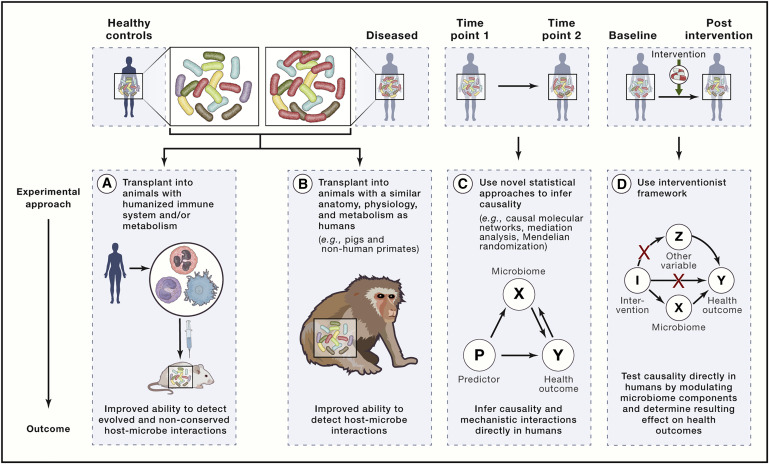
1-s2.0-S009286741931387X-gr3

Why is it important to change?

“Specifically, the correction of altered microbiomes, be it by FMT, live biotherapeutics, or microbial products, will be beneficial only if the alterations are causal or contributory to the disease rather than a bystander response. Causal claims in the microbiome field are often overstated and disproportional to the experimental evidence from which they are derived, and it has become difficult to identify a disease state in which the microbiome has not been implicated in the scientific literature, a notion amplified in the popular press.”

“Sadly, most researchers and reviewers in the microbiome field, and almost all editors of high-impact journals, seem to regard acceptance of the null hypothesis as a failure. As with all scientific endeavor, our field would be served better if editorial policies of higher tier journals and guidelines of funding agencies discouraged any discrimination against negative data, replications, validations of experimental designs, and statistical analyses.”

January 22, 2020

In today’s digest read about Lactobacillus mulieris sp. nov. isolated from healthy female urinary tract, diversity of Escherichia coli phages in the Danish wastewater, PLate Coverage Algorithm (PLCA) in culture-enriched metagenomics, and more. Happy reading!

General microbiome

Microbiomes Reduce Their Host’s Sensitivity to Interspecific Interactions – Sara L. Jackrel – mBio

Gut microbiome

Klebsiella michiganensis transmission enhances resistance to Enterobacteriaceae gut invasion by nutrition competition – Rita A. Oliveira – Nature Microbiology

Long-term impact of fecal transplantation in healthy volunteers – Oleg V. Goloshchapov – BMC Microbiology

Efficacy of faecal microbiota transplantation in Crohn’sdisease: a new target treatment?– Liyuan Xiang – Microbial Biotechnology

Resident microbial communities inhibit growth and antibiotic resistance evolution of Escherichia coli in human gut microbiome samples – Michael Baumgartner – bioRxiv

Microreview: Causalities of war: The connection between type VI secretion system and microbiota – Luke P. Allsopp – Cellular Microbiology

Urinary microbiome

*Lactobacillus mulieris sp. nov., a new species of Lactobacillus delbrueckii group – Joana Rocha – International Journal of systematic and evolutionary microbiology

Vaginal microbiome

Vaginal Microbiota Transplantation: The Next Frontier – Kevin DeLong – The Journal of Law, Medicine, & Ethics

Respiratory microbiome

*Culture-enriched metagenomic sequencing enables in-depth profiling of the cystic fibrosis lung microbiota – Fiona J. Whelan – Nature Microbiology

A Refined View of Airway Microbiome in Chronic Obstructive Pulmonary Disease at Species and Strain-levels– Zhang Wang – bioRxiv

Eye microbiome

The closed eye harbors a unique microbiome in dry eye disease – Kent A. Willis – medRxiv

Plant/root/soil microbiome

Root ethylene mediates rhizosphere microbial community reconstruction when chemically detecting cyanide produced by neighbouring plants – Yan Chen – Microbiome

Warming-induced permafrost thaw exacerbates tundra soil carbon decomposition mediated by microbial community– Jiajie Feng – Microbiome

Microbiome composition differs in hybrid and inbred maize – Maggie R. Wagner – bioRxiv

Diversity and plant growth-promoting functions of diazotrophic/N-scavenging bacteria isolated from the soils and rhizospheres of two species of Solanum – Zuluaga Mya – PlosOne

Water microbiome

Molecular Characteristics of Dissolved Organic Nitrogen and Its Interaction with Microbial Communities in a Prechlorinated Raw Water Distribution System – Hang Xu – Environmental Science and Technology

Effects of geographic location and water quality on bacterial communities in full-scale biofilters across North America – Ben Ma – FEMS Microbiology Ecology

Phages and viruses

*Exploring the remarkable diversity of Escherichia coli Phages in the Danish Wastewater Environment, Including 91 Novel Phage Species – Nikoline S. Olsen – bioRxiv

Bioinformatics

Piphillin predicts metagenomic composition and dynamics from DADA2-corrected 16S rDNA sequences – Nicole R. Narayan – BMC Genomics

Network-Based Prediction of Novel CRISPR-Associated Genes in Metagenomes – Jake L. Weissman and Philip L. F. Johnson – mSystems

Review: Integrating Computational Methods to Investigate the Macroecology of Microbiomes – Rilquer Mascarenhas – Frontiers in Genetics

Assessment of single cell RNA-seq statistical methods on microbiome data – Matteo Calgaro – bioRxiv