Antibiotic resistance- can reducing outpatient prescription help?

Antibiotic resistance is increasing at a rapid rate making pathogens and other bacterial species resistant to currently available antibiotics. Its impact is already visible globally and clock is ticking faster than ever pushing scientists all over the world to develop better antibiotics with higher specificity (only!) for pathogens. Antibiotic consumption is directly related to antibiotic resistance and policies across the continents are underway to control the consumption and prescription of antibiotics.

A recent article in elife introduces the problem of unnecessary antibiotic use and provides data to avert it.

Inappropriate antibiotic use leads to increased risk of adverse events, disruption of colonization resistance and other benefits of the microbial flora, and bystander selection for antibiotic resistance, with little to no health gains for the patient.”

To address the problem, Christine et al. used publically available data (NAMCS/NHAMCS) and mathematical models to find what would happen if antibiotic consumption is averted in hypothetical scenarios.

What they did?
The analysis included sixteen antibiotics that are frequently prescribed in the outpatient setting and nine potentially pathogenic bacterial species that are commonly carried in the normal human microbiome. For each antibiotic-species pair, they estimated the proportion of antibiotic exposures experienced by that species that could be averted under four hypothetical scenarios.

1) Eliminate unnecessary antibiotic use across all outpatient conditions.
2) Eliminate all antibiotic use for outpatient respiratory conditions for which antibiotics are not indicated.
3) Eliminate all antibiotic use for acute sinusitis.
4) Prescribe nitrofurantoin* for all cases of cystitis in women.”

“*Nitrofurantoin- a recommended first-line therapy with good potency against common uropathogens, low levels of resistance, and decreased risk of collateral damage to the intestinal microbiome”

Results
Picture1

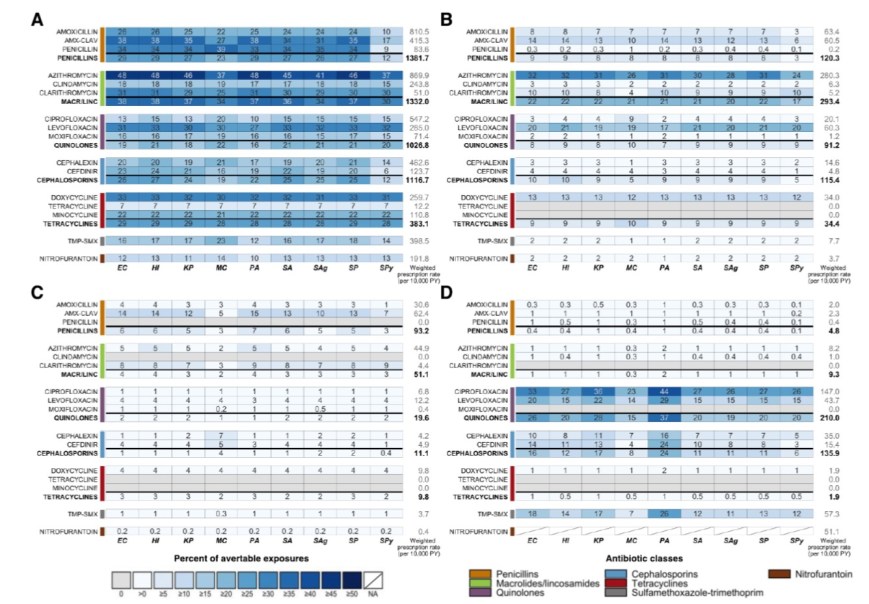
Heatmaps showing the estimated percentage of species exposures to each antibiotic or antibiotic class that could be averted if A: unnecessary antibiotic prescriptions across all outpatient conditions, B: all antibiotic use for outpatient respiratory conditions for which antibiotics are not indicated, C: all antibiotic use for acute sinusitis, or D: non-nitrofurantoin treatment of cystitis in women was eliminated. Drug class results include prescriptions of all antibiotics in that class, as identified by the Lexicon Plus classification system.
Abbreviations: Antibiotics (y-axis): AMX-CLAV=amoxicillin-clavulanate,, MACR/LINC=macrolides/lincosamides, TMP-SMX=sulfamethoxazole-trimethoprim;

Organisms (x-axis): EC=E. coli, HI=H. influenzae, KP=K. pneumoniae, MC=M. catarrhalis, PA=P. aeruginosa, SA=S. aureus, SAg=S. agalactiae, SP=S. pneumoniae, SPy=S. pyogenes; PY=person-years


The darker shades in panel A (scenario 1) clearly indicated that “elimination of unnecessary antibiotic prescriptions across all outpatient conditions would prevent 6 to 48% (IQR: 17 to 31%) of antibiotic-species exposures. If all unnecessary antibiotic use could be prevented, over 30% of exposures to amoxicillin-clavulanate, penicillin, azithromycin, clarithromycin, levofloxacin, and doxycycline across most potential pathogens of interest could be averted.

In panel D (scenario 4), they found that prescribing nitrofurantoin not only averted antibiotic exposure in non-causative bacterial species (bystanders) but also in causative species for cystitis in women.
Overall, 27% of ciprofloxacin use is associated with acute cystitis in women. Organisms that are not causative pathogens of cystitis have proportions of avertable exposures close to or less than 27%, but a substantially higher proportion of exposures could be averted among causative pathogens – 33%, 36%, and 44% of ciprofloxacin exposures to E. coli, K. pneumoniae, and P. aeruginosa, respectively.

The study addresses the limitations with regard to data availability and reporting in public database. Authors are cautious and point out,

It is important to note that the reduction in antibiotic exposures estimated here does not translate to the same reduction in the prevalence of resistance or in the morbidity and mortality attributable to resistance. Additionally, in this analysis, we give each exposure equal weight. However, the selective pressure imposed by a single exposure depends on a number of variables, including pharmacokinetics, pharmacodynamics, distribution of bacteria across body sites, and bacterial population size. For example, we might expect that the probability of resistance scales with population size, and thus that an exposure received by an individual with higher bacterial load will have a larger impact on resistance.

Overall, this study indeed provides evidence that “improved prescription of antibiotics has the potential to prevent antibiotic exposure experienced by bacterial species throughout microbiome.

February 2, 2020

Have a nice Sunday! Today, in this Digest we have several papers about the relationship between the microbiome and different neurological/psychological conditions, such as ASD, depression or anxiety, or about the microbiome and the inflammatory bowel disease. Enjoy!


Human and General Microbiome

Review: Host-microbiota interactions in inflammatory bowel disease – Roberta Caruso – Nature Reviews Immunology 

Review: Considering gut microbiota in treatment of type 2 diabetes mellitus – Aneseh Adeshirlarijaney – Gut Microbes

Review: Gut Dysbiosis Dysregulates Central and Systemic Homeostasis via Suboptimal Mitochondrial Function: Assessment, Treatment and Classification Implications – George Anderson – Current Topics in Medicinal Chemistry

Book Chapter: Immune-Kynurenine Pathways and the Gut Microbiota-Brain Axis in Anxiety Disorders – Alper Evrensel – Anxiety Disorders 

Book Chapter: Autism and Gut-Brain Axis: Role of Probiotics – Saravana Babu Chidambaram – Personalized Food Intervention and Therapy for Autism Spectrum Disorder Management

Review: Microbial-Based and Microbial-Targeted Therapies for Inflammatory Bowel Diseases – Akihiko Oka – Digestive Diseases and Sciences

Precision Microbiome Modulation with Discrete Dietary Fiber Structures Directs Short-Chain Fatty Acid Production – Edward C. Deehan – Cell Host and Microbe

Urinary microbiome in uncomplicated and interstitial cystitis: is there any similarity? – Süleyman Yıldırım – World Journal of Urology

The gut microbiota response to helminth infection depends on host sex and genotype – Fei Ling – The ISME Journal 

Metabolism of multiple glycosaminoglycans by Bacteroides thetaiotaomicron is orchestrated by a versatile core genetic locus – Didier Ndeh – Nature Communications

Gestational diabetes and the human salivary microbiota: a longitudinal study during pregnancy and postpartum – Mie K. W. Crusell – BMC Pregnancy and Childbirth 

Vaginal dysbiosis associated-bacteria Megasphaera elsdenii and Prevotella timonensis induce immune activation via dendritic cells – Nienke H.van Teijlingen – Journal of Reproductive Immunology

Variability in Skin Microbiota between Smokers, Former Smokers, and Non-Smokers – Katherine G. Thompson – Journal of the American Academy of Dermatology

Microbiota changes and Intestinal Microbiota Transplantation in Liver Diseases and Cirrhosis – Jasmohan S. Bajaj – Journal of Hepatology

Host-Specific Evolutionary and Transmission Dynamics Shape the Functional Diversification of Staphylococcus epidermidis in Human Skin – Wei Zhou – Cell


Animal Microbiome and Animal Experiments

Effect of probiotic administration on gut microbiota and depressive behaviors in mice – Quan Feng Liu – DARU Journal of Pharmaceutical Sciences

Deciphering the bifidobacterial population within the canine and feline gut microbiota – Giulia Alessandri – Applied and Environmental Microbiology

Dissecting the factors shaping fish skin microbiomes in a heterogeneous inland water system – Yaron Krotman – Microbiome

Prenatal exposure to glufosinate ammonium disturbs gut microbiome and induces behavioral abnormalities in mice – Tianyu Dong – Journal of Hazardous Materials

High prevalence of Phasi Charoen-like virus from wild-caught Aedes aegypti in Grenada, W.I. as revealed by metagenomic analysis – Maria E. Ramos-Nino – PLoS ONE

Common structuring principles of the Drosophila melanogaster microbiome on a continental scale and between host and substrate – Yun Wang – Environmental Microbiology Reports

Community assembly of the native C. elegans microbiome is influenced by time, substrate, and individual bacterial taxa – Julia Johnke – Environmental Microbiology 


Environmental Microbiome

Patterns of local, intercontinental and inter-seasonal variation of soil bacterial and eukaryotic microbial communities – Johan De Gruyter – FEMS Microbiology Ecology

Dynamics and ecological distributions of the Archaea microbiome from inland saline lakes (Monegros Desert, Spain) – Mateu Menéndez-Serra – FEMS Microbiology Ecology


February 1, 2020

Today’s Digest brings you an Outlook collection on human gut microbiome by Nature, a Hi-C investigation of the evolution of the gut microbiota, and be careful with the dust, there’s transferrable antimicrobial genes within!

Events

Reshaping the Microbiome through Nutrition – Nature Conference – San Diego, CA

General microbiology

Commensal Bacteroidetes protect against Klebsiella pneumoniae colonization and transmission through IL-36 signalling – Richard P. Sequeira et al. – Nature Microbiology

** The gut microbiome – Nature Outlook

Antimicrobial resistance

The negative cofactor 2 complex is a key regulator of drug resistance in Aspergillus fumigatus – Takanori Furukawa et al. – Nature Communications

Plasmid-mediated metronidazole resistance in Clostridioides difficile – Ilse M. Boekhoud et al. – Nature Communications

A Common Practice of Widespread Antimicrobial Use in Horse Production Promotes Multi-Drug Resistance – S. Álvarez–Narváez et al. – Scientific Reports

Surveys of knowledge and awareness of antibiotic use and antimicrobial resistance in general population: A systematic review – PLoS One

Antimicrobial resistance patterns and molecular resistance markers of Campylobacter jejuni isolates from human diarrheal cases – Mohamed Elhadidy et al. – PLoS One

Review: Antibiotic resistance: turning evolutionary principles into clinical reality – Dan I Andersson et al. – FEMS Microbiology Reviews

Antibiotic resistome associated with microbial communities in an integrated wastewater reclamation system – Kaifeng Yu et al. – Water Research

Human gut microbiome

** Tracking microbial evolution in the human gut using Hi-C reveals extensive horizontal gene transfer, persistence and adaptation – Eitan Yaffe & David A. Relman – Nature Microbiology

Growth effects of N-acylethanolamines on gut bacteria reflect altered bacterial abundances in inflammatory bowel disease – Nadine Fornelos et al. – Nature Microbiology

Human cancer microbiome

The Influence of Lung Microbiota on Lung Carcinogenesis, Immunity, and Immunotherapy – Ariel G. Ramírez-Labrada et al. – Trends in Cancer

Built environment microbiome

** Mobilizable antibiotic resistance genes are present in dust microbial communities – Sarah Ben Maamar et al. – PLoS Pathogens

Indoor and outdoor airborne bacterial and fungal air quality in kindergartens: seasonal distribution, genera, levels, and factors influencing their concentration – Farhad Mirkhond Chegini et al. – Building and Environment

Metabolomics

Targeted metabolomics of pellicle and saliva in children with different caries activity – Annika Schulz et al. – Scientific Reports

Animal experiments

Review: The role of the microbiota in sedentary life style disorders and ageing: Lessons from the animal kingdom – P.W. O’Toole & P.G. Shiels – Journal of Internal Medicine

Animal microbiome

Dietary effects on gut microbiota of the mesquite lizard Sceloporus grammicus (Wiegmann, 1828) across different altitudes – Nina Montoya-Ciriaco et al. – Microbiome

Late weaning is associated with increased microbial diversity and Faecalibacterium prausnitzii abundance in the fecal microbiota of piglets – Francesca Romana Massacci et al. – Animal Microbiome

Plant, root and soil microbiome

Effects of soil chemical properties and fractions of Pb, Cd, and Zn on bacterial and fungal communities – Xiaomei Pan et al. – Science of the Total Environment

Resilience of the microbial communities of semiarid agricultural soils during natural climatic variability events – Lumarie Pérez-Guzmán et al. – Applied Soil Ecology

Effects of microbial inoculants on the fermentation characteristics and microbial communities of sweet sorghum bagasse silage – Miaoyin Dong et al. – Scientific Reports

Water and extremophile microbiome

Diversity of Bacterial Community in the Oxygen Minimum Zones of Arabian Sea and Bay of Bengal as Deduced by Illumina Sequencing – Genevieve L. Fernandes et al. – Frontiers in Microbiology

Ionic Liquid Enriches the Antibiotic Resistome, Especially Efflux Pump Genes, Before Significantly Affecting Microbial Community Structure – Xiaolong Wang et al. – Environmental Science & Technology

Methane yield enhancement of mesophilic and thermophilic anaerobic co-digestion of algal biomass and food waste using algal biochar: Semi-continuous operation and microbial community analysis – Le Zhang et al. – Bioresource Technology

Characterization and co-occurrence of microbial community in epiphytic biofilms and surface sediments of wetlands with submersed macrophytes – Yuansi Liu et al. – Science of the Total Environment

Phages and viruses

** Giant virus diversity and host interactions through global metagenomics – Frederik Schulz et al. – Nature

Reassortment and adaptive mutations of an emerging avian influenza virus H7N4 subtype in China – Bingqian Qu et al. – PLoS One

Outbreak of Pneumonia of Unknown Etiology in Wuhan China: the Mystery and the Miracle – Hongzhou Lu et al. – Journal of Medical Virology

Bioinformatics

Comparing bioinformatic pipelines for microbial 16S rRNA amplicon sequencing – Andrei Prodan et al. – PLoS One

Microbes in the news

Walnuts May Benefit Gut Bacteria and Improve Heart Health – Karina Lichtenstein – Medicine Net

How to create living art with microbes – Eugenia Angulo – BBVA OpenMind

Human microbiota associated-rodent models

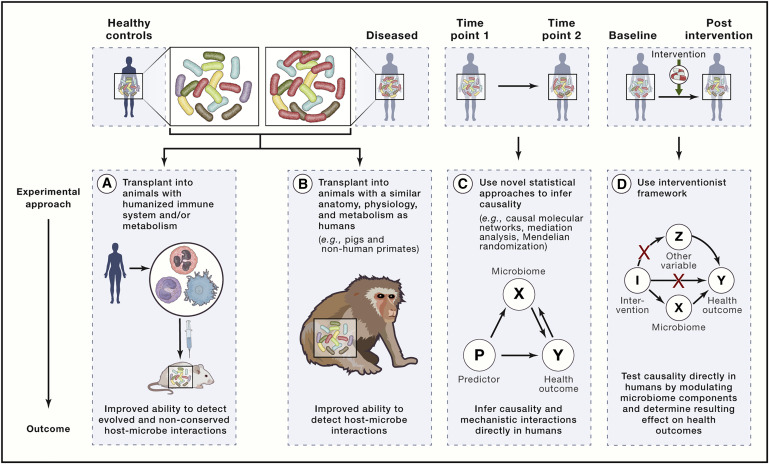
I came across brilliant review by Jens Walter et al. that resonates with my thoughts in microbiome field. I also work in the same field doing similar experiments, but sometimes it is better to stop and look back what you have been doing. This review has discussed some important points on the transmissibility of human diseases in human microbiota-associated mouse models. They acknowledge the importance of human microbiota-associated mouse models as valuable resource in the microbiome field. However, through systematic review they demonstrate that according to current literature it is easily possible to transfer (any!) human disease in mice through microbiota transplant. The inflated positivity and hype around these experiments must be criticized. Most importantly, they talk about the relevance of negative transplant studies, which are seldom published, and urge to use rigorous statistics to improve the data interpretation. Following are some excerpts from the review, though reading full review is highly recommended.

The problem with the concept:

“Because a “normal” or “healthy” microbiome has not been defined yet, we use the term dysbiosis to refer solely to an altered microbiome associated with a specific disease or condition as compared to a control. Whether such “dysbiotic” microbiomes are the cause or consequence of disease, or whether both are caused by a third factor, is, in most instances, unproven.”

“There are two well-documented diseases in the microbiome field that link a microbial biomarker with causation in disease: Helicobacter pylori-associated peptic ulceration and gastric cancer, and Clostridium (or Clostridioides) difficile infection-associated diarrhea. However, causal inferences between complex microbiomes and other inflammatory, metabolic, neoplastic, and neuro-behavioral disorders have been neither compelling nor conclusive.”

“A substantial proportion of the taxa that comprise the human gut microbiome fail to colonize in the recipient animals. Most importantly, the ecological factors (such as diet, lifestyle, disease phenotype, and human genotype) that have driven the dysbiosis in humans in the first place are absent in the recipient rodents, making it unlikely that disease-associated alterations are replicated. Taxa that colonize at sufficient levels may not engage in the EVOLUTIONARY routed host-microbe interactions that they establish with their native host.”

“Consider H. pylori and C. difficile, two members of the human microbiome with established causality in human disease, neither of which exhibit sufficient colonization to cause reliable pathology in conventional murine models.”

Results from systematic review:

“Of 38 studies meeting the inclusion criteria, all but two (36/38; 95%) concluded that fecal transfer from diseased donors resulted in at least one phenotype of the human disease being greater in the recipient mice when compared with transfers from healthy donors.”

Of all the studies, 63% (24/38) of the studies tested for a dysbiosis in the original human donor samples, and only 29% (11/38) confirmed that at least some aspect (reduced diversity, ecosystem processes/services, loss or bloom of specific taxa, or shifts in metabolic capacity) of the “human dysbiosis” was replicated in the recipient animals. Consequently, the majority of studies did not attempt to identify the “causal component” of the microbiome. Only a few studies (34%; 13/38) identified potential underlying mechanisms linking the dysbiotic microbiome with disease.”

Issues with statistics 

“Often, a small number (1–5) of human donors is used per human disease and control group, and these “donor microbiomes” are then replicated in a larger number of individual mice, which are then often used for statistical inference.”

“The result is “pseudoreplication,” which artificially inflates the sample size, the chance for “false positive” findings, and the evidence for a scientific claim. This problem is amplified if donor samples are pooled before the inoculation of groups of rodents, which is common practice for both the “diseased” and healthy control samples. We found that 84% (32/38) of the published studies on HMA murine models used the individual animals as the statistical inference, although animal numbers were much higher than the number of human donors and therefore inflated. Only 16% of studies (6/38) were clear in their use of the individual human donor samples as the “N” for statistical inferences or used the same number of rodents as donors.”

“When virtually all reports are positive, as in our systematic review, the greater the doubt will be and the more justified the scrutiny should be.”

Suggestions for alternative experimental approach

1-s2.0-S009286741931387X-gr3

Why is it important to change?

“Specifically, the correction of altered microbiomes, be it by FMT, live biotherapeutics, or microbial products, will be beneficial only if the alterations are causal or contributory to the disease rather than a bystander response. Causal claims in the microbiome field are often overstated and disproportional to the experimental evidence from which they are derived, and it has become difficult to identify a disease state in which the microbiome has not been implicated in the scientific literature, a notion amplified in the popular press.”

“Sadly, most researchers and reviewers in the microbiome field, and almost all editors of high-impact journals, seem to regard acceptance of the null hypothesis as a failure. As with all scientific endeavor, our field would be served better if editorial policies of higher tier journals and guidelines of funding agencies discouraged any discrimination against negative data, replications, validations of experimental designs, and statistical analyses.”

January 27, 2020

In today’s Monday morning post – establishing causality for gut microbiome using human microbiota associated rodents, gut microbiota profiling in pregnant women after bariatric surgery, proteomics changes in bacteria, discovery of core microbiome of common bean rhizosphere and many more.

General Microbiome

Establishing or Exaggerating Causality for the Gut Microbiome: Lessons from Human Microbiota-Associated Rodents – Jens Walter – Cell

Microbial Genomics and Metagenomics in India: Explorations and Perspectives– Princy Hira – Proceedings of Indian National Science Academy

Human Microbiome

Longitudinal metabolic and gut bacterial profiling of pregnant women with previous bariatric surgery – Kiana Ashley West – Gut

Identifying determinants of bacterial fitness in a model of human gut microbial succession – Lihui Feng – PNAS

16S rDNA microbiome composition pattern analysis as a diagnostic biomarker for biliary tract cancer – Huisong Lee – World Journal of Surgical Oncology

Faecal microbiota transplantations and urinary tract infections – Jean Christophe Lagier – Lancet

Animal Microbiome

Influences of a Prolific Gut Fungus (Zancudomyces culisetae) on Larval and Adult Mosquito (Aedes aegypti)-Associated Microbiota – Jonas Frankel-Bricker – Applied and Environmental Microbiology

Functional dynamics of bacterial species in the mouse gut microbiome revealed by metagenomic and metatranscriptomic analyses – Youn Wook Chung – PlosOne

Early life microbiome perturbation alters pulmonary responses to ozone in male mice – Traci A. Brown – Physiological Reports

Evolution and maintenance of microbe-mediated protection under occasional pathogen attack – Anke Kloock – BioRxiv

Plant, root and soil microbiome

Community sequencing on a natural experiment reveals little influence of host species and timing but a strong influence of compartment on the composition of root endophytes in three annual Brassicaceae – Jose G Macia-Vicente – BioRxiv

Discovery of a spatially and temporally persistent core microbiome of the common bean rhizosphere – Nejc Stopnisek – BioRxiv

Resident and phytometer plants host comparable rhizosphere fungal communities in managed grassland ecosystems – Ricardo Schöps – Scientific Reports

Evaluation of fatty acid derivatives in the remediation of aged PAH-contaminated soil and microbial community and degradation gene response – Qingling Wang – Chemosphere

Techniques

Proteomic changes in bacteria caused by exposure to environmental conditions can be detected by Matrix-Assisted Laser Desorption/Ionization – Time of Flight (MALDI-ToF) Mass Spectrometry – Denise Chac – BioRxiv

Probiotics, prebiotics

Beneficial bile acid metabolism from Lactobacillus plantarum of food origin – Roberta Prete – Scientific Reports

Microbes in the news

Could a kid’s microbiome alter their behaviour? – Health24

Microbiome Therapeutics Market Report Forecast by Capital Investment, Industry Outlook, Opportunities & Trends 2024 – Fusion Science Academy

January 25, 2020

In today’s microbiome digest various interesting aspects of microbiome research has been covered such as 1) a summary report by Marc G. Chevrette on one of my favorite research of the decade – “A metagenomic strategy for harnessing the chemical repertoire of the human microbiome”, 2) Oral administration of hydrogels promoted intestinal barrier function, suppressed the pro-inflammatory mRNA expression, 3) Association of low fiber intake in chronic heart failure, and several other interesting articles! Enjoy reading! Happy Weekend!

General microbiome

From Metagenomes to Molecules: Innovations in Functional Metagenomics Unlock Hidden Chemistry in the Human Microbiome – Marc G. Chevrette – Biochemistry

A systematic review of economic evaluation in fecal microbiota transplantation – Thomas Stalder – Infection Control & Hospital Epidemiology

Review: Microbial Contribution to the Human Metabolome: Implications for Health and Disease – William Van Treuren – Annual Review of Pathology

Human gut microbiome

Low fibre intake is associated with gut microbiota alterations in chronic heart failure – Cristiane C.K. Mayerhofer – ESC Heart Fail

Review: Establishing or Exaggerating Causality for the Gut Microbiome: Lessons from Human Microbiota-Associated Rodents – Jens Walter – Cell

Compositional flux within the intestinal microbiota and risk for bloodstream infection with gram-negative bacteria – Igor Stoma – Clinical Infectious Diseases

Comparative Analysis of Gut Microbiota Following Changes in Training Volume Among Swimmers– Jarrad Timothy Hampton-Marcell – International Journal of Sports Medicine

Diversity, compositional and functional differences between gut microbiota of children and adults – Djawad Radjabzadeh – Scientific Reports

Environmental and intrinsic factors shaping gut microbiota composition and diversity and its relation to metabolic health in children and early adolescents: A population-based study – Sofia Moran-Ramos – Gut Microbes

Human skin microbiome

Impact of the early-life skin microbiota on the development of canine atopic dermatitis in a high-risk breed birth cohort– S. Rodriguez-Campos – Scientific Reports

Human respiratory microbiome

The lung microbiota: role in maintaining pulmonary immune homeostasis and its implications in cancer development and therapy – Michele Sommariva – Cellular and Molecular Life Sciences

Lung Microbiota Predict Clinical Outcomes in Critically Ill Patients – Robert P. Dickson – American Journal of Respiratory and Critical Care Medicine

Animal microbiome / Animal experiments

Functional dynamics of bacterial species in the mouse gut microbiome revealed by metagenomic and metatranscriptomic analyses – Youn Wook Chung – PLOS ONE

Effect of Lactobacillus acidophilus D2/CSL (CECT 4529) supplementation in drinking water on chicken crop and caeca microbiome– De Cesare A – PLOSE ONE

Differential effects of synthetic psychoactive cathinones and amphetamine stimulants on the gut microbiome in mice – Angoa-Pérez M – PLOSE ONE

Modulation of inflammatory response and gut microbiota in ankylosing spondylitis mouse model by bioactive peptide IQW – Gang Liu – Journal of Applied Microbiology

Effect of cereal soaking and carbohydrase supplementation on growth, nutrient digestibility and intestinal microbiota in liquid-fed grow-finishing pigs – Alberto Torres-Pitarch – Scientific Reports

Anesthesia and surgery induce age-dependent changes in behaviors and microbiota – Ning Liufu – Aging

Amyloid–Polyphenol Hybrid Nanofilaments Mitigate Colitis and Regulate Gut Microbial Dysbiosis – Bing Hu – ACS Nano

Clostridium butyricum Modulates the Microbiome to Protect Intestinal Barrier Function in Mice with Antibiotic-Induced Dysbiosis – Mao Hagihara – iScience

Microbes in news

Can our microbiome accurately identify diseases … and predict death?

January 24, 2020

Have a nice weekend! Today in this Digest, we have several papers about different interventions, microbes, and compounds with positive properties. And, of course, more papers. Enjoy.


Human and General Microbiome

Review: The microbiota and the hypothalamus-pituitary-adrenocortical (HPA) axis, implications for anxiety and stress disorders – Linoy Mia Frankiensztajn – Current Opinion in Neurobiology

Review: The Role of Meat Protein in Generation of Oxidative Stress and Pathophysiology of Metabolic Syndromes – Muhammad Ijaz Ahmad – Food Science of Animal Resources

Identifying determinants of bacterial fitness in a model of human gut microbial succession – Lihui Feng – PNAS

Reduced environmental bacterial load during early development and gut colonisation has detrimental health consequences in Japanese quail. – Ngare Wilkinson  – Heliyon

Review: Immunological Role of the Maternal Uterine Microbiome in Pregnancy: Pregnancies Pathologies and Alterated Microbiota – Jonah Bardos – Frontiers in Immunology

Association between the faecal short-chain fatty acid propionate and infant sleep – Anne-Louise M. Heath – European Journal of Clinical Nutrition

Prenatal dietary supplements influence the infant airway microbiota in a randomized factorial clinical trial – Mathis H. Hjelmsø – Nature Communications 

Physical fitness in community-dwelling older adults is linked to dietary intake, gut microbiota, and metabolomic signatures – Josué L. Castro‐Mejía – Aging Cell

Temporal Gut Microbial Changes Predict Recurrent Clostridiodes Difficile Infection in Patients With and Without Ulcerative Colitis – Allen A Lee – Inflammatory Bowel Diseases

Impacts of the Plateau Environment on the Gut Microbiota and Blood Clinical Indexes in Han and Tibetan Individuals – Zhilong Jia – mSystems

Intestinal microbes influence development of thymic lymphocytes in early life – Maria Ennamorati – PNAS

The cervicovaginal mucus barrier to HIV-1 is diminished in bacterial vaginosis – Thuy Hoang – PLoS Pathogens

Establishing high-accuracy biomarkers for colorectal cancer by comparing fecal microbiomes in patients with healthy families – Jian Yang – Beneficial Microbes

Characteristic gut microbiota and predicted metabolic functions in women with PCOS – Ling Zhou – Endocrine Connections 

Obese adolescents with PCOS have altered biodiversity and relative abundance in gastrointestinal microbiota – Beza Jobira – The Journal of Clinical Endocrinology & Metabolism

Association between blood omega-3 polyunsaturated fatty acids and the gut microbiota among breast cancer survivors – A. Horigome – Beneficial Microbes

Editorial: Processed food affects the gut microbiota: The revolution has started – Michael A Kamm – Journal of Gastroenterology and Hepatology

Commentary: mSphere of Influence: the Mycobiota in Human Health and Disease – Soo Chan Lee – mSphere


Animal Microbiota and Animal Model experiments

Letter: TCF-1 deficiency influences the composition of intestinal microbiota and enhances susceptibility to colonic inflammation – Guotao Yu – Protein & Cell 

Single-cell genomics of uncultured bacteria reveals dietary fiber responders in the mouse gut microbiota – Rieka Chijiiwa – Microbiome

Antidepressant treatment with fluoxetine during pregnancy and lactation modulates the gut microbiome and metabolome in a rat model relevant to depression – Anouschka S Ramsteijn – Gut Microbes


Beneficial Microbes and Compounds

Review: Fecal microbiota transplantation in disease therapy – Hanna Antushevich – Clinica Chimica Acta

Review: Microbiota and alcohol use disorder: are psychobiotics a novel therapeutic strategy? – Alicia Rodriguez-Gonzalez – Current Pharmaceutical Design

Mining possible associations of faecal A. muciniphila colonisation patterns with host adiposity and cardiometabolic markers in an adult population – E.K. Mitsou – Beneficial Microbes

Probiotics maintain intestinal secretory immunoglobulin A levels in healthy formula-fed infants: a randomised, double-blind, placebo-controlled study – L. Xiao – Beneficial Microbes

Effect of rice bran fermented with Saccharomyces cerevisiae and Lactobacillus plantarum on gut microbiome of mice fed high-sucrose diet – J. Shibayama – Beneficial Microbes

Inulin with different degrees of polymerization protects against diet-induced endotoxemia and inflammation in association with gut microbiota regulation in mice – Li-Li Li – Scientific Reports

Understanding the Scope of Do-It-Yourself Fecal Microbiota Transplant – Chiazotam Ekekezie – The American Journal of Gastroenterology

Milk Fermented by Lactobacillus paracasei NCC 2461 (ST11) Modulates the Immune Response and Microbiota to Exert its Protective Effects Against Salmonella typhimurium Infection in Mice – Leonardo Borges Acurcio – Probiotics and Antimicrobial Proteins 

Recovery of Lactobacillus casei strain Shirota (LcS) from faeces of healthy Singapore adults after intake of fermented milk – W.W.T. Khine – Beneficial Microbes

Seabuckthorn (Hippophaë rhamnoides) Freeze-Dried Powder Protects against High-Fat Diet-Induced Obesity, Lipid Metabolism Disorders by Modulating the Gut Microbiota of Mice – Caixia Guo – Nutrients

Chitooligosaccharides Modulate Glucose-Lipid Metabolism by Suppressing SMYD3 Pathways and Regulating Gut Microflora – Qiutong Wang – Marine Drugs

Lactobacillus and Pediococcus ameliorate progression of non-alcoholic fatty liver disease through modulation of the gut microbiome – Na Young Lee – Gut Microbes

Review: Antimicrobials for food and feed; a bacteriocin perspective – Paula M O’Connor – Current Opinion in Biotechnology


Bioinformatics

Transfer index, NetUniFrac and some useful shortest path-based distances for community analysis in sequence similarity networks – Henry Xing – Bioinformatics

MICOM: Metagenome-Scale Modeling To Infer Metabolic Interactions in the Gut Microbiota – Christian Diener – mSystems

January 22, 2020

In today’s digest read about Lactobacillus mulieris sp. nov. isolated from healthy female urinary tract, diversity of Escherichia coli phages in the Danish wastewater, PLate Coverage Algorithm (PLCA) in culture-enriched metagenomics, and more. Happy reading!

General microbiome

Microbiomes Reduce Their Host’s Sensitivity to Interspecific Interactions – Sara L. Jackrel – mBio

Gut microbiome

Klebsiella michiganensis transmission enhances resistance to Enterobacteriaceae gut invasion by nutrition competition – Rita A. Oliveira – Nature Microbiology

Long-term impact of fecal transplantation in healthy volunteers – Oleg V. Goloshchapov – BMC Microbiology

Efficacy of faecal microbiota transplantation in Crohn’sdisease: a new target treatment?– Liyuan Xiang – Microbial Biotechnology

Resident microbial communities inhibit growth and antibiotic resistance evolution of Escherichia coli in human gut microbiome samples – Michael Baumgartner – bioRxiv

Microreview: Causalities of war: The connection between type VI secretion system and microbiota – Luke P. Allsopp – Cellular Microbiology

Urinary microbiome

*Lactobacillus mulieris sp. nov., a new species of Lactobacillus delbrueckii group – Joana Rocha – International Journal of systematic and evolutionary microbiology

Vaginal microbiome

Vaginal Microbiota Transplantation: The Next Frontier – Kevin DeLong – The Journal of Law, Medicine, & Ethics

Respiratory microbiome

*Culture-enriched metagenomic sequencing enables in-depth profiling of the cystic fibrosis lung microbiota – Fiona J. Whelan – Nature Microbiology

A Refined View of Airway Microbiome in Chronic Obstructive Pulmonary Disease at Species and Strain-levels– Zhang Wang – bioRxiv

Eye microbiome

The closed eye harbors a unique microbiome in dry eye disease – Kent A. Willis – medRxiv

Plant/root/soil microbiome

Root ethylene mediates rhizosphere microbial community reconstruction when chemically detecting cyanide produced by neighbouring plants – Yan Chen – Microbiome

Warming-induced permafrost thaw exacerbates tundra soil carbon decomposition mediated by microbial community– Jiajie Feng – Microbiome

Microbiome composition differs in hybrid and inbred maize – Maggie R. Wagner – bioRxiv

Diversity and plant growth-promoting functions of diazotrophic/N-scavenging bacteria isolated from the soils and rhizospheres of two species of Solanum – Zuluaga Mya – PlosOne

Water microbiome

Molecular Characteristics of Dissolved Organic Nitrogen and Its Interaction with Microbial Communities in a Prechlorinated Raw Water Distribution System – Hang Xu – Environmental Science and Technology

Effects of geographic location and water quality on bacterial communities in full-scale biofilters across North America – Ben Ma – FEMS Microbiology Ecology

Phages and viruses

*Exploring the remarkable diversity of Escherichia coli Phages in the Danish Wastewater Environment, Including 91 Novel Phage Species – Nikoline S. Olsen – bioRxiv

Bioinformatics

Piphillin predicts metagenomic composition and dynamics from DADA2-corrected 16S rDNA sequences – Nicole R. Narayan – BMC Genomics

Network-Based Prediction of Novel CRISPR-Associated Genes in Metagenomes – Jake L. Weissman and Philip L. F. Johnson – mSystems

Review: Integrating Computational Methods to Investigate the Macroecology of Microbiomes – Rilquer Mascarenhas – Frontiers in Genetics

Assessment of single cell RNA-seq statistical methods on microbiome data – Matteo Calgaro – bioRxiv

January 20, 2020

Have a nice monday! Today, in this Digest we have a good amount of papers about different beneficial interventions based on the microbiome such as probiotics, synbiotics and others. We have also papers about the microbiome in brain disorders, new evidence about microbiota changes in IBS, the impact of early antibiotic use on infant microbiota and the relation between mycobiome and childhood caries. Enjoy!

Human and General Microbiome

Review: The Reproductive Microbiome: An Emerging Driver of Sexual Selection, Sexual Conflict, Mating Systems, and Reproductive Isolation – Melissah Rowe – Trends in Ecology and Evolution

Systematic Review: Gut microbial changes of patients with psychotic and affective disorders: A systematic review – Nina Vindegaard – Schizophrenia Research

Review: The progress of gut microbiome research related to brain disorders – Sibo Zhu – Journal of Neuroinflammation

Review: Unraveling How Candida albicans Forms Sexual Biofilms – Austin M. Perry – Journal of Fungi

In Brief: Host-microbiome interactions lost during flight – Ashley York – Nature Reviews Microbiology

Evidence of altered mucosa-associated and fecal microbiota composition in patients with Irritable Bowel Syndrome – Johanna Sundin – Scientific Reports

Antibiotics in early life associate with specific gut microbiota signatures in a prospective longitudinal infant cohort – Katri Korpela – Pediatric Research 

Activated Drp1-mediated mitochondrial ROS influence the gut microbiome and intestinal barrier after hemorrhagic shock – Chenyang Duan – Aging

Virulent coliphages in 1-year-old children fecal samples are fewer, but more infectious than temperate coliphages – Aurélie Mathieu – Nature Communications

Impact of commonly used drugs on the composition and metabolic function of the gut microbiota – Arnau Vich Vila – Nature Communications

Site-specific profiling of the dental mycobiome reveals strong taxonomic shifts during progression of early childhood caries – Lauren M. O’Connell – Applied and Environmental Microbiology

Influence of gastrectomy for gastric cancer treatment on faecal microbiome and metabolome profiles – Pande Putu Erawijantari – Gut (BMJ)

Dysbiosis Signatures of Fecal Microbiota in South African Infants with Respiratory, Gastrointestinal, and Other Diseases – Srinivasan Krishnamoorthy – The Journal of Pediatrics

Cervicovaginal Microbiome and Urine Metabolome Paired Analysis Reveals Niche Partitioning of the Microbiota in Patients with Human Papilloma Virus Infections – Nataliya Chorna – Metabolites (MDPI)

Animal Microbiomes and Animal Model Experiments

The mitochondrial negative regulator MCJ modulates the interplay between microbiota and the host during ulcerative colitis – Miguel Angel Pascual-Itoiz – Scientific Reports

Effects of peptidoglycan on the development of steatohepatitis – Meiling Jin – Biochimica et Biophysica Acta (BBA) – Molecular and Cell Biology of Lipids

Phylosymbiosis across deeply diverging lineages in omnivorous cockroaches – Kara A. Tinker – Applied and Environmental Microbiology

Metagenomic shotgun analyses reveal complex patterns of intra- and interspecific variation in the intestinal microbiomes of codfishes – Even Sannes Riiser – Applied and Environmental Microbiology

Beneficial Microbes and Compounds

Review: Effects of probiotics on type II diabetes mellitus: a meta-analysis – Yun-Wen Tao – Journal of Translational Medicine

Opinion: Improving Risk-Benefit in Faecal Transplantation through Microbiome Screening – Lito E. Papanicolas – Trends in Microbiology

Akkermansia muciniphila Prevents Fatty Liver, Decreases Serum Triglycerides, and Maintains Gut Homeostasis – Sejeong Kim – Applied and Environmental Microbiology

Lactobacillus Protects Against S. Typhimurium-Induced Intestinal Inflammation by Determining the Fate of Epithelial Proliferation and Differentiation – Xiaoxi Lu – Molecular Nutrition & Food Research

Probiotics Prevent Dysbiosis and the Raise in Blood Pressure in Genetic Hypertension: Role of Short-chain Fatty Acids – Iñaki Robles‐Vera – Molecular Nutrition & Food Research

Tuna Bone Powder Alleviates Glucocorticoid-Induced Osteoporosis Via Coregulation of the NF-κB and Wnt/β-Catenin Signaling Pathways and Modulation of Gut Microbiota Composition and Metabolism – Chenyang Lu – Molecular Nutrition & Food Research

A 2-strain mixture of Lactobacillus acidophilus in the treatment of irritable bowel syndrome: A placebo-controlled randomized clinical trial – Stéphane Sadrin – Digestive and Liver Disease

Lactobacillus reuteri DSM 17938 and Magnesium Oxide in Children with Functional Chronic Constipation: A Double-Blind and Randomized Clinical Trial – Megumi Kubota – Nutrients

Chemical Profile, Antioxidative, and Gut Microbiota Modulatory Properties of Ganpu Tea: A Derivative of Pu-erh Tea – Yuying Zheng – Nutrients

Effects of Synbiotic Supplement on Human Gut Microbiota, Body Composition and Weight Loss in Obesity – Igor N. Sergeev – Nutrients

Antidiabetic Effect of Casein Glycomacropeptide Hydrolysates on High-Fat Diet and STZ-Induced Diabetic Mice via Regulating Insulin Signaling in Skeletal Muscle and Modulating Gut Microbiota – Qichen Yuan – Nutrients