March 20, 2020

Good morning! I hope this post finds you well. There are lots of new microbiome papers to share, including work on the disruption of E. coli biofilms, inconsistent diets used in Drosophila microbiome studies, and the effects of pollution on soil microbial communities.

General microbiome

Biosynthesis of silver nanoparticles by Fusarium scirpi and its potential as antimicrobial agent against uropathogenic Escherichia coli biofilms, Candelario Rodríguez-Serrano et al., PLOS ONE


Human gut microbiome

Targeted inhibition of gut bacterial β-glucuronidase activity enhances anticancer drug efficacy, Aadra P. Bhatt et al., PNAS

Gut Microbiome Pattern Reflects Healthy Aging and Predicts Extended Survival in Humans (preprint), Tomasz Wilmanski et al., bioRxiv

Propionic Acid Shapes the Multiple Sclerosis Disease Course by an Immunomodulatory Mechanism, Alexander Duscha et al., Cell

Adjusting for age improves identification of gut microbiome alterations in multiple diseases, Tarini S Ghosh et al., eLife

Environmental remodeling of human gut microbiota and antibiotic resistome in livestock farms, Jian Sun et al., Nature Communications

Review – Altering Routine Intensive Care Unit Practices to Support Commensalism, Hamilton and Behal, Nutrition in Clinical Practice

Household Pet Ownership and the Microbial Diversity of the Human Gut Microbiota, Ashley E. Kates et al., Frontiers in Cellular and Infection Microbiology

Meta-analysis – Assessing the efficacy and safety of fecal microbiota transplantation and probiotic VSL#3 for active ulcerative colitis: A systematic review and meta-analysis, Xiaofei Dang et al., PLOS ONE


Other human microbiome

Subgingival Host-Microbial Interactions in Hyperglycemic Individuals, P.S. Kumar et al., Journal of Dental Research

Investigating Bifidobacteria and Human Milk Oligosaccharide Composition of Lactating Mothers, Gabriele Andrea Lugli et al., FEMS Microbiology Ecology


Animal experiments

Effects of intestinal flora on the pharmacokinetics and pharmacodynamics of aspirin in high-altitude hypoxia, Sun and Zhang et al., PLOS ONE

Meta-analysis of diets used in Drosophila microbiome research and introduction of the Drosophila Dietary Composition Calculator (DDCC) (preprint), Broderick and Lesperance, bioRxiv

The Carnivorous Digestive System and Bamboo Diet of Giant Pandas May Shape Their Low Gut Bacterial Diversity, Wei Gui et al., Conservation Physiology


Animal microbiome

Non-invasive evaluation of the equine gastrointestinal mucosal transcriptome, Coleman and Whitfield-Cargile et al., PLOS ONE

Dietary substitution of soybean oil with coconut oil in the absence of dietary antibiotics supports growth performance and immune function in nursery and grower pigs, Andrea G. Braundmeier-Fleming et al., Journal of Animal Science and Biotechnology

Isoflavone supplementation, via red clover hay, alters the rumen microbial community and promotes weight gain of steers grazing mixed grass pastures, Brittany E. Harlow et al., PLOS ONE

Domesticated equine species and their derived hybrids differ in their fecal microbiota, J.E. Edwards et al., Animal Microbiome

Integrative analysis of gut microbiome and metabolites revealed novel mechanisms of intestinal Salmonella carriage in chicken, Khin K.Z. Mon et al., Scientific Reports


Plant, root, and soil microbiome

Acute effects of PAH contamination on microbial community of different forest soils, Enrica Picariello et al., Environmental Pollution

Context-dependent Dynamics Lead to the Assembly of Functionally Distinct Microbial Communities, Leonora S Bittleston et al., Nature Communications

Lifting the veil on arid-to-hyperarid Antarctic soil microbiomes: a tale of two oases, Eden Zhang et al., Microbiome

Perspective – Toward Comprehensive Plant Microbiome Research, Kari Saikkonen et al., Frontiers in Ecology and Evolution


Water and extremophile microbiome

Deep-sea corals provide new insight into the ecology, evolution, and the role of plastids in widespread apicomplexan symbionts of anthozoans, Samuel A. Vohsen et al., Microbiome


Food microbiology

Lactic Acid Bacteria Isolated From Korean Kimchi Activate the Vitamin D Receptor–autophagy Signaling Pathways, Rong Lu et al., Inflammatory Bowel Diseases

Consumption of Fermented Foods Is Associated with Systematic Differences in the Gut Microbiome and Metabolome, Bryn C. Taylor et al., mSystems

Differential Microbial Composition of Monovarietal and Blended Extra Virgin Olive Oils Determines Oil Quality During Storage, Zullo and Ciafardini, Microorganisms


Phages and viruses

Honey bees harbor a diverse gut virome engaging in nested strain-level interactions with the microbiota, Germán Bonilla-Rosso et al., PNAS


Bioinformatics

FORENSIC: an Online Platform for Fecal Source Identification, Adélaïde Roguet et al., mSystems

Review – Accurate and complete genomes from metagenomes, Lin-Xing Chen et al., Genome Research

Powmic: An R Package for Power Assessment in Microbiome Case-Control Studies, Li Chen, Bioinformatics


Techniques

RapidAIM: a culture- and metaproteomics-based Rapid Assay of Individual Microbiome responses to drugs, Leyuan Li et al., Microbiome


Non-microbiology picks

Marketplace shrimp mislabeling in North Carolina, Morgan L. Korzik et al., PLOS ONE

March 16, 2020

To all the work-from-home researchers (like me!), today’s digest covers microbiome in memory recognition, enteric neuropathy and neurodevelopmental disorder in rodent models. Gut microbiome in cardiovascular disease, a dual mechanism antibiotic and shifts in human gut microbiome and metabolome following gastric bypass. An important preprint that Covid-19 could not induce reinfection in infected rhesus macaques and that Ibuprofen may aggravate Covid-19 infection.

General microbiome

Gut microbiota and cardiovascular disease: opportunities and challenges – Negin Kazemian – Microbiome

Human microbiome
Pharmacomicrobiomics in inflammatory arthritis: gut microbiome as modulator of therapeutic response – Jose U. Scher – Nature Reviews Rheumatology

Long-term metal exposure changes gut microbiota of residents surrounding a mining and smelting area – Mengmeng Shao – Scientific Reports

Temporospatial shifts in the human gut microbiome and metabolome after gastric bypass surgery – Zehra Esra Ilhan – NPJ biofilms and microbiomes

Animal experiments

Habitat and seasonality shape the structure of tench (Tinca tinca L.) gut microbiome – Tomasz Dulski – Scientific Reports

Microecological Koch’s postulates reveal that intestinal microbiota dysbiosis contributes to shrimp white feces syndrome – Zhijian Huang – Microbiome

Early-life microbial intervention reduces colitis risk promoted by antibiotic-induced gut dysbiosis – Jun Miyoshi – BioRxiv

Gut microbiota manipulation during the prepubertal period shapes behavioral abnormalities in a mouse neurodevelopmental disorder model – Justin M. Saunders – Scientific Reports

Minocycline-induced microbiome alterations predict cafeteria diet-induced spatial recognition memory impairments in rats – Sarah-Jane Leigh – Translational Psychiatry

A purified membrane protein from Akkermansia muciniphila or the pasteurised bacterium blunts colitis associated tumourigenesis by modulation of CD8+ T cells in mice – Lijuan Wang – Gut

PM2.5 exposure perturbs lung microbiome and its metabolic profile in mice – Jingli Li – Science of The Total Environment

High‐fat diet–induced alterations to gut microbiota and gut‐derived lipoteichoic acid contributes to the development of enteric neuropathy – Yvonne Nyavor – Neurogastroenterology and Motility

Plant, root and soil microbiome

Complementary Metagenomic Approaches Improve Reconstruction of Microbial Diversity in a Forest Soil – L. V. Alteio – mSystems

Impact of plants on the diversity and activity of methylotrophs in soil – Michael C. Macey – Microbiome

Conserved bacterial genomes from two geographically distinct peritidal stromatolite formations shed light on potential functional guilds – Samantha C. Waterworth – BioRxiv

Techniques

A framework for assessing 16S rRNA marker-gene survey data analysis methods using mixtures – Nathan D. Olson – Microbiome

Antibiotic resistance

A dual-mechanism antibiotic targets Gram-negative bacteria and avoids drug resistance – James K. Martin – BioRxiv

Non microbiology picks

Reinfection could not occur in SARS-CoV-2 infected rhesus macaques – Linlin Bao – BioRxiv

Anti-inflammatories may aggravate Covid-19, France advises – The Guardian

March 10, 2020

Today’s digest features a study on the fecal microbiota transplantation and obesity, a comprehensive overview of the diversity and abundance of antibiotic resistance genes in migratory birds, and more. Happy reading!

Gut microbiome

*Fecal microbiota transplantation for the improvement of metabolism in obesity: The FMT-TRIM double-blind placebo-controlled pilot trial – Elaine W. Yu – PlosMedicine

Diet influences the functions of the human intestinal microbiome – Maria De Angelis — Scientific Reports

Bacillus coagulans SANK 70258 suppresses Enterobacteriaceae in the microbiota of ulcerative colitis in vitro and enhances butyrogenesis in healthy microbiota – Kengo Sasaki – Applied Microbiology and Biotechnology

Mini review: Gut epithelial metabolism as a key driver of intestinal dysbiosis associated with noncommunicable diseases – Catherine D. Shelton and Mariana X. Byndloss – Infection and Immunity

Etiologic features of diarrheagenic microbes in stool specimens from patients with acute diarrhea in Thailand – Kazuhisa Okad – Scientific reports

Raman‐activated sorting of antibiotic‐resistant bacteria in human gut microbiota – Yi Wang – Environmental Microbiology

Animal microbiome

*Metagenomic analysis reveals the microbiome and resistome in migratory birds – Jian Cao – Microbiome

Lack of evidence for microbiota in the placental and fetal tissues of rhesus macaques – Kevin R. Theis – bioRxiv

Animal experiment

Diarrhoeal events can trigger long-term Clostridium difficile colonization with recurrent blooms – David VanInsberghe – Nature Microbiology

Plant/root/soil microbiome

Long-Term Phytoremediation of Coastal Saline Soil Reveals Plant Species-Specific Patterns of Microbial Community Recruitment – Xiaogai Wang – mSystems

Impact of Soil Microbial Amendments on Tomato Rhizosphere Microbiome and Plant Growth in Field Soil – Andrea Nuzzo – Microbial Ecology

Bioinformatics

DeepMAsED: Evaluating the quality of metagenomic assemblies– Olga Mineeva – Bioinformatics

A method for achieving complete microbial genomes and better quality bins from metagenomics data – Lauren M. Lui – bioRxiv

Estimating relative biomasses of organisms in microbiota using “phylopeptidomics” – Olivier Pible – Microbiome

March 5, 2020

Today’s Digest is heavy, so you might want to pace yourself. It’s hard to pick the highlights, but I’m biased towards fungal research, so first about a wake-up call to look at the fungi seriously. The insects might provide for remedy against antibiotic resistance and is the dust settled on the sparse fetal intestinal microbiota? Stay healthy and keep reading.

Event

Call for papers – Global Outbreaks and Responses – BMC Medicine

General microbiology

** Viewpoints: Fungal diseases as neglected pathogens: A wake-up call to public health officials – Marcio L. Rodrigues & Joshua D. Nosanchuk – PLoS NTD

Inducible cell-to-cell signaling for tunable dynamics in microbial communities – Arianna Miano et al. – Nature Communications

Antimicrobial resistance

** The insect antimicrobial peptide cecropin A disrupts uropathogenic Escherichia coli biofilms – Miriam Kalsy et al. – npj Biofilms and Microbiomes

Using comparative genomics to understand molecular features of carbapenem-resistant Acinetobacter baumannii from South Korea causing invasive infections and their clinical implications – Min Hyung Kim – PLoS One

Factors associated with sufficient knowledge of antibiotics and antimicrobial resistance in the Japanese general population – Shinya Tsuzuki et al. – Scientific Reports

Faeces and vaccines could be the key to tackling antimicrobial resistance – Elisabeth Mahase – BMJ

A survey of extended-spectrum beta-lactamase-producing Enterobacteriaceae in urban wetlands in southwestern Nigeria as a step towards generating prevalence maps of antimicrobial resistance – Olawale Olufemi Adelowo et al. – PLoS One

Pregnancy and early life

** Viable bacterial colonization is highly limited in the human intestine in utero – E. Rackaityte et al. – Nature Medicine

Perinatal Antibiotic Exposure Affects the Transmission between Maternal and Neonatal Microbiota and Is Associated with Early-Onset Sepsis – Ping Zhou et al. – mSphere

Combined analysis of microbial metagenomic and metatranscriptomic sequencing data to assess in situ physiological conditions in the premature infant gut – Yonatan Sher et al. – PLoS One

Human skin microbiome

A microbiome and metabolomic signature of phases of cutaneous healing identified by profiling sequential acute wounds of human skin: An exploratory study – Mohammed Ashrafi et al. – PLoS One

Human oral microbiome

Review: Single-Cell Genomics and the Oral Microbiome – M. Balachandran et al. – Journal of Dental Research

Insights Obtained by Culturing Saccharibacteria With Their Bacterial Hosts – B. Bor et al. – Journal of Dental Research

Electronic Cigarette Aerosol Modulates the Oral Microbiome and Increases Risk of Infection – Smruti Pushalkar et al. – iScience

Press: Oral Microbiome Changes Implicated in Gum Inflammation in E-Cigarette Users – GenomeWeb

In vitro: A salivary metabolite signature that reflects gingival host-microbe interactions: instability predicts gingivitis susceptibility – Marcela M. Fernandez-Gutierrez et al. – Scientific Reports

Human respiratory microbiome

Review: The Role of Lung and Gut Microbiota in the Pathology of Asthma – Weronika Barcik et al. – Immunity

Cancer and microbiome

Endogenous murine microbiota member Faecalibaculum rodentium and its human homologue protect from intestinal tumour growth – Elena Zagato et al. – Nature Microbiology

Escherichia coli adhesion portion FimH functions as an adjuvant for cancer immunotherapy – Wei Zhang et al. – Nature Communications

Temporal changes in gut microbiota profile in children with acute lymphoblastic leukemia prior to commencement-, during-, and post-cessation of chemotherapy – Ling Ling Chua et al. – BMC Cancer

Review: Interplay between Dietary Polyphenols and Oral and Gut Microbiota in the Development of Colorectal Cancer – Carolina Cueva & Mariana Silva – Nutrients

Human gut microbiome

In vitro: Short-term supplementation of celecoxib-shifted butyrate production on a simulated model of the gut microbial ecosystem and ameliorated in vitro inflammation – Emma Hernandez-Sanabria et al. – npj Biofilms and Microbiomes

Review: Crosstalk Between Gut Microbiota and Innate Immunity and Its Implication in Autoimmune Diseases – Yuhao Jiao et al. – Frontiers in Immunology

An empirically derived method for measuring human gut microbiome alpha diversity: Demonstrated utility in predicting health-related outcomes among a human clinical sample – Sarah L. Hagerty et al. – PLoS One

Proof-of-concept study of the efficacy of a microbiota-directed complementary food formulation (MDCF) for treating moderate acute malnutrition – Ishita Mostafa et al. – BMC Public Health

Microbiota as Predictor of Mortality in Allogeneic Hematopoietic-Cell Transplantation – Jonathan U. Peled et al. – New England Journal of Medicine

Human multi-site microbiome

Age-Related Variation of Bacterial and Fungal Communities in Different Body Habitats across the Young, Elderly, and Centenarians in Sardinia – Lu Wu et al. – mSphere

Response of the human gut and saliva microbiome to urbanization in Cameroon – Ana Lokmer et al. – Scientific Reports

The gut-microbiota-brain axis

Therapeutic Effects of the In Vitro Cultured Human Gut Microbiota as Transplants on Altering Gut Microbiota and Improving Symptoms Associated with Autism Spectrum Disorder – Kainan Chen et al. – Microbial Ecology

Built environment microbiome

A preliminary study on the potential of Nanopore MinION and Illumina MiSeq 16S rRNA gene sequencing to characterize building-dust microbiomes – Anders B. Nygaard et al. – Scientific Reports

Metabolomics

Spatial metabolomics of in situ host–microbe interactions at the micrometre scale – Benedikt Geier et al. – Nature Microbiology

Global chemical effects of the microbiome include new bile-acid conjugations – Robert A. Quinn et al. – Nature

Animal experiments

PM2.5 exposure perturbs lung microbiome and its metabolic profile in mice – Jingli Li et al. – Science of the Total Environment

Growth hormone deficiency and excess alter the gut microbiome in adult male mice – Elizabeth A Jensen et al. – Endocrinology

Dissociation of Adaptive Thermogenesis from Glucose Homeostasis in Microbiome-Deficient Mice – Tibor L. Krisko et al. – Cell Metabolism

Fecal IgA Levels Are Determined by Strain-Level Differences in Bacteroides ovatus and Are Modifiable by Gut Microbiota Manipulation – Chao Yang et al. – Cell Host & Microbe

Animal microbiome

Can rumen bacteria communicate to each other? – Mi-Young Won et al. – Microbiome

Entomopathogenic nematode-associated microbiota: from monoxenic paradigm to pathobiome – Jean-Claude Ogier et al. – Microbiome

The canine oral microbiome: variation in bacterial populations across different niches – Avika Ruparell et al. – BMC Microbiology

Evolutionary analysis of Mycobacterium bovis genotypes across Africa suggests co-evolution with livestock and humans – Osvaldo Frederico Inlamea et al. – PLoS NTD

Nanopore sequencing of microbial communities reveals the potential role of sea lice as a reservoir for fish pathogens – Ana Teresa Gonçalves et al. – Scientific Reports

Plant, root and soil microbiome

Insights on aquatic microbiome of the Indian Sundarbans mangrove areas – Paltu Kumar Dhal et al. – PLoS One

Ganoderma lucidum cultivation affect microbial community structure of soil, wood segments and tree roots – Fei Ren et al. – Scientific Reports

Effect of long-term destocking on soil fungal functional groups and interactions with plants – Jie Wang et al. – Plant and Soil

Comparative Analysis of Root Microbiomes of Rice Cultivars with High and Low Methane Emissions Reveals Differences in Abundance of Methanogenic Archaea and Putative Upstream Fermenters – Zachary Liechty et al. – mSystems

Fungal diversity and community composition of wheat rhizosphere and non-rhizosphere soils from three different agricultural production regions of South Africa – Magalane Pheladi Gqozo et al. – Applied Soil Ecology

Microbial and volatile profiling of soils suppressive to Fusarium culmorum of wheat – Adam Ossowicki & Vittorio Tracanna et al. – Proceedings of the Royal Society B

Industrial development as a key factor explaining variances in soil and grass phyllosphere microbiomes in urban green spaces – Zhen-Zhen Yan et al. – Environmental Pollution

Plant communities mediate the interactive effects of invasion and drought on soil microbial communities – Catherine Fahey et al. – The ISME Journal

Water and extremophile microbiome

Methyl t-butyl ether-degrading bacteria for bioremediation and biocontrol purposes – Giada d’Errico et al. – PLoS One

Uncovering microbial responses to sharp geochemical gradients in a terrace contaminated by acid mine drainage – Rui Xu et al. – Environmental Pollution

Snapshot: Microbial Extremophiles – Amy K. Schmid et al. – Cell

Denitrification performance and microbial communities of solid-phase denitrifying reactors using poly (butylene succinate)/bamboo powder composite – Wanhe Qi et al. – Bioresource Technology

Meta-omics Provides Insights into the Impact of Hydrocarbon Contamination on Microbial Mat Functioning – Johanne Aubé et al. – Microbial Ecology

Role of microbial diversity for sustainable pyrite oxidation control in acid and metalliferous drainage prevention – Omy T. Ogbughalu et al. – Journal of Hazardous Materials

Phages and viruses

** Coronavirus research highlights – BMC

Fecal Viral Community Responses to High-Fat Diet in Mice – Anjelique Schulfer et al. – mSphere

Technology

Rapid MinION profiling of preterm microbiota and antimicrobial-resistant pathogens – Richard M. Leggett et al. – Nature Microbiology

Assembly-free single-molecule sequencing recovers complete virus genomes from natural microbial communities – John Beaulaurier et al. – Genome Research

Bioinformatics

Rapid inference of antibiotic resistance and susceptibility by genomic neighbour typing – Karel Břinda et al. – Nature Microbiology

Microbes in the news

Tough microbe’s DNA could be a lasting archive – Steve Nadis – Science

How Bacteria Can ‘Sculpt The Gut’ – Maya Trabulsi – KPBS

The bee microbiome can fight back against fungi that cause Colony Collapse Disorder – Lauren Sara McKee – Massive Science

Ancient gut microbiomes shed light on human evolution – Newswise

Launch of the Marine Microbiome Roadmap – NIOZ

Understanding Microbiome Resilience on a Changing Planet – Michigan State University

Adaptations in gut microbes helped our ancestors thrive in new geographical territories: Study – New Kerala

Scientists Announce VIRGO, First Comprehensive Gene Catalog To Decode the Vaginal Microbiome – PR Newswire

Metabolomics Reveals Connection Between Gut Microbiome and Blood – Metabolon

Study shows universally positive effect of cover crops on soil microbiome – Phys.org

New Center of Microbiome Science is in the works at Ohio State – Emily Caldwell – Ohio State University News

Common diseases may be communicable through microbiome, says UBC researcher – Stephanie Blain – The Ubyssey

The microbes in your mouth, and a reminder to floss and go to the dentist – Science Daily

For Your Microbiome, How You Eat Could Be As Important As What You Eat – Technology Networks

Study: Infectious gut bacteria may predict UTI risk – Sue Treiman – Cornell Chronicle

The Best Way to Avoid Getting Sick Is to Wash Your Hands — But You’re Probably Doing It Wrong – Bojana Galic – Live Strong

Microbes on the market

DuPont carries on microbiome momentum with metabolic disease collaboration – Will Chu – Nutraingredients

Non-microbiology picks

Invest 5% of research funds in ensuring data are reusable – Barend Mons – Nature


February 18, 2020

Highlights for today’s Digest: a study takes us deep into bacterial community of the dermal compartment of the skin, skin microbiota predicts chronological age most accurately, and a review on network analyses using multi-omics data. Enjoy!

General microbiology

A biphasic growth model for cell pole elongation in mycobacteria – Mélanie T. M. Hannebelle et al. – Nature Communications

Press: Bacteria under the microscope: A new growth model for tuberculosis – Lionel Pousaz, Ecole Polytechnique Federale de Lausanne – Phys.org

Metabolic dependencies govern microbial syntrophies during methanogenesis in an anaerobic digestion ecosystem – Xinyu Zhu et al. – Microbiome

Antimicrobial resistance

Stepwise evolution and convergent recombination underlie the global dissemination of carbapenemase-producing Escherichia coli – afael Patiño-Navarrete et al. – Genome Medicine

Pregnancy and early life

The effect of legume supplementation on the gut microbiota in rural Malawian infants aged 6 to 12 months – M Isabel Ordiz et al. – The American Journal of Clinical Nutrition

Human skin microbiome

** Universal Dermal Microbiome in Human Skin – Lene Bay et al. – mBio

Human cancer microbiome

Opinion: The Cancer Microbiome: Distinguishing Direct and Indirect Effects Requires a Systemic View – Joao B. Xavier et al. – Trends in Cancer

Human gut microbiome

Interactions between the gut microbiome and host gene regulation in cystic fibrosis – Gargi Dayama et al. – Genome Medicine

Human multi-site microbiome

Review: Blood Microbiota and Circulating Microbial Metabolites in Diabetes and Cardiovascular Disease – Ganesan Velmurugan et al. – Trends in Endocrinology & Metabolism

** Human Skin, Oral, and Gut Microbiomes Predict Chronological Age – Shi Huang et al. – mSystems

Press: Human Skin, Oral Microbiomes Can Estimate People’s Ages to Within Few Years – GenomeWeb

Animal experiments

Self-reinoculation with fecal flora changes microbiota density and composition leading to an altered bile-acid profile in the mouse small intestine – Said R. Bogatyrev et al. – Microbiome

Mouse: It’s the fiber, not the fat: significant effects of dietary challenge on the gut microbiome – Kathleen E. Morrison et al. – Microbiome

Animal microbiome

Trait-Based Comparison of Coral and Sponge Microbiomes – Cara L. Fiore et al. – Scientific Reports

Plant, root and soil microbiome

Functional relationships between aboveground and belowground spinach (Spinacia oleracea L., cv. Racoon) microbiomes impacted by salinity and drought – A. Mark Ibekwe et al. – Science of the Total Environment

Water and extremophile microbiome

Constraints on microbial communities, decomposition and methane production in deep peat deposits – Laurel A. Kluber et al. – PLoS One

Machine learning-aided analyses of thousands of draft genomes reveal specific features of activated sludge processes – Lin Ye et al. – Microbiome

Phages and viruses

Pearls: Virus interactions with bacteria: Partners in the infectious dance – Ursula Neu & Bernardo A. Mainou – PLoS Pathogens

Coronavirus: hospitals must learn from past pandemics – Nahid Bhadelia – Nature

Review: Phage diversity, genomics and phylogeny – Moïra B. Dion et al. – Nature Reviews Microbiology

Technology

Uncovering a hidden diversity: optimized protocols for the extraction of dsDNA bacteriophages from soil – Pauline C. Göller et al. – Microbiome

Review: Combining omics technologies with CRISPR-based genome editing to study food microbes – Meichen Pan & Rodolphe Barrangou – Current Opinion in Biotechnology

Complete, closed bacterial genomes from microbiomes using nanopore sequencing – Eli L. Moss et al. – Nature Biotechnology

Press: Closing bacterial genomes from the human gut microbiome using long-read sequencing – Dylan Maghini – Nature Bioengineering Community

Bioinformatics

A pipeline for targeted metagenomics of environmental bacteria – Anissa Grieb et al. Microbiome

** Review: Network analyses in microbiome based on high-throughput multi-omics data – Zhaoqian Liu et al. – Briefings in Bioinformatics

Microbes in the news

Getting the Band (of Microbes) Back Together – Jessica Messier – Worcester Polytechnic Institute

Gut microbe imbalance may stunt CF babies’ growth – Leila Gray – University of Washington

The Big Idea: The Microbiome – Purdue University

Moscow’s Subway Microbiome Looks Similar to that of New York’s – GenEngNews

A guide to caring for the Indian gut – Cherylann Mollan – Hindustan Times
 

Antibiotic resistance- can reducing outpatient prescription help?

Antibiotic resistance is increasing at a rapid rate making pathogens and other bacterial species resistant to currently available antibiotics. Its impact is already visible globally and clock is ticking faster than ever pushing scientists all over the world to develop better antibiotics with higher specificity (only!) for pathogens. Antibiotic consumption is directly related to antibiotic resistance and policies across the continents are underway to control the consumption and prescription of antibiotics.

A recent article in elife introduces the problem of unnecessary antibiotic use and provides data to avert it.

Inappropriate antibiotic use leads to increased risk of adverse events, disruption of colonization resistance and other benefits of the microbial flora, and bystander selection for antibiotic resistance, with little to no health gains for the patient.”

To address the problem, Christine et al. used publically available data (NAMCS/NHAMCS) and mathematical models to find what would happen if antibiotic consumption is averted in hypothetical scenarios.

What they did?
The analysis included sixteen antibiotics that are frequently prescribed in the outpatient setting and nine potentially pathogenic bacterial species that are commonly carried in the normal human microbiome. For each antibiotic-species pair, they estimated the proportion of antibiotic exposures experienced by that species that could be averted under four hypothetical scenarios.

1) Eliminate unnecessary antibiotic use across all outpatient conditions.
2) Eliminate all antibiotic use for outpatient respiratory conditions for which antibiotics are not indicated.
3) Eliminate all antibiotic use for acute sinusitis.
4) Prescribe nitrofurantoin* for all cases of cystitis in women.”

“*Nitrofurantoin- a recommended first-line therapy with good potency against common uropathogens, low levels of resistance, and decreased risk of collateral damage to the intestinal microbiome”

Results

Picture1

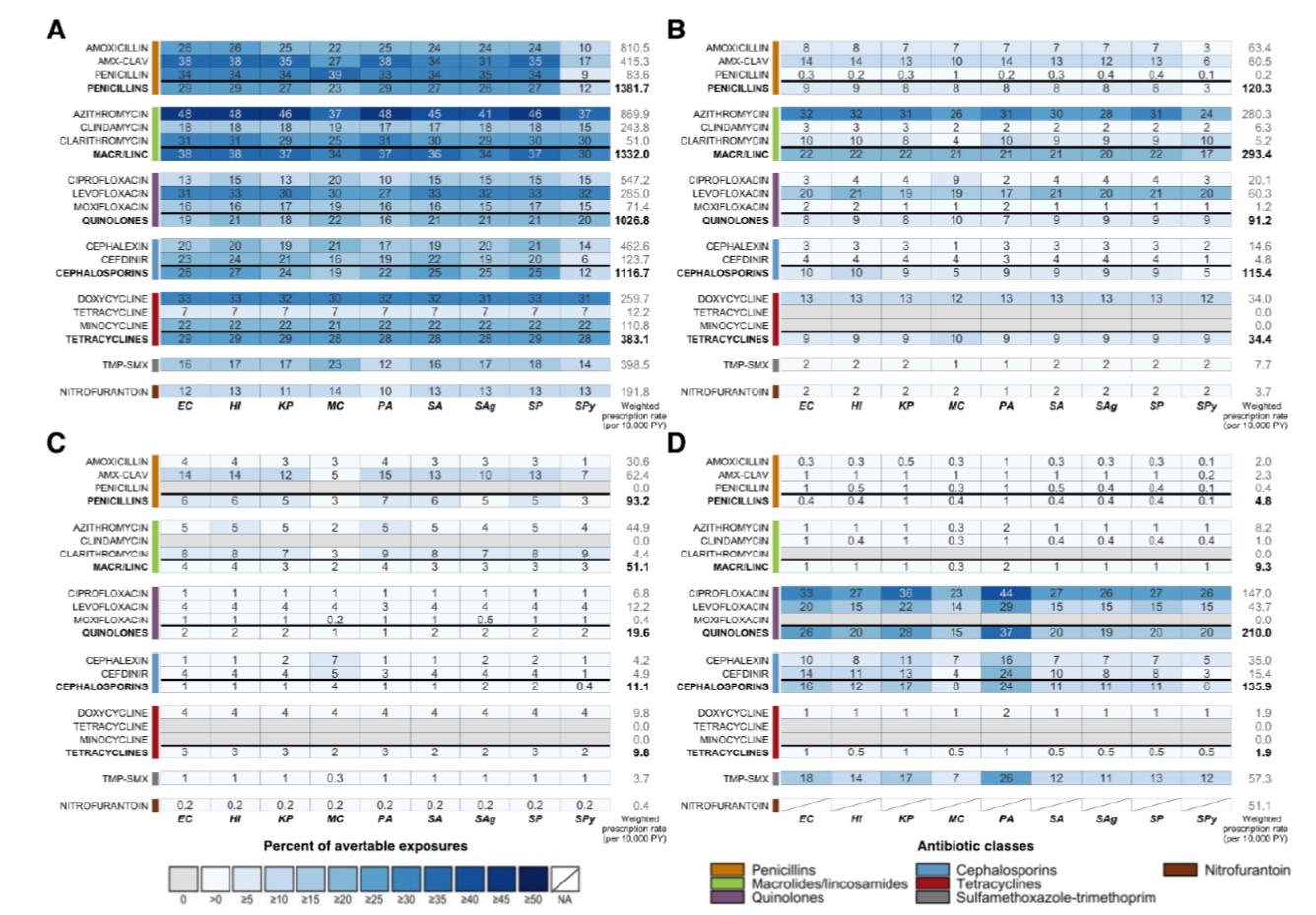
Heatmaps showing the estimated percentage of species exposures to each antibiotic or antibiotic class that could be averted if A: unnecessary antibiotic prescriptions across all outpatient conditions, B: all antibiotic use for outpatient respiratory conditions for which antibiotics are not indicated, C: all antibiotic use for acute sinusitis, or D: non-nitrofurantoin treatment of cystitis in women was eliminated. Drug class results include prescriptions of all antibiotics in that class, as identified by the Lexicon Plus classification system.
Abbreviations: Antibiotics (y-axis): AMX-CLAV=amoxicillin-clavulanate,, MACR/LINC=macrolides/lincosamides, TMP-SMX=sulfamethoxazole-trimethoprim;

Organisms (x-axis): EC=E. coli, HI=H. influenzae, KP=K. pneumoniae, MC=M. catarrhalis, PA=P. aeruginosa, SA=S. aureus, SAg=S. agalactiae, SP=S. pneumoniae, SPy=S. pyogenes; PY=person-years


The darker shades in panel A (scenario 1) clearly indicated that “elimination of unnecessary antibiotic prescriptions across all outpatient conditions would prevent 6 to 48% (IQR: 17 to 31%) of antibiotic-species exposures. If all unnecessary antibiotic use could be prevented, over 30% of exposures to amoxicillin-clavulanate, penicillin, azithromycin, clarithromycin, levofloxacin, and doxycycline across most potential pathogens of interest could be averted.

In panel D (scenario 4), they found that prescribing nitrofurantoin not only averted antibiotic exposure in non-causative bacterial species (bystanders) but also in causative species for cystitis in women.
Overall, 27% of ciprofloxacin use is associated with acute cystitis in women. Organisms that are not causative pathogens of cystitis have proportions of avertable exposures close to or less than 27%, but a substantially higher proportion of exposures could be averted among causative pathogens – 33%, 36%, and 44% of ciprofloxacin exposures to E. coli, K. pneumoniae, and P. aeruginosa, respectively.

The study addresses the limitations with regard to data availability and reporting in public database. Authors are cautious and point out,

It is important to note that the reduction in antibiotic exposures estimated here does not translate to the same reduction in the prevalence of resistance or in the morbidity and mortality attributable to resistance. Additionally, in this analysis, we give each exposure equal weight. However, the selective pressure imposed by a single exposure depends on a number of variables, including pharmacokinetics, pharmacodynamics, distribution of bacteria across body sites, and bacterial population size. For example, we might expect that the probability of resistance scales with population size, and thus that an exposure received by an individual with higher bacterial load will have a larger impact on resistance.

Overall, this study indeed provides evidence that “improved prescription of antibiotics has the potential to prevent antibiotic exposure experienced by bacterial species throughout microbiome.

February 1, 2020

Today’s Digest brings you an Outlook collection on human gut microbiome by Nature, a Hi-C investigation of the evolution of the gut microbiota, and be careful with the dust, there’s transferrable antimicrobial genes within!

Events

Reshaping the Microbiome through Nutrition – Nature Conference – San Diego, CA

General microbiology

Commensal Bacteroidetes protect against Klebsiella pneumoniae colonization and transmission through IL-36 signalling – Richard P. Sequeira et al. – Nature Microbiology

** The gut microbiome – Nature Outlook

Antimicrobial resistance

The negative cofactor 2 complex is a key regulator of drug resistance in Aspergillus fumigatus – Takanori Furukawa et al. – Nature Communications

Plasmid-mediated metronidazole resistance in Clostridioides difficile – Ilse M. Boekhoud et al. – Nature Communications

A Common Practice of Widespread Antimicrobial Use in Horse Production Promotes Multi-Drug Resistance – S. Álvarez–Narváez et al. – Scientific Reports

Surveys of knowledge and awareness of antibiotic use and antimicrobial resistance in general population: A systematic review – PLoS One

Antimicrobial resistance patterns and molecular resistance markers of Campylobacter jejuni isolates from human diarrheal cases – Mohamed Elhadidy et al. – PLoS One

Review: Antibiotic resistance: turning evolutionary principles into clinical reality – Dan I Andersson et al. – FEMS Microbiology Reviews

Antibiotic resistome associated with microbial communities in an integrated wastewater reclamation system – Kaifeng Yu et al. – Water Research

Human gut microbiome

** Tracking microbial evolution in the human gut using Hi-C reveals extensive horizontal gene transfer, persistence and adaptation – Eitan Yaffe & David A. Relman – Nature Microbiology

Growth effects of N-acylethanolamines on gut bacteria reflect altered bacterial abundances in inflammatory bowel disease – Nadine Fornelos et al. – Nature Microbiology

Human cancer microbiome

The Influence of Lung Microbiota on Lung Carcinogenesis, Immunity, and Immunotherapy – Ariel G. Ramírez-Labrada et al. – Trends in Cancer

Built environment microbiome

** Mobilizable antibiotic resistance genes are present in dust microbial communities – Sarah Ben Maamar et al. – PLoS Pathogens

Indoor and outdoor airborne bacterial and fungal air quality in kindergartens: seasonal distribution, genera, levels, and factors influencing their concentration – Farhad Mirkhond Chegini et al. – Building and Environment

Metabolomics

Targeted metabolomics of pellicle and saliva in children with different caries activity – Annika Schulz et al. – Scientific Reports

Animal experiments

Review: The role of the microbiota in sedentary life style disorders and ageing: Lessons from the animal kingdom – P.W. O’Toole & P.G. Shiels – Journal of Internal Medicine

Animal microbiome

Dietary effects on gut microbiota of the mesquite lizard Sceloporus grammicus (Wiegmann, 1828) across different altitudes – Nina Montoya-Ciriaco et al. – Microbiome

Late weaning is associated with increased microbial diversity and Faecalibacterium prausnitzii abundance in the fecal microbiota of piglets – Francesca Romana Massacci et al. – Animal Microbiome

Plant, root and soil microbiome

Effects of soil chemical properties and fractions of Pb, Cd, and Zn on bacterial and fungal communities – Xiaomei Pan et al. – Science of the Total Environment

Resilience of the microbial communities of semiarid agricultural soils during natural climatic variability events – Lumarie Pérez-Guzmán et al. – Applied Soil Ecology

Effects of microbial inoculants on the fermentation characteristics and microbial communities of sweet sorghum bagasse silage – Miaoyin Dong et al. – Scientific Reports

Water and extremophile microbiome

Diversity of Bacterial Community in the Oxygen Minimum Zones of Arabian Sea and Bay of Bengal as Deduced by Illumina Sequencing – Genevieve L. Fernandes et al. – Frontiers in Microbiology

Ionic Liquid Enriches the Antibiotic Resistome, Especially Efflux Pump Genes, Before Significantly Affecting Microbial Community Structure – Xiaolong Wang et al. – Environmental Science & Technology

Methane yield enhancement of mesophilic and thermophilic anaerobic co-digestion of algal biomass and food waste using algal biochar: Semi-continuous operation and microbial community analysis – Le Zhang et al. – Bioresource Technology

Characterization and co-occurrence of microbial community in epiphytic biofilms and surface sediments of wetlands with submersed macrophytes – Yuansi Liu et al. – Science of the Total Environment

Phages and viruses

** Giant virus diversity and host interactions through global metagenomics – Frederik Schulz et al. – Nature

Reassortment and adaptive mutations of an emerging avian influenza virus H7N4 subtype in China – Bingqian Qu et al. – PLoS One

Outbreak of Pneumonia of Unknown Etiology in Wuhan China: the Mystery and the Miracle – Hongzhou Lu et al. – Journal of Medical Virology

Bioinformatics

Comparing bioinformatic pipelines for microbial 16S rRNA amplicon sequencing – Andrei Prodan et al. – PLoS One

Microbes in the news

Walnuts May Benefit Gut Bacteria and Improve Heart Health – Karina Lichtenstein – Medicine Net

How to create living art with microbes – Eugenia Angulo – BBVA OpenMind

January 17, 2020

I 100% concur with Barak about our great Microbiome Digest, and we invite YOU to join us to create useful content for our community. Today’s Digest hopefully brings you much food for thought. I would draw your attention towards two papers about insecticide and antibiotic resistance. The first is about the mechanism for malaria transmitting mosquitoes to tolerate the common pesticide, pyrethroid. The second is on a potential genetic engineering approach to replacing antibiotic resistant plasmids with artificial ones. Of course, there are many more articles and news pieces to read from. Enjoy!

Jobs and Events

MICROBIOME CONNECT SKIN USA 2020 – Global Cosmetics News

Postdoc Computational and Statistical Analysis of Microbiome Data (0.8 – 1.0 FTE) – Universiteit Utrecht

Digest this! New exhibition explores the hidden world of microbes inside — and on — you! – Ottawa Citizen

Call for papers: Cancer Evolution and Metastasis – Genome Biology

General microbiology

Setting the agenda for social science research on the human microbiome – Beth Greenhough et al. – University of Nottingham

Exploring microbial worlds – Lei Tang – Nature Methods

Community-driven Metadata Standards for Agricultural Microbiome Research – JP. Dundore-Arias et al – Phytobiomes Journal

Antimicrobial/Insecticide resistance

Mobile resistome of human gut and pathogen drives anthropogenic bloom of antibiotic resistance – Kihyun Lee et al. – Microbiome

Structures of lipoprotein signal peptidase II from Staphylococcus aureus complexed with antibiotics globomycin and myxovirescin – Samir Olatunji et al. – Nature Communications

** A sensory appendage protein protects malaria vectors from pyrethroids – Victoria A. Ingham et al. – Nature

Press: Malaria-carrying mosquitoes get a leg up on insecticides – Flaminia Catteruccia – Nature

** Potentiation of curing by a broad-host-range self-transmissible vector for displacing resistance plasmids to tackle AMR – Alessandro Lazdins et al. – PLoS One

Promising antifungal activity of new oxadiazole against Candida krusei – Daniella Renata Faria et al. – PLoS One

Impact of multi-drug resistant bacteria on economic and clinical outcomes of healthcare-associated infections in adults: Systematic review and meta-analysis – Miquel Serra-Burriel et al. – PLoS One

Pregnancy and early life

The association between dietary patterns before and in early pregnancy and the risk of gestational diabetes mellitus (GDM): Data from the Malaysian SECOST cohort – Heng Yaw Yong et al. – PLoS One

Nucleic Acid-Based Screening of Maternal Serum to Detect Viruses in Women with Labor or PROM – Ankit A. Shah et al. – Reproductive Sciences

Provision of Lipid-Based Nutrient Supplements to Mothers During Pregnancy and 6 Months Postpartum and to Their Infants from 6 to 18 Months Promotes Infant Gut Microbiota Diversity at 18 Months of Age but Not Microbiota Maturation in a Rural Malawian Setting: Secondary Outcomes of a Randomized Trial – Arox W Kamng’ona et al. – The Journal of Nutrition

Human skin microbiome

Distribution of microbial communities and core microbiome in successive wound grades of diabetic foot ulcer individuals – Apoorva Jnana et al. – Applied and Environmental Microbiology

Review: The skin microbiome as a clinical biomarker in atopic eczema: Promises, navigation, and pitfalls – Matthias Reiger et al. – The Journal of Allergy and Clinical Immunology

Characterization and Analysis of the Skin Microbiota in Acne: Impact of Systemic Antibiotics – Seo-Yeon Park et al. – Journal of Clinical Medicine

Human gut microbiome

Review: Microbial Production of Bioactive Chemicals for Human Health – Xia Wu et al. – Current Opinion in Food Science

Gut microbiota compositional profile and serum metabolic phenotype in patients with primary open-angle glaucoma – Haijun Gong et al. – Experimental Eye Research

Inulin-type fructan intervention restricts the increase in gut microbiome–generated indole in patients with peritoneal dialysis: a randomized crossover study – Li Li et al. – The American Journal of Clinical Nutrition

Human reproductive microbiome

Review: The Reproductive Microbiome: An Emerging Driver of Sexual Selection, Sexual Conflict, Mating Systems, and Reproductive Isolation – Melissah Rowe et al. – Trends in Ecology & Evolution

Press: What we’re learning about the reproductive microbiome – Cell Press – Phys.org

Cancer microbiome

Assessment of peritoneal microbial features and tumor marker levels as potential diagnostic tools for ovarian cancer – Ruizhong Miao – PLoS One

Animal experiments

Acute oral methylmercury exposure perturbs the gut microbiome and alters gut-brain axis related metabolites in rats – Xiaoying Lin et al. – Ecotoxicology & Environmental Safety

Perfluorooctane sulfonate alters gut microbiota-host metabolic homeostasis in mice – Limin Zhang et al. – Toxicology

Fecal transplant prevents gut dysbiosis and anxiety-like behaviour after spinal cord injury in rats – Emma K. A. Schmidt et al. – PLoS One

Impact of antibiotic-resistant bacteria in the mouse intestine on immune activation and Clostridioides difficile infection – James Keith et al. – Infection and Immunity

Animal microbiome

Evolutionary signal in the gut microbiomes of 74 bird species from Equatorial Guinea – Darien C. Capunitan et al. – Molecular Ecology

Whole blood transcriptomic analysis of beef cattle at arrival identifies potential predictive molecules and mechanisms that indicate animals that naturally resist bovine respiratory disease – Matthew A. Scott et al. – PLoS One

Body-site specific microbiota reflect sex and age-class among wild spotted hyenas – Connie A Rojas et al. – FEMS Microbiology Ecology

Plant, root and soil microbiome

Biochar mediates microbial communities and their metabolic characteristics under continuous monoculture – Hongmiao Wu et al. – Chemosphere

Functional Metagenomic Exploration Identifies Novel Prokaryotic Copper Resistance Genes from Soil Microbiome – Chao Xing et al. – Metallomics

** A Pathogen-Responsive Gene Cluster for Highly Modified Fatty Acids in Tomato – Ju Eun Jeon et al. – Cell

Effects of soil physicochemical properties on microbial communities in different ecological niches in coastal area – Tianyun Shao et al. – Applied Soil Ecology

Soil microbial community structure and function mainly respond to indirect effects in a multifactorial climate manipulation experiment – Evi Deltedesco et al. – Soil Biology and Biochemistry

Long term effects of management practice intensification on soil microbial community structure and co-occurrence network in a non-timber plantation – Liang Xue et al. – Forest Ecology and Management

Soil microbial and macrofauna dynamics under different green manure termination methods – Carolyn B. Marshall & Derek H. Lynch – Applied Soil Ecology

Microbial abundance, composition, and function in nectar are shaped by flower visitor identity – Megan M Morris et al. – FEMS Microbiology Ecology

Ecological clusters based on responses of soil microbial phylotypes to precipitation explain ecosystem functions – Ying Wu et al. – Soil Biology and Biochemistry

Phylogenetic Analysis of Symbiotic Bacteria Associated with Two Vigna Species under Different Agro-Ecological Conditions in Venezuela – María Daniela Artigas Ramírez et al. – Microbes and Environments

Diversity and structure of bacterial community in rhizosphere of lima bean – Regina Maria Silva Sousa et al. – Applied Soil Ecology

Distinct factors drive the assembly of quinoa-associated microbiomes along elevation – Zhiquan Cai et al. – Plant and Soil

Influence of plant fraction, soil and plant species on the microbiota: a multi-kingdom comparison – Tkacz, A et al. – mBio

Spatial Variation in Soil Fungal Communities across Paddy Fields in Subtropical China – Pengfa Li et al. – mSystems

Water and extremophile microbiome

Impacts of antimony and arsenic co-contamination on the river sedimentary microbial community in an antimony-contaminated river – Rui Xu et al. – Science of the Total Environment

Interactions of PAH-degradation and nitrate-/sulfate-reducing assemblages in anaerobic sediment microbial community – Xunan Yang et al. – Journal Hazardous Materials

Influence of wastewater microbial community on the performance of miniaturized microbial fuel cell biosensor – Nan Xiao et al. – Bioresource Technology

Intra-host symbiont diversity in eastern Pacific cold seep tubeworms identified by the 16S-V6 region, but undetected by the 16S-V4 region – Corinna Breusing et al. – PLoS One

Phages and viruses

Biogeographic study of human gut-associated crAssphage suggests impacts from industrialization and recent expansion – Tanvi P. Honap et al. – PLoS One

Bioinformatics

Gclust: A Parallel Clustering Tool for Microbial Genomic Data – Ruilin Li et al. – Genomics, Proteomics & Bioinformatics

Microbes in the news

Insomnia: When I took part in a sleep study – Yella Hewings-Martin – Medical News Today

How to Keep Your Baby’s Skin Healthy When It’s Cold Outside – Joane Amay – Ebony

Prebiotics, cosmeceuticals may improve skin condition – Ingrid Torjesen – Dermatology Times

Next frontier is to identify and use good bacteria to treat specific diseases – Namita Kohli – The Week

Five next-gen depression treatments that could revolutionize the field – Alexandra Pattillo – Inverse

Coeliac disease linked to bacteria exposure – Liam Mannix – The Sydney Morning Herald

GETTING TO KNOW YOUR MICROBIOME BETTER – Kim-Anh Lê Cao – Pursuit

Common foods can help ‘landscape’ the jungle of our gut microbiome – San Diego State University – Medical Xpress

Pioneering scientists create designer prebiotics to disrupt the microbiome health space – Nikki Hancocks – NutraIngredients

Applying knowledge of the human microbiome to pig health – The Pig Site

Your microbiome reveals more about your health than your genes do – Michael Le Page – New Scientist

UH joins new national consortium to advance microbiome research – University of Hawaiʻi at Mānoa

Check out these awesomely creepy puppets of microbial creatures – Thom Dunn – BoingBoing

Microbes on the market

Bloom Science Granted Exclusive Option to License Microbiome-Based Technology for the Development of Novel Treatments for Multiple Neurological and Oncology Conditions – Bloom Science – PR Newswire

Mawi and CosmosID Collaborate to Enable More Precise Microbiome Analysis – Business Wire – Yahoo! Finance

January 11, 2020

Science doesn’t rest! Today’s Digest brings you several seminal papers and many news pieces. Highlights include a mouse study probing the mechanism behind maternally provisioned immunity for infants, a major effect to characterize mouse gut microbiota, a study on the diversity of the uncultured viruses of bacteria and archaea, and last but not least, a DIY method to deplete ribosomal RNA from your total RNA!

General microbiology

Preprint: Detection of phylogenetic core groups in diverse microbial ecosystems – Marcos Parras-Moltó & Daniel Aguirre de Cárcer – bioRxiv

Antimicrobial resistance

Preprint: Investigating the impact of combination phage and antibiotic therapy: a modeling study – Selenne Banuelos et al. – bioRxiv

Human liver microbiome

Intrahepatic bacterial metataxonomic signature in non-alcoholic fatty liver disease – Silvia Sookoian et al. – Gut

Cancer microbiome

Review: Roles of microbiota in response to cancer immunotherapy – Kentaro Inamura – Seminars in Cancer Biology

Animal experiments

Butyrate attenuated fat gain through gut microbiota modulation in db/db mice following dapagliflozin treatment – Tae Jung Oh et al. – Scientific Reports

Microvesicles from Lactobacillus reuteri (DSM-17938) completely reproduce modulation of gut motility by bacteria in mice – Christine L. West et al. – PLoS One

** Mouse: Microbiota-targeted maternal antibodies protect neonates from enteric infection – Wen Zheng et al. – Nature

Press: Maternal Microbiome Protects Newborns from Deadly Diarrheal Infections – Genengnews

Animal microbiome

** The Mouse Gut Microbial Biobank expands the coverage of cultured bacteria – Chang Liu et al. – Nature Communications

Energy conservation involving 2 respiratory circuits – Marie Charlotte Schoelmerich et al. – PNAS

Press: New metabolic pathway discovered in rumen microbiome – EurekAlert

Plant, root and soil microbiome

Soil bacterial diversity mediated by microscale aqueous-phase processes across biomes – Samuel Bickel & Dani Or – Nature Communications

Fungal community assembly in drought-stressed sorghum shows stochasticity, selection, and universal ecological dynamics – Cheng Gao et al. – Nature Communications

Phages and viruses

** Charting the diversity of uncultured viruses of Archaea and Bacteria – F. H. Coutinho, R. A. Edwards & F. Rodríguez-Valera – BMC Biology

Technology

** Preprint: A simple, cost-effective, and robust method for rRNA depletion in RNA-sequencing studies – Peter H. Culviner et al. – bioRxiv

Microbes in the news

Gut Microbiomes Are Linked To Diet And Evolution—Except In Flying Animals – Linh Anh Cat – Forbes

7 Effects of Greasy Food on Your Body – Elise Mandl – Healthline

Gut microbes may improve stroke recovery – University of Kentucky – EurekAlert

Surprising Ways A Virus Can Be A Man’s Best Friend – Mishal Shaheen et al. – The Health Mania

Twin Studies Examine Cohabiting Affect on Gut Microbiome – Technology Networks

Microbes on the market

Shoreline Biome expands presence in Asia to include Japan – Yahoo! Finance

Synthetic Biologics Receives FDA Guidance at Type C Meeting for SYN-004 (ribaxamase) Phase 1b/2a Clinical Trial in Allogeneic HCT Recipients – Synthetic Biologics – PR Newswire

Johnson & Johnson To Collaborate With Microbiome Biotech On Childhood Allergies – Taylor Carmichael – The Motley Fool

Kaleido Bio teams up with J&J to identify microbiome metabolic candidates – Douglas W. House – Seeking Alpha

Finch Therapeutics Completes Enrollment in Potentially Pivotal Trial of CP101, an Investigational Oral Full-Spectrum Microbiota® Therapy for the Prevention of Recurrent C. difficile Infection – The Tullahoma News

December 27, 2019

Today’s Digest brings you a report linking gut microbiota and metabolites, a study on dishwasher rubber as a bacterial reservoir, a news piece for your guide to probiotics, and many more. If we don’t see you again in 2019, Happy New Year! May 2020 bring much success and happiness!

General microbiology

Preprint: The Microbe Directory v2.0: An Expanded Database of Ecological and Phenotypical Features of Microbes – Maria A. Sierra et al. – bioRxiv

A novel graph theoretical approach for modeling microbiomes and inferring microbial ecological relationships – Suyeon Kim et al. – BMC Genomics

Antimicrobial resistance

Preprint: Longitudinal linked read sequencing reveals ecological and evolutionary responses of a human gut microbiome during antibiotic treatment – Morteza Roodgar et al. – bioRxiv

Human oral microbiome

Re-initiation of Oral Food Intake Following Enteral Nutrition Alters Oral and Gut Microbiota Communities – Sayaka Katagiri et al. – Frontiers in Cellular and Infection Microbiology

Human respiratory microbiome

Microbiome in Chronic Obstructive Pulmonary Disease: Role of Natural Products Against Microbial Pathogens – Alessia Santoro et al. – Current Medicinal Chemistry

Human gut microbiome

Comparison of Japanese and Indian intestinal microbiota shows diet-dependent interaction between bacteria and fungi – Siddhika Pareek et al. – npj Biofilms and Microbiomes

Review: The influence of dietary patterns on gut microbiome and its consequences for nonalcoholic fatty liver disease – Qing-Song Zhang et al. – Trends in Food Science and Technology

** Relationship between gut microbiota and circulating metabolites in population-based cohorts – Dina Vojinovic et al. – Nature Communications

Human gut microbiota is associated with HIV-reactive immunoglobulin at baseline and following HIV vaccination – Jacob A. Cram et al. – PLoS One

Preprint: The interplay between host genetics and the gut microbiome reveals common and distinct microbiome features for human complex diseases – Fengzhe Xu & Yuanqing Fu et al. – bioRxiv

Effect of Helicobacter pylori on gastrointestinal microbiota: a population-based study in Linqu, a high-risk area of gastric cancer – Yang Guo et al. – Gut

Human gut-microbiome-brain axis

The relationship between the gut microbiome and mild cognitive impairment in patients without dementia: a cross-sectional study conducted in Japan – Naoki Saji et al. – Scientific Reports

Synergistic effects of APOE and sex on the gut microbiome of young EFAD transgenic mice – Juan Maldonado Weng et al. – Molecular Neurodegeneration

Metabolomics

Tech Note: Boost that metabolomic confidence – Vivien Marx – Nature Methods

The total microbiome functions in bacteria and fungi – Robert Starke et al. – Journal of Proteomics

Animal experiments

Allergic inflammation alters the lung microbiome and hinders synergistic co-infection with H1N1 influenza virus and Streptococcus pneumoniae in C57BL/6 mice – Kim S. LeMessurier et al. – Scientific Reports

Jatrorrhizine Balances the Gut Microbiota and Reverses Learning and Memory Deficits in APP/PS1 transgenic mice – Sheng Wang et al. – Scientific Reports

The impact of gut microbiota manipulation with antibiotics on colon tumorigenesis in a murine model – Jae Gon Lee et al. – PLoS One

Maternal milk and fecal microbes guide the spatiotemporal development of mucosa-associated microbiota and barrier function in the porcine neonatal gut – Hongbin Liu et al. – BMC Biology

Built environment microbiome

** The dishwasher rubber seal acts as a reservoir of bacteria in the home environment – Jerneja Zupančič et al. – BMC Microbiology

Plant, root and soil microbiome

Development of microbial communities in organochlorine pesticide contaminated soil: A post-reclamation perspective – Helga E.Balázs et al. – Applied Soil Ecology

Towards simple tools to assess functional effects of contaminants on natural microbial and invertebrate sediment communities – Stéphane Pesce et al. – Environmental Science and Pollution Research

Core rhizosphere microbiomes of dryland wheat are influenced by location and land-use history – Daniel C Schlatter et al. – Applied and Environmental Microbiology

Water and extremophile microbiome

Single molecule sequencing reveals response of manganese-oxidizing microbiome to different biofilter media in drinking water systems – Xin Zhao et al. – Water Research

Prokaryotic Population Dynamics and Viral Predation in a Marine Succession Experiment Using Metagenomics – Jose M. Haro-Moreno et al. – Frontiers in Microbiology

Phages and viruses

News & Views: Phages build anti-defence barriers – Eugene V. Koonin & Mart Krupovic – Nature Microbiology

Microbes in the news

The Best Thing That Happened This Week: Dogs Rule Because They Drool – Sandy Hingston – Philadelphia Magazine

** A guide to the best probiotics – Louisa Richards/Katherine Marengo – Medical News Today

Having a Dog as a Child Is Tied to a Lower Risk of Schizophrenia as an Adult – Nicholas Bakalar – New York Times

Expanding virophage diversity – DOE/Joint Genome Institute

Microbes on the market

Carbiotix to partner with Italian university on neuroinflammation project – Nathan Gray – Nutraingredients

Human Microbiome Market is Expected to Touch US$ 1888.9 Mn by 2026 – Sheila Shipman – News Cast Report

The next frontier – Aaron Massecar – Today’s Veterinary Business