November 24, 2024

Human and General Microbiome

Spatially restricted immune and microbiota-driven adaptation of the gut – Toufic Mayassi – Nature

Bacterial interactions underpin worsening lung function in cystic fibrosis-associated infections – Damian W Rivett – mBio

Aerobic bacterial group as an early-stage biomarker from faecal samples of patients with colorectal cancer without distant metastasis – D Lee – Beneficial Microbes

The Parkinson’s disease drug entacapone disrupts gut microbiome homoeostasis via iron sequestration – Fátima C Pereira – Nature Microbiology

Coffee consumption is associated with intestinal Lawsonibacter asaccharolyticus abundance and prevalence across multiple cohorts – Paolo Manghi – Nature Microbiology

Enteric bacterial infection stimulates remodelling of bile metabolites to promote intestinal homeostasis – Ting Zhang – Nature Microbiology

Microbiome-Based Colon Cancer Patient Stratification and Survival Analysis – Joshua Smyth – Cancer Medicine

Why HPV16? Why, now, HPV42? How the discovery of HPV42 in rare cancers provides an opportunity to challenge our understanding about the transition between health and disease for common members of the healthy microbiota – Ignacio G Bravo – FEMS Microbiology Reviews

Acarbose impairs gut Bacteroides growth by targeting intracellular glucosidases – Haley A Brown – mBio

Review: More than just a number: the gut microbiota and brain function across the extremes of life – Nathan D Nuzum – Gut Microbes

Review: Microbiota-derived small molecule genotoxins: host interactions and ecological impact in the gut ecosystem – Ellen L Zechner – Gut Microbes

Review: Citizen science as an instrument for women’s health research – Sarah Ahannach – Nature Medicine

Review: Normal Gut Microbiomes in Diverse Populations: Clinical Implications – Omprakash Shete – Annual Review of Medicine

Review: Synthetic Ecosystems: From the Test Tube to the Biosphere – Ricard Solé – ACS Synthetic Biology

Animal Model Microbiome

Limosilactobacillus reuteri ameliorates maternal separation stress in newborn mice and alters subsequent adult behaviour – Z M Saleh – Beneficial Microbes

Sodium oligomannate disrupts the adherence of Rib(high) bacteria to gut epithelia to block SAA-triggered Th1 inflammation in 5XFAD transgenic mice – Xinyi Wang – Cell Discovery

B. vulgatus ameliorates high-fat diet-induced obesity through modulating intestinal serotonin synthesis and lipid absorption in mice – Xinxin Wen – Gut Microbes

Animal Microbiome

Multiomics of yaks reveals significant contribution of microbiome into host metabolism – Shuli Yang – NPJ Biofilms and Microbiomes

Single-strain probiotics enhance growth, anti-pathogen immunity, and resistance to Nocardia seriolae in grey mullet (Mugil cephalus) via gut microbiota modulation – Ching-Hung Chan – Animal Microbiome

The gut microbiota of three avian species living in sympatry – Hugo Pereira – BMC Ecology and Evolution

Butyrate reduces epithelial barrier dysfunction induced by the foodborne mycotoxin deoxynivalenol in cell monolayers derived from pig jejunum organoids – Julie Alberge – Gut Microbes

Plant Microbiome

Trophic modulation of endophytes by rhizosphere protists – Rasit Asiloglu – The ISME Journal

Metagenome-based diversity and functional analysis of culturable microbes in sugarcane – Haidong Lin – Microbiology Spectrum

Root hair developmental regulators orchestrate drought triggered microbiome changes and the interaction with beneficial Rhizobiaceae – Zhenghong Wang – Nature Communications

Functional diversity of the above-ground fungal community under long-term integrated, organic and biodynamic Vineyard Management – Katharina Steng – Environmental Microbiome

Environmental Microbiome

A functional microbiome catalogue crowdsourced from North American rivers – Mikayla A Borton – Nature

Experimental evolution at ecological scales allows linking of viral genotypes to specific host strains – María Dolores Ramos-Barbero – The ISME Journal

Selenium alters the gene content but not the taxonomic composition of the soil microbiome – Alison E Bennett – Environmental Microbiome

Evaluation of microbial community dynamics and chlorinated solvent biodegradation in methane-amended microcosms from an acidic aquifer – Myung Hwangbo – Biodegradation

Viruses

Rotavirus rewires host cell metabolic pathways toward glutamine catabolism for effective virus infection – Suvrotoa Mitra – Gut Microbes

Microbiome Analysis

SPARTA: Interpretable functional classification of microbiomes and detection of hidden cumulative effects – Baptiste Ruiz – PLoS Computational Biology

Micro-DeMix: a mixture beta-multinomial model for investigating the heterogeneity of the stool microbiome compositions – Ruoqian Liu – Bioinformatics

November 13, 2024

Today we are highlighting a recent call to action by leading scientists and scientific organizations around the globe aimed at drawing attention to the increasingly urgent climate catastrophe. The authors argue for the use of microbe-based solutions that could be promising in addressing the crisis, and yet are not used effectively at scale. Here we’ve included links to the press release and the journals which have jointly published the paper:

[PRESS RELEASE] Scientists issue call to action underlining importance of microbial solutions to tackle climate crisis – Linda Stewart – The Microbiologist by Applied Microbiology International

Microbial solutions must be deployed against climate catastrophe – Raquel Peixoto, Christian R Voolstra, Lisa Y Stein, Philip Hugenholtz, Joana Falcao Salles, Shady A Amin, Max Häggblom, Ann Gregory, Thulani P Makhalanyane, Fengping Wang, Nadège Adoukè Agbodjato, Yinzhao Wang, Nianzhi Jiao, Jay T Lennon, Antonio Ventosa, Patrik M Bavoil, Virginia Miller, Jack A Gilbert – Sustainable Microbiology

The paper can also be found in journals published by FEMS, ISME, ASM, and Nature.

Human gut microbiome

Predictable regulation of gut microbiome in immunotherapeutic efficacy of gastric cancer – Wei Gao et al – Genes & Immunity

Multimodal analysis identifies microbiome changes linked to stem cell transplantation-associated diseases – Alejandro Artacho et al – BMC Microbiome

Human oral microbiome

Large-scale metagenomic analysis of oral microbiomes reveals markers for autismspectrum disorders – Paolo Manghi et al – Nature Communications

[REVIEW] Viral infection and antiviral immunity in the oral cavity – Heather D. Hickman & Niki M. Moutsopoulos – Nature Reviews Immunology

Nepali oral microbiomes reflect a gradient of lifestyles from traditional to industrialized – Eria P. Ryu et al – BMC Microbiome

Human respiratory microbiome

Major alteration of lung microbiome and the host responses in critically ill COVID-19 patients with high viral load – Ingrid G. Bustos et al – Scientific Reports

Human skin microbiome

The healing process of diabetic ulcers correlates with changes in the cutaneous microbiota – Emanuele Bruni et al – Scientific Reports

Soil microbiome

Microplastic diversity increases the abundance of antibiotic resistance genes in soil – Yi-Fei Wang et al – Nature Communications

Built environment microbiome

Moving beyond species: fungal function in house dust provides novel targets for potential indicators of mold growth in homes – Neeraja Balasubrahmaniam et al – BMC Microbiome

Animal microbiome

Reef site and habitat influence effectiveness of Acropora palmata restoration and its microbiome in the Florida Keys – Stephanie M. Rosales et al – Nature Communications Earth & Environment

Melatonin alleviates heat stress-induced spermatogenesis dysfunction in male dairy goats by regulating arachidonic acid metabolism mediated by remodeling the gut microbiota – Xinrui Guo et al – BMC Microbiome

Pathobiont and symbiont contribute to microbiota homeostasis through Malpighian tubules-gut countercurrent flow in Bactrocera dorsalis – Yanning Liu et al – ISME Journal

Medium-chain fatty acid triglycerides improve feed intake and oxidative stress of finishing bulls by regulating ghrelin concentration and gastrointestinal tract microorganisms and rumen metabolites – Jiaming Luan et al – BMC Microbiome

Intestinal commensal bacteria promote Bactrocera dorsalis larval development through the vitamin B6 synthesis pathway – Jian Gu et al – BMC Microbiome

Water & extremophile microbiome

Latitudinal gradients and ocean fronts strongly influence protist communities in the southern Pacific Ocean – Daniela Sturm et al – FEMS Microbial Ecology

Urea assimilation and oxidation support activity of phylogenetically diverse microbial communities of the dark ocean – Nestor Arandia-Gorostidi et al – ISME Journal

Bioinformatics & tools

MAGqual: a stand-alone pipeline to assess the quality of metagenome-assembled genomes – Annabel Cansdale & James P.J. Chong – BMC Microbiome

October 2, 2024

Gut Microbiome

Gut microbiota wellbeing index predicts overall health in a cohort of 1000 infants – Brandon Hickman et al – Nature Communications

Pangenomes of human gut microbiota uncover links between genetic diversity and stress response – Saar Shoer et al – Cell Host & Microbe

[MINI REVIEW] The human gut microbiome in health and disease: time for a new chapter? – Jee-Yon Lee et al – ASM Infection & Immunity

Metabolic interactions shape emergent biofilm structures in a conceptual model of gut mucosal bacterial communities – Amin Valiei et al – NPJ Biofilms & Microbiomes

A population-scale analysis of 36 gut microbiome studies reveals universal species signatures for common diseases – Wen Sun et al – NPJ Biofilms & Microbiomes

A single amplified genome catalog reveals the dynamics of mobilome and resistome in the human microbiome – Tetsuro Kawano-Sugaya et al – BMC Microbiome

Stratification of human gut microbiomes by succinotype is associated with inflammatory bowel disease status – Laura Anthamatten et al – BMC Microbiome

Impact of complementary feeding on infant gut microbiome, metabolites and early development – Yudong Shi et al – Food & Function

Can longer lifespan be associated with gut microbiota involvement in lipid metabolism? – Sára Šardzíková et al – FEMS Microbiology Ecology

Beneficial microbes & compounds

[REVIEW] Preventive effect of probiotics on oral mucositis induced by anticancer therapy: a systematic review and meta-analysis of randomized controlled trials – Bo Yang et al – BMC Oral Health

Animal Microbiome

Bacteria from the Amycolatopsis genus associated with a toxic bird secrete protective secondary metabolites – Elena Seibel et al – Nature Communications

Impact of virginiamycin on the ruminal microbiota of feedlot cattle – Bruna Parapinski Santos – Canadian Journal of Veterinary Research

Microbiome of death

From carrion to soil: microbial recycling of animal carcasses – Jennifer M. DeBruyn et al – Cell Trends in Microbiology

Water & extremophile microbiome

Microbiome–metabolite linkages drive greenhouse gas dynamics over a permafrost thaw gradient – Viviana Freire-Zapata et al – Nature Microbiology

Prescribed fire regimes influence responses of fungal and bacterial communities on new litter substrates in a brackish tidal marsh – Viet Q. Dao et al – PLOS One

Plant, root & soil microbiome

The phyllosphere of Nigerian medicinal plants, Euphorbia lateriflora and Ficus thonningii is inhabited by a specific microbiota – Anderson O. Oaikhena et al – Scientific Reports

Water‒soil-air‒plant mutual feedback mechanism under the application of red bed composite polymers – Tianpeng Chen et al – PLOS One

Diversity and community distribution of soil bacterial in the Yellow River irrigation area of Ningxia, China – Xia Wu et al – PLOS One

Bioinformatics & tools

Strain-resolved de-novo metagenomic assembly of viral genomes and microbial 16S rRNAs – Annika Jochheim et al – BMC Microbiome

August 28, 2024

Human gut microbiome

[REVIEW] Feeding gut microbes to nourish the brain: unravelling the diet–microbiota–gut–brain axis – Elizabeth Schneider et al – Nature Metabolism

Elucidating human gut microbiota interactions that robustly inhibit diverse Clostridioides difficile strains across different nutrient landscapes – Jordy Evan Sulaiman et al – Nature Communications

Fecal microbiota transplantation influences microbiota without connection to symptom relief in irritable bowel syndrome patients – Anna K. Hartikainen et al – NPJ Biofilms & Microbiomes

Impact of probiotics on gut microbiome of extremely preterm or extremely low birthweight infants – Lauren C. Beck et al – Nature Pediatric Research

Effect of Helicobacter pylori on sleeve gastrectomy and gastric microbiome differences in patients with obesity and diabetes – Yong Suk Park et al – International Journal of Obesity

Mining human microbiomes reveals an untapped source of peptide antibiotics – Marcelo D.T. Torres et al – Cell

Both pathogen and host dynamically adapt pH responses along the intestinal tract during enteric bacterial infection – Sarah E. Woodward et al – PLOS Biology

Examination of sex-specific interactions between gut microbiota and host metabolism after 12-week combined polyphenol supplementation in individuals with overweight or obesity – Kelly M. Jardon et al – Gut Microbes

Human vaginal microbiome

The potential of residual clinical Group B Streptococcus swabs for assessing the vaginorectal microbiome in late pregnancy – Laura K. Boelsen et al – Scientific Reports

Animal models

Sex-dependent effects of a high fat diet on metabolic disorders, intestinal barrier function and gut microbiota in mouse – Candice Lefebvre et al – Scientific Reports

Animal microbiome

16S rRNA metabarcoding for the identification of tick-borne bacteria in ticks in the Republic of Korea – Badriah Alkathiri et al – Scientific Reports

The bacterial microbiome and resistome of house dust mites in Irish homes – Amal Aljohani et al – Scientific Reports

Social environment influences microbiota and potentially pathogenic bacterial communities on the skin of developing birds – Ester Martínez-Renau – BMC Animal Microbiome

16S amplicon-based microbiome biomapping of a commercial broiler hatchery – Michael J. Rothrock Jr. et al – BMC Animal Microbiome

Phages & viruses

[REVIEW] Renewed insights into Ackermannviridae phage biology and applications – Anders Nørgaard Sørensen & Lone Brøndsted – NPJ Viruses

Adaptation strategies of giant viruses to low-temperature marine ecosystems – Marianne Buscaglia et al – ISME Journal

Targeted viromes and total metagenomes capture distinct components of bee gut phage communities – Dino Lorenzo Sbardellati et al – BMC Microbiome

Plant, root & soil microbiome

Soil health is associated with higher primary productivity across Europe – Ferran Romero et al – Nature Ecology & Evolution

Pathogen-driven Pseudomonas reshaped the phyllosphere microbiome in combination with Pseudostellaria heterophylla foliar disease resistance via the release of volatile organic compounds – Qing-Song Yuan et al – BMC Environmental Microbiome

Water & extremophile microbiome

Impact of temperature and water source on drinking water microbiome during distribution in a pilot-scale study – Fien Waegenaar et al – NPJ Clean Water

Metagenomics analysis of sewage for surveillance of antimicrobial resistance in South Africa – Anthony M. Smith et al – PLOS One

Nitrite-oxidizing bacteria adapted to low oxygen conditions dominate nitrite oxidation in marine oxygen minimum zones – Samantha G Fortin et al – ISME Journal

Niche separation in bacterial communities and activities in porewater, loosely attached, and firmly attached fractions in permeable surface sediments – Chyrene Moncada et al – ISME Journal

Microbial assemblages and associated biogeochemical processes in Lake Bonney, a permanently ice-covered lake in the McMurdo Dry Valleys, Antarctica – Hanbyul Lee et al – BMC Environmental Microbiome

Tools & methods

Intestinal organ chips for disease modelling and personalized medicine – Alican Özkan et al – Nature Reviews Gastroenterology & Hepatology

MICROPHERRET: MICRObial PHEnotypic tRait ClassifieR using Machine lEarning Techniques – Edoardo Bizzotto et al – BMC Environmental Microbiome

refMLST: reference-based multilocus sequence typing enables universal bacterial typing – Mondher Khdhiri et al – BMC Bioinformatics

Smccnet 2.0: a comprehensive tool for multi-omics network inference with shiny visualization – Weixian Liu et al – BMC Bioinformatics

General microbiology and science, October 14, 2014

A living review of multivariate techniques, spatial organizations of bacterial genomes, and metabolomics of wetlands, pigs, marine bacteria and free-living humans.

Bioinformatics

* A Guide to Statistical Analysis in Microbial Ecology: a community-focused, living review of multivariate data analyses – Pier Luigi Buttigieg – FEMS Microbiology Ecology

“we present the GUide to STatistical Analysis in Microbial Ecology (GUSTA ME): a dynamic, web-based resource providing accessible descriptions of numerous multivariate techniques relevant to microbial ecologists”

Techniques

New approaches to understanding the spatial organization of bacterial genomes – Tung BK Le, Michael T Laub – Current Opinion in Microbiology

“Here, we review the current arsenal of techniques used to query chromosome structure”

Development of Clamping Probe for Rare DNA Detection using Universal Primers – Meyong il Kim – E-FAS Journal

“In this study, we evaluated the efficiency of rare gene detection for two kinds of clamping probes which were successfully utilized for eukaryotic symbiont analysis”

Metabolomics

Microbial community metabolic function in subsurface flow constructed wetlands of different designs – Mark Button – Ecological Engineering

“Microbial community function followed a clear gradient along the flow direction. Metabolic profiles were system specific (horizontal, vertical, and aerated).”

A high fat, high choleststerol diet leads to changes in metabolite patterns in pigs – a metabolomic study – Jianghao Sun – Food Chemistry

“Extracts of plasma, fecal and urine samples from pigs fed high fat or basal regular diets for 11 weeks were analyzed using ultra-high performance liquid chromatography with high-resolution mass spectrometry “

Free-living individuals – as in “not in prison”?
An NMR metabolomics approach reveals a combined-biomarkers model in a wine interventional trial with validation in free-living individuals of the PREDIMED study – Rosa Vázquez-Fresno – Metabolomics

A High-Resolution LC-MS-Based Secondary Metabolite Fingerprint Database of Marine Bacteria – Liang Lu – Nature Scientific Reports

“Till now, 1,430 bacterial strains spanning 168 known species collected from different marine environments were cultured and profiled. “

Viruses and phages

Ribonucleotide reductases reveal novel viral diversity and predict biological and ecological features of unknown marine viruses – Eric G. Sakowski – PNAS USA

“We identify ribonucleotide reductase (RNR) genes as superior markers of viral diversity. RNR genes are distributed over a broad range of viruses”

More microbiology

Strength in Diversity – Daniel J. Wolter, Lucas R. Hoffman – Cell Host & Microbe

“In this issue of Cell Host & Microbe, Hammer et al. (2014) show that distinct, slow-growing bacteria have better in vitro and in vivo growth and virulence when cocultured than in isolation. “

The Journal of Infectious Diseases has a special Issue on Polio: The Final Phase of Polio Eradication and Endgame Strategies for the Post-Eradication Era – Journal of Infectious Diseases

Science, publishing, career

Correcting the scientific record: An introduction to retractions – Bonnie Swoger – Scientific American

“Although the system is far from perfect, the retraction process is one of the ways in which the scientific literature corrects itself over time.”


Bik’s Picks

When Racism Was a Science – ‘Haunted Files: The Eugenics Record Office’ Recreates a Dark Time in a Laboratory’s Past – Joshua A. Krisch – New York Times

“In its heyday, the office was the premier scientific enterprise at Cold Spring Harbor. There, bigoted scientists applied rudimentary genetics to singling out supposedly superior races and degrading minorities. “

Paul Ryan: Science doesn’t get climate change – Jane C. Timm – MSNBC

“A full 97% of researchers taking a stance on climate change say it’s man-made, as do 97-98% of the most frequently-published climate scientists. But according to Wisconsin Rep. Paul Ryan, they’re all wrong.”

Get fish fry with a side of science at ‘Science of the Supper Club’ this Friday – Lindsay Christians – The Capital Times

“Science is everywhere, even at a Friday night fish fry. That’s the message of a new event this Friday called “Science of Supper Clubs,” part of the four-day Wisconsin Science Festival held at various venues around the state.”

[hr] [hr]

General microbiology and science digest, October 6, 2014

Phages to reduce biofilms or monitor virus outbreaks, binning metagenomic reads, lots of microbes in the news. In Bik’s Picks, we have the 2014 Nobel Prize for Medicine and a giant ant nest.


More Microbes

Combined Use of Bacteriophage K and a Novel Bacteriophage To Reduce Staphylococcus aureus Biofilm Formation – D. R. Alves – Applied and Environmental Microbiology

“DRA88 was mixed with phage K to produce a high-titer mixture that showed strong lytic activity against a wide range of S. aureus isolates, including representatives of the major international MRSA clones and coagulase-negative Staphylococcus. “

Detection of Pathogenic Viruses in Sewage Provided Early Warnings of Hepatitis A Virus and Norovirus Outbreaks – Maria Hellmér – Applied and Environmental Microbiology

“ In this study, the presence of eight pathogenic viruses (norovirus, astrovirus, rotavirus, adenovirus, Aichi virus, parechovirus, hepatitis A virus [HAV], and hepatitis E virus) was investigated in sewage to explore whether their identification could be used as an early warning of outbreaks. “

Bioinformatics

New software aims to improve sorting the microbiome – The Cherry Creek News

“MaxBin automates the binning of assembled metagenomic scaffolds using an expectation-maximization algorithm after the assembly of metagenomic sequencing reads,” says Singer, a chemist who also holds an appointment with Berkeley Lab’s Earth Sciences Division. “

Microbes in the news

* King’s launches British Gut – King’s College London

“British Gut – the UK’s largest open-source science project to understand the microbial diversity of the human gut – has been launched today by the Department of Twin Research at King’s College London, in collaboration with American Gut.”

Pay attention to your gut bacteria – Charles Wallace – Financial Times

“A number of organisations, such as Mr Leach’s own American Gut project and the commercial venture uBiome, offer an analysis of the bacteria in your gut for about $100. “

Home sweet microbiome – By Scott LaFee – UT San Diego

“The University of Chicago recently published findings from its Home Microbiome Project, which surveyed the domiciles of seven families: 18 people, three dogs and one cat.”

Medical superbugs: Antibiotic-resistant bacteria carried by more than a third of nursing home residents, study – ABC Australia

“Scientists from Monash University swabbed more than a 100 residents from four high-care facilities across the city.”

Special bacteria, 13000 cleaners to clean Dhaka – Rezaul Hoque – BDNews

“This special kind of microorganism will be sprayed on waste dumps. The spray has been developed in Thailand. We have introduced it here in Bangladesh with the aid of a Malaysian company.””

Yogurt bacteria could replace colonoscopies for cancer detection – Billy Steele – EnGadget

“MIT professor Sangeeta Bhatia is working on engineered bacteria that detects colorectal cancer. After the nanoparticles pass through the digestive system, a urine sample shows results on a reactive paper — similar to that of a pregnancy test.”

Science and Publishing

Adjudicating “misbehavior”: how can scientists respond when they don’t get fair credit? –  Janet D. Stemwedel – Scientific American

“Denying someone of fair credit for the contribution they made to a piece of research is not a good thing. But who can you turn to if someone does it to you? “

Twitter’s science stars, the sequel – John Travis – Science

“We listed. You tweeted (often in outrage). We listened (mostly). And now we’re doubling down on our recent list of Twitter’s 50 most popular researchers with a revision that names 100 of the most followed scientists on the social media platform. “

Bik’s Picks

2014 Nobel Prize in Physiology or Medicine: Cells that constitute a positioning system in the brain – Science Daily

“The 2014 Nobel Prize in Physiology or Medicine has been awarded to John O´Keefe, May-Britt Moser and Edvard I. Moser for their discoveries of cells that constitute a positioning system in the brain.”

Concrete Cast of Ant Nest Reveals Huge Underground Metropolis – Lisa Winter – IFL Science

“Through a process that took a few months, researchers made a cast of an anthill by pumping it full of concrete, allowing it to cure and dry, then excavating it out to explore the intricacies of the ant civilization. “

Tall tale: scientists unravel the genetics of human height – Will Dunham – Daily Mail

“Researchers on Sunday unveiled what they called the biggest such study to date, analyzing genome data from more than a quarter million people to identify nearly 700 genetic variants and more than 400 genome regions relating to height.”

[hr]

General microbiology and science

Virus reactivation in sepsis, influenza mixing, and Dr. Bik’s Picks, featuring animals predicting the World Cup results, and which friends to take with you to Mars.

Infection and host response

Screen Shot 2014-06-13 at 11.39.47 PMReactivation of Multiple Viruses in Patients with Sepsis – Andrew H. Walton – PLOS ONE

“A small subgroup of septic patients had markedly elevated viral loads (>104–106 DNA copies/ml blood) for CMV, EBV, and HSV. Excluding TTV, DNAemia was uncommon in critically-ill non-septic patients and in age-matched healthy controls. Compared to septic patients without DNAemia, septic patients with viremia had increased fungal and opportunistic bacterial infections.”

 More microbes

Screen Shot 2014-06-14 at 12.30.41 AMDeadly airborne flu virus created in lab – not as bad as it sounds – Wendy Barclay – The Conversation

“Now scientists at the University of Wisconsin-Madison in the US have been criticised for recreating a very similar but distinct influenza virus by mixing together a set of genes taken from viruses of wild birds that are present in the gene pool today”

Screen Shot 2014-06-14 at 12.31.12 AMBelongs toCirculating Avian Influenza Viruses Closely Related to the 1918 Virus Have Pandemic Potential – Tokiko Watanabe – Cell Host Microbe

Human Ancestors Got Herpes from Chimps’ Ancestors – Agata Blaszczak-Boxe – LiveScience

“Researchers found that herpes simplex virus 1 (HSV-1) infected hominids before their evolutionary split from chimpanzees 6 million years ago”

Science and Art

Franklin InstituteA Show That Really Gets Into Your Head – ‘Your Brain’ Opens at the Franklin Institute – Edward Rothstein – New York Times

“In these cases, the brain leaps ahead of what the body senses, drawing conclusions. They are sometimes wrong, sometimes subtly correct and sometimes extraordinarily imaginative.”

Dr. Bik’s Picks – Weekend Edition

CatYes, You Can Get Your Cat to Behave – Wayne Pacelle – Live Science

Animals ‘Predict’ 2014 World Cup results (video) – BBC News

“China’s panda picker Ying Mei got off to a successful start, opting for the box of food emblazoned with a Brazilian flag, before the host nation beat Croatia 3-1.”

Bedtime Procrastination: Introducing a New Area of Procrastination – Floor Kroese – Frontiers in Psychology

“Introducing a novel domain in which procrastinators experience problems, bedtime procrastination appears to be a prevalent and relevant issue that is associated with getting insufficient sleep.”

Science Blogging Versus Science Journalism – Tommaso Dorigo – Science 2.0

“Hence I tried to organize my lecture as a discussion of things that science journalist wannabes could be interested to hear, from a scientist who has been blogging for 10 years and has picked up some tricks and lessons along the way.”

Skin cancer: Sunscreen ‘not complete protection’ – Helen Briggs – BBC News

“Sunscreen alone should not be relied on to prevent malignant melanoma, a deadly form of skin cancer, research suggests.”

Longread: Forget Calories – Counting calories is misguided. The focus belongs on real food – James Hamblin – The Atlantic

“In other words, your New Year’s resolution to lose weight probably won’t last through the spring, let alone affect how you look in a swimsuit in July.”

Longread: Extroverts Don’t Belong on Mars – Olga Khazan – The Atlantic

“Extroverted friends are good for a lot of things—serving as deft and lively wingmen, spicing up book club, sparking interesting conversations at parties by wearing ostentatious leggings, etc. One thing they may be less suited for: Long voyages to faraway planets.”

[hr]


Non-human microbiomes, June 5

Meta-analysis of avian gut microbiomes, mosquitos, microbes and oil-spills, and fungi and viruses found on corals and sponges.

Bird microbiome

Screen Shot 2014-06-05 at 11.23.11 AMCharacterizing the avian gut microbiota: membership, driving influences, and potential function – David W. Waite – Frontiers in Microbiology, Microbial Symbioses

“In this study, we present the first meta-analysis of the avian gut microbiota, using 16S rRNA gene sequences obtained from a range of publicly available clone-library and amplicon pyrosequencing data. “

Insect microbiome

Screen Shot 2014-06-05 at 11.24.12 AMPyrosequencing 16S rRNA genes of bacteria associated with wild tiger mosquito Aedes albopictus: a pilot study – Guillaume Minard – Frontiers in Cellular and Infection Microbiology

“We surveyed the bacteria associated with field populations of Ae. albopictus from Madagascar by pyrosequencing 16S rRNA gene amplicons. Different aspects of amplicon preparation and sequencing depth were tested to optimize the breadth of bacterial diversity identified”

Screen Shot 2014-06-05 at 11.24.56 AMMultifaceted Defense against Antagonistic Microbes in Developing Offspring of the Parasitoid Wasp Ampulex compressa (Hymenoptera, Ampulicidae) – Katharina Weiss – PLOS ONE

“Larvae of the emerald cockroach wasp, Ampulex compressa, sanitize their cockroach hosts, Periplaneta americana, with a cocktail of nine antimicrobials comprising mainly (R)-(-)-mellein and micromolide.”

Invertebrate microbiome

Screen Shot 2014-06-02 at 6.19.53 PMReview: Fungal association with sessile marine invertebrates – Oded Yarden – Frontiers in Microbiology, Microbial Symbioses

“The ecological function of fungi in association with sessile marine animals is complex and is founded on a combination of factors such as fungal origin, host health, environmental conditions and the presence of other resident or invasive microorganisms in the host.”

Screen Shot 2014-06-02 at 6.19.09 PMGenerating viral metagenomes from the coral holobiont – Karen D. Weynberg – Frontiers in Microbiology, Virology

“Here we present the first protocol for isolating, purifying and amplifying viral nucleic acids from corals based on mechanical disruption of cells. This method produces at least 50% higher yields of viral nucleic acids, has very low levels of cellular sequence contamination and captures wider viral diversity than previously used chemical-based extraction methods.”

Plant microbiome

Screen Shot 2014-06-05 at 11.26.58 AMColonization of plants by human pathogenic bacteria in the course of organic vegetable production – Andreas Hoffman – Frontiers in Microbiology, Plant-Microbe Interaction

“In this study laboratory experiments in axenic and soil systems following common practices in organic farming were conducted to identify the minimal dose needed for bacterial colonization of plants and to identify possible factors like bacterial species or serovariation, plant species or organic fertilizer types used, influencing the success of plant colonization by human pathogenic bacteria”

Water microbiome

Screen Shot 2014-06-05 at 11.28.03 AMThe polycyclic aromatic hydrocarbon degradation potential of Gulf of Mexico native coastal microbial communities after the Deepwater Horizon oil spill – Anthony D. Kappell – Frontiers in Microbiology, Aquatic Microbiology

“To investigate the Gulf Coast beach microbial community response to hydrocarbon exposure, we examined the functional gene diversity, bacterial community composition, and PAH degradation capacity of a heavily oiled and non-oiled beach following the oil exposure. “

Screen Shot 2014-06-05 at 11.36.29 AMComparison of prokaryotic community structure from Mediterranean and Atlantic saltern concentrator ponds by a metagenomic approach – Ana B. Fernández – Frontiers in Microbiology, Extreme Microbiology

“We analyzed the prokaryotic community structure of a saltern pond with 21% total salts located in Isla Cristina, Huelva, Southwest Spain, close to the Atlantic ocean coast. “

Screen Shot 2014-06-05 at 11.32.42 AMConversion of crude oil to methane by a microbial consortium enriched from oil reservoir production waters – Carolina Berdugo-Clavijo – Frontiers in Microbiology, Microbial Physiology and Metabolism

“Microbial community analysis revealed that the enrichment culture was dominated by members of the genus Smithella, Methanosaeta, and Methanoculleus. However, a shift in microbial community occurred following incubation of the enrichment in the sandstone columns. “

Screen Shot 2014-06-05 at 11.33.20 AMNatural oil slicks fuel surface water microbial activities in the northern Gulf of Mexico – Kai Ziervogel – Frontiers in Microbiology, Aquatic Microbiology

“These results demonstrate that the formation of oil slicks and activities of oil-degrading bacteria result in a temporal offset of microbial cycling of organic matter, affecting food web interactions and carbon cycling in surface waters over cold seeps.”

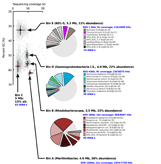
Screen Shot 2014-06-05 at 11.34.20 AMRecoding of the stop codon UGA to glycine by a BD1-5/SN-2 bacterium and niche partitioning between Alpha- and Gammaproteobacteria in a tidal sediment microbial community naturally selected in a laboratory chemostat – Anna Hanke – Frontiers in Microbiology, Evolutionary and Genomic Microbiology

“Metagenomics, proteomics and fluorescence in situ hybridization showed that this simplified community contained both a potential sulfur oxidizing Gammaproteobacteria (at 24 ± 2% abundance) and a member of the BD1-5/SN-2 candidate phylum (at 7 ± 6% abundance). “

Deep earth microbiome

Screen Shot 2014-06-05 at 11.35.07 AMChanges in the deep subsurface microbial biosphere resulting from a field-scale CO2 geosequestration experiment – Andre Mu – Frontiers in Microbiology, Terrestrial Microbiology

“This study demonstrates a successful new in situ sampling approach for detecting microbial community changes associated with an scCO2 geosequestration event.”

[hr]

Infection and host response digest – May 28, 2014

Hi all,

Today I’m just playing with different layouts for my digests, by splitting them up into smaller groups of topics. In this post, you will find dengue, phages, and infection/host response papers.

Dengue

Phages and viruses

Infection and Host ReponseScreen Shot 2014-05-28 at 7.32.41 PM

Staphylococcus aureus

Arsenic metabolism


[hr]