
Day 1 of the Kisaco North American Microbiome Congress


Today, I live tweeted from the 4th Annual North American Microbiome Congress, in Washington DC. Here are my tweets, nicely bundled for you, per talk.

In about 30 min, I will start live tweeting from the 4th Kisaco North American Microbiome Congress in Washington DC. @MBCongress @KisacoRes
Get your coffee ready and hear about the latest in Microbiome Research!

While I am going to grab a coffee, get ready for the morning session at the DC Microbiome Congress @KisacoRes with Jo Handelsman @Jo_Microbe and Jeff Leach.

Opening remarks by David Kyle, Evolve Biosystems

David Kyle of @EvolveBio will be the chair of this morning, and welcomes us all. He reminds us about all the great research that came out in the last decade.

David Kyle: The gut microbiome is sort of a complex organ that needs to be fed well. We sometimes damage it by antibiotics – which we should not eliminate, because they save lives! How can we return it to its original state after the use of antibiotics?
David Kyle: The first 100 days of life are fascinating. Immune system is learning what is self or not, microbiome is forming – infant nutrition is important.
David Kyle: In this congress we will hear about the impact of the microbiome on many aspects of physiology, skin, gut, brain. The microbiome has in impact on our whole body, this is a multidisciplinary field.
David Kyle: Let’s recognize that we are all students. We are all here to learn about this rapidly changing field. Please engage in questions! And make sure to network, and challenge each other. Let’s make this a melting pot of thoughts.

Jo Handelsman, Wisconsin Institute for Discovery – Welcome Address

Next up is Jo Handelsman @Jo_Microbe @jo44atWID @WIDiscovery who starts off with some remarkable words: “The most valuable citizen of the Earth was the microbe” – written by Mark Twain in “My 3000 Years with the Microbes”
Jo Handelsman: Catching up with Mark Twain: The number of microbiome publications and investment has increased incredibly. The White House Microbiome Initiative from 2016 played a big role.
Jo Handelsman: Microbes are connected to many different diseases, either being protective or associated. For example, work from the Jeff Gordon lab doing microbiome transfers from obese humans to germ-free mice.
Jo Handelsman: The microbiome plays roles in most chronic diseases. Most stunningly and un-anticipated, there are associations between the microbiome and the brain. Depression, autism, Alzheimers, have all been linked to microbiome composition.
Jo Handelsman: These diseases can e.g. be transferred by fecal transplants to mice. Extensive research going on in all these fields.
Jo Handelsman: One of the challenges is that the microbiome is very hard to change. It is resilient. Metchnikoff consumed liters of yogurt and found Lactobacillus, but it disappeared after he stopped eating yogurt.
Jo Handelsman: There are of course ways to change the microbiome, such as fecal transplants, phages, probiotics, prebiotics. But we don’t yet understand the basis for community robustness, the resistance to change, or resilience (change but then snap back).
Jo Handelsman: We launched the White House National MIcrobiome Initiative in 2016 under the Obama administration, to fund basic research on the microbiome.
Jo Handelsman: The White House Microbiome Initiative evolved around two basic questions:
1. What is a healthy microbiome? Is a change after a perturbation good or bad? Parallels with changes in water microbes in Gulf of Mexico after Deepwater Horizon oil spill.
Jo Handelsman: 2. How do we change a microbiome? Can we restore a microbiome after a perturbation? Can we change it in a directional and predictable way?
Jo Handelsman: National Microbiome Initiative goals: interdisciplinary research on fundamental questions about diverse microbiomes, different environments, but we all have the same questions. Also, to develop new platforms and tools to probe microbiomes.
Jo Handelsman: Of course, we hoped for practical outcomes to improve the health of humans, animals, agriculture and environmental habitats.
Jo Handelsman: We need to understand how to alter microbiome predictably and reliably, understand robustness, and develop predictive models for microbiome behavior.
Jo Handelsman: Do not only look at human microbiome studies, we need to broaden our view to other fields (plant, animal, environmental) to learn about the principles that govern microbiome composition and robustness.

Keynote lecture by Jeff Leach, Human Food Project

Next up: Jeff Leach, founder of the Human Food Project. @humanfoodproj with “Re-becoming Human”.
Jeff Leach: I got interested in the microbiome, and asked the question: why is no one working in Africa? We started a project on hunter gatherers. We are going to talk about poop today (shows image of elephant pooping).
Jeff Leach: The Hadza in Tanzania are hunter gatherers. Women gather tubers, men hunt for zebras etc. They are connected to nature in a way no one else is anymore. They live like humans lived for millions of years.
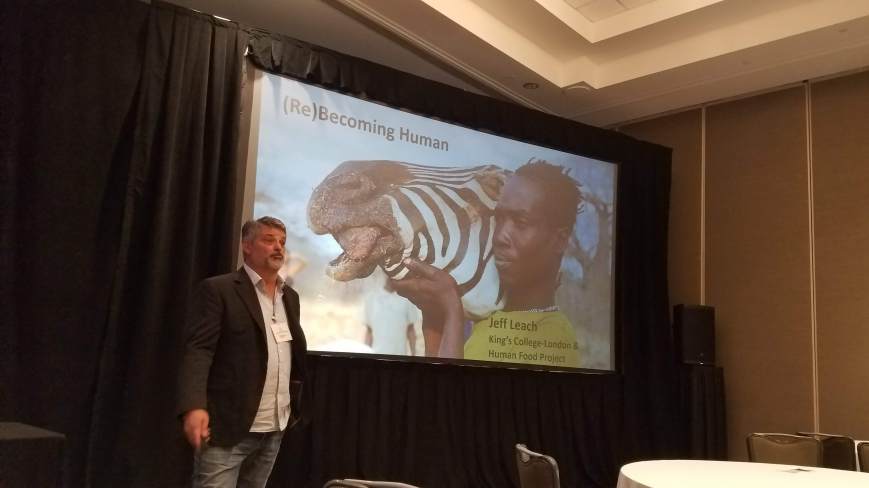

Jeff Leach: The Hadza eat a lot of birds, honey, baobab, berry and tubers. Depending on the season, they might eat honey for days in a row, and fiberfull berries.
Jeff Leach: They might eat 10-15 pounds of meat in a sitting, or 1000s of calories of honey. It can be very monotonous, and not what your nutritionist would recommend.
Jeff Leach: The women dig up tubers all day, every day. They taste like a sweet potato. (shows lots of pictures of Hadza and their food).
Jeff Leach: The vast majority of their calories comes from one type of food, lots of fiber. The kids’ bellies are swollen because of fermentation; they eat >100 gram of fiber (age matched kids in the US eat 10 grams).
Jeff Leach: We wanted to see what the Hadza microbiomes looked like. So we took lots of samples: 14,000 samples from skin and gut, but also of their food/environment. We freeze in the field in liquid nitrogen. Very difficult.
Jeff Leach: I spent many months there, not showering, drinking water from puddles, eating with the Hadza, but I never got sick. I sampled myself before/after these trips.
Jeff Leach: Our original question was to find out how seasonal changes affect the Hadza microbiomes. During wet season, their microbiome diversity drops, because they eat less meat (less contact with animal droppings).
Jeff Leach: Certain bacteria are coming and going, seasonably, but they are missing from western microbiomes.
Jeff Leach: Treponema, Akkermansia, Prevotella are much more common in non-industrialized communities.
Jeff Leach: The Hadza are connected to nature. They kill an animal, take out the colon, squeeze out the poop, and eat it. They don’t wash their hands, and then touch their children.
Jeff Leach: Their skin microbiome changes all the time because they touch and butcher and don’t wash their hands.
Jeff Leach: The average life expectancy of the Hadza is 36 years, mainly because of child mortality, but also of falling out of trees, shooting each other with poison arrows, and infections. But not because of obesity or poor nutrition.
Jeff Leach: The Hadza stand at the microbial highway of Africa. They come into contact with all microbes in their environment. Where do you stand, here in DC? Most of us spend >80% of our lives indoors.
Jeff Leach: Hadza men eat a lot more honey and meat than the women, but their microbiomes largely overlap. Most of their BMIs are around 20.
Jeff Leach showing the many differences between Hadza lifestyle and Western lifestyle.
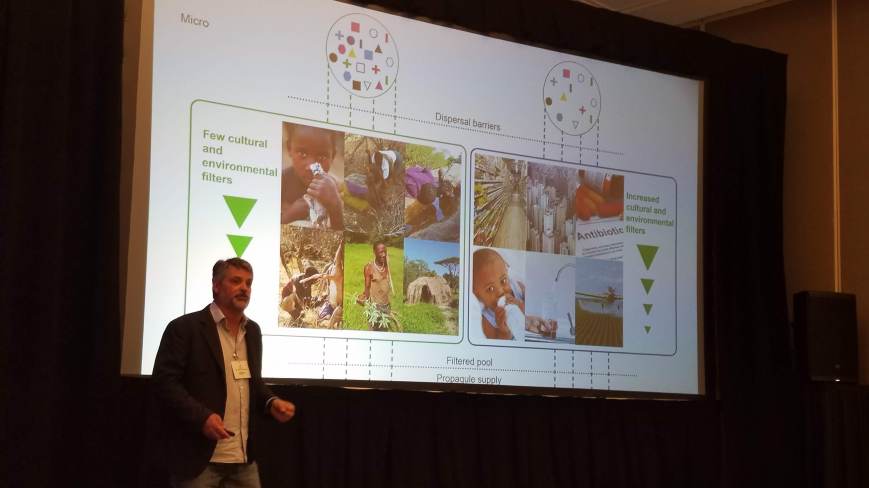
Jeff Leach: The Hadza have twice the microbial diversity as most of us (except me). Their microbiome bounces back within 48h after antibiotic treatment. Very resistant and resilient microbiomes.
Jeff Leach goes way over time, but seems unstoppable.
Jeff Leach: We need new nutrition and health advice that does not focus on our food input but on our filters – our environment. We need more connections with nature.

Panel discussion

Next up: Panel discussion: Pharmaceutical investment in microbiome therapeutics and strategizing ways to overcome the valley of death.
Daniel Couto @VedantaBio – moderator
James Brown @GSK
Dirk Gevers @dirk_gevers @JanssenGlobal
Arpita Maiti @pfizer

Arpita Maiti: At @Pfizer we look at the microbiome in a broad context – the data is not yet robust enough for us to make big investments. But this could quickly change in the next 12 months.
Dirk Gevers: @JanssenGlobal At the Janssen Human Microbiome Institute we invested in lots of research and partnerships – we have a very broad portfolio.
James Brown @gsk It is great to be looking at one particular small molecule but we probably need to focus more on consortia.
Question from the audience: Why aren’t there more physicians at these conferences? Or on panels?
Arpita Maiti @pfizer – we might still be very compartmentalized – the microbiome spans many disciplines.
Dirk Gevers @JanssenGlobal – many physicians are very involved. Scientists and physicians are including the microbiome in increasing number of clinical trials.
James Brown @GSK Most of our work is on clinical populations, not on animals. We need more interventional studies.

David Kyle, Evolve Biosystems

David Kyle: Breast milk is an important source of nutrition for babies. 85% of the nutrients in milk go into infant growth, 15% of the nutrients are HMO’s – this is the food for their microbiome.
David Kyle: Bifidobacterium infantis is the sole consumer of these HMOs (Human Milk Oligosaccharides). It converts indigestible HMOs into usable fuels: lactate and acetate. These reduce the fecal pH.
David Kyle: HMO + B. infantis provides pathogen colonization resistance to baby. In those first 100 days, the immune system is educated, so does not work properly. Breastmilk helps protect the baby, it is full of protective factors (IgA etc).
David Kyle: Most babies nowadays have highly variable microbiotas. Disrupted by c-section, antibiotics, formula feeding. How did baby poop look like 100 years ago?
David Kyle: There is a 1913 publication (W.R. Logan, J Path Bacteriol) that described almost pure culture of Gram-positive bacilli – which we believe were Bifidobacteria.
David Kyle: Several studies have described high amounts of Bifidobacteria in Bangladesh, Gambia, etc (80%). Much lower in western countries, and often not B. infantis.
David Kyle: Gut pH of infant stool in 1920s was 5.0. Now the pH is 6.1. Steady increase of pH in stools might be associated with the loss of B. infantis in baby stool.
David Kyle: The vaginal microbiome does not contain B. infantis, but mom’s stool might contain low amounts. This symbiosis is disrupted by formula feeding (no HMOs), C-section, antibiotics (B infantis is very sensitive to that).
David Kyle: IMPRINT trial (Smilowitz, Frese): B. infantis for 21 days in first weeks after birth. These babies got high levels of B. infantis, even after stopping the probiotics.
Persistence of Supplemented Bifidobacterium longum subsp. infantis EVC001 in Breastfed Infants
https://msphere.asm.org/content/2/6/e00501-17
David Kyle: Significant different in stool composition (high Bifido, lower Klebsiella / Escherichia/ Clostridium/ Streptococcus) and HMO utilization between infants who did or did not receive the B. infantis.
David Kyle: Escherichia/Klebsiella/Clostridia break down mucin glycans (they eat it). B. infantis EVC001 binds to the mucin glycans, but don’t break it down, protecting the breakdown of the gut barrier.
David Kyle: Control babies (no B. infantis) showed higher inflammatory markers, such as calprotectin (high calprotectin can predict atopy/asthma at later age).
David Kyle: Are we remodeling the gut? Or “unremodeling”? Just restoring it to where it was 100 years ago?

Maxim Seferovic, Baylor College of Medicine

Next up is Maxim Daniel Seferovic @MaximSeferovic, Baylor College of Medicine, with “Our earliest microbial encounters and the developmental origins of disease”.
Maxim Seferovic: What are the long term consequences of early exposures to microbes? Genomic variation and epigenomics only partially explain diversity of human phenotypes.
Maxim Seferovic: Do microbial metagenomes contribute to our phenotypic diversity? Which factors, including maternal factors, determine microbial exposure early in life?
Maxim Seferovic: The vaginal microbiome is different during pregnancy – diversity is temporarily diminished during pregnancy (Pace, revised submission).
Maxim Seferovic: There is a mismatch of microbial taxa between the gut of newborns (first days of life) and vaginal bacteria. Are babies exposed to bacteria before birth?
Maxim Seferovic: The uterus (womb) is not sterile; it is open to the vagina. There might be microbial exposure to the developing fetus. Placenta functions as a conduit for microbial communication between mother and fetus.
Maxim Seferovic: We did in situ hybridization (amplified FISH) labeling of placental tissue. We found bacteria in roughly half of the placentas in cesarean, term, healthy pregnancies. Not in all tissues, though.
Maxim Seferovic: Meconium is different, while mouth/gut/nose of newborns look very similar. At 6 weeks old, microbiomes of newborns are diversified / differentiated.
Maxim Seferovic: We did not find any effect of cesarean delivery on community. See Chu 2017:
Maturation of the infant microbiome community structure and function https://www.nature.com/articles/nm.4272
Maxim Seferovic: Directly after delivery, neonates are seeded with maternal strains. These are gone after 6 weeks.
Maxim Seferovic: We confirmed in animal studies that placental sequences were different than those found in kit reagents. These are not contaminants.
Maxim Seferovic: Animal experiments: maternal high-fat diet alters the offspring gut microbiome from fetal life, onto adult life (in monkeys). Maternal factors (diet, breastfeeding) influence early exposures.

Amir Bein, Wyss Institue

I switched to Track 2 but the talk started too early so I missed half of it 😦
Amir Bein – Human intestine chip colonized with complex gut microbiome for in vitro disease modeling and drug testing
Actually, his talk is already finished. I only saw the last 2 slides. That is too bad – I had hoped to see more of it. 😦
OK, all of us from the other rooms complained, and Amir Bein is kind enough to give his talk again – Yay!
Amir Bein: Challenges in drug development: it costs a lot of money to do studies, and animal studies are difficult and not always good models for human disease.
Amir Bein: We built a microfluidic device with a membrane, that mimics a human lung, with different cells and media on different sides of the membrane. We can use this to study e.g. adherence of certain immune cells, and measure this with a microscope.
Amir Bein: shows videos of cells flowing over the chip, or adhering to it.
Amir Bein: We took this technique further to develop “organ on a chip” modules, such as the “gut on a chip”. Epithelial cells are seeded on a membrane, and fed with liquid flow. These develop vili-like structures.
Amir Bein: Mechanical cues are important. But we can also co-culture with microbes. We see that bacterial exposure increases the barrier functions. They change the morphology as well: higher villi.
Amir Bein: Inflammatory bowel disease model (Kim 2015, PNAS). We can also study protective effect of probiotic therapy. We can grow anaerobic bacterial communities on these chips too.
Amir Bein: We also developed a primary human small intestine chip, with beautiful villi. Transcriptomic analysis: it really resembles the duodenum much better than older models.
Amir Bein: We use this chip to study Environmental enteric dysfunction: stunted growth because of recurrent infections and poor nutrition.
Amir Bein: Doing all these complex studies would be very hard in most in vitro models, but this chip allows to study and measure many variants.
Amir Bein: It takes about 3-4 weeks to grow the complete organ/chip model. Thanks to the amazing team at the @wyssinstitute and the @gatesfoundation.

Nur Hasan, Cosmos ID

There are three parallel sessions to choose from but I will be live tweeting the talk by Nur Hasan, CSO of @CosmosID with “Unlocking the microbiome with bias-free, affordable, metagenomic sequencing and best-in-class cloud bioinformatics”
Nur Hasan: The microbiome is broadly implicated with health and disease. Therefore, it is a target for many diagnostic and therapeutic approaches. Interpretation of cause and effect, and understanding pathways all are still not well established.
Nur Hasan: You need to have high resolution strain-level data for better functional insight. A strain is the clinically informative and actionable unit, not a species.
Nur Hasan: Different Lactobacillus casei strains are used for making Wisconsin cheese, chardonnay wine, or yogurt. Same species, very different strains.
Nur Hasan: We offer end-to-end sequencing and analysis services, as well as bioinformatics analysis and visualization, even for people with little bioinformatics background.
Nur Hasan: There are several different next-generation sequencing methods – which method for which purpose?
Amplicon sequencing has served us well, but has limitations. Shotgun sequencing adds to specificity. Need good reference databases.
Nur Hasan: Within shotgun metagenomics, choice of sequencing depth depends on e.g. % host DNA, diversity in your sample, desired information, and purpose.
Nur Hasan: We have done lots of probiotics studies, which are very strain-specific.
Nur Hasan: We have developed large curated strain-level databases @CosmosID , and I invite everyone to try our tools online at app.cosmosid.com

Johan van Hylckama Vlieg, Chr Hansen

The second talk of this session will be by Johan van Hylckama Vlieg, @vanHylckama, VP of Microbiome & Human Health Innovation, @Chr_Hansen with “The microbiome as a source of next-generation probiotics and therapeutic microbes”
Johan van Hylckama Vlieg: I changed my title to “Microbes Matter – More than Ever”. I work for @Chr_Hansen, a company in Denmark, the largest producer of live bacterial cultures – for over 140 years!
Johan van Hylckama Vlieg: Food cultures and enzymes (mainly dairy cultures), health & nutrition, and therapeutics. We ship trillions of bacteria every day!
Johan van Hylckama Vlieg: Industrial production of bacterial cultures involves huge fermentors! Everything gets big at this scale. We also know a lot about dosage forms and stability e.g. at room temperature.
Johan van Hylckama Vlieg: More than 100y ago, Elie Metchnikoff postulated that supplementation of diet with lactic acid bacteria has health benefits, even if you cannot consume dairy products.
Johan van Hylckama Vlieg: Lactobacillus rhamnosus LGG was isolated from human gut in 1983, used worldwide for more than 20 years. Tested eg. in preterm infants, pregnant women, elderly. Prevents infections in children, and promising results in other fields.
Johan van Hylckama Vlieg: LGG produces pili important for mucus adhesion. However, genomic locus for these pili is absent in some strains – see:
Genome Instability in Lactobacillus rhamnosus GG
https://aem.asm.org/content/79/7/2233.long
Luckily, in our production chain, the pili locus is present throughout. 🙂
Johan van Hylckama Vlieg: Given homology of LGG pili to Vancomycin-Resistant Enterococci (VRE) pili, it might be helpful in eradication of VRE infection. aem.asm.org/cgi/pmidlookup…
Johan van Hylckama Vlieg: The small intestine is a highly attractive target for probiotic interventions – much lower bacterial density.
Johan van Hylckama Vlieg: Much interest for the role of gut barrier function in maintaining health – and many in vitro models to study this. We are currently studying the effect of probiotics on aspirin-induced damage (ulcers).
Johan van Hylckama Vlieg: New probiotics (other than Lactobacillus and Bifidobacterium spp) are being investigated: Clostridium, Eubacterium, Faecalibacterium, Akkermansia, Christensenella spp.
Johan van Hylckama Vlieg: After the hype: more realism and managing expectations.
The Zmora 2019 paper gives an excellent overview on food as a modulator of the human gut microbiome.
nature.com/articles/s4157…
Johan van Hylckama Vlieg: Dobzhansky 1973 said: “Nothing in biology makes sense except in the light of evolution”
Let me end by giving you a variant of that statement:
“Nothing in probiotics makes sense except in the light of the microbiome”

Christopher Mason, Weill Cornell Medicine

Christopher Mason @WeillCornell with “Modern methods for deliniating metagenomic complexity: defining clinical quality genome measurements and editing for the microbiome space”
Christopher Mason: We work on standardization of 16S and metagenomic analysis: Genome in a bottle (GIAB): extensive, public and un-embargoed data.
Ratios of 16S derived taxa vary a lot with primer choice.
Zymo has a good set of standards to monitor extraction.
Christopher Mason: IMMSA-Home – IMMSA http://MicrobialStandards.org
lists many approaches, and our 2017 paper has suggestions for methods to use:
Comprehensive benchmarking and ensemble approaches for metagenomic classifiers
https://genomebiology.biomedcentral.com/articles/10.1186/s13059-017-1299-7
Christopher Mason: How many species do I have? Each metagenomic tool gives a completely different number.
Christopher Mason: We have an ongoing project in our lab to sample the public environment, e.g. the subways of major cities #MetaSUB
Homepage – MetaSUB: http://metasub.org/
Christopher Mason: This way we are building genetic maps of public transportation systems and expanding the number of microbial taxa that are known. Which city has the most mystery taxa? Tokyo has the most novel peptides, Santiago has many novelty as well.
Christopher Mason: We are also mapping the antibiotic resistance gene abundance per city. Highly correlated with use of over-the-counter antibiotic use.
Christopher Mason: What can be learned from a surface? Skin bacterial communities (“microbial fingerprints”) were some of the earliest application. Small molecules on your phones and shoes reveal differences between people.
Christopher Mason: We swabbed phones at JPMorgan, metagenomics sequencing, and used MetaGenScope, a basic pipeline for taxonomy and functional profiles.
Christopher Mason: We mapped DNA from phones to corn, apple, salads, orange, leather purse, often what people ate just before swabbing. But also skin microbes. Engineers had urogenital bacteria on their phones. We can predict who has cats or dogs.
Christopher Mason: Twin astronauts study – Firmicutes/Bacteroidetes ratio switched while in space. Can we sequence in space? Nanopore was tested by Kate Rubins and it worked well.

Dan Knights – University of Minnesota

The next speaker is @KnightsDan with “New methods for affordable and high-resolution shotgun sequencing”
Dan Knights: There is a big need for cheap tools (like 16S) that have a high level of information content (like WGS). We started to develop affordable methods of the whole workflow.
Dan Knights: How can we automate the lab work? How can we do shallower sequencing to save some money? See our publication here:
Evaluating the Information Content of Shallow Shotgun Metagenomics
https://msystems.asm.org/content/3/6/e00069-18
Dan Knights: With moderate depth shotgun sequencing, you get much better information than 16S. Even with 5000 reads (shotgun) you can almost get the same signal (betadiv ordination plot) as with 50 million reads.
Dan Knights: 10K gives alpha/beta diversity, 500k gives strains, 2M ($99) gives strains at 0.01%, 20-50M ($500) reads allows assembly of new genomes. Big step between these last 2. You can start by 2M reads, then follow up by deep shotgun sequencing on subset.
Dan Knights: Using this approach we sequenced gut microbiome of 34 people over time, correlated that with diet. Most folks have stable gut communities, despite super variable dietary intake.
Dan Knights: In two people who followed a (super stable) soylent diet, there was as much variation in gut microbiome as in regular, variable diets.
Dan Knights: We found that microbiome pairs with food groups (e.g. vegetables, eggs), not with nutrients (kale vs spinach). But every person responds differently to each food group.

Kiran Krishnan, Microbiome Labs

I hopped rooms again, for Kiran Krishnan, CSO of Microbiome Labs, with “Intelligent microbiota modulation”
Kiran Krishnan: We can define dysbiosis associated with disease as low amounts of keystone strains. E.g. amounts of Akkermansia, Faecalibacterium, and Bifidobacterium sp. are negatively associated with several health conditions.
Kiran Krishnan: Low amounts of these keystone species: disrupted mucosa, higher immune response, dysfunctional gut barrier, leaky gut.
Kiran Krishnan: Bacillus subtilis HU58 results in higher amounts of butyrate production and less ammonium. Synbiotic increased butyrate production even more.
Kiran Krishnan: We published a paper last year about effect of a probiotic on post-prandial dietary endotoxin, triglycerides, and disease risk biomarkers.
Oral spore-based probiotic supplementation was associated with reduced incidence of post-prandial dietary endotoxin, triglycerides, and disease risk biomarkers
https://www.wjgnet.com/2150-5330/full/v8/i3/117.htm

That concludes all the talks of today. There were 3 parallel sessions, so I could not report on all the talks, but I hope you enjoyed my reporting.

February 5th, 2019

Today’s digest includes some new bioinformatics techniques to study the microbiome and some more cool papers about diet and the microbiome.

General Microbiome

Experimental evolution reveals microbial traits for association with the host gut. – Vega NM – PLoS Biology

Human gut Microbiome

The intestinal microbiota predisposes to traveler’s diarrhea and to the carriage of multidrug-resistant Enterobacteriaceae after traveling to tropical regions. – Leo S – Gut Microbes

Antibiotic Treatment Drives the Diversification of the Human Gut Resistome – Jun Li – bioRxiv

Human Pregnancy/Infant Microbiome

Effect of Delivery Mode and Nutrition on Gut Microbiota in Neonates. – Akagawa S – Annals of Nutrition and Metabolism

Trait-based community assembly and succession of the infant gut microbiome – John Guittar – Nature Communications

Animal experiments

Modulation of Gut Microbiota Composition by Serotonin Signaling Influences Intestinal Immune Response and Susceptibility to Colitis. – Kwon YH – Cellular and Molecular Gastroenterology and Hepatology

Plant, root, water and soil Microbiome

Marine biofilms constitute a bank of hidden microbial diversity and functional potential – Weipeng Zhang – Nature Communications

Combined metabarcoding and co-occurrence network analysis to profile the bacterial, fungal and Fusarium communities and their interactions in maize stalks – Jose F. Cobo-Diaz – Frontiers in Microbiology

*****************************

Bioinformatics

Utilizing longitudinal microbiome taxonomic profiles to predict food allergy via Long Short-Term Memory networks. – Metwally AA – PLoS Computational Biology

RedCom: A strategy for reduced metabolic modeling of complex microbial communities and its application for analyzing experimental datasets from anaerobic digestion – Sabine Koch – PLoS Computational Biology

Swathi’s non-microbiology picks

How Millennials Became The Burnout Generation – An article about work-life balance that I think is applicable to scientists and academia.


January 31, 2019

Today’s digest covers articles describing sphingolipids in host-microbiome interaction, unique microbiome and metabolome of Indian population, selection and stabilization of soil microbiome and effect of probiotics on early sepsis in patients and immune response in childrenEnjoy reading!

General microbiome

Metabolic Modeling of Human Gut Microbiota on a Genome Scale: An Overview – Partho Sen – Metabolites

Altered composition and function of intestinal microbiota in autism spectrum disorders: a systematic review – Feitong Liu – Translational Psychiatry

Sphingolipids in host–microbial interactions – Stacey L. Heaver – Current Opinion in Microbiology

Pregnancy and early life

Mixed Viral-Bacterial Infections and Their Effects on Gut Microbiota and Clinical Illnesses in Children – Shilu Mathew – Scientific Reports

Pathways linking caesarean delivery to early health in a dual burden context: Immune development and the gut microbiome in infants and children from Galápagos, Ecuador – Amanda L. Thompson – American Journal of Human Biology

Human gut microbiome

The vagino-cervical microbiome as a woman’s life history – Zhuye Jie – BioRxiv

Dynamics of Human Gut Microbiota and Short-Chain Fatty Acids in Response to Dietary Interventions with Three Fermentable Fibers – Nielson T. Baxter – mBio

The unique composition of Indian gut microbiome, gene catalogue and associated faecal metabolome deciphered using multi-omics approaches – D.B. Dhakan – Gigascience

Animal experiments

Oral neonatal antibiotic treatment perturbs gut microbiota and aggravates central nervous system autoimmunity in Dark Agouti rats – Suzana Stanisavljević – Scientific Reports

Intestinal epithelial N-acylphosphatidylethanolamine phospholipase D links dietary fat to metabolic adaptations in obesity and steatosis – Amandine Everard – Nature Communications

Mutual interplay between IL-17–producing γδT cells and microbiota orchestrates oral mucosal homeostasis – Anneke Wilharm – PNAS

Plant, root and soil microbiome

Selection, succession and stabilization of soil microbial consortia – Elias K. Zegeye – BioRxiv

Comparison of the bacterial and methanotrophic diversities between an Italian paddy field and its neighboring meadow – Mohammad Ghashghavi – BioRxiv

Quality of Irrigation Water Affects Soil Functionality and Bacterial Community Stability in Response to Heat Disturbance – Sammy Frenk – Applied and Environmental Microbiology

Water and extremophiles microbiome

Archaea dominate the microbial community in an ecosystem with low-to-moderate temperature and extreme acidity – Aleksei A. Korzhenkov – Microbiome

Antibiotic disturbance affects aquatic microbial community composition and foodweb interactions but not community resilience – Ester M. Eckert – Molecular Ecology

 Phages and viruses

Megaphages infect Prevotella and variants are widespread in gut microbiomes – Audra E. Devoto – Nature Microbiology

Probiotics / prebiotics

Dysbiosis in early sepsis can be modulated by a multispecies probiotic: a randomised controlled pilot trial – V. Stadlbauer – Beneficial Microbes

Lactobacillus plantarum IS-10506 supplementation increases faecal sIgA and immune response in children younger than two years – P.D. Kusumo – Beneficial Microbes

Supplementation with Lactobacillus kefiranofaciens ZW3 from Tibetan Kefir improves depression-like behavior in stressed mice by modulating the gut microbiota – Ye Sun – Food and Function

Non-microbiology picks

Identification of Enteroendocrine Regulators by Real-Time Single-Cell Differentiation Mapping – Helmuth Gehart – Cell

January 22, 2019

Today’s digest is packed with interesting reviews from Gut to Rhizosphere microbiomes.

General Microbiome

Short-term consumption of a high-fat diet increases host susceptibility to Listeria monocytogenes infection.Heras VL. Microbiome.

Dietary Fructose and Microbiota-Derived Short-Chain Fatty Acids Promote Bacteriophage Production in the Gut Symbiont Lactobacillus reuteri. Oh JH. Cell Host snd Microbe.

Gut Microbiome

REVIEW: The Gut Microbiome as a Target for IBD Treatment: Are We There Yet?Knox NC. Current Treatment Options in Gastroenterology

Interactions between gut microbiota and non-alcoholic liver disease: the role of microbiota-derived metabolites.Ding Y. Pharmacological Research

Gut bacterial tyrosine decarboxylases restrict levels of levodopa in the treatment of Parkinson’s disease.van Kessel SP. Nature Communications

Lung Microbiome

Multiple respiratory microbiota profiles are associated with lower airway inflammation in children with protracted bacterial bronchitis. Marsh RL. Chest.

Plant, Soil, and Air Microbiome

Resilience and Assemblage of Soil Microbiome in Response to Chemical Contamination Combined with Plant Growth. Jiao S. Applied Environmental Microbiology

Effect of plant growth promoting bacterium; Pseudomonas putida UW4 inoculation on phytoremediation efficacy of monoculture and mixed culture of selected plant species for PAH and lead spiked soils.Afegbua SL. International Journal of Phytoremediation.

REVIEW: Synergistic plant-microbes interactions in the rhizosphere: a potential headway for the remediation of hydrocarbon polluted soils.Asemoloye MD. International Journal of Phytoremediation

Spatial and temporal variation of fungal endophytic richness and diversity associated to the phyllosphere of olive cultivars.Materatski P. Fungal Biology

Rhizosphere fungal community structure succession of Xinjiang continuously cropped cotton.Wei Z. Fungal Biology.

REVIEW: To Fix or Not To Fix: Controls on Free-Living Nitrogen-Fixation in the Rhizosphere.Smercina DN. Applied Environmental Microbiology

An active β-lactamase is a part of an orchestrated cell wall stress resistance network of Bacillus subtilis and related rhizosphere species.Bucher T. Environmental Microbiology

Diversity analysis of the rhizospheric and endophytic bacterial communities of <i>Senecio vulgaris</i> L. (Asteraceae) in an invasive range. Cheng D. PeerJ

Genotype and rhizobium inoculation modulate the assembly of soybean rhizobacterial communities.Zhong Y. Plant, Cell, and Environment

Animal Experiments and Microbiome

Dose-dependent impact of oxytetracycline on the veal calf microbiome and resistome.Keijser BJF. BMC Genomics

Earthworms and cadmium – Heavy metal resistant gut bacteria as indicators for heavy metal pollution in soils?  Šrut M. Ecotoxicology and Environmental

Taxonomic and functional composition of the small intestinal microbiome in neonatal calves provide a framework for understanding early life gut health. Malmuthuge N. Applied Environmental Microbiology

Inland Waters and Marine Microbiomes

High-Throughput Sequencing of the 16S rRNA Gene as a Survey to Analyze the Microbiomes of Free-Living Ciliates Paramecium.Plotnikov AO. Microbial Ecology

Action of oxytetracycline (OTC) degrading bacterium and its application in Moving Bed Biofilm Reactor (MBBR) for aquaculture wastewater pre-treatment.Shao S. Ecotoxicology and Environmental

Metabarcoding and machine learning analysis of environmental DNA in ballast water arriving to hub ports. Gerhard WA. Environment International

January 11, 2019

General Microbiome

A great-ape view of the gut microbiome.Nishida AH. Nature Reviews Genetics

Relative reduction of biological and phylogenetic diversity of the oral microbiota of diabetes and pre-diabetes patients. Saeb ATM. Microbial Pathogenesis

Dietary modulation of the microbiome as therapy.Bernard NJ. Nature Reviews Rheumatology

Costless metabolic secretions as drivers of interspecies interactions in microbial ecosystems.Pacheco AR. Nature Communications

Low-moisture food matrices as probiotic carriers. Marcial-Coba MS . FEMS Microbiology Letters

REVIEW: Cross-Domain and Viral Interactions in the Microbiome.Rowan-Nash AD. Microbiology and Molecular Biology Reviews

The respiratory microbiome and susceptibility to influenza virus infection. Lee KH. PLoS One

Food Microbiome

Metagenomic profiles of different types of Italian high-moisture Mozzarella cheese.Marino M. Food Microbiology

Gut Microbiome

Enhancement of the gut barrier integrity by a microbial metabolite through the Nrf2 pathway.Singh R. Nature Communications

Pilot study of probiotic/colostrum supplementation on gut function in children with autism and gastrointestinal symptoms.Sanctuary MR. PLoS One

Nonsteroidal Anti-inflammatory Drugs Alter the Microbiota and Exacerbate <i>Clostridium difficile</i> Colitis while Dysregulating the Inflammatory Response.Maseda D. mBio

Techniques/Resources

OTUX: V-region specific OTU database for improved 16S rRNA OTU picking and efficient cross-study taxonomic comparison of microbiomes. Yadav D. DNA Research

Streamlining standard bacteriophage methods for higher throughput.Kauffman KM. MethodsX

Indirect DNA extraction method suitable for acidic soil with high clay content. Högfors-Rönnholm E. MethodsX

DATABASE: The 26th annual Nucleic Acids Research database issue and Molecular Biology Database Collection.Rigden DJ. Nucleic Acid Research

Animal Experiments and Microbiome

Effect of the Nursing Mother on the Gut Microbiome of the Offspring During Early Mouse Development.Treichel NS. Microbial Ecology

Delayed differentiation of vaginal and uterine microbiomes in dairy cows developing postpartum endometritis.Miranda-CasoLuengo R. PLoS One.

Seabird and pinniped shape soil bacterial communities of their settlements in Cape Shirreff, Antarctica.Ramírez-Fernández L. PLoS One

Use of 16S rRNA gene sequencing for prediction of new opportunistic pathogens in chicken ileal and cecal microbiota.Kollarcikova M. Poultry Science

Whole rumen metagenome sequencing allows classifying and predicting feed efficiency and intake levels in cattle.Delgado B. Scientific  Reports


Marine and Inland Waters

Diversity and Composition of Pelagic Prokaryotic and Protist Communities in a Thin Arctic Sea-Ice Regime.de Sousa AGG. Microbial Ecology

Stratification, nitrogen fixation, and cyanobacterial bloom stage regulate the planktonic food web structure.Loick-Wilde N. Global Change Biology

Analysis of viral and bacterial communities in groundwater associated with contaminated land.Costeira R. Science of the Total Environment

Plant, Soil, and Air Microbiome

The known and the unknown in soil microbial ecology. Baldrian P. FEMS Microbiology Ecology.

Genomic analysis of bacteria in the Acute Oak Decline pathobiome.Doonan J. Microbial Genomics.

Glutathione S-Transferase Enzymes in Plant-Pathogen Interactions.Gullner G. Frontiers in Plant Science

A comparative metagenomic and spectroscopic analysis of soils from an international point of entry between the US and Mexico.  Cota-Ruiz K. Environmental International

Metagenome tracking biogeographic agroecology: Phytobiota of tomatoes from Virginia, Maryland, North Carolina and California. Ottesen A. Food Microbiology

Temporal Dynamics of Bacterial Communities in Soil and Leachate Water After Swine Manure Application.Rieke EL. Frontiers of Microbiology

January 2nd, 2019

Happy New Year Everyone! Some cool new papers for the digest including multiple diet studies!

General Microbiome

Cultivated human vaginal microbiome communities impact Zika and Herpes Simplex Virus replication in ex vivo vaginal mucosal cultures – Megan H Amerson-Brown – Frontiers in Microbiology

Human gut Microbiome

In vivo screening of multiple bacterial strains identifies Lactobacillus rhamnosus Lb102 and Bifidobacterium animalis ssp. lactis Bf141 as probiotics that improve metabolic disorders in a mouse model of obesity – Le Barz M – FASEB Journal

Protective effects of Bacillus probiotics against high-fat diet-induced metabolic disorders in mice. – Kim B – PLoS One

NLRP1 restricts butyrate producing commensals to exacerbate inflammatory bowel disease. – Tye H – Nature Communications

Human Pregnancy Microbiome

Characterizing the Subgingival Microbiome of Pregnant African American Women. – Yang I – J Obstet Gynecol Neonatal Nurs

Animal experiments 

A Gut Commensal Bacterium Promotes Mosquito Permissiveness to Arboviruses. – Wu P – Cell Host Microbe

Plant, root, and soil Microbiome

Specific recruitment of soil bacteria and fungi decomposers following a biostimulant application increased crop residues mineralization. – Hellequin E – PLoS One

Mangrove facies drives resistance and resilience of sediment microbes exposed to anthropic disturbance – C Capdeville – Frontiers in Microbiology

*****************************

Bioinformatics

Galaxy mothur Toolset (GmT): a user-friendly application for 16S rRNA gene sequencing analysis using mothur – Hiltemann SD – Gigascience

iVikodak–a platform and standard workflow for inferring, analyzing, comparing, and visualizing the functional potential of microbial communities – S Nagpal -Frontiers in Microbiology

Swathi’s non-microbiology picks

Issac Asimov on his predictions for 2019 – Issac Asimov


December 24, 2018

Good morning everyone, Today’s digest mainly focusing on the methods such as SigClust a novel clustering algorithm, mm-tSNE a method for visualizing high-dimensional data and aMiAD – a novel microbial diversity association test. Additionally, several review articles and research using human as well as animal experiments showing the relationship of the gut microbiome in Alzheimer’s, Parkinson, atopic dermatitis, antidepressant and anti-inflammatory, heart failure, NAFLD, irritable bowel syndrome and colorectal cancer and their role in the protection against the acute arsenic toxicity. Enjoy Reading.

General microbiome

Review: The microbiome of the nose – Matthew Rawls – Annals of Allergy, Asthma, and Immunology

The Gut Microbiome in Food Allergy – William Zhao – Annals of Allergy, Asthma, and Immunology

Prenatal stress enhances postnatal plasticity: The role of microbiota – Sarah Hartman – Developmental Psychobiology

Review: The gut microbiome and heart failure – Adilah F. Ahmad – Current Opinion in Cardiology

Synthetic consortia of nanobody‐coupled and formatted bacteria for prophylaxis and therapy interventions targeting microbiome dysbiosis‐associated diseases and co‐morbidities – Kenneth Timmis – Microbial Biotechnology

Gut microbiome

The gut microbiota-derived metabolite trimethylamine N-oxide is elevated in Alzheimer’s disease – Nicholas M. Vogt – Alzheimer’s Research & Therapy

Stability and resilience of the intestinal microbiota in children in daycare – a 12 month cohort study – Martin Steen Mortensen – BMC Microbiology

Effects of diet on the childhood gut microbiome and its implications for atopic dermatitis – Mahboobeh Mahdavinia – The Journal of Allergy and Clinical Immunology

Editorial: Emerging evidence linking the gut microbiome to neurologic disorders – Jessica A. Griffiths – Genome Medicine

Metabolomics and 16S rRNA sequencing of human colorectal cancers and adjacent mucosa – Mun Fai Loke – Plos One

Review: Impact of maternal HIV exposure, feeding status, and microbiome on infant cellular immunity – Sonwabile Dzanibe – Journal of Leukocyte Biology

Review: Inherited nongenetic influences on the gut microbiome and immune system – Kathryn A. Knoop – Birth Defects Research

New insights into porcine milk N-glycome and the potential relation with offspring gut microbiome – Chunlong Mu – Journal of Proteome Research

Unraveling gut microbiota in Parkinson’s disease and atypical parkinsonism – Michela Barichella – Movement Disorders

Fecal SCFAs and SCFA-producing bacteria in gut microbiome of human NAFLD as a putative link to systemic T-cell activation and advanced disease – Monika Rau – United European Gastroenterology Journal

Skin microbiome

A tryptophan metabolite of the skin microbiota attenuates inflammation in atopic dermatitis via the aryl hydrocarbon receptor – Jinlei Yu – The Journal of Allergy and Clinical Immunology

Nasal microbiome

Competition among nasal bacteria suggests a role for siderophore-mediated interactions in shaping the human nasal microbiota – Reed M. Stubbendieck – Applied and Environmental Microbiology

Plant Microbiome

Metabolic niches in the rhizosphere microbiome: New tools and approaches to analyse metabolic mechanisms of plant-microbe nutrient exchange – Richard P Jacoby – Journal of Experimental Botany

Animal experiments

Chronic stress-induced gut dysfunction exacerbates Parkinson’s disease phenotype and pathology in a rotenone-induced mouse model of Parkinson’s disease – Hemraj B.Dodiya – Neurobiology of Disease

Ketamine interactions with gut-microbiota in rats: relevance to its antidepressant and anti-inflammatory properties – Bruk Getachew – BMC Microbiology

Dietary l-Tryptophan Supplementation Enhances the Intestinal Mucosal Barrier Function in Weaned Piglets: Implication of Tryptophan-Metabolizing Microbiota – Haiwei Liang – International Journal of Molecular Science

In Vivo Effects of Einkorn Wheat (Triticum monococcum) Bread on the Intestinal Microbiota, Metabolome, and on the Glycemic and Insulinemic Response in the Pig Model – Francesca Barone – Nutrients

Diet-Independent Correlations between Bacteria and Dysfunction of Gut, Adipose Tissue, and Liver: A Comprehensive Microbiota Analysis in Feces and Mucosa of the Ileum and Colon in Obese Mice with NAFLD – Eveline Gart – International Journal of Molecular Science

Abnormality in Maternal Dietary Calcium Intake During Pregnancy and Lactation Promotes Body WEIGHT gain by Affecting the Gut Microbiota in Mouse Offspring – Ping Li – Molecular Nutrition Food Research

Bilberry anthocyanin extract promotes intestinal barrier function and inhibits digestive enzyme activity by regulating the gut microbiota in aging rats – Jing Li – Food and Function

The gut microbiome is required for full protection against acute arsenic toxicity in mouse models – Michael Coryell – Nature Communications

Gut microbiota was modulated by moxibustion stimulation in rats with irritable bowel syndrome – Xiaomei Wang – Chinese Medicine

Bioinformatics

Rapid analysis of metagenomic data using signature-based clustering – Timothy Chappell – BMC Bioinformatics

Nonlinear expression and visualization of nonmetric relationships in genetic diseases and microbiome data – Xianchao Zhu – BMC Bioinformatics

Coupled dynamics of intestinal microbiome and immune system—A mathematical study – Akane Hara – Journal of Theoretical Biology

An adaptive microbiome α-diversity-based association analysis method – Hyunwook Koh – Scientific Reports

December 21, 2018

Today’s digest is about the shortcomings of the midstream urine test for urinary tract infection, contacts between phages and bacterial hosts, and contamination in marker-gene and metagenomic sequencing. There is a very interesting podcast on “Seeing double” in scientific papers. Happy reading/listening!

Urinary microbiome

Cross-over data supporting long-term antibiotic treatment in patients with painful lower urinary tract symptoms, pyuria and negative urinalysis – Sheela Swamy – International Urogynecology Journal

*Reassessment of routine midstream culture in diagnosis of urinary tract infection – Sanchutha Sathiananthamoorthya – Journal of Clinical Microbiology

Gut microbiome

Drivers of human gut microbial community assembly: Coadaptation, determinism and stochasticity – Kaitlyn Oliphan – BioRxiv

Animal experiments

*Scaffolding bacterial genomes and probing host-virus interactions in gut microbiome by proximity ligation (chromosome capture) assay – Martial Marbouty – Science Advances

Antidepressant treatment modulates the gut microbiome and metabolome during pregnancy and lactation in rats with a depressive-like phenotype – Anouschka S Ramsteijn – BioRxiv

General Anesthesia Alters the Diversity and Composition of the Intestinal Microbiota in Mice – Mara A. Serbanescu – Anesthesia & Analgesia

Water microbiome

Bacterial community activity and dynamics in the biofilm of an experimental hybrid wetland system treating greywater – Marika Truu – Environmental Science and Pollution Research

Plant/root/soil microbiome

Introducing THOR, a model microbiome for genetic dissection of community behavior – Gabriel L. Lozano – BioRxiv

Bacterial analogs of plant piperidine alkaloids mediate microbial interactions in a rhizosphere model system – Gabriel L. Lozano – BioRxiv

Bioinformatics

*Simple statistical identification and removal of contaminant sequences in marker-gene and metagenomics data – Nicole M. Davis – Microbiome

Nucleotide Archival Format (NAF) enables efficient lossless reference-free compression of DNA sequences – Kirill Kryukov – BioRxiv

Podcast

*Seeing double [Elisabeth Bik speaks about the problematic images in scientific papers, the state of microbiome research, and making the jump from academia to industry] – Dan Quintana and James Heathers – Everything Hertz.

December 18, 2018

Good morning everyone. Today’s digest will cover recent studies focusing on the diet derived changes in the gut microbiome, the role of gut microbiome on brain health, inflammatory responses, autism, cystic fibrosis, hepatic steatosis using animal experiments, and reviews highlight the tumor genomics along with the microbiome and secretome as a new strategy in colorectal cancer. Enjoy reading.

General microbiome

Review: Is microbiome a target for the management of allergy associated diseases in children? – Ribaldone DG – European Review for Medical and Pharmacological Sciences

Review: Integrating tumor genomics into studies of the microbiome in colorectal cancer Michael B Burns – Gut Microbes

Gut microbiome

Assessing the in vivo data on low/no-calorie sweeteners and the gut microbiota – Alexandra R.Lobach – Food and Chemical Toxicology

Review: Analysing the Secretome of Gut Microbiota as the Next Strategy For Early Detection of Colorectal Cancer – Putri‐Intan‐Hafizah Megat Mohd Azlan – Proteomics

Review: Bottoms up: the role of gut microbiota in brain health – Nina Radisavljevic – Environmental Microbiology

Treponema species enrich the gut microbiota of traditional rural populations but are absent from urban individuals – E. Angelakis – New Microbes and New Infections

Comparative Microbiome Signatures and Short-Chain Fatty Acids in Mouse, Rat, Non-human Primate, and Human Feces – Ravinder Nagpal – Frontiers in Microbiology

Synergistic convergence of microbiota-specific systemic IgG and secretory IgA – Jehane Fadlallah – The Journal of Allergy and Clinical Immunology

Water and extremophile microbiome

Microbial community composition and diversity in the Indian Ocean deep sea REY-rich muds – Shuyan Wang – PLOS One

Animal experiments

Following spinal cord injury, PDE4B drives an acute, local inflammatory response and a chronic, systemic response exacerbated by gut dysbiosis and endotoxemia – Scott A.Myer – Neurobiology of Disease

The Acute Influence of Acid Suppression with Esomeprazole on Gastrointestinal Microbiota and Brain Gene Expression Profiles in a Murine Model of Restraint Stress – RobertMacLaren – Neuroscience

Microbial communities in swine lungs and their association with lung lesions – Tao Huang – Microbial Biotechnology

Report: Gut microbial compositions mirror caste‐specific diets in a major lineage of social insects – Saria Otani – Environmental Microbiology Reports

Diet‐Induced Dysbiosis and Genetic Background Synergize With Cystic Fibrosis Transmembrane Conductance Regulator Deficiency to Promote Cholangiopathy in Mice – Dominique Debray – Hepatology Communications

The valproic acid rat model of autism presents with gut bacterial dysbiosis similar to that in human autism – Fang Liu – Molecular Autism

Amelioration of hepatic steatosis is associated with modulation of gut microbiota and suppression of hepatic miR-34a in Gynostemma pentaphylla (Thunb.) Makino treated mice – Ning Jia – Nutritiion and Metabolism

Isolated Rearing at Lactation Increases Gut Microbial Diversity and Post-weaning Performance in PigsIsolated Rearing at Lactation Increases Gut Microbial Diversity and Post-weaning Performance in Pigs – Tsungcheng Tsai – Frontiers in Microbiology

Echinococcus granulosus Infection Results in an Increase in Eisenbergiella and Parabacteroides Genera in the Gut of Mice – Jianling Bao – Frontiers in Microbiology

Bioinformatics

Evaluation of metabolite-microbe correlation detection methods – YijunYou – Analytical Biochemistry

Microbes in News

Gut bacteria link to immunotherapy sparks interest – Brian Owens – Nature Biotechnology


December 1, 2018

Today’s microbiome digest will have more on gut microbiome, animal experiments along with one method DiTaxa for host phenotype and biomarker detection. Enjoy reading.

 General microbiome

Pre-transplant recovery of microbiome diversity without recovery of the original microbiome – Armin Rashidi – Bone Marrow Transplantation

Review: Importance of gut microbiota in obesity – Isabel Cornejo-Pareja – European Journal of Clinical Nutrition

Gut Microbiome and Plasma Microbiome-Related Metabolites in Patients With Decompensated and Compensated Heart Failure – Tomohiro Hayashi – Circulation Journal

Review: The lung and gut microbiome: what has to be taken into consideration for cystic fibrosis? – Geneviève Héry-Arnaud – Journal of Cystic Fibrosis

Gut microbiome

Impacts of dietary silver nanoparticles and probiotic administration on the microbiota of an in-vitro gut model – Cristina Cattò – Environmental Pollution

The Gut Microbiome: A Difficult Target for Translational Studies of Clostridium Difficile Colonization – Richard Kellermayer – Journal of Pediatric Gastroenterology and Nutrition

Altered gut microbiota after traumatic splenectomy is associated with endotoxemia – Hua Zhu – Emerging Microbes & Infections

Gut Microbiota Modulates Interactions Between Polychlorinated Biphenyls and Bile Acid Homeostasis – Sunny Lihua Cheng – Toxicological Sciences

The intestinal microbiome and its relevance for functionality in older persons – Andrea Ticinesi – Current Opinion in Clinical Nutrition and Metabolic Care

Gut Microbiota Disruption in Septic Shock Patients: A Pilot Study – You-Dong Wan – Medical Science Monitor

Microbial Biomarkers of Intestinal Barrier Maturation in Preterm Infants – Bing Ma – Frontiers in Microbiology

Review: Microbial impact on cholesterol and bile acid metabolism: current status and future prospects – Aicha Kriaa – Journal of Lipid Research

Respiratory microbiome

Characterising the respiratory microbiome – Rebecca L. Watson – European Respiratory Journal

Vaginal microbiome

Characterization of vaginal microbiota in Thai women – Auttawit Sirichoat – PeerJ

Normal vaginal microbiome in women with primary Sjögren’s syndrome-associated vaginal dryness – van der Meulen TA – Annals of the Rheumatic Diseases

Animal experiments

On the role of corticosterone in behavioral disorders, microbiota composition alteration and neuroimmune response in adult male mice subjected to maternal separation stress – HosseinAmini-Khoei – International Immunopharmacology

Insights into a Possible Mechanism Underlying the Connection of Carbendazim-Induced Lipid Metabolism Disorder and Gut Microbiota Dysbiosis in Mice – Cuiyuan Jin – Toxicological Sciences

General Anesthesia Alters the Diversity and Composition of the Intestinal Microbiota in Mice – Mara A. Serbanescu – Anesthesia & Analgesia

Lactobacillus helveticus KLDS1.8701 alleviates D-galactose-induced aging by regulating Nrf-2 and gut microbiota in mice – Bailiang Li – Food and Function

The Host Microbiota Contributes to Early Protection Against Lung Colonization by Mycobacterium tuberculosisAlexia Dumas – Frontiers in Immunology

Cesarean Section Induces Microbiota-Regulated Immune Disturbances in C57BL/6 Mice – Line Fisker Zachariassen – The Journal of Immunology

Bioinformatics

DiTaxa: Nucleotide-pair encoding of 16S rRNA for host phenotype and biomarker detection – Ehsaneddin Asgari – Bioinformatics