March 5, 2020

Today’s Digest is heavy, so you might want to pace yourself. It’s hard to pick the highlights, but I’m biased towards fungal research, so first about a wake-up call to look at the fungi seriously. The insects might provide for remedy against antibiotic resistance and is the dust settled on the sparse fetal intestinal microbiota? Stay healthy and keep reading.

Event

Call for papers – Global Outbreaks and Responses – BMC Medicine

General microbiology

** Viewpoints: Fungal diseases as neglected pathogens: A wake-up call to public health officials – Marcio L. Rodrigues & Joshua D. Nosanchuk – PLoS NTD

Inducible cell-to-cell signaling for tunable dynamics in microbial communities – Arianna Miano et al. – Nature Communications

Antimicrobial resistance

** The insect antimicrobial peptide cecropin A disrupts uropathogenic Escherichia coli biofilms – Miriam Kalsy et al. – npj Biofilms and Microbiomes

Using comparative genomics to understand molecular features of carbapenem-resistant Acinetobacter baumannii from South Korea causing invasive infections and their clinical implications – Min Hyung Kim – PLoS One

Factors associated with sufficient knowledge of antibiotics and antimicrobial resistance in the Japanese general population – Shinya Tsuzuki et al. – Scientific Reports

Faeces and vaccines could be the key to tackling antimicrobial resistance – Elisabeth Mahase – BMJ

A survey of extended-spectrum beta-lactamase-producing Enterobacteriaceae in urban wetlands in southwestern Nigeria as a step towards generating prevalence maps of antimicrobial resistance – Olawale Olufemi Adelowo et al. – PLoS One

Pregnancy and early life

** Viable bacterial colonization is highly limited in the human intestine in utero – E. Rackaityte et al. – Nature Medicine

Perinatal Antibiotic Exposure Affects the Transmission between Maternal and Neonatal Microbiota and Is Associated with Early-Onset Sepsis – Ping Zhou et al. – mSphere

Combined analysis of microbial metagenomic and metatranscriptomic sequencing data to assess in situ physiological conditions in the premature infant gut – Yonatan Sher et al. – PLoS One

Human skin microbiome

A microbiome and metabolomic signature of phases of cutaneous healing identified by profiling sequential acute wounds of human skin: An exploratory study – Mohammed Ashrafi et al. – PLoS One

Human oral microbiome

Review: Single-Cell Genomics and the Oral Microbiome – M. Balachandran et al. – Journal of Dental Research

Insights Obtained by Culturing Saccharibacteria With Their Bacterial Hosts – B. Bor et al. – Journal of Dental Research

Electronic Cigarette Aerosol Modulates the Oral Microbiome and Increases Risk of Infection – Smruti Pushalkar et al. – iScience

Press: Oral Microbiome Changes Implicated in Gum Inflammation in E-Cigarette Users – GenomeWeb

In vitro: A salivary metabolite signature that reflects gingival host-microbe interactions: instability predicts gingivitis susceptibility – Marcela M. Fernandez-Gutierrez et al. – Scientific Reports

Human respiratory microbiome

Review: The Role of Lung and Gut Microbiota in the Pathology of Asthma – Weronika Barcik et al. – Immunity

Cancer and microbiome

Endogenous murine microbiota member Faecalibaculum rodentium and its human homologue protect from intestinal tumour growth – Elena Zagato et al. – Nature Microbiology

Escherichia coli adhesion portion FimH functions as an adjuvant for cancer immunotherapy – Wei Zhang et al. – Nature Communications

Temporal changes in gut microbiota profile in children with acute lymphoblastic leukemia prior to commencement-, during-, and post-cessation of chemotherapy – Ling Ling Chua et al. – BMC Cancer

Review: Interplay between Dietary Polyphenols and Oral and Gut Microbiota in the Development of Colorectal Cancer – Carolina Cueva & Mariana Silva – Nutrients

Human gut microbiome

In vitro: Short-term supplementation of celecoxib-shifted butyrate production on a simulated model of the gut microbial ecosystem and ameliorated in vitro inflammation – Emma Hernandez-Sanabria et al. – npj Biofilms and Microbiomes

Review: Crosstalk Between Gut Microbiota and Innate Immunity and Its Implication in Autoimmune Diseases – Yuhao Jiao et al. – Frontiers in Immunology

An empirically derived method for measuring human gut microbiome alpha diversity: Demonstrated utility in predicting health-related outcomes among a human clinical sample – Sarah L. Hagerty et al. – PLoS One

Proof-of-concept study of the efficacy of a microbiota-directed complementary food formulation (MDCF) for treating moderate acute malnutrition – Ishita Mostafa et al. – BMC Public Health

Microbiota as Predictor of Mortality in Allogeneic Hematopoietic-Cell Transplantation – Jonathan U. Peled et al. – New England Journal of Medicine

Human multi-site microbiome

Age-Related Variation of Bacterial and Fungal Communities in Different Body Habitats across the Young, Elderly, and Centenarians in Sardinia – Lu Wu et al. – mSphere

Response of the human gut and saliva microbiome to urbanization in Cameroon – Ana Lokmer et al. – Scientific Reports

The gut-microbiota-brain axis

Therapeutic Effects of the In Vitro Cultured Human Gut Microbiota as Transplants on Altering Gut Microbiota and Improving Symptoms Associated with Autism Spectrum Disorder – Kainan Chen et al. – Microbial Ecology

Built environment microbiome

A preliminary study on the potential of Nanopore MinION and Illumina MiSeq 16S rRNA gene sequencing to characterize building-dust microbiomes – Anders B. Nygaard et al. – Scientific Reports

Metabolomics

Spatial metabolomics of in situ host–microbe interactions at the micrometre scale – Benedikt Geier et al. – Nature Microbiology

Global chemical effects of the microbiome include new bile-acid conjugations – Robert A. Quinn et al. – Nature

Animal experiments

PM2.5 exposure perturbs lung microbiome and its metabolic profile in mice – Jingli Li et al. – Science of the Total Environment

Growth hormone deficiency and excess alter the gut microbiome in adult male mice – Elizabeth A Jensen et al. – Endocrinology

Dissociation of Adaptive Thermogenesis from Glucose Homeostasis in Microbiome-Deficient Mice – Tibor L. Krisko et al. – Cell Metabolism

Fecal IgA Levels Are Determined by Strain-Level Differences in Bacteroides ovatus and Are Modifiable by Gut Microbiota Manipulation – Chao Yang et al. – Cell Host & Microbe

Animal microbiome

Can rumen bacteria communicate to each other? – Mi-Young Won et al. – Microbiome

Entomopathogenic nematode-associated microbiota: from monoxenic paradigm to pathobiome – Jean-Claude Ogier et al. – Microbiome

The canine oral microbiome: variation in bacterial populations across different niches – Avika Ruparell et al. – BMC Microbiology

Evolutionary analysis of Mycobacterium bovis genotypes across Africa suggests co-evolution with livestock and humans – Osvaldo Frederico Inlamea et al. – PLoS NTD

Nanopore sequencing of microbial communities reveals the potential role of sea lice as a reservoir for fish pathogens – Ana Teresa Gonçalves et al. – Scientific Reports

Plant, root and soil microbiome

Insights on aquatic microbiome of the Indian Sundarbans mangrove areas – Paltu Kumar Dhal et al. – PLoS One

Ganoderma lucidum cultivation affect microbial community structure of soil, wood segments and tree roots – Fei Ren et al. – Scientific Reports

Effect of long-term destocking on soil fungal functional groups and interactions with plants – Jie Wang et al. – Plant and Soil

Comparative Analysis of Root Microbiomes of Rice Cultivars with High and Low Methane Emissions Reveals Differences in Abundance of Methanogenic Archaea and Putative Upstream Fermenters – Zachary Liechty et al. – mSystems

Fungal diversity and community composition of wheat rhizosphere and non-rhizosphere soils from three different agricultural production regions of South Africa – Magalane Pheladi Gqozo et al. – Applied Soil Ecology

Microbial and volatile profiling of soils suppressive to Fusarium culmorum of wheat – Adam Ossowicki & Vittorio Tracanna et al. – Proceedings of the Royal Society B

Industrial development as a key factor explaining variances in soil and grass phyllosphere microbiomes in urban green spaces – Zhen-Zhen Yan et al. – Environmental Pollution

Plant communities mediate the interactive effects of invasion and drought on soil microbial communities – Catherine Fahey et al. – The ISME Journal

Water and extremophile microbiome

Methyl t-butyl ether-degrading bacteria for bioremediation and biocontrol purposes – Giada d’Errico et al. – PLoS One

Uncovering microbial responses to sharp geochemical gradients in a terrace contaminated by acid mine drainage – Rui Xu et al. – Environmental Pollution

Snapshot: Microbial Extremophiles – Amy K. Schmid et al. – Cell

Denitrification performance and microbial communities of solid-phase denitrifying reactors using poly (butylene succinate)/bamboo powder composite – Wanhe Qi et al. – Bioresource Technology

Meta-omics Provides Insights into the Impact of Hydrocarbon Contamination on Microbial Mat Functioning – Johanne Aubé et al. – Microbial Ecology

Role of microbial diversity for sustainable pyrite oxidation control in acid and metalliferous drainage prevention – Omy T. Ogbughalu et al. – Journal of Hazardous Materials

Phages and viruses

** Coronavirus research highlights – BMC

Fecal Viral Community Responses to High-Fat Diet in Mice – Anjelique Schulfer et al. – mSphere

Technology

Rapid MinION profiling of preterm microbiota and antimicrobial-resistant pathogens – Richard M. Leggett et al. – Nature Microbiology

Assembly-free single-molecule sequencing recovers complete virus genomes from natural microbial communities – John Beaulaurier et al. – Genome Research

Bioinformatics

Rapid inference of antibiotic resistance and susceptibility by genomic neighbour typing – Karel Břinda et al. – Nature Microbiology

Microbes in the news

Tough microbe’s DNA could be a lasting archive – Steve Nadis – Science

How Bacteria Can ‘Sculpt The Gut’ – Maya Trabulsi – KPBS

The bee microbiome can fight back against fungi that cause Colony Collapse Disorder – Lauren Sara McKee – Massive Science

Ancient gut microbiomes shed light on human evolution – Newswise

Launch of the Marine Microbiome Roadmap – NIOZ

Understanding Microbiome Resilience on a Changing Planet – Michigan State University

Adaptations in gut microbes helped our ancestors thrive in new geographical territories: Study – New Kerala

Scientists Announce VIRGO, First Comprehensive Gene Catalog To Decode the Vaginal Microbiome – PR Newswire

Metabolomics Reveals Connection Between Gut Microbiome and Blood – Metabolon

Study shows universally positive effect of cover crops on soil microbiome – Phys.org

New Center of Microbiome Science is in the works at Ohio State – Emily Caldwell – Ohio State University News

Common diseases may be communicable through microbiome, says UBC researcher – Stephanie Blain – The Ubyssey

The microbes in your mouth, and a reminder to floss and go to the dentist – Science Daily

For Your Microbiome, How You Eat Could Be As Important As What You Eat – Technology Networks

Study: Infectious gut bacteria may predict UTI risk – Sue Treiman – Cornell Chronicle

The Best Way to Avoid Getting Sick Is to Wash Your Hands — But You’re Probably Doing It Wrong – Bojana Galic – Live Strong

Microbes on the market

DuPont carries on microbiome momentum with metabolic disease collaboration – Will Chu – Nutraingredients

Non-microbiology picks

Invest 5% of research funds in ensuring data are reusable – Barend Mons – Nature


Antibiotic resistance- can reducing outpatient prescription help?

Antibiotic resistance is increasing at a rapid rate making pathogens and other bacterial species resistant to currently available antibiotics. Its impact is already visible globally and clock is ticking faster than ever pushing scientists all over the world to develop better antibiotics with higher specificity (only!) for pathogens. Antibiotic consumption is directly related to antibiotic resistance and policies across the continents are underway to control the consumption and prescription of antibiotics.

A recent article in elife introduces the problem of unnecessary antibiotic use and provides data to avert it.

Inappropriate antibiotic use leads to increased risk of adverse events, disruption of colonization resistance and other benefits of the microbial flora, and bystander selection for antibiotic resistance, with little to no health gains for the patient.”

To address the problem, Christine et al. used publically available data (NAMCS/NHAMCS) and mathematical models to find what would happen if antibiotic consumption is averted in hypothetical scenarios.

What they did?
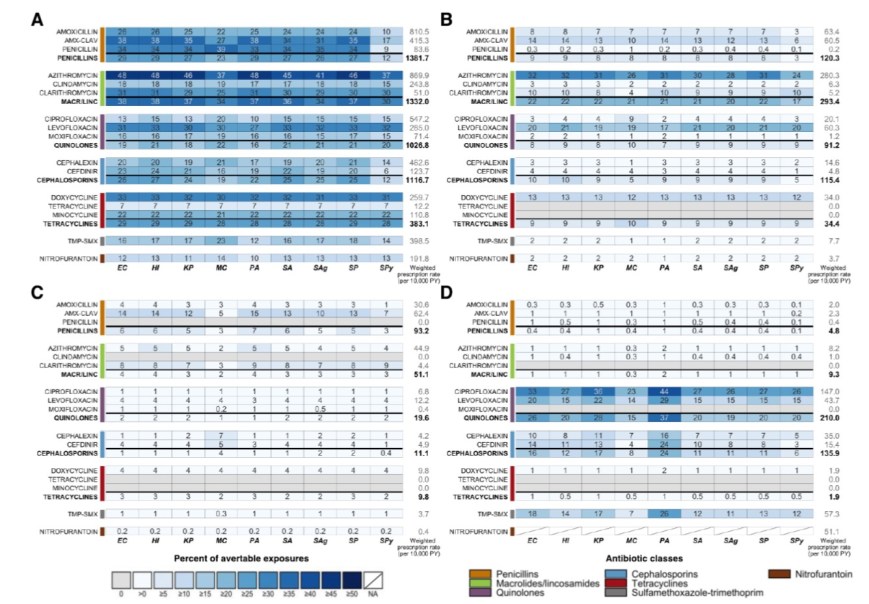
The analysis included sixteen antibiotics that are frequently prescribed in the outpatient setting and nine potentially pathogenic bacterial species that are commonly carried in the normal human microbiome. For each antibiotic-species pair, they estimated the proportion of antibiotic exposures experienced by that species that could be averted under four hypothetical scenarios.

1) Eliminate unnecessary antibiotic use across all outpatient conditions.
2) Eliminate all antibiotic use for outpatient respiratory conditions for which antibiotics are not indicated.
3) Eliminate all antibiotic use for acute sinusitis.
4) Prescribe nitrofurantoin* for all cases of cystitis in women.”

“*Nitrofurantoin- a recommended first-line therapy with good potency against common uropathogens, low levels of resistance, and decreased risk of collateral damage to the intestinal microbiome”

Results

Picture1

Heatmaps showing the estimated percentage of species exposures to each antibiotic or antibiotic class that could be averted if A: unnecessary antibiotic prescriptions across all outpatient conditions, B: all antibiotic use for outpatient respiratory conditions for which antibiotics are not indicated, C: all antibiotic use for acute sinusitis, or D: non-nitrofurantoin treatment of cystitis in women was eliminated. Drug class results include prescriptions of all antibiotics in that class, as identified by the Lexicon Plus classification system.
Abbreviations: Antibiotics (y-axis): AMX-CLAV=amoxicillin-clavulanate,, MACR/LINC=macrolides/lincosamides, TMP-SMX=sulfamethoxazole-trimethoprim;

Organisms (x-axis): EC=E. coli, HI=H. influenzae, KP=K. pneumoniae, MC=M. catarrhalis, PA=P. aeruginosa, SA=S. aureus, SAg=S. agalactiae, SP=S. pneumoniae, SPy=S. pyogenes; PY=person-years


The darker shades in panel A (scenario 1) clearly indicated that “elimination of unnecessary antibiotic prescriptions across all outpatient conditions would prevent 6 to 48% (IQR: 17 to 31%) of antibiotic-species exposures. If all unnecessary antibiotic use could be prevented, over 30% of exposures to amoxicillin-clavulanate, penicillin, azithromycin, clarithromycin, levofloxacin, and doxycycline across most potential pathogens of interest could be averted.

In panel D (scenario 4), they found that prescribing nitrofurantoin not only averted antibiotic exposure in non-causative bacterial species (bystanders) but also in causative species for cystitis in women.
Overall, 27% of ciprofloxacin use is associated with acute cystitis in women. Organisms that are not causative pathogens of cystitis have proportions of avertable exposures close to or less than 27%, but a substantially higher proportion of exposures could be averted among causative pathogens – 33%, 36%, and 44% of ciprofloxacin exposures to E. coli, K. pneumoniae, and P. aeruginosa, respectively.

The study addresses the limitations with regard to data availability and reporting in public database. Authors are cautious and point out,

It is important to note that the reduction in antibiotic exposures estimated here does not translate to the same reduction in the prevalence of resistance or in the morbidity and mortality attributable to resistance. Additionally, in this analysis, we give each exposure equal weight. However, the selective pressure imposed by a single exposure depends on a number of variables, including pharmacokinetics, pharmacodynamics, distribution of bacteria across body sites, and bacterial population size. For example, we might expect that the probability of resistance scales with population size, and thus that an exposure received by an individual with higher bacterial load will have a larger impact on resistance.

Overall, this study indeed provides evidence that “improved prescription of antibiotics has the potential to prevent antibiotic exposure experienced by bacterial species throughout microbiome.

January 22, 2020

In today’s digest read about Lactobacillus mulieris sp. nov. isolated from healthy female urinary tract, diversity of Escherichia coli phages in the Danish wastewater, PLate Coverage Algorithm (PLCA) in culture-enriched metagenomics, and more. Happy reading!

General microbiome

Microbiomes Reduce Their Host’s Sensitivity to Interspecific Interactions – Sara L. Jackrel – mBio

Gut microbiome

Klebsiella michiganensis transmission enhances resistance to Enterobacteriaceae gut invasion by nutrition competition – Rita A. Oliveira – Nature Microbiology

Long-term impact of fecal transplantation in healthy volunteers – Oleg V. Goloshchapov – BMC Microbiology

Efficacy of faecal microbiota transplantation in Crohn’sdisease: a new target treatment?– Liyuan Xiang – Microbial Biotechnology

Resident microbial communities inhibit growth and antibiotic resistance evolution of Escherichia coli in human gut microbiome samples – Michael Baumgartner – bioRxiv

Microreview: Causalities of war: The connection between type VI secretion system and microbiota – Luke P. Allsopp – Cellular Microbiology

Urinary microbiome

*Lactobacillus mulieris sp. nov., a new species of Lactobacillus delbrueckii group – Joana Rocha – International Journal of systematic and evolutionary microbiology

Vaginal microbiome

Vaginal Microbiota Transplantation: The Next Frontier – Kevin DeLong – The Journal of Law, Medicine, & Ethics

Respiratory microbiome

*Culture-enriched metagenomic sequencing enables in-depth profiling of the cystic fibrosis lung microbiota – Fiona J. Whelan – Nature Microbiology

A Refined View of Airway Microbiome in Chronic Obstructive Pulmonary Disease at Species and Strain-levels– Zhang Wang – bioRxiv

Eye microbiome

The closed eye harbors a unique microbiome in dry eye disease – Kent A. Willis – medRxiv

Plant/root/soil microbiome

Root ethylene mediates rhizosphere microbial community reconstruction when chemically detecting cyanide produced by neighbouring plants – Yan Chen – Microbiome

Warming-induced permafrost thaw exacerbates tundra soil carbon decomposition mediated by microbial community– Jiajie Feng – Microbiome

Microbiome composition differs in hybrid and inbred maize – Maggie R. Wagner – bioRxiv

Diversity and plant growth-promoting functions of diazotrophic/N-scavenging bacteria isolated from the soils and rhizospheres of two species of Solanum – Zuluaga Mya – PlosOne

Water microbiome

Molecular Characteristics of Dissolved Organic Nitrogen and Its Interaction with Microbial Communities in a Prechlorinated Raw Water Distribution System – Hang Xu – Environmental Science and Technology

Effects of geographic location and water quality on bacterial communities in full-scale biofilters across North America – Ben Ma – FEMS Microbiology Ecology

Phages and viruses

*Exploring the remarkable diversity of Escherichia coli Phages in the Danish Wastewater Environment, Including 91 Novel Phage Species – Nikoline S. Olsen – bioRxiv

Bioinformatics

Piphillin predicts metagenomic composition and dynamics from DADA2-corrected 16S rDNA sequences – Nicole R. Narayan – BMC Genomics

Network-Based Prediction of Novel CRISPR-Associated Genes in Metagenomes – Jake L. Weissman and Philip L. F. Johnson – mSystems

Review: Integrating Computational Methods to Investigate the Macroecology of Microbiomes – Rilquer Mascarenhas – Frontiers in Genetics

Assessment of single cell RNA-seq statistical methods on microbiome data – Matteo Calgaro – bioRxiv

December 27, 2019

Today’s Digest brings you a report linking gut microbiota and metabolites, a study on dishwasher rubber as a bacterial reservoir, a news piece for your guide to probiotics, and many more. If we don’t see you again in 2019, Happy New Year! May 2020 bring much success and happiness!

General microbiology

Preprint: The Microbe Directory v2.0: An Expanded Database of Ecological and Phenotypical Features of Microbes – Maria A. Sierra et al. – bioRxiv

A novel graph theoretical approach for modeling microbiomes and inferring microbial ecological relationships – Suyeon Kim et al. – BMC Genomics

Antimicrobial resistance

Preprint: Longitudinal linked read sequencing reveals ecological and evolutionary responses of a human gut microbiome during antibiotic treatment – Morteza Roodgar et al. – bioRxiv

Human oral microbiome

Re-initiation of Oral Food Intake Following Enteral Nutrition Alters Oral and Gut Microbiota Communities – Sayaka Katagiri et al. – Frontiers in Cellular and Infection Microbiology

Human respiratory microbiome

Microbiome in Chronic Obstructive Pulmonary Disease: Role of Natural Products Against Microbial Pathogens – Alessia Santoro et al. – Current Medicinal Chemistry

Human gut microbiome

Comparison of Japanese and Indian intestinal microbiota shows diet-dependent interaction between bacteria and fungi – Siddhika Pareek et al. – npj Biofilms and Microbiomes

Review: The influence of dietary patterns on gut microbiome and its consequences for nonalcoholic fatty liver disease – Qing-Song Zhang et al. – Trends in Food Science and Technology

** Relationship between gut microbiota and circulating metabolites in population-based cohorts – Dina Vojinovic et al. – Nature Communications

Human gut microbiota is associated with HIV-reactive immunoglobulin at baseline and following HIV vaccination – Jacob A. Cram et al. – PLoS One

Preprint: The interplay between host genetics and the gut microbiome reveals common and distinct microbiome features for human complex diseases – Fengzhe Xu & Yuanqing Fu et al. – bioRxiv

Effect of Helicobacter pylori on gastrointestinal microbiota: a population-based study in Linqu, a high-risk area of gastric cancer – Yang Guo et al. – Gut

Human gut-microbiome-brain axis

The relationship between the gut microbiome and mild cognitive impairment in patients without dementia: a cross-sectional study conducted in Japan – Naoki Saji et al. – Scientific Reports

Synergistic effects of APOE and sex on the gut microbiome of young EFAD transgenic mice – Juan Maldonado Weng et al. – Molecular Neurodegeneration

Metabolomics

Tech Note: Boost that metabolomic confidence – Vivien Marx – Nature Methods

The total microbiome functions in bacteria and fungi – Robert Starke et al. – Journal of Proteomics

Animal experiments

Allergic inflammation alters the lung microbiome and hinders synergistic co-infection with H1N1 influenza virus and Streptococcus pneumoniae in C57BL/6 mice – Kim S. LeMessurier et al. – Scientific Reports

Jatrorrhizine Balances the Gut Microbiota and Reverses Learning and Memory Deficits in APP/PS1 transgenic mice – Sheng Wang et al. – Scientific Reports

The impact of gut microbiota manipulation with antibiotics on colon tumorigenesis in a murine model – Jae Gon Lee et al. – PLoS One

Maternal milk and fecal microbes guide the spatiotemporal development of mucosa-associated microbiota and barrier function in the porcine neonatal gut – Hongbin Liu et al. – BMC Biology

Built environment microbiome

** The dishwasher rubber seal acts as a reservoir of bacteria in the home environment – Jerneja Zupančič et al. – BMC Microbiology

Plant, root and soil microbiome

Development of microbial communities in organochlorine pesticide contaminated soil: A post-reclamation perspective – Helga E.Balázs et al. – Applied Soil Ecology

Towards simple tools to assess functional effects of contaminants on natural microbial and invertebrate sediment communities – Stéphane Pesce et al. – Environmental Science and Pollution Research

Core rhizosphere microbiomes of dryland wheat are influenced by location and land-use history – Daniel C Schlatter et al. – Applied and Environmental Microbiology

Water and extremophile microbiome

Single molecule sequencing reveals response of manganese-oxidizing microbiome to different biofilter media in drinking water systems – Xin Zhao et al. – Water Research

Prokaryotic Population Dynamics and Viral Predation in a Marine Succession Experiment Using Metagenomics – Jose M. Haro-Moreno et al. – Frontiers in Microbiology

Phages and viruses

News & Views: Phages build anti-defence barriers – Eugene V. Koonin & Mart Krupovic – Nature Microbiology

Microbes in the news

The Best Thing That Happened This Week: Dogs Rule Because They Drool – Sandy Hingston – Philadelphia Magazine

** A guide to the best probiotics – Louisa Richards/Katherine Marengo – Medical News Today

Having a Dog as a Child Is Tied to a Lower Risk of Schizophrenia as an Adult – Nicholas Bakalar – New York Times

Expanding virophage diversity – DOE/Joint Genome Institute

Microbes on the market

Carbiotix to partner with Italian university on neuroinflammation project – Nathan Gray – Nutraingredients

Human Microbiome Market is Expected to Touch US$ 1888.9 Mn by 2026 – Sheila Shipman – News Cast Report

The next frontier – Aaron Massecar – Today’s Veterinary Business

December 23, 2019

In today’s digest read about the subway microbiome (from surface and air samples collected at 16 subway stations in Oslo, Norway), role of Staphylococcus epidermidis in healthy maturation of the nasal microbiome, effect of storage and time on urinary microbiome, and more. Happy Holidays!

General microbiome

The emergence of microbiome centres – Jennifer B. H. Martiny – Nature Microbiology

Subway microbiome

*The subway microbiome: seasonal dynamics and direct comparison of air and surface bacterial communities– Jostein Gohli – Microbiome

Gut microbiome

Engineered E. coli Nissle 1917 for the delivery of matrix-tethered therapeutic domains to the gut– Pichet Praveschotinunt – Nature Communications

Urinary microbiome

*The urinary microbiota composition remains stable over time and under various storage conditions – Caspar Bundgaard-Nielsen – bioRxiv

Vaginal microbiome

Review: Genetic Heterogeneity and Taxonomic Diversity among Gardnerella Species – Joana Castro – Trends in Microbiology

Nasal microbiome

*Staphylococcus epidermidis Contributes to Healthy Maturation of the Nasal Microbiome by Stimulating Antimicrobial Peptide Production – Qian Liu – Cell Host & Microbes

Animal microbiome

Characterization of the Pig Gut Microbiome and Antibiotic Resistome in Industrialized Feedlots in China – Chunlai Wang – mSystems

Animal experiments

Altered microbiota composition reflects enhanced communication in 15q11-13 CNV mice– Dian Eurike Septyaningtrias – Neuroscience Research

Plant/root/soil microbiome

Time after Time: Temporal Variation in the Effects of Grass and Forb Species on Soil Bacterial and Fungal Communities – S. Emilia Hannula – mBio

Habitat filtering shapes the differential structure of microbial communities in the Xilingol grassland– Jie Yang – Scientific Reports

Water microbiome

Metagenomic Insights into the Effects of Seasonal Temperature Variation on the Activities of Activated Sludge– Chenbing Ai – Microorganisms

Viruses

Plant virome reconstruction and antiviral RNAi characterization by deep sequencing of small RNAs from dried leaves – Victor Golyaev – Scientific Reports

Bioinformatics

Identifying the causes and consequences of assembly gaps using a multiplatform genome assembly of a bird-of-paradise – Valentina Peona – bioRxiv

Transcriptome assembly from long-read RNA-seq alignments with StringTie2– Sam Kovaka – Genome Biology

Deconvoluting the diversity of within-host pathogen strains in a multi-locus sequence typing framework – Guo Liang Gan – BMC Bioinformatics

The Generalized Matrix Decomposition Biplot and Its Application to Microbiome Data – Yue Wang – mSystems

December 20, 2019

This may be our last edition of the Microbiome Digest before the holidays kick in. A rich and dynamic Digest brings you all things microbiome (apologies for the tight formatting). An encouraging report on how we can reduce antimicrobial resistance organically, an amazing recovery of a human genome and an oral microbiome from chewed birch pitch thousands of years ago, and a network analysis reveals four levels of hierarchical trophic interactions in the human gut microbiome. Enjoy Reading and Happy Holidays!
Events
BMC Medicine’s upcoming collection, New Frontiers in Diagnosis, Treatment and Management of Neuromuscular Disorders, is soliciting submissions.
Current Issue of The ISME Journal
The 9th Gut Microbiota for Health World Summit – March 7 and 8 2020 in Madrid, Spain
General microbiology
High-order interactions distort the functional landscape of microbial consortia – Sanchez-Gorostiaga & Bajić et al. – PLoS Biology
Antimicrobial resistance
Human skin microbiome
Human oral microbiome
** A 5700 year-old human genome and oral microbiome from chewed birch pitch – Theis Z. T. Jensen et al. – Nature Communications
Press: Ancient “Chewing Gum” Reveals a 5,700-Year-Old Microbiome – Jim Daley – Scientific American
Human respiratory microbiome
Press: Child asthma flare-ups coincide with microbiome changes – JULIA EVANGELOU STRAIT-WUSTL – Futurity
Human gut microbiome
Human vaginal microbiome
Human gut-microbiota-brain axis
Review: Tryptophan Metabolism: A Link Between the Gut Microbiota and Brain – Kan Gao et al. – Advances in Nutrition
Cancer microbiome
Metabolomics
The total microbiome functions in bacteria and fungi – Robert Starke et al. – Journal of Proteomics
Animal experiments
Animal microbiome
Plant, root and soil microbiome
Root microbiomes as indicators of seagrass health – Belinda C Martin et al. – FEMS Microbiology Ecology
Water and extremophile microbiome
Phages and viruses
Technology
Manipulating rod-shaped bacteria with optical tweezers – Zheng Zhang et al. – Scientific Reports
Bioinformatics
** Evidence for a multi-level trophic organization of the human gut microbiome – Tong Wang et al. – PLoS Computational Biology
Microbes in the news
The microbiome is fundamental to both health and disease – Fabian Brockotter – Poultry World
Low FODMAP Diet Helps IDB Patients – Kenny Walter – MDMAG
Oral Health: Caring for the Other Microbiome – Julia Peterman – Whole Foods Magazine
Non-microbiology pick


December 4, 2019

Highlights: Microbiome of human milk, AMON to integrate microbiome and metabolome data, soil microbiomes, skin microbiome based news and many more!

General microbiome

The fight for glycans in reproductive tract microbial ecology – MIH Pishchany – AJOG

Microbiota, a Third Player in the Host–Plasmodium Affair – D Mukherjee – Trends in Parasitology

Pregnancy and early life

Baby’s First Microbes: The Microbiome of Human Milk – MC Collado – How Fermented Foods Feed a Healthy Gut Microbiota

Human respiratory microbiome

Anterior Nares Diversity and Pathobionts Represent Sinus Microbiome in Chronic Rhinosinusitis – ID Boeck – mSphere

Animal microbiome 

Next generation sequencing reveals significant variations in bacterial compositions across the gastrointestinal tracts of the Indian major carps, rohu (Labeo rohita), catla (Catla catla) and mrigal (Cirrhinus cirrhosis) – MJ Foysal – Letters in Applied Microbiology

Plant, root, and soil microbiome

Rewetting of three drained peatlands drives congruent compositional changes in pro- and eukaryotic microbiomes through environmental filtering – M Weil – bioRxiv

The influence of substrate concentration on the culturability of heterotrophic soil microbes isolated by high-throughput dilution-to-extinction cultivation –  R Bartelme – bioRxiv

Rhizosphere: a home for human pathogens – R Sharma – Plant Biotic Interactions

Amplicon sequencing and imputed metagenomic analysis of waste soil and sediment microbiome reveals unique bacterial communities and their functional attributes – SD Mandal – Environmental Monitoring and Assessment

Soil bacterial and fungal communities exhibit distinct long-term responses to disturbance in temperate forests – ED Osburn – Frontiers in Microbiology

Decomposition of mixtures of cover crop residues increases microbial functional diversity – SM Drost – Geoderma

Techniques

AMON: annotation of metabolite origins via networks to integrate microbiome and metabolome data – M Shaffer – BMC Bioinformatics

Identification and quantitation of clinically relevant microbes in patient samples: Comparison of three k-mer based classifiers for speed, accuracy, and sensitivity – GS Watts – PLoS Computational Biology

Extracting the GEMs: Genotype, Environment and Microbiome interactions shaping host phenotypes – BO Oyserman – bioRxiv

Microbes in the news

Korean beauty makers join the rush towards new skin gold mine of microbiome – Pulse

Mode of Delivery May Alter Microbiome, But Study Finds No Link to Later GI Issues – Gastro Endo News

Smart Skin care – Cosmetics Design Europe

The Dynamic Microbiome – Gen Eng News

microRNA Found in Gut Microbiome May Unlock Future Therapeutic Approach for MS – Multiple Sclerosis News Today

A Matchmaker for Microbiomes – Identifying Relationships of Microbes and Metabolites – Scitech Daily

November 6, 2019

Today’s Digest features a large study on the evolution of diet and microbiota in African animals, a review on how diet can alter gut microbiota to fight infectious diseases, and we might reverse specific antibiotic resistance by removing those antibiotics in the environment. Enjoy!

General microbiology

Letter to the Editor: A conceptual framework for the phylogenetically constrained assembly of microbial communities – Daniel Aguirre de Cárcer – Microbiome

Review: The engineering of spatially linked microbial consortia – potential and perspectives – Sami Ben Said et al. – Current Opinion in Biotechnology

Preprint: Selection of representative genomes for 24,706 bacterial and archaeal species clusters provide a complete genome-based taxonomy – Donovan H. Parks et al. – bioRxiv

Antimicrobial resistance

** Rapid decline of bacterial drug-resistance in an antibiotic-free environment through phenotypic reversion – Anett Dunai et al. – eLife

Human respiratory microbiome

Interplay between host-microbe and microbe-microbe interactions in cystic fibrosis – Catherine R. Armbruster et al. – Journal of Cystic Fibrosis

Human gut microbiome

Review: Gastrointestinal Microbiota and Type 1 Diabetes Mellitus: The State of Art – Marilena Durazzo et al. – Journal of Clinical Medicine

Identification of a Shared Microbiomic and Metabolomic Profile in Systemic Autoimmune Diseases – Chiara Bellocchi et al. – Journal of Clinical Medicine

Gut microbiome composition in the Hispanic Community Health Study/Study of Latinos is shaped by geographic relocation, environmental factors, and obesity – Robert C. Kaplan et al. – Genome Biology

Food microbiome

Comparison of microbial communities and physiochemical characteristics of two traditionally fermented vegetables – Qianqian Guan et al. – Food Research International

Animal experiments

** Review: Diet–microbiome–disease: Investigating diet’s influence on infectious disease resistance through alteration of the gut microbiome – Erica V. Harris et al. – PLoS Pathogen

Supplementation of Sesamin Alleviates Stress-Induced Behavioral and Psychological Disorders via Reshaping the Gut Microbiota Structure – Qianxu Wang et al. – Journal of Agricultural and Food Chemistry

Animal microbiome

** Covariation of diet and gut microbiome in African megafauna – Tyler R. Kartzinel et al. – PNAS

Press: Study of African animals illuminates links between environment, diet and gut microbiome – Brown University – Phys.org

Plant, root and soil microbiome

Interactive Effects of Nitrogen-Fixing Bacteria Inoculation and Nitrogen Fertilization on Soybean Yield in Unfavorable Edaphoclimatic Environments – Carlos Felipe dos Santos Cordeiro & Fábio Rafael Echer – Scientific Reports

Impacts of Maize Domestication and Breeding on Rhizosphere Microbial Community Recruitment from a Nutrient Depleted Agricultural Soil – Vanessa L. Brisson et al. – Scientific Reports

Microbial communities and soil chemical features associated with commercial production of the medicinal mushroom Ganoderma lingzhi in soil – Le-Qin Ke et al. – Scientific Reports

Feasibility of bioleaching of heavy metals from sediment with indigenous bacteria using agricultural sulfur soil conditioners – Chuncheng Wu et al. – Science of the Total Environment

Land management and microbial seed load effect on rhizosphere and endosphere bacterial community assembly in wheat – Tim H. Mauchline et al. – Frontiers in Microbiology

Water and extremophile microbiome

Comparative metagenomic analysis of microbial taxonomic and functional variations in untreated surface and reclaimed waters used in irrigation applications – Jessica Chopyk et al. – Water Research

Strong seasonality in arctic estuarine microbial food webs – Colleen T. Kellogg et al. – Frontiers in Microbiology

Evaluation of degradation behavior over tetracycline hydrochloride by microbial electrochemical technology: Performance, kinetics, and microbial communities – Xinhong Peng et al. – Ecotoxicology and Environmental Safety

Groundwater microbial communities and their connection to hydrochemical environment in Golmud, Northwest China – Liang Guo et al. – Science of the Total Environment

Performance of enhanced anaerobic digestion with different pyrolysis biochars and microbial communities – Ruixia Shen et al. – Bioresource Technology

Technology

Optimizing sequencing protocols for leaderboard metagenomics by combining long and short reads – Jon G. Sanders et al. – Genome Biology

Bioinformatics

Microbiota analysis optimization for human bronchoalveolar lavage fluid – Pierre H. H. Schneeberger et al. – Microbiome

The PATRIC Bioinformatics Resource Center: expanding data and analysis capabilities – James J Davis et al. – Nucleic Acids Research

Microbes in the news

Gut microbiome of premature babies is associated with stunted growth – EurekAlert!

Shark Skin Microbiome Protects Wounds From Infection – SciTechDaily

Fiber-rich diet eases son’s asthma, launches professor’s interdisciplinary microbiome research – Jeff Dodge – Colorado State University

Researchers identify certain gut bacteria that may be involved in causing bowel cancer – University of Bristol

Some gut bacteria may increase bowel cancer risk, research suggests – Nicola Davis – The Guardian

Certain Gut Bacteria May Contribute to Bowel Cancer – Technnology Networks

China Approves Alzheimer’s Treatment that Targets the Microbiome – Kerry Grens – The Scientist

Microbes on the market

Loop Genomics launches long-read Microbiome sequencing service at short-read price – Loop Genomics – PR Newswire

October 26, 2019

Highlights: Bacterial communities in aquaculture, crocodiles, tadpoles, mushrooms, coasts, sports facilities; viruses; standardization issues of human microbiome research; some cool events and news hot off the press!


Events and jobs

2019 Genome Center Halloween Symposium – 31/10/2019 – UCD, USA

MB Seminar: Marine Host-Microbiome Interactions: Challenges and Opportunities (Dr. Jonathan Eisen, UC Davis) – 22/11/2019 – UCSD, USA

General microbiome 

Metabolic specializations within a bacterial community to create living rocks – Samantha C Waterworth – bioRxiv

Analysis of bacterial microbiome associated with nylon and copper nets in an aquaculture context – Paula Canada – Aquaculture

The gut-eye-lacrimal gland-microbiome axis in Sjögren Syndrome – Claudia M. Trujillo-Vargas – The Ocular Surface

Multi-site human microbiome

DNA extraction for human microbiome studies: the issue of standardization  – K. Leigh Greathouse Genome Biology

Storage media and not extraction method has the biggest impact on recovery of bacteria from the oral microbiome – Xiaoyan Zhou – Nature

Factors contributing to interindividual variation in retronasal odor perception from aroma glycosides: the role of odorant sensory detection threshold, oral microbiota and hydrolysis in saliva – Mango Parker – ACS

Animal experiments 

Contribution of fungal microbiome to intestinal physiology, early-life immune development and mucosal inflammation in mice – Erik van Tilburg Bernardes – bioRxiv

Animal microbiome 

Gut microbiota structure differs between honey bees in winter and summer – Lucie Kešnerová – bioRxiv

Characterisation of the intestinal microbiota of commercially farmed saltwater crocodiles, Crocodylus porosus – Nicky-Lee Willson – Applied Microbiology and Biotechnology

Changes in intestinal microbial community of Rana chensinensis tadpoles during metamorphosis – Hongyu Yang – Aquaculture

Plant, root, and soil microbiome

Impact of agro-farming activities on microbial diversity of acidic red soils in a Camellia Oleifera Forest – Jun Li – Revista Brasileira de Ciência do Solo

A horizon scan of priorities for coastal marine microbiome research – Stacey M. Trevathan-Tackett – Nature

Water and extremophile microbiome 

Effects of disinfection efficiency on microbial communities and corrosion processes in drinking water distribution systems simulated with actual running conditions – Ying Zhu – Journal of Environmental Sciences

Built environment 

Microbial diversity of bioaerosol inside sports facilities and antibiotic resistance of isolated Staphylococcus spp. – Marta Małecka-Adamowicz – Aerobiologia

Food microbiology

Comparing approaches for capturing bacterial assemblages 2 associated with symptomatic (bacterial blotch) and asymptomatic 3 mushroom (Agaricus bisporus) caps – Samuel J. Martins – APS

Comprehensive Understanding of the Bacterial Populations and Metabolites Profile of Fermented Feed by 16S rRNA Gene Sequencing and Liquid Chromatography–Mass Spectrometry – Wei Jin – MDPI Metabolites

Phages and viruses

Viruses RIG up intestinal immunity – Sanghyun Lee – Nature Immunology

Gut DNA Virome Diversity and Its Association with Host Bacteria Regulate Inflammatory Phenotype and Neuronal Immunotoxicity in Experimental Gulf War Illness – Ratanesh K Seth – MDPI Viruses

Viral quasispecies – Esteban Domingo – PLoS Genetics

Techniques

Effective application of machine learning to microbiome-based classification problems – Begüm D. Topçuoğlu – bioRxiv

LEMMI: A continuous benchmarking platform for metagenomics classifiers – Mathieu Seppey – bioRxiv

Microbes in the news

Even the Fetus Has Gut Bacteria, Study Shows – News Wise

Tropical Air Microbiome Analysis Reveals Daily Cycle, Environmental Drivers – genomeweb

Global Microbiome Sequencing Market – Yahoo

How our day-to-day food intake shapes our gut microbiota – Gut microbiota for health

Tracking down the functions of the microbiome – phys.org

Unhealthy gut microbiome reduces brain synaptic pruning, impairs learning – News Medical

Harnessing the Power of Microbes to Fight Cancer – Medscape.com

October 5, 2019

This weekend, read about how cooking food modifies the microbiome, how bacteria ‘strip off’ to evade antibiotics, and more. Check out an interesting pilot study looking at potential inclusion and exclusion criteria of donors for safe vaginal microbiota transplant. Enjoy!

Events

Bioinformatics for the Microbiome Symposium 2019, Stanford University, Monday October 28.
Some tickets are still available!

General microbiome

Mobile phones as fomites for potential pathogens in hospitals: microbiome analysis reveals hidden contaminants – Rebecca Simmonds – Journal of Hospital Infection

Review: Microbiomes as sources of emergent host phenotypes – J. B. Lynch and E. Y. Hsiao – Science

Vaginal microbiome

*Conceptual Design of a Universal Donor Screening Approach for Vaginal Microbiota Transplant – Kevin DeLong – Frontiers in Cellular and Infection Microbiology

Highly diverse anaerobe-predominant vaginal microbiota among HIV-infected pregnant women in Zambia – Joan T. Price – PlosOne

Urinary microbiome

*Possible role of L-form switching in recurrent urinary tract infection – Katarzyna M. Mickiewicz – Nature Communications

Aerococcus urinae and Globicatella sanguinis Persist in Polymicrobial Urethral Catheter Biofilms Examined in Longitudinal Profiles at the Proteomic Level – Yanbao Yu – Biochemistry Insights

Gut microbiome

*Cooking shapes the structure and function of the gut microbiome – Rachel N. Carmody – Nature Microbiology

Integrated paired-end enhancer profiling and whole-genome sequencing reveals recurrent CCNE1 and IGF2 enhancer hijacking in primary gastric adenocarcinoma – Wen Fong Ooi – Gut

Effects of Low-FODMAP Diet on Symptoms, Fecal Microbiome, and Markers of Inflammation in Patients With Quiescent Inflammatory Bowel Disease in a Randomized Trial – Selina R.Cox – Gastroenterology

Water microbiome

Trophic networks improve the performance of microbial anodes treating wastewater – Christin Koch – npj Biofilms and Microbiomes

Application of a novel molecular technique to characterise the effect of settling on microbial community composition of activated sludge – Luong N.Nguyen – Journal of Environmental Management

Bacterial diversity in Icelandic cold spring sources and in relation to the groundwater amphipod Crangonyx islandicus – Ragnhildur Guðmundsdóttir – PlosOne

Animal microbiome

Looking like the locals – gut microbiome changes post-release in an endangered species – Rowena Chong – Animal microbiome

Animal experiment

Letrozole treatment of pubertal female mice results in activational effects on reproduction, metabolism and the gut microbiome – Pablo Arroyo – PlosOne

Microbiota of MR1 deficient mice confer resistance against Clostridium difficile infection – Ashley D. Smith – PlosOne

Exploring the microbiota of upper respiratory tract during the development of pneumonia in a mouse model – Yoshitomo Morinaga – PlosOne

Plant microbiome

Microbiome profiling of the onion thrips, Thrips tabaci Lindeman (Thysanoptera: Thripidae) – Suresh J. Gawande – PlosOne

Food

Comparison of the microbial composition of African fermented foods using amplicon sequencing – Maria Diaz – Scientific Reports

The impact of grape processing and carbonic maceration on the microbiota of early stages of winemaking – Raffaele Guzzon – Journal of Applied Microbiology

Fungi

Phyllosphere Fungal Communities of Plum and Antifungal Activity of Indigenous Phenazine-Producing Pseudomonas synxantha Against Monilinia laxa – Tamara Janakiev – Frontiers in Microbiology

Microbial communities associated with the black morel Morchella sextelata cultivated in greenhouses – Gian Maria Niccolò Benucci – PeerJ

Viruses

The gut virome in inflammatory bowel disease pathogenesis: From metagenomics to novel therapeutic approaches – Federica Ungaro – United European Gastroenterology Journal

Association of the Eukaryotic Vaginal Virome with Prophylactic Antibiotic Exposure and Reproductive Outcomes in a Subfertile Population Undergoing In Vitro Fertilization: A Prospective Exploratory Study – Ashley M. Eskew – Obstetrics and Gynaecology

Bioinformatics

ProphET, prophage estimation tool: A stand-alone prophage sequence prediction tool with self-updating reference database – João L. Reis-Cunha – PlosOne