
November 30, 2019

Have a nice weekend! In this Digest, we have a set of reviews about the gut-brain axis, covering associations between microbiota and neurological diseases, as well as a set of reviews about the connection between the microbiome and the immune system. We have also a paper about the microbiome from people living in high-altitude environments, and of course, several papers more. 


Human and General Microbiome

Gut microbiota composition in Himalayan and Andean populations and its relationship with diet, lifestyle and adaptation to the high-altitude environment – Andrea Quagliariello – Journal of Anthropological Sciences

Microbiological evidences for gastric cardiac microflora dysbiosis inducing the progression of inflammation – Ruijing Yan – Journal of Gastroenterology and Hepatology

Review: Targeting the gut microbiota for the treatment of irritable bowel syndrome – Charles C. Herndon – The Kaohsiung Journal of Medical Sciences

Review: The Gut Microbiome and Treatment-Resistance in Schizophrenia – Mary V. Seeman – Psychiatric Quarterly

Review: The Role of the Gut Microbiota in the Pathogenesis of Parkinson’s Disease – Dongming Yang – Frontiers in Neurology

Editorial: Interactions of the microbiota with the mucosal immune system – Calum C. Bain – Immunology

Review: Understanding immune-microbiota interactions in the intestine – Philip P. Ahern – Immunology

Review: The interaction of intestinal microbiota and innate lymphoid cells in health and disease throughout life – Stephanie C. Ganal‐Vonarburg – Immunology

Review: Immunological mechanisms underpinning faecal microbiota transplantation for the treatment of inflammatory bowel disease – M. N. Quraishi – Clinical and Experimental Immunology

Review: Population Genetics in the Human Microbiome – Nandita R. Garud – Trends in Genetics

Review: Gut Microbiota And The Use Of Probiotics In Constipation In Children And Adolescents: Systematic Review – Daiane Oliveira Vale San Gomes – Revista Paulista de Pediatria

Review: The gut microbiota modulates both browning of white adipose tissue and the activity of brown adipose tissue – José María Moreno-Navarrete – Reviews in Endocrine and Metabolic Disorders

Decoding Microbiome Research for Clinical Psychiatry – Jane A. Foster – The Canadian Journal of Psychiatry

Lactobacillus iners Is Associated with Vaginal Dysbiosis in Healthy Pregnant Women: A Preliminary Study – Nengneng Zheng – BioMed Research International

Human Endometrial Microbiota at Term of Normal Pregnancies – Claudia Leoni – Genes (MDPI)

Helicobacter pylori Infection Aggravates Dysbiosis of Gut Microbiome in Children With Gastritis – Lu Yang – Frontiers in Cellular and Infection Microbiology

The Effect of Gut Microbiome Composition on Human Immune Responses: An Exploration of Interference by Helminth Infections – Ivonne Martin – Frontiers in Genetics

Metagenome-wide association study of the alterations in the intestinal microbiome composition of ankylosing spondylitis patients and the effect of traditional and herbal treatment – RunYue Huang – Journal of Medical Microbiology 

Gut Microbiota and Cardiometabolic Risk Factors in Hemodialysis Patients: A Pilot Study – Annabel Biruete – Topics in Clinical Nutrition

Habitual animal fat consumption in shaping gut microbiota and microbial metabolites – Yi Wan – Food and Function


Animal Microbiome and Animal Experiments

Division of labor in honey bee gut microbiota for plant polysaccharide digestion – Hao Zheng – PNAS

Exploring interactions between xenobiotics, microbiota, and neurotoxicity in zebrafish – Luísa B. Bertotto – NeuroToxicology

The Skin Microbiota of Eleutherodactylus Frogs: Effects of Host Ecology, Phylogeny, and Local Environment – Liza Garcia-Recinos – Frontiers in Microbiology

The intestinal microbiota of lake anchovy varies according to sex, body size, and local habitat in Taihu Lake, China – Min Jiang – Microbiology Open

Microbial associations and spatial proximity predict North American moose (Alces alces) gastrointestinal community composition – Nicholas M. Fountain‐Jones – Journal of Animal Ecology

Immunodeficiency Promotes Adaptive Alterations of Host Gut Microbiome: An Observational Metagenomic Study in Mice – Shuyu Zheng – Frontiers in Microbiology

Integrative analysis of the gut microbiota and metabolome in rats treated with rice straw biochar by 16S rRNA gene sequencing and LC/MS-based metabolomics – Jie Han – Scientific Reports

Wild specimens of sand fly phlebotomine Lutzomyia evansi, vector of leishmaniasis, show high abundance of Methylobacterium and natural carriage of Wolbachia and Cardinium types in the midgut microbiome – Rafael J. Vivero – Scientific Reports

Ochratoxin A induces liver inflammation: involvement of intestinal microbiota – Wence Wang – Microbiome

Toxicity, Pharmacokinetics, and Gut Microbiome of Oral Administration of Sesterterpene MHO7 Derived from a Marine Fungus – Wei Tian – Marine Drugs


Bioinformatics

AMON: annotation of metabolite origins via networks to integrate microbiome and metabolome data –  M. Shaffer – BMC Bioinformatics

Managing batch effects in microbiome data – Yiwen Wang – Briefings in Bioinformatics

Review: Microbiome Multi-Omics Network Analysis: Statistical Considerations, Limitations, and Opportunities – Duo Jiang – Frontiers in Genetics


Methods

Exploring the chemical space of the human microbiome – Lei Tang – Nature Methods


Other

Microbiome Response to Hot Water Treatment and Potential Synergy With Biological Control on Stored Apples – Birgit Wassermann – Frontiers in Microbiology 

Year in Review: Big data and tiny proteins: shining a light on the dark corners of the gut microbiome – Suzanne Devkota – Nature Reviews Gastroenterology & Hepatology 
 

November 26, 2019

Have a nice day! Today in this Digest, we have papers about the microbiome and colorectal carcinoma and autism spectrum disorder, as well as studies about skin microbiota. We have also a set of papers about the effect of diet or probiotics in different animal systems, as well as some studies in insects. 


Human and General Microbiome

Resistant starch: impact on the gut microbiome and health – Peter DeMartino – Current Opinion in Biotechnology

Mucosal cancer-associated microbes and anastomotic leakage after resection of colorectal carcinoma – Kosuke Mima – Surgical Oncology

Mycobacterial immunomodulation and viral manipulation of neuronal copper efflux in the setting of sporadic Parkinson’s disease: A multi – hit, outside – in hypothesis of its pathogenesis – George D.Vavougios – Medical Hypotheses

Specificity of gut microbiota in children with autism spectrum disorder in Slovakia and its correlation with astrocytes activity marker and specific behavioural patterns – A.Tomova – Physiology & Behavior

Small intestinal bacterial overgrowth is associated with Diarrhea-predominant irritable bowel syndrome by increasing mainly Prevotella abundance – Kang-Qi Wu – Scandinavian Journal of Gastroenterology 

Probiotics of Diverse Origin and Their Therapeutic Applications: A Review – Monika Yadav – Journal of the American College of Nutrition 

Variation of Gut Mucosal Microbiome With Anti-Saccharomyces cerevisiae Antibody Status in Pediatric Crohn Disease – Shivani Kansal – Journal of Pediatric Gastroenterology and Nutrition

Dataset of the microbiome composition in skin lesions caused by lumpy skin disease virus via 16s rRNA massive parallel sequencing – Sören Hansen – Data in Brief 

Characterization of Skin Microbiome in Tinea Pedis – Xiaoping Liu – Indian Journal of Microbiology

Human Milk Microbiota: Transferring the Antibiotic Resistome to Infants – Lahari Das –  Indian Journal of Microbiology

Vertical selection for nuclear and mitochondrial genomes shapes gut microbiota and modifies risks for complex diseases – Youjie Zhang – Physiological Genomics

The relationship of gastric microbiota and Helicobacter pylori infection in pediatrics population – Ruixue Miao – Helicobacter

The impact of vitamin B12 deficiency on infant gut microbiota – Perran Boran – European Journal of Pediatrics

Novel Therapies for Treatment of Food Allergy – Sultan Albuhairi – Immunology and Allergy Clinics

Structural and Functional Bases of Genitourinary Syndrome of Menopause – A. K. Pichigina – Bulletin of Experimental Biology and Medicine

The role of bacteria and its derived metabolites in chronic pain and depression: Recent findings and research progress – Shan Li – International Journal of Neuropsychopharmacology

Microbial supernatants from Mobiluncus mulieris, a bacteria strongly associated with spontaneous preterm birth, disrupts the cervical epithelial barrier through inflammatory and miRNA mediated mechanisms – Carolynn M. Dude – Anaerobe

Overview of prospects for inflammation pathways in autism spectrum disorders – H.Turbé – L’Encéphale


Animal Microbiome and Animal Experiments

The effect of nitrite and sulfide on the antioxidant capacity and microbial composition of the intestines of red swamp crayfish, Procambarus clarkii – Kun Guo – Fish & Shellfish Immunology

Feed supplementation with inulin on broiler performance and meat quality challenged with Clostridium perfringens: Infection and prebiotic impacts – Andréia Guaragni – Microbial Pathogenesis

Strain specific stress-modulating effects of candidate probiotics: a systematic screening in a mouse model of chronic restraint stress – Lotta K. Stenman – Behavioural Brain Research

Effects of the solubility of yeast cell wall preparations on their potential prebiotic properties in dogs – Stephanie de Souza Theodoro – PLoS One

The microbiota of Drosophila suzukii influences the larval development of Drosophila melanogaster – Gabrielle M. Solomon – PeerJ

Host dietary specialization and neutral assembly shape gut bacterial communities of wild dragonflies – Rittik Deb​ – PeerJ

Kestose supplementation exerts bifidogenic effect within fecal microbiota and increases fecal butyrate concentration in dogs – Kaori Ide – Journal of Veterinary Medical Science

Interactions between host and gut microbiota in domestic pigs: a review – Yadnyavalkya Patil – Gut Microbes

Absorptive transport of amino acids by the rat colon – Yuxin Chen – Gastrointestinal and Liver Physiology

Video: Visualization of Candida albicans in the Murine Gastrointestinal Tract Using Fluorescent In Situ Hybridization – Jessica N. Witchley – JoVE

Video: Infecting Mice with Malassezia spp. to Study the Fungus-Host Interaction – Florian Sparber – JoVE


Plant and Soil Microbiome

Assisted phytoremediation of chromium spiked soils by Sesbania Sesban in association with Bacillus xiamenensis PM14: A biochemical analysis – Bashir Ud Din – Plant Physiology and Biochemistry

Exploring the genetic potential of a fosmid metagenomic library from an oil-impacted mangrove sediment for metabolism of aromatic compounds – Sanderson Tarciso Pereira de Sousa – Ecotoxicology and Environmental Safety

November 23, 2019

In today’s digest read about the Darobactin (a new antibiotic that selectively kills Gram-negative pathogens by binding to the BamA protein, located in the external membrane of Gram-negative bacteria), temporal stability of the rumen microbiota, and Gardnerella species (Gardnerella leopoldii, G. swidsinskii, G. piotii, and G. vaginalis) in the vaginal microbiome. And, check out 2019 Holiday Gift Guide For Microbe Lovers. Happy weekend!

General microbiome

*A new antibiotic selectively kills Gram-negative pathogens – Yu Imai – Nature

Read the story behind the paper by Roberto Molar Candanosa, Northeastern University.

Gut microbiome

Review: The human gut bacteria Christensenellaceae are widespread, heritable, and associated with health – Jillian L. Waters & Ruth E. Ley – BMC Biology

The gut microbiota influences how circulating immune cells in humans change from one day to the next – Jonas Schluter – bioRxiv

Vaginal microbiome

*Resolution and Cooccurrence Patterns of Gardnerella leopoldii, G. swidsinskii, G. piotii, and G. vaginalis within the Vaginal Microbiome – Janet E. Hill – Infection and Immunity

Clinical validation of the Aptima Bacterial Vaginosis and Aptima Candida/Trichomonas Vaginitis Assays: results from a prospective multi-center clinical study – Jane R. Schwebke – Journal of Clinical Microbiology

Review: Understanding and interpreting community sequencing measurements of the vaginal microbiome – HL Berman – BJOG : an International Journal of Obstetrics and Gynaecology

Endocervical microbiome

Diversity of endocervical microbiota associated with genital Chlamydia trachomatis infection and infertility among women visiting obstetrics and gynecology clinics in Malaysia – Heng Choon Cheong – PlosOne

Uterine microbiome

Does dysbiotic endometrium affect blastocyst implantation in IVF patients? – Tomoko Hashimoto & Koichi Kyono – Journal of Assisted Reproduction and Genetics

Oral microbiome

Oral microbial community composition is associated with pancreatic cancer: A case‐control study in Iran – Emily Vogtmann – Cancer Medicine

Animal microbiome

*Temporal stability of the rumen microbiota in beef cattle, and response to diet and supplements – Timothy J. Snelling – Animal Microbiome

Development of the duodenal, ileal, jejunal and caecal microbiota in chickens – Laura Glendinning – Animal Microbiome

Mammary microbiome of lactating organic dairy cows varies by time, tissue site, and infection status – Tucker Andrews – PlosOne

Inulin improves the egg production performance and affects the cecum microbiota of laying hens – Hongmei Shang – International Journal of Biological Macromolecules

Animal experiments

Effects of Debaryomyces hansenii treatment on intestinal mucosa microecology in mice with antibiotic-associated diarrhea – Ao Zeng – PlosOne

Microbe-metabolite associations linked to the rebounding murine gut microbiome post-colonization with vancomycin resistant Enterococcus faecium – Andre Mu – bioRxiv

Hepatitis B Virus Infection Alters Gut Microbiota Composition in Mice – Qingfeng Zhu – Front. Cell. Infect. Microbiol.

Human Gut Microbiome Transplantation in Ileitis Prone Mice: A Tool for the Functional Characterization of the Microbiota in Inflammatory Bowel Disease Patients – Abigail R Basson – Inflammatory Bowel Diseases

Effects of an Escherichia coli exopolysaccharide on human and mouse gut microbiota in vitro – Baiyuan Li – International Journal of Biological Macromolecules

Ion Transport Basis of Diarrhea in a Mouse Model of Adoptive T Cell Transfer Colitis – Dulari Jayawarden – Digestive Diseases and Sciences

Water microbiome

Rewetting of three drained peatlands drives congruent compositional changes in pro- and eukaryotic microbiomes through environmental filtering – Micha Weil – bioRxiv

Phages and viruses

Herpes Simplex Virus Infection, Acyclovir and IVIG Treatment All Independently Cause Gut Dysbiosis – Chandran Ramakrishna – bioRxiv

Svetlana’s pick

Gift guide for this holiday season!
by Justine Dees

November 20, 2019

Today’s Digest brings you a comprehensive on microbial recovery after antibiotics, a series of studies in Blood on microbial changes after bone marrow transplant, how global ecological factors can drive soil microbiota evolution, and much more. Enjoy!

General microbiology

Preprint: Horizontal gene transfer drives the evolution of dependencies in bacteria – Akshit Goyal – bioRxiv

Antimicrobial resistance

Cross Journal Series: Health Policy and the Management of Antimicrobial Resistance in LMICs – BMC

** Recovery of the Gut Microbiota after Antibiotics Depends on Host Diet, Community Context, and Environmental Reservoirs – Katharine Michelle Ng et al. – Cell Host & Microbe

Testing sustained soil-to-soil contact as an approach for limiting the abiotic influence of source soils during experimental microbiome transfer – Ryan V Trexler & Terrence H Bell – FEMS Microbiology Letters

Natural products discovery and potential for new antibiotics – Olga Genilloud – Current Opinion in Microbiology

Engineering enzymatic assembly lines to produce new antibiotics – Kenan AJ Bozhüyük et al. – Current Opinion in Microbiology

Human gut microbiome

Antibiotic Exposures and Dietary Intakes Are Associated with Changes in Microbiota Compositions in Allogeneic Hematopoietic Stem Cell Transplant Patients – Chi L. Nguyen et al. – Blood

Impact of Antibiotics on Gut Microbiota Diversity and the Results of a Prospective Dietary Assessment in Patients with Multiple Myeloma Undergoing Autologous Hematopoietic Stem Cell Transplantation – Christopher D’Angelo et al. – Blood

** Impact of Gut Mycobiota Composition on Outcomes after Allogeneic Hematopoietic Cell Transplantation – Florent Malard et al. – Blood

Functional microbiome deficits associated with ageing: Chronological age threshold – Susana Ruiz‐Ruiz et al. – Aging Cell

Human gut-microbiome-brain axis

Review: Gut Microbiota: A Perspective for Psychiatrists – Rea K. et al. – Neuropsychobiology

Metabolomics

Review: Metabolomics biotechnology, applications, and future trends: a systematic review – Qiang Yang et al. – RSC Adv

Animal experiments

Hematopoietic Npc1 mutation shifts gut microbiota composition in Ldlr−/− mice on a high-fat, high-cholesterol diet – Tom Houben et al. – Scientific Reports

Animal microbiome

Cross-kingdom analysis of nymphal-stage Ixodes scapularis microbial communities in relation to Borrelia burgdorferi infection and load – William J Landesman et al. – FEMS Microbiology Ecology

Abdominal microbial communities in ants depend on colony membership rather than caste and are linked to colony productivity – Francisca H. I. D. Segers et al. – Ecology and Evolution

Plant, root and soil microbiome

The invasive potential of a hybrid species: insights from soil chemical properties and soil microbial communities – Feng Sun et al. – Journal of Plant Ecology

** The role of multiple global change factors in driving soil functions and microbial biodiversity – Matthias C. Rillig et al. – Science

Influence of sulfur fertilization on CuO nanoparticles migration and transformation in soil pore water from the rice (Oryza sativa L.) rhizosphere – Lijuan Sun et al. – Environmental Pollution

Water and extremophile microbiome

Effect of temperature on opportunistic pathogen gene markers and microbial communities in long-term stored roof-harvested rainwater – Xiaodong Zhang et al. – Environmental Research

Metabolic profiling of cold adaptation of a deep-sea psychrotolerant Microbacterium sediminis to prolonged low temperature under high hydrostatic pressure – Jin-Mei Xia et al. – Applied Microbiology and Biotechnology

Groundwater cable bacteria conserve energy by sulfur disproportionation – Hubert Müller et al. – The ISME Journal

Bioinformatics

Impact of quality trimming on the efficiency of reads joining and diversity analysis of Illumina paired-end reads in the context of QIIME1 and QIIME2 microbiome analysis frameworks – Attayeb Mohsen et al. – BMC Bioinformatics

Microbes in the news

New Etiology of Rheumatoid Arthritis Identified in the Gut Microbiome – Frieda Wiley – Rheumatology Network

Gut microbiome diversity associates with sleep quality in healthy adults – Allison Clark – Gut Microbiota For Health

Metagenomics Unlocks Unknowns of Diarrheal Disease Cases in Children – John Toon – GA Tech

Clues for predicting premature birth risk may be found in mother’s immune system, microbiome – Amanda Keener – Genetic Literacy Project

Study offers a bird’s eye view of a bird’s smell – Kaylie Connors – Great Lakes Echo

Microbes on the market

Lancôme brings microbiome hub to Hong Kong with DFS – Elena Dimama – DFNI

November 19, 2019

Have a nice Tuesday! Today, in this Digest we have several papers about the microbiome and respiratory health.  We have also papers about the detection of archaeal species in caries biofilm, microbiome and cancer, and microbiome changes by the use of fish oil and their effect on (TMAO)-exacerbated atherogenesis. And of course, more papers… 


Human and General Microbiome

Minireview: The Microbiome, Malignant Fungating Wounds, and Palliative Care – Mridula Vardhan – Frontiers in Cellular and Infection Microbiology

Gut microbiota: from the forgotten organ to a potential key player in the pathology of Alzheimer disease – Dong-oh Seo – The Journals of Gerontology

Presence of Archaea in dental caries biofilms – Naile Dame-Teixeira – Archives of Oral Biology

Increased Moraxella and Streptococcus following severe bronchiolitis is associated with recurrent wheezing – Jonathan M. Mansbach  – Journal of Allergy and Clinical Immunology

Composition and Diversity of Bacterial Community on the Ocular Surface of Patients With Meibomian Gland Dysfunction – Xiaojin Dong – Investigative Ophthalmology & Visual Science 

Diversity of endocervical microbiota associated with genital Chlamydia trachomatis infection and infertility among women visiting obstetrics and gynecology clinics in Malaysia – Heng Choon Cheong – Plos One

Competition Among Gardnerella Subgroups From the Human Vaginal Microbiome – Salahuddin Khan – Frontiers in Cellular and Infection Microbiology

Review: Potential clinical utility of multiple target quantitative polymerase chain reaction (qPCR) array to detect microbial pathogens in patients with chronic obstructive pulmonary disease (COPD) – Hannah E. O’Farrell – Journal of Thoracic Disease 

Review: COPD and the gut-lung axis: the therapeutic potential of fibre – Annalicia Vaughan – Journal of Thoracic Disease 

Review: Chronic obstructive pulmonary disease (COPD) and lung cancer: common pathways for pathogenesis – Brielle A. Parris – Journal of Thoracic Disease 

The Vaginal Community State Types Microbiome-Immune Network as Key Factor for Bacterial Vaginosis and Aerobic Vaginitis – Francesco De Seta – Frontiers in Microbiology

Gut Microbiota in Bipolar Depression and Its Relationship to Brain Function: An Advanced Exploration – Qiaoqiao Lu – Frontiers in Psychiatry

Fish oil is more potent than flaxseed oil in modulating gut microbiota and reducing trimethylamine-N-oxide (TMAO)-exacerbated atherogenesis – Zouyan He – Journal of Agricultural and Food Chemistry 

Characterization of gut microbiota in children with pulmonary tuberculosis – Weiran Li – BMC Pediatrics

Editorial: Bugs, Drugs, and Shrugs – James T. Rosenbaum – Arthritis and Rheumatology

Opinion: Harnessing the Microbiome for Pancreatic Cancer Immunotherapy – Gerardo A. Vitiello – Trends in Cancer


Animal Microbiome / Animal Experiments

Review: Maternal imprinting of the neonatal microbiota colonization in intrauterine growth restricted piglets: a review – Lili Jiang – Journal of Animal Science and Biotechnology

Colonization of the gut microbiota of honey bee (Apis mellifera) workers at different developmental stages – Xiang Dong – Microbiological Research 

Effects of oral exposure to titanium dioxide nanoparticles on gut microbiota and gut-associated metabolism in vivo – Zhangjian Chen – Nanoscale

Sex, Age, and Bacteria: How the Intestinal Microbiota Is Modulated in a Protandrous Hermaphrodite Fish – M. Carla Piazzon – Frontiers in Microbiology

Dynamic Changes in the Microbiome and Mucosal Immune Microenvironment of the Lower Respiratory Tract by Influenza Virus Infection – Liming Gu – Frontiers in Microbiology

Fuzhuan brick tea attenuates high-fat diet-induced obesity and associated metabolic disorders by shaping gut microbiota – Dongmin Liu – Journal of Agricultural and Food Chemistry 


Plant Microbiome

Rapid Detection of Xanthomonas citri pv. fuscans and Xanthomonas phaseoli pv. phaseoli in Common Bean by Loop-Mediated Isothermal Amplification – Bruna Alicia Rafael de Paiva – Plant Disease

Beneficial Plant Microorganisms Affect the Endophytic Bacterial Communities of Durum Wheat Roots as Detected by Different Molecular Approaches – Monica Agnolucci –  Frontiers in Microbiology


Methods

Reproducibility, stability, and accuracy of microbial profiles by fecal sample collection method in three distinct populations – Doratha A. Byrd – Plos One


Bioinformatics

Link-HD: a versatile framework to explore and integrate heterogeneous microbial communities – Laura M Zingaretti – Bioinformatics


Other papers

Antibiotic exposure and risk of Parkinson’s disease in finland: A nationwide case-control study – Tuomas H. Mertsalmi – Movement Disorders


November 17, 2019

Good Morning! Highlights of today’s digest include a promising probiotic effect of Lactobaccillus helveticus on acute liver failure as shown in an animal model study. Findings from another study about soil sterilization and how it leads to healthier soil microbiome and plant growth by modulating promotion of plant and beneficial microbes associations. Finally, check out an investigation aiming to generate a standardized approach for microbiome profiling by evaluating a series of hypervariable regions of 16S gene and estimating community richness across diverse sample types. Many review articles are also posted. Enjoy!

Pregnancy and early life

Acquisition and Development of the Extremely Preterm Infant Microbiota Across Multiple Anatomical Sites – Young et al. – J of Pediatric Gastroebterology and Nutrition

Multi-site human microbiome

Review: Urobiome: In Sickness and in Health – Wojciuk et al. – Microorganisms

Review: The Skin and Gut Microbiome and Its Role in Common Dermatologic Conditions – Ellis et al. – Microorganisms

Human oral microbiome

Analysis of the human oral microbiome from modern and historical samples with SPARSE and EToKi – Achtman and Zhou – bioRxiv

Human vaginal microbiome

HIV infection is associated with preterm delivery independent of vaginal microbiota in pregnant African women – Gudza-Mugabe et al. – The Journal of Infectious Diseases

Human gut microbiome

Review: Microbial Phenolic Metabolites: Which Molecules Actually Have an Effect on Human Health? – Marhuenda-Munoz et al. – Nutrients

Microbial succession during wheat bran fermentation and colonisation by human faecal microbiota as a result of niche diversification – Paepe et al. – ISME

Bifidogenic and butyrogenic effects of young barely leaf extract in an in vitro human colonic microbiota model – Sasaki et al. – AMB Express

Animal experiments

Dietary energy and protein levels influenced the growth performance, ruminal morphology and fermentation and microbial diversity of lambs – Cui et al. – Scientific Reports

*Lactobacillus helveticus R0052 alleviates liver injury by modulating gut microbiome and metabolome in d-galactosamine-treated rats – Wang et al. – Applied Microbiology and Biotechnology

Plant, root and soil microbiome

Evaluation of the ecological restoration of a coal mine dump by exploring the characteristics of microbial communities – Chen et al. – Applied Soil Ecology

*Soil sterilization leads to re-colonization of a healthier rhizosphere microbiome – Li et al. – Rhizosphere

Water and extremophile microbiome

Microbial composition and variability of natural marine planktonic and biofouling communities from the Bay of Bengal – Angelova et al. – Frontiers in Microbiology

Changes to the microbial communities within groundwater in response to a large crustal earthquake in Kumamoto, southern Japan – Morimura et al. – Journal of Hydrology

Increasing oxygen defciency changes rare and moderately abundant bacterial communities in coastal soft sediments – Sinkko et al. – Scientific Reports Nature Research

Probiotics / peribiotics

Review: Recent systems biology approaches for probiotics use in health aspects: a review – Yadave and Shukla – 3 Biotech

Bioinformatics

A phylogenetic model for the recruitment of species into microbial communities and application to studies of the human microbiome – Darcy et al. – bioRxiv

Developing a Reproducible Microbiome Data Analysis Pipeline Using the Amazon Web Services Cloud for a Cancer Research Group: Proof-of-Concept Study – Bai et al. – JMIR Medical Informatics

Techniques

*Evaluation of primer pairs for microbiome profiling across a food chain from soils to humans within the One Health framework – Wasimuddin et al. – bioRxiv

Rapid, selective and single cell electrical detection of antibiotic resistant bacteria – Kumar et al. – bioRxiv

Droplet Digital PCR Technology for Detection of Ilyonectria liriodendri from Grapevine Environmental Samples – Martinez Diz et al. – APS Publications

November 16, 2019

In today’s digest read about the Million Microbiome of Humans Project, problems in studies of the gut microbiome in Parkinson’s disease, and how bats’ gut bacteria are more closely tied to where bats live. Happy weekend!

Gut microbiome

*Review: Increasing Comparability and Utility of Gut Microbiome Studies in Parkinson’s Disease: A Systematic Review – Jeffrey M. Boertien – Journal of Parkinson’s Disease

Microbiome‐immune‐metabolic axis in the epidemic of childhood obesity: Evidence and opportunities – Halle J. Kincaid – Obesity Reviews

Vaginal microbiome

Cervicovaginal microbiome composition drives metabolic profiles in healthy pregnancy – Andrew Oliver – bioRxiv

Respiratory microbiome

Review: The microbiome of the upper respiratory tract in health and disease – Christina Kumpitsch – BMC Biology

Animal experiments

Lactobacillus helveticus R0052 alleviates liver injury by modulating gut microbiome and metabolome in d-galactosamine-treated rats – Qiangqiang Wang – Applied Microbiology and Biotechnology

Comparison of the fecal, cecal, and mucus microbiome in male and female mice after TNBS-induced colitis – Ariangela J. Kozik – PlosOne

Cranberry extracts promote growth of Bacteroidaceae and decrease abundance of Enterobacteriaceae in a human gut simulator model – Kathleen O’Connor – PlosOne

Animal microbiome

*Ecology and Host Identity Outweigh Evolutionary History in Shaping the Bat Microbiome – Holly L. Lutz – mSystems

High-throughput sequencing reveals the core gut microbiota of the mud crab (Scylla paramamosain) in different coastal regions of southern China – Hongling Wei – BMC Genomics

Probiotics

Production of multiple bacteriocins, including the novel bacteriocin gassericin M, by Lactobacillus gasseri LM19, a strain isolated from human milk – Enriqueta Garcia-Gutierrez – bioRxiv

Infected chronic ischemic wound topically treated with a multi-strain probiotic formulation: a novel tailored treatment strategy – Salvatore Venosi – Journal of Translational Medicine

Genomic and epidemiological evidence of bacterial transmission from probiotic capsule to blood in ICU patients – Idan Yelin – Nature Medicine

Water microbiome

Species-level microbiome composition of activated sludge – introducing the MiDAS 3 ecosystem-specific reference database and taxonomy – Marta Nierychlo – bioRxiv

Comparative microbial diversity across temperature gradients in hot springs from Yellowstone and Iceland – Peter T Podar – bioRxiv

Niche partitioning of microbial communities in riverine floodplains – Marc Peipoch – Scientific Reports

Biodegradability of wastewater determines microbial assembly mechanisms in full-scale wastewater treatment plants – Bing Zhang – Water Research

Techniques

Microfluidic cultivation and analysis tools for interaction studies of microbial co-cultures – Alina Burmeister and Alexander Grünberger – Current Opinion in Biotechnology

Selective culture enrichment and sequencing of feces to enhance detection of antimicrobial resistance genes in third-generation cephalosporin resistant Enterobacteriaceae – Leon Peto – PlosOne

Microbiome in News

*Million Microbiome of Humans Project – PRNewswire
Scientists from China, Sweden, Denmark, France, Latvia and other countries will cooperate in microbial metagenomic research, aiming to analyze one million microbial samples and build the world’s largest database of human microbiome.

Childhood Asthma and the Airway Microbiome.

Increased risk of childhood asthma development associated with specific infant airway microbiota 1

By: Puck deRoos

According to the CDC the prevalence of childhood asthma has dramatically increased within the past decade, rising to become the top reason for missed school days and affecting over 6 million children in the United States alone2

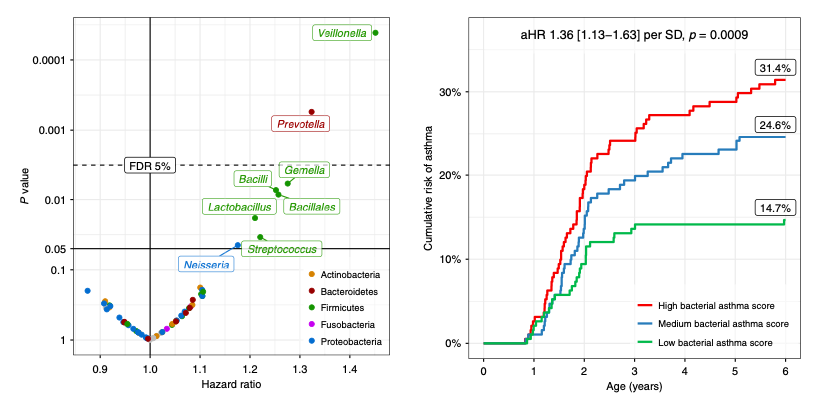
Researchers at the University of Copenhagen have found an association between an infant’s airway microbiota at one month old and the development of childhood asthma by age six. 

Previously, another factor associated with an increased risk of developing childhood asthma was delivery via cesarean section3, while living with farm animals, an older sibling, or attending day care decreased the risk of developing childhood asthma 4,5

In this new study, scientists have specifically found a correlation between the presence of Veillonella (importance 28.1%), Prevotella (23.7%), and Gemella (importance 16.3%) bacteria in the airway at age one month with an increased risk of asthma development before age six. Furthermore, they analyzed the topical airway immune profile from the mucosal lining and discovered an independent correlation between the previously mentioned bacteria and the development of childhood asthma. 

At age one month, researchers found that children who developed asthma had a higher diversity of microbes, but also have an increased ratio of high-risk bacteria Vallonella and Prevotella. They found no association between specific taxa of microbes and asthma development by 6 years at ages 1 week or 3 months old. 

A larger proportion of high-risk bacteria in a critical period of airway immune development poses a major threat to normal development. The children who developed asthma early in life showed a reduction in tumor necrosis factor-α (TNF-α) and interleukin-1β (IL-1β), which are secreted by the bodies immune cells to fight inflammation and infections. They convergently showed an increase in Chemokine (C-C motif) ligand 2 (CCL2) and CCL17 levels in the topical immune profile. 

The airway microbiota samples were taken during the first three months of life from 700 children monitored for the development of asthma using 16S ribosomal RNA gene amplicon sequencing from the population based Copenhagen Prospective Studies on Asthma in Childhood 2010 (COPSAC 2010). The use of this cohort strengthened the results of the study because all children were sampled during infancy before the development of any symptoms, and were uniformly monitored for the development of any asthmatic symptoms through childhood. 

The findings of this study suggest that the development of childhood asthma may be connected to the interactions between early-life airway microbiota and the developing immune system. Because different areas of the human body have different microbial compositions which are considered healthy, determining specific microbes increasing the risk for childhood asthma may provide tools to prevent the disease’s spread.

  1. Thorsen, J., Rasmussen, M.A., Waage, J. et al. Infant airway microbiota and topical immune perturbations in the origins of childhood asthma. Nat Commun 10, 5001 (2019) doi:10.1038/s41467-019-12989-7
  2. The Centers for Disease Control and Prevention (CDC, 2019).
  3. Thavagnanam, S., Fleming, J., Bromley, A., Shields, M. D. & Cardwell, C. R. A meta-analysis of the association between Caesarean section and childhood asthma. Clin. Exp. Allergy38, 629–633 (2008).
  4. Illi, S. et al. Protection from childhood asthma and allergy in Alpine farm environments—the GABRIEL advanced studies. J. Allergy Clin. Immunol. 129, 1470–1477.e6 (2012).
  5. Ball, T. M. et al. Siblings, day-care attendance, and the risk of asthma and wheezing during childhood. N. Engl. J. Med.343, 538–543 (2000).

November 12, 2019

Have a nice day! Today we have reviews about the “hologenome” concept, the influence of stress on IBD flares in children and adults and microbiome and liver disease. In addition, we have articles about the effect of UV light on skin microbiota, alligator microbiome, and more!


Human and General Microbiome

Perspective: The concept of the hologenome, an epigenetic phenomenon, challenges aspects of the modern evolutionary synthesis – Adena Collens – Molecular and Developmental Evolution

Review: Stress Triggers Flare of Inflammatory Bowel Disease in Children and Adults – Yue Sun – Frontiers in Pediatrics

Review: Current US Food and Drug Administration-Approved Pharmacologic Therapies for the Treatment of Irritable Bowel Syndrome with Diarrhea – Darren M. Brenner – Advances in Therapy

Review: Microbiome Modulation in Liver Disease – Eamonn M.M. Quigley – Clinical Liver Disease

Viewpoint: How the joint study of the microbiota and metabolites in different body fluids may aid in the identification of novel disease mechanisms – Jordi Mayneris‐Perxachs – The FEBS Journal

Microbial Metabolite Signaling Is Required for Systemic Iron Homeostasis – Nupur K. Das – Cell Metabolism

Characteristics of Gut Microbiota in Patients With Rheumatoid Arthritis in Shanghai, China – Yang Sun – Frontiers in Cellular and Infection Microbiology

Using compositional principal component analysis to describe children’s gut microbiota in relation to diet and body composition – Claudia Leong – The American Journal of Clinical Nutrition

Skin Exposure to Narrow Band Ultraviolet (UVB) Light Modulates the Human Intestinal Microbiome – Else S. Bosman – Frontiers in Microbiology

The Therapeutic Effect of 1,8-Cineol on Pathogenic Bacteria Species Present in Chronic Rhinosinusitis – Matthias Schürmann – Frontiers in Microbiology

Potential correlation between dietary fiber suppresses microbial conversion of choline to trimethylamine and formation of methylglyoxal – Qian Li – Journal of Agricultural and Food Chemistry


Animal Microbiome

Host-associated microbiomes drive structure and function of marine ecosystems – Laetitia G. E. Wilkins – PLoS Biology

Intake of Watermelon or Its Byproducts Alters Glucose Metabolism, the Microbiome, and Hepatic Proinflammatory Metabolites in High-Fat-Fed Male C57BL/6 J Mice – Alexandra R Becraft – The Journal of Nutrition

Mixed mode bacterial transmission in the common brooding coral Pocillopora acuta – Katarina Damjanovic – Environmental Microbiology

The Effect of Milk Replacer Composition on the Intestinal Microbiota of Pre-ruminant Dairy Calves – James Badman – Frontiers in Veterinary Sciences

Metagenomics Reveals Seasonal Functional Adaptation of the Gut Microbiome to Host Feeding and Fasting in the Chinese Alligator – Ke-Yi Tang – Frontiers in Microbiology

A Short-Term Feeding of Dietary Casein Increases Abundance of Lactococcus lactis and Upregulates Gene Expression Involving Obesity Prevention in Cecum of Young Rats Compared With Dietary Chicken Protein – Fan Zhao – Frontiers in Microbiology

Microbiota assessment across different developmental stages of Dermacentor silvarum (Acari: Ixodidae) revealed stage-specific signatures – Zhang Ruiling – Ticks and Tick-borne Diseases


Food Microbiome

Tracking bacteriome variation over time in Listeria monocytogenes-positive foci in food industry – Pedro Rodríguez-López – International Journal of Food Microbiology


Environmental Microbiome

Response mechanism of microbial community to the environmental stress caused by the different mercury concentration in soils – Lei Wang – Ecotoxicology and Environmental Safety


Other papers

The Bacterial Communities of Little Cigars and Cigarillos Are Dynamic Over Time and Varying Storage Conditions – Eoghan M. Smyth – Frontiers in Microbiology 


Methods and Techniques

Review: A Bioinformatics Guide to Plant Microbiome Analysis – Rares Lucaciu – Frontiers in Plant Sciences

Drug Discovery and Repurposing Inhibits a Major Gut Pathogen-Derived Oncogenic Toxin – Paul Metz – Frontiers in Cellular and Infection Microbiology

Developing a Reproducible Microbiome Data Analysis Pipeline Using the Amazon Web Services Cloud for a Cancer Research Group: Proof-of-Concept Study – Jinbing Bai – JMIR Medical Informatics

Rapid sequencing-based diagnosis of infectious bacterial species from meningitis patients in Zambia – So Nakagawa – Clinical and Translational Immunology 

November 11, 2019

Monday’s morning digest is all about interesting updates in microbiome field – real time sampling of international travelers to study antibiotic resistant bacteria, new techniques on using rectal swabs instead of fecal samples to study infant microbiota, 16srRNA gene sequencing for strain level identification and if neutraceutical consumption helps in multiple sclerosis! Finally some interesting review articles on microbial ecology in wine making and a Movember month featured article on association of gut microbiome with men’s sexual health. Enjoy reading!

General microbiome

From the vineyard to the winery: how microbial ecology drives regional distinctiveness of wine – Di Liu – Frontiers in Microbiology

The Gut Microbiome and Men’s Sexual Health – Mohamad M. Osman – Current Sexual Heath Reports

Antibacterial Soaps and Other Cleaners May Actually Be Aiding in the Development of Super Bacteria – Shimon Shatzmiller – Pharmacology, Toxicology and Pharmaceutics

Dietary lipids, gut microbiota and lipid metabolism – Marc Schoeler – Reviews in Endocrine and Metabolic Disorders

Human microbiome

Functional characterisation of gut microbiota and metabolism in Type 2 diabetes indicates that Clostridiales and Enterococcus could play a key role in the disease – Marina Mora-Ortiz – BioRxiv

Real-time sampling of travelers shows intestinal colonization by multidrug-resistant bacteria to be a dynamic process with multiple transient acquisitions – A. Kantele – BioRxiv

A multi-omic cohort as a reference point for promoting a healthy human gut microbiome – Zhuye Jie – BioRxiv

Antimicrobial resistance gene prevalence in a population of patients with advanced dementia is related to specific pathobionts – Aislinn D. Rowan-Nash – BioRxiv

Genomic characterization of the non-O1/non-O139 Vibrio cholerae strain that caused a gastroenteritis outbreak in Santiago, Chile, 2018 – Mónica Arteaga – BioRxiv

Molecular Reconstruction of the Diet in Human Stool Samples – Frank Maixner – mSystems

Infant microbiome

Impacts of Delivery Mode on Very Low Birth Weight Infants’ Oral Microbiome – Hongping Li – Pediatrics and Neonatology

Biomarker Research in ADHD: the Impact of Nutrition (BRAIN) – study protocol of an open-label trial to investigate the mechanisms underlying the effects of a few-foods diet on ADHD symptoms in children – Tim Stobernack – BMJ Open

Immunometabolic approaches to prevent, detect, and treat neonatal sepsis – Maria Giulia Conti – Pediatric Research

Rectal swabs are a reliable proxy for faecal samples in infant gut microbiota research based on 16S-rRNA sequencing – Marta Reyman – Scientific Reports

Gut microbiome of treatment-naïve MS patients of different ethnicities early in disease course – R. E. Ventura – Scientific Reports

Animal experiments

Vasoactive intestinal peptide deficiency is associated with altered gut microbiota communities in male and female C57BL/6 mice – Manpreet Bains – Frontiers in Microbiology

Metabolic analysis of regionally distinct gut microbial communities using an in vitro platform – Jenni Firrman – Agricultural and Environmental Chemistry

Effect of Diet on the Enteric Microbiome of the Wood-Eating Catfish Panaque nigrolineatus – Harold J. Schreier – Frontiers in Microbiology

A high-fat/high-protein, Atkins-type diet exacerbates Clostridioides (Clostridium) difficile infection in mice, whereas a high-carbohydrate diet protects – Chrisabelle C. Mefferd – BioRxiv

Plant, soil, root microbiome

Effects of repeated applications of urea with DMPP on ammonia oxidizers, denitrifiers, and non-targeted microbial communities of an agricultural soil in Queensland, Australia – Aineah Obed Luchibia – Applied Soil Ecology

Covariation of diet and gut microbiome in African megafauna – Tyler R. Kartzinel – PNAS

Fungal communities resist recovery in sand mine restoration – Miranda Hart – Frontiers in Forest and Global Change

Microbial community structure and ecology in sediments of a pristine mangrove forest – C.O.Santana – BioRxiv

Bridging the gap between single-strain and community-level plant-microbe chemical interactions – Bridget O’Banion – Molecular Plant-Microbe Interactions

A brief from the leaf: latest research to inform our understanding of the phyllosphere microbiome – Johan HJ Leveau – Current Opinion in Microbiology

Water microbiome

Metabolic and biogeochemical consequences of viral infection in aquatic ecosystems Amy E. Zimmerman – Nature Reviews Microbiology

Down to the bone: the role of overlooked endolithic microbiomes in reef coral health – Mathieu Pernice – ISME Journal

Differential responses of stream water and bed sediment microbial communities to watershed degradation – Hehuan Liao – Environment International

B12 production by marine microbial communities and Dinoroseobacter shibae continuous cultures under different growth and respiration rates – Josue Villegas-Mendoza – Aquatic Microbial Ecology

Quantifying the contribution of microbial immigration in engineered water systems – Ran Mei – Microbiome

Microbial community rearrangements in power-to-biomethane reactors employing mesophilic biogas digestate – Norbert Ács – Frontiers in Energy Research

Techniques

Evaluation of 16S rRNA gene sequencing for species and strain-level microbiome analysis – Jethro S. Johnson – Nature Communications

AMR – An R Package for Working with Antimicrobial Resistance Data – Matthijs S. Berends – BioRxiv

Probiotics Prebiotics

The effect of emerging nutraceutical interventions for clinical and biological outcomes in multiple sclerosis: A systematic review – Wolfgang Marx – Multiple Sclerosis and Related Disorders

Resveratrol treatment improves the altered metabolism and related dysbiosis of gut programed by prenatal high-fat diet and postnatal high-fat diet exposure – Yi-Chuan Huang – The Journal of Nutritional Biochemistry

The effects of inulin on gut microbial composition: a systematic review of evidence from human studies – Quentin Le Bastard – European Journal of Clinical Microbiology & Infectious Diseases