October 13, 2016

Ethics and microbiome research, oversimplifying microbiome studies, viruses destroy archaea in the deep seafloor, Clostridium difficile in patients sharing hospital beds.

General microbiome

Perspective: Ethical issues in microbiome research and medicine – Rosamond Rhodes – BMC Medicine

Interview: Science communication: the dangers of oversimplifying microbiome studies – Interview with Lauren Freeman and Saray Ayala – Ben Johnson – NPJ Biofilms Community

Human gut microbiome

Preview: Making It Stick: A Compelling Case for Precision Microbiome Reconstitution – David Berry – Cell Host & Microbe

Preview: A Commensal Protozoan Strikes a Balance in the Gut – P’ng Loke – Cell Host & Microbe

Animal models

Intestinal microbiota could transfer host Gut characteristics from pigs to mice – H. Diao – BMC Microbiology

Plant, root, and soil microbiome

Review: How lichens impact on terrestrial community and ecosystem properties – Johan Asplund – Biological Reviews

Water (and coral) microbiology

Virus-mediated archaeal hecatomb in the deep seafloor – Roberto Danovaro – Science Advances

Press: Deep-Sea Viruses Destroy Archaea. Viruses are responsible for the majority of archaea deaths on the deep ocean floors, scientists show – Ruth Williams – The Scientist

Multifaceted impacts of the stony coral Porites astreoides on picoplankton abundance and community composition – Sean P. McNally – Limnology and Oceanography

Food microbiology

Ultrasound improves chemical reduction of natural contaminant microbiota and Salmonella enterica subsp. enterica on strawberries – Denes Kaic Alves do Rosário – International Journal of Food Microbiology

Techniques

Greater than X kb: a quantitative assessment of preservation conditions on genomic DNA quality, and a proposed standard for genome-quality DNA – Daniel G. Mulcahy – PeerJ

Metagenomics

Diverse Intestinal Bacteria Contain Putative Zwitterionic Capsular Polysaccharides with Anti-inflammatory Properties – C. Preston Neff – Cell Host & Microbe

Other microbiology

Division of labour in microorganisms: an evolutionary perspective – Stuart A. West – Nature Reviews Microbiology

Receipt of Antibiotics in Hospitalized Patients and Risk for Clostridium difficile Infection in Subsequent Patients Who Occupy the Same Bed – Daniel E. Freedberg – JAMA

Press: Antibiotics Encourage Spread of C.diff To Subsequent Patients Who Occupy the Same Bed and Haven’t Received Antibiotics: Interview with Daniel Freedberg – Medical Research

Microbes in the news

The Conversation Gut Series:

RI Hospital receives $500,000 CDC grant to research new approach for combating antibiotic resistanceMicrobiome research will help prevent ongoing spread of multi-drug resistant bacteria – EurekAlert

Science, publishing, and career

How Are Scientists Using Social Media in the Workplace? – Kimberley Collins – PLOS ONE

5 retractions and a sack for Pfizer lead cancer researcher Min-Jean Yin – Leonid Schneider – For Better Science
Pfizer fires employee, requests five retractions – Alison McCook – Retraction Watch

Bik’s non-microbiology Picks

Genomics is failing on diversity – Alice B. Popejoy & Stephanie M. Fullerton – Nature
The Simons Genome Diversity Project: 300 genomes from 142 diverse populations – Swapan Mallick – Nature

SF Bay Area Microbiome Meetup


Screen Shot 2016-10-12 at 06.02PM, Oct 12.png

With so many great Bay Area universities and life science companies working on the human microbiome and other microbial communities, the four of us (see below) thought it would make sense to organize a “Bay Area Microbiome Meetup”. This will – hopefully! – be the start of a series of get-togethers to connect, discuss, and share about the latest microbiome research.

IndieBio, a biotech accelerator located in San Francisco has graciously offered to host the event on Monday November 7, 2016, from 6-9 pm. The theme of this evening will be “Commercializing the microbiome”

The main purpose of our first event will be to get to know each other. We will host microbiome professionals from leading Bay Area research institutions (e.g., UCSF, UC Berkeley, UC Davis, and Stanford) as well as cutting edge life science and biotech organizations.

We will start the evening with a series of short pitches by representatives from several Bay Area microbiome companies and start-ups, followed by a Q&A panel. But most of the evening will be a mixer in an informal setting with food and drinks. This will be a great opportunity to strengthen the connections between microbiome scientists working in academia and biotech, and to learn, socialize, and network.

The event will be free, and drinks and light food will be provided, thanks to generous donations by Second Genome, Assembly Biosciences, One Codex, uBiome, Whole Biome, Osel Inc, and our host IndieBio. Seating is limited.

You can sign up for this event here: bay-area-microbiome-meetup.eventbrite.com

Here is a flyer to forward to other people who might be interested:  november-microbiome-meetup-v4 (PDF).

We hope this Microbiome Meetup will be a great success!

Jun Axup, IndieBio (our host)
Stephen Martis, UC Berkeley (poster design)
George Roche, UC Berkeley
Elisabeth Bik, Stanford University


October 12, 2016

Infants with bronchiolitis, vitamin D receptor GWAS study, long-term effects of stool transplants, genome reduction in insect endosymbionts, San Francisco Bay denitrifying communities, resistomes in metagenomic datasets, Picodroplet WGA for metagenomics.

Jobs and events

Scientist/Senior Scientist opening at WholeBiome

Upcoming mothur and R workshops – Pat Schloss – Mothur

Pregnancy and early life

Rapid change of fecal microbiome and disappearance of Clostridium difficile in a colonized infant after transition from breast milk to cow milk – Manli Y. Davis – Microbiome

Human general and multisite microbiome

Multi-Body-Site Microbiome and Culture Profiling of Military Trainees Suffering from Skin and Soft Tissue Infections at Fort Benning, Georgia – Jatinder Singh – mSphere

Review: The human gastrointestinal tract and oral microbiota in inflammatory bowel disease: a state of the science review – Rosario Lucas López – APMIS

Human oral microbiome

Does obesity influence the subgingival microbiota composition in periodontal health and disease? – Suellen da Silva Maciel – Journal of Clinical Periodontology

Human respiratory microbiome

Throat Swabs and Sputum Culture as Predictors of P. aeruginosa or S. aureus Lung Colonization in Adult Cystic Fibrosis Patients – Darius Seidler – PLOS ONE

Association of nasopharyngeal microbiota profiles with bronchiolitis severity in infants hospitalised for bronchiolitis – Kohei Hasegawa – European Respiratory Journal

Human urinary tract microbiome

Changes in Urinary Microbiome Populations Correlate in Kidney Transplants With Interstitial Fibrosis and Tubular Atrophy Documented in Early Surveillance Biopsies
B. D. Modena – American Journal of Transplantation

Human reproductive tract microbiome

Evidence that the endometrial microbiota has an effect on implantation success or failure – Immaculada Moreno – American Journal of Obstetrics & Gynecology

Human gut microbiome

Integrated multi-omics of the human gut microbiome in a case study of familial type 1 diabetes – Anna Heintz-Buschart – Nature Microbiology

Genome-wide association analysis identifies variation in vitamin D receptor and other host factors influencing the gut microbiota – Jun Wang – Nature Genetics

A Pair of Identical Twins Discordant for Myalgic Encephalomyelitis/Chronic Fatigue Syndrome Differ in Physiological Parameters and Gut Microbiome Composition – Ludovic Giloteaux – American Journal of Case Reports

Unique Features of Ethnic Mongolian Gut Microbiome revealed by metagenomic analysis – Wenjun Liu – Scientific Reports

Long-term effects on luminal and mucosal microbiota and commonly acquired taxa in faecal microbiota transplantation for recurrent Clostridium difficile infection – Jonna Jalanka – BMC Medicine

Press: Healing effect of fecal microbiota transplantation lasts for long – Science Daily

Integrity of the Human Faecal Microbiota following Long-Term Sample Storage – Elahe Kia – PLOS ONE

Review: Signals from the gut microbiota to distant organs in physiology and disease -Bjoern O Schroeder – Nature Medicine

Review: The Gut Microbiome as Therapeutic Target in Central Nervous System Diseases: Implications for Stroke – Katarzyna Winek – Neurotherapeutics

Review: The Multibiome: The Intestinal Ecosystem’s Influence on Immune Homeostasis, Health, and Disease – Heather A Filyk – EBioMedicine

Commentary: Microbiome: Should we diversify from diversity? – Katerina V.-A. Johnson – Gut Microbes

Review: I-Cubed (Infection, Immunity, and Inflammation) and the Human Microbiome – David S. Younger – Neurologic Clinics

Animal models

Microbiota of the Small Intestine Is Selectively Engulfed by Phagocytes of the Lamina Propria and Peyer’s Patches – Masatoshi Morikawa – PLOS ONE

Spatial and Temporal Shifts in Bacterial Biogeography and Gland Occupation during the Development of a Chronic Infection – Daniela Keilberg – mBio

Altered gut microbiota in female mice with persistent low body weights following removal of post-weaning chronic dietary restriction – Jun Chen – Genome Medicine

Animal microbiome

Mosquitoes host communities of bacteria that are essential for development but vary greatly between local habitats – Kerri L. Coon – Molecular Ecology

Review: Dissecting genome reduction and trait loss in insect endosymbionts – Amparo Latorre – Annals of the New York Academy of Sciences

Review: Beneficial microorganisms for honey bees: problems and progresses – Daniele Alberoni – Applied Microbiology and Biotechnology

Plant, root, and soil microbiome

The interplay between soil structure, roots, and microbiota as a determinant of plant–soil feedback – Joana Bergmann – Ecology and Evolution

Soil type determines the distribution of nutrient mobilizing bacterial communities in the rhizosphere of beech trees – O. Nicolitch – Soil Biology and Biochemistry

Bacterial selection for biological control of plant disease: criterion determination and validation – Monalize Salete Mota – Brazilian Journal of Microbiology

Killing two birds with one stone: Natural rice rhizospheric microbes reduce arsenic uptake and blast infections in rice – Venkatachalam Laksmanan – Frontiers in Plant Science

Bioenergy cropping systems that incorporate native grasses stimulate growth of plant-associated soil microbes in the absence of nitrogen fertilization – Lawrence G. Oates – Agriculture, Ecosystems & Environment

Microbiome and Exudates of the Root and Rhizosphere of Brachypodium distachyon, a Model for Wheat – Akitomo Kawasaki – PLOS ONE

Review: Chatting With a Tiny Belowground Member of the Holobiome: Communication Between Plants and Growth-Promoting Rhizobacteria – R. Sharifi – Advances in Botanical Research

Water and extremophile microbiome

Spatiotemporal Characterization of San Francisco Bay Denitrifying Communities: a Comparison of nirK and nirS Diversity and Abundance – Jessica A. Lee – Microbial Ecology

Molecular diversity of plankton in a tropical crater lake switching from hyposaline to subsaline conditions: Lake Oloidien, Kenya – Wei Luo – Hydrobiologia

Distinct biogeographical patterns of marine bacterial taxonomy and functional genes – John Matthew Haggerty – Global Ecology and Biogeography

Waste and pollution microbiology

The shift of microbial communities and their roles in sulfur and iron cycling in a copper ore bioleaching system – Jiaojiao Niu – Scientific Reports

Comparison of the microbial community composition of pristine rock cores and technical influenced well fluids from the Ketzin pilot site for CO2 storage – Linda Pellizzari – Environmental Earth Sciences

Food microbiology

Microbial Succession and Flavor Production in the Fermented Dairy Beverage Kefir – Aaron M. Walsh – mSystems

Spatial and compositional variation in the fungal communities of organic and conventionally grown apple fruit at the consumer point-of-purchase – Ahmed Abdelfattah – Horticulture Research

Bioinformatics and metagenomics

Picodroplet partitioned whole genome amplification of low biomass samples preserves genomic diversity for metagenomic analysis – Maria Hammond – Microbiome

The structure and diversity of human, animal and environmental resistomes – Chandan Pal – Microbiome


TreeScaper: Visualizing and Extracting Phylogenetic Signal from Sets of Trees – Wen Huang – Molecular Biology and Evolution


Proteomics

Mining gut microbiome oligopeptides by functional metaproteome display – Jonas Zantow – Scientific Reports

More microbiology

Multiple Signals Govern Utilization of a Polysaccharide in the Gut Bacterium Bacteroides thetaiotaomicron – Nathan D. Schwalm III – mBio

Living together in biofilms: the microbial cell factory and its biotechnological implications – Mercedes Berlanga – Microbial Cell Factories

Microbes in the news

The Virus With Spider DNA. How did part of a black-widow venom gene end up in a virus that infects one of the world’s most successful bacteria? – Ed Yong – The Atlantic

The Human Microbiome – ASM Cultures microbiome special featuring top scientists and biotech companies

The superhero in your vagina – Kendall Powell – Mosaic Science

Legionella Bacteria Detected at 4 American Airlines Hangars – ABC News

Study Sees Link Between Allergies and the Infant Gut – Robert Lee Hotz – Wall Street Journal

Breasts have their own microbiome – and it could influence your cancer risk
Your breast has its own unique ecosystem – Bec Crew – Science Alert

Researchers restored a colony of microbes in the gut – Ian Graber-Stiehl – Popular Science

Microbes and money

Second Genome Partners with King’s College London to Evaluate the Influence of the Microbiome in Landmark EAT Study – PR Newswire

MicroBiome Therapeutics’ NM504 For Improving Blood Glucose Regulation Is First Microbiome Modulator to Receive U.S. Patent Allowance – PR Web

Seres’s pioneering microbiome drug fails mid-stage trial – Mark Ratner

Farmers Are Manipulating Microbiomes to Help Crops Grow – Sarah Zhang – Wired

October 10, 2016

A Mostly Male Microbiome meeting, host genetics and microbiota in IBD, dysbiosis in dogs and humans, airport door handles, and surfing the world for microbes. I’m back!

Events

I wish I could recommend this, but it has only 2 of the 27 invited speakers are women. This is so sad. See Jonathan Eisen’s blog post about this. Second Annual Human Microbiome Congress in San Diego / North American Microbiome Congress – 24/25 January 2017 – San Diego.

Human gut microbiome

Interplay of host genetics and gut microbiota underlying the onset and clinical presentation of inflammatory bowel disease – Floris Imhann – Gut

Effect of dietary interventions on the intestinal microbiota of Mongolian hosts – Jing Li – Science Bulletin

Animal models

Dog and human inflammatory bowel disease rely on overlapping yet distinct dysbiosis networks – Yoshiki Vázquez-Baeza – Nature Microbiology

Acute Infectious Gastroenteritis Potentiates a Crohn’s Disease Pathobiont to Fuel Ongoing Inflammation in the Post-Infectious Period – Cherrie L. Small – PLOS Pathogens

Press: Diarrhea-Causing Bacteria Promote Growth of Crohn’s-Linked Microbe in Mice – ET Healthworld

Neonatal androgen exposure causes persistent gut microbiota dysbiosis related to metabolic disease in adult female rats – Isabel Moreno-Indias – Endocrinology

Exposure to the Functional Bacterial Amyloid Protein Curli Enhances Alpha-Synuclein Aggregation in Aged Fischer 344 Rats and Caenorhabditis elegans – Shu G. Chen – Scientific Reports

Press: Gut microbiota may have role in neurodegenerative diseases: study – CTV News

Plant, root, and soil microbiome

Review: Too much or not enough: Reflection on two contrasting perspectives on soil biodiversity – Philippe C. Baveye – Soil Biology and Biochemistry

Built environment microbiology

Airport door handles and the global spread of antimicrobial-resistant bacteria: a cross sectional study – Frieder Schaumburg – Clinical Microbiology and Infection

Press: Are Airport Bathrooms Spreading Antibiotic-Resistant Bacteria Globally? – Alex Berezow – American Council on Science and Health

Food microbiology

Extensive Horizontal Gene Transfer in Cheese-Associated Bacteria – Kevin S. Bonham – bioRxiv

Does fingerprinting truly represent the diversity of wine yeasts? A case study with interdelta genotyping of S. cerevisiae strains – Walter P. Pfliegler – Letters in Applied Microbiology

Microbes in the news

This Surfer/PhD Student Is Scraping Bacteria off Surfers Around the World for Science – Dylan Heyden – The Inertia
Surfing the world for microbes – Erika Johnson, UC San Diego – University of California

Weethinking the role of bacteria in incontinence. Researchers look at the role of bacteria in incontinence – EurekAlert

The Unseen Cloud Makers From The Ocean – Jennifer – The Microbial Menagerie

Marine bacteria are the climate’s wild card – ScienceNordic

Researchers Hunt for a Link Between Microbiome and Autism – KQED

The natural wonder that holds the key to the origins of life – and warns of its destruction – Michael Slezak – The Guardian

Did his artificial hips put him at risk of infection when he saw the dentist? – David Lindley – Washington Post

Millions of craft paint units recalled over bacteria concerns – Morgan Maria Pawl – KDVR

Science, publishing, and career

Scientific Misconduct: The Elephant in the Lab. A Response to Parker et al. – Timothy D. Clark – Trends in Ecology & Evolution

Bik’s non-microbiology Picks

As DNA reveals its secrets, scientists are assembling a new picture of humanity – Carl Zimmer

Yale J Biol Med Microbiome Issue

Just a quick post before going to my volunteering job at an elementary school teaching science: The Yale Journal of Biology and Medicine’s September Issue is dedicated to the microbiome. The papers are all Open Access via PubMed Central.

The September issue features reviews, a case report, and some book reviews. Contributions made by Stephanie Schnorr, Catherine Lozupone, and many others.

I contributed as well, with the following review paper. Note that the PDF is 67 MB, but this link goes to the HTML page.

The Hoops, Hopes, and Hypes of Human Microbiome Research – Elisabeth M. Bik – Yale Journal of Biology and Medicine

Recent developments in sequencing methods and bioinformatics analysis tools have greatly enabled the culture-independent analysis of complex microbial communities associated with environmental samples, plants, and animals. This has led to a spectacular increase in the number of studies on both membership and functionalities of these hitherto invisible worlds, in particular those of the human microbiome. The wide variety in available microbiome tools and platforms can be overwhelming, and making sound conclusions from scientific research can be challenging. Here, I will review 1) the methodological and analytic hoops a good microbiome study has to jump through, including DNA extraction and choice of bioinformatics tools, 2) the hopes this field has generated for diseases such as autism and inflammatory bowel diseases, and 3) some of the hypes that it has created, e.g., by confusing correlation and causation, and the recent pseudoscientific commercialization of microbiome research.

Screen Shot 2016-10-05 at 9.29.18 AM.png

October 3, 2016

Gut microbiota in a Belgian nursing home,  aspirin and antibiotics, and Enterococcus in fecal samples of wild marine species. Please note that the next couple of days won’t leave me much time to run literature searches after work-hours. I might publish less and shorter posts, but I hope to be back soon!

Pregnancy and birth

Review: Impact of Maternal Nutrition in Pregnancy and Lactation on Offspring Gut Microbial Composition and Function – Derrick M Chu – Gut Microbes

Human oral microbiome

Microbiome in the Apical Root Canal System of Teeth with Post-Treatment Apical Periodontitis – José F. Siqueira Jr, – PLOS ONE

Bacterial community of saliva in adults with and without periodontitis – Jianye Zhou – Int J Clin Exp Med

Human gut microbiome

Longitudinal survey of Clostridium difficile presence and gut microbiota composition in a Belgian nursing home – Cristina Rodriguez – BMC Microbiology

Dysbiosis of small intestinal microbiota in liver cirrhosis and its association with etiology – Yanfei Chen – Scientific Reports

Editorial: Disease-Associated Microbial Communities in Healthy Relatives: A Bacteria-Filled Crystal Ball? – Mark R. Frey – CMGH Cellular and Molecular Gastroenterology and Hepatology

Review: The association between the gut microbiota and the inflammatory bowel disease activity: a systematic review and meta-analysis – Michelle Prosberg – Scandinavian Journal of Gastroenterology

Animal models

Reduced metabolic activity of gut microbiota by antibiotics can potentiate the antithrombotic effect of aspirin – In Sook Kim – Biochemical Pharmacology

Bacterial Abscess Formation Is Controlled by the Stringent Stress Response and Can Be Targeted Therapeutically – Sarah C. Mansour – EBioMedicine

Press: New weapon for hard-to-treat bacterial infections – Science Daily

Animal microbiome

Enterococcus species diversity in fecal samples of wild marine species by real-time PCR – Aline Weber Medeiros – Canadian Journal of Microbiology

A Metabarcoding Survey on the Fungal Microbiota Associated to the Olive Fruit Fly – Antonino Malacrinò – Microbial Ecology
Drosophila Adaptation to Viral Infection through Defensive Symbiont Evolution – Vitor G. Faria – PLOS Genetics

Press: Evolution of a species also involves the bacteria it carries – Science Daily

Plant, root, and soil microbiome

Assemblages of fungi associated with cork oak forests in northwestern Tunisia – Mourad Ben Hassine Ben Ali – Nova Hedwigia

Nutrient enrichment induces dormancy and decreases diversity of active bacteria in salt marsh sediments – Patrick J. Kearns – Nature Communications

Book chapter: Plant Growth-Promoting Bacteria: A Good Source for Phytoremediation of Metal-Contaminated Soil – Iqra Munir – Phytoremediation

Water and extremophile microbiome

Differences in the Composition of Archaeal Communities in Sediments from Contrasting Zones of Lake Taihu – Xianfang Fan – Frontiers in Microbiology

Seasonal Variation in an Acid Mine Drainage Microbial Community – Ryan Richard Auld – Canadian Journal of Microbiology

Distribution and Diversity of Microbial Eukaryotes in Bathypelagic Waters of the South China Sea – Dapeng Xu – Journal of Eukaryotic Microbiology

Built environment microbiome

Annotating public fungal ITS sequences from the built environment according to the MIxS-Built Environment standard – a report from a May 23-24, 2016 workshop (Gothenburg, Sweden) – Kessy Abarenkov – MycoKeys

Bioaerosols in the Barcelona subway system – X. Triadó-Margarit – Indoor Air

Metagenomics, metatranscriptomics, and bioinformatics

Validation of picogram- and femtogram-input DNA libraries for microscale metagenomics – Christian Rinke – PeerJ

SAMSA: a comprehensive metatranscriptome analysis pipeline – Samuel T. Westreich – BMC Bioinformatics

More microbiology

Resveratrol suppresses NTHi-induced inflammation via up-regulation of the negative regulator MyD88 short – Carla S. Andrews – Scientific Reports

Press: Does red wine have health benefits? – Tim Sandle – Digital Journal
Resveratrol can help to reduce inflammation, study finds – Medical Xpress

Microbes in the news

Does gum disease have a link to cancer, dementia, stroke? – Suzanne Allard Levingston – Washington Post

From smart socks for diabetes to hand rehab: Health 2.0’s most interesting startups. DayTwo seeks to use insights from evaluating users’ microbiome to guide their diet choices – Stephanie Baum – MedCityNews

Graceleigh, Inc. Recalls Sammy’s Milk Baby Food Because of Possible Health Risk – FDA

Microbes and art: Future of Portugal, Fungi Mutarium, and Ahna Skop

The Future of Portugal as explained by Microorganisms –  Clara Rodríguez Fernández – Labiotech

Microbiology makes its mark at the first edition of the London Design Biennale taking place in Somerset House. Portugal’s exhibition by Marta de Menezes uses bacteria and viruses to create changing art that represents the future direction of the country. With the common topic “Design by Utopia“, 30 nations have interpreted utopic and dystopic futures using art to make us think about where we’re headed. Portuguese artist Marta de Menezes decided to use microbiology to represent the changing nature of her nation

Screen Shot 2016-10-02 at 5.55.12 PM.png

Decon by artist Marta de Menezes recreates Mondriaan paintings by colored media with bacteria.


Fungi Mutarium: Growing Food on Toxic Waste – Livin Studio

Livin Studio has, in collaboration with Utrecht University, developed a novel fungi food product grown on (plastic) waste, a prototype to grow it and culinary tools to eat it. (…)

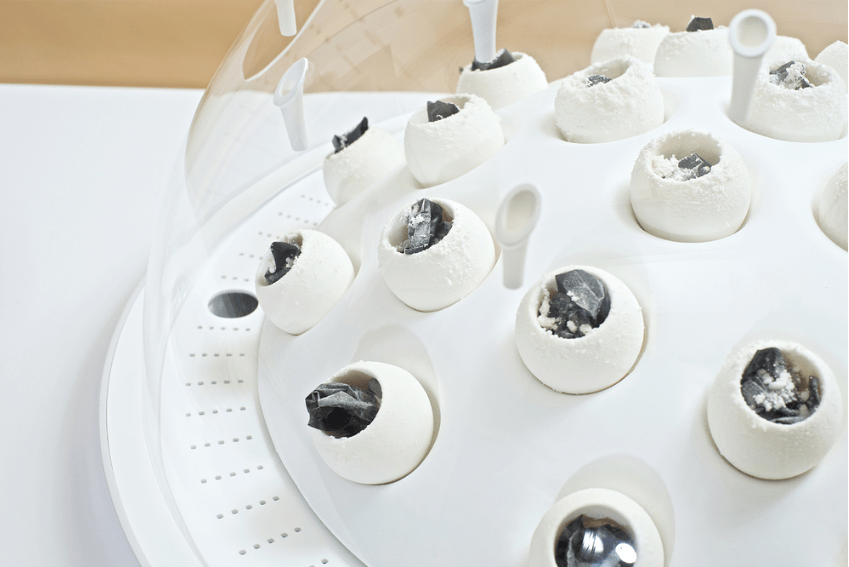
Fungi Mutarium is a prototype that grows edible fungal biomass, mainly the mycelium, as a novel food product. Fungi is cultivated on specifically designed agar shapes that the designers called “FU”. Agar is a seaweed based gelatin substitute and acts, mixed with starch and sugar, as a nutrient base for the fungi. The “FUs” are filled with plastics. The fungi is then inserted, it digests the plastic and overgrows the whole substrate.

screen-shot-2016-10-02-at-6-01-00-pm

Decon by artist Marta de Menezes recreates Mondriaan paintings by colored media with bacteria.


Lecturer uses art to explain science – Derek Clayton – Iowa State Daily

More than 240 students and staff were greeted Monday by the sight of letter-shaped bacteria exploding out of petri dishes at Ahna Skop’s lecture titled “Too Creative for Science?” The petri dishes with bacteria letters were among the many pieces of art the associate professor of genetics at the University of Wisconsin-Madison used to wow the audience during her lecture. (…) Skop uses artwork to make it easier to understand complicated scientific concepts. From displaying bacterial worms to DNA helixes, she believes adding a visual aspect to science is absolutely vital in understanding it.


pecase2_h.jpg

Ahna Skop, credit: University of Wisconsin-Madison


October 1, 2016

Microbiome of tonsils in kidney disease, poisonous salamanders,  Kruger National Park, drought tolerance of plants, and human milk microbiota.

Pregnancy and birth

Distinct patterns in human milk microbiota and fatty acid profiles across specific geographic locations – Himanshu Kumar – Frontiers in Microbiology

ReviewSystematic Review of the Human Milk Microbiota – John L. Fitzstevens – Nutrition in Clinical Practice

Human respiratory microbiome

Comprehensive microbiome analysis of tonsillar crypts in IgA nephropathy – Hirofumi Watanabe – Nephrology Dialysis Transplantation

Human skin microbiome

Microbiota is a primary cause of pathogenesis of chronic wounds – R. Wolcott – Journal of Wound Care

Animal and in vitro models

Transient and Prolonged Response of Chicken Cecum Mucosa to Colonization with Different Gut Microbiota – Jiri Volf – PLOS ONE

Effect of flow and peristaltic mixing on bacterial growth in a gut-like channel – Jonas Cremer – PNAS

Animal microbiome

Cutaneous Bacterial Communities of a Poisonous Salamander: a Perspective from Life Stages, Body Parts and Environmental Conditions – Eugenia Sanchez – Microbial Ecology

Characterization of the Cutaneous Bacterial Communities of Two Giant Salamander Subspecies – Obed Hernández-Gómez – Microbial Ecology

Host-specific functional significance of Caenorhabditis gut commensals – Maureen Berg – Frontiers in Microbiology

Sexual variation of bacterial microbiota of Dendroctonus valens guts and frass in relation to verbenone production – Letian Xu – Journal of Insect Physiology

Plant, root, and soil microbiome

Comparative Metagenomics Reveal Phylum Level Temporal and Spatial Changes in Mycobiome of Belowground Parts of Crocus sativus – Sheetal Ambardar – PLOS ONE

Community composition and abundance of nitrifiers and total bacterial and archaeal populations in savanna soils on contrasting bedrock material in Kruger National Park, South Africa – Saskia Rughoeft – Frontiers in Microbiology

Microbial Mat Compositional and Functional Sensitivity to Environmental Disturbance – Eva C. Preisner – Frontiers in Microbiology

Plant Drought Tolerance Enhancement by Trehalose Production of Desiccation-Tolerant Microorganisms – Juan I. Vílchez – Frontiers in Microbiology

Associations between an Invasive Plant (Taeniatherum caput-medusae, Medusahead) and Soil Microbial Communities – Elise S. Gornish – PLOS ONE

Temporal dynamics of hot desert microbial communities reveal structural and functional responses to water input – Alacia Armstrong – Scientific Reports

Annual Removal of Aboveground Plant Biomass Alters Soil Microbial Responses to Warming – Kai Xue – mBio

Impact of Cropping Systems, Soil Inoculum, and Plant Species Identity on Soil Bacterial Community Structure – Suzanne L. Ishaq – Microbial Ecology

Extremophiles

Metagenomics of Thermophiles with a Focus on Discovery of Novel Thermozymes – María-Eugenia DeCastro – Frontiers in Microbiology

Food microbiology

Kimchi and Other Widely Consumed Traditional Fermented Foods of Korea: A Review – Jayanta Kumar Patra – Frontiers in Microbiology

Biofilms

Fungal Super Glue: The Biofilm Matrix and Its Composition, Assembly, and Functions – Kaitlin F. Mitchell – PLOS Pathogens

Microbes in the news

Dr. Rob Knight, co-founder of American Gut, Discusses the Microbiota and Microbiota testing – Dr Ruscio

Flesh-Eating Bacteria Like It Hot – Hannah Gavin – Discover Magazine

September 30, 2016

When does a probiotic stick around, microbial diversity in 12 French cheese varieties, effects of field conditions on fecal microbiota.

Events

Microbiome Drug Development Summit Europe – 24-26 January 2017, Paris, France

Human oral microbiome

Changes in the oral ecosystem induced by the use of 8% arginine toothpaste – Jessica E. Koopman – Archives of Oral Biology

Review: Role of oral microbiome on oral cancers, a review – Pourya Gholizadeh – Biomedicine & Pharmatherapy

Human skin microbiome

Novel volatiles of skin-borne bacteria inhibit the growth of Gram-positive bacteria and affect quorum-sensing controlled phenotypes of Gram-negative bacteria – Marie Chantal Lemfack – Systematic and Applied Microbiology

Human gut microbiome

Stable Engraftment of Bifidobacterium longum AH1206 in the Human Gut Depends on Individualized Features of the Resident Microbiome – María X. Maldonado-Gómez – Cell Host & Microbe

Press: A Probiotic That Actually Lasts. The bacteria in yogurts have largely failed to live up to their hyped health benefits, but there are other microbes that might – Ed Yong – The Atlantic

Animal microbiome

Consequences of coinfection with protective symbionts on the host phenotype and symbiont titres in the pea aphid system – Mélanie Leclair – Insect Science

CoralsBacterial community diversity of the deep-sea octocoral Paramuricea placomus – Christina A. Kellogg – PeerJ

Plant, root, and soil microbiome

Effects of slope exposure on soil physico-chemical and microbiological properties along an altitudinal climosequence in the Italian Alps – Tommaso Bardelli – Science of the Total Environment

Food microbiology

Highlighting the microbial diversity of 12 French cheese varieties – Eric Dugat-Bony – International Journal of Food Microbiology

Microbial ecology and more microbiology

Macroecology for microbiology – Jay T Lennon – PeerJ Preprint

Review: Fungal Super Glue: The Biofilm Matrix and Its Composition, Assembly, and Functions – Kaitlin F. Mitchell – PLOS Pathogens

Techniques

Effects of field conditions on fecal microbiota – Vanessa L. Hale – Journal of Microbiological Methods

A cost-efficient and simple protocol to enrich prey DNA from extractions of predatory arthropods for large-scale gut content analysis by Illumina sequencing – Henrik Krehenwinkel – Methods in Ecology and Evolution

Microbes in the news

The cost of cheap drugs? Toxic Indian lake is ‘superbug hotspot’ – Zeba Siddiqui – Reuters

Effects of maternal stress on newborn health: An Interview with Dr. Connie Mulligan of the University of Florida – DNA Genotek

Gene-engineered gut bacteria successfully treat sick mice — and could treat humans someday – Leah Samuel – STAT News

Microbiology retreat showcases research – Anamika Veeramani – Yale Daily News

Science, publishing, and career

Working life: Doing science while black – Edward J. Smith – Science

September 29, 2016

Two human skin microbiota papers, effects of eating chili powder, methanogens can tolerate Mars-like low pressure, gut microbiota signatures of longevity.

Human skin microbiome

Topical Decolonization Does Not Eradicate the Skin Microbiota of Community-Dwelling or Hospitalized Adults – Carey-Ann D. Burnham – Antimicrobial Agents and Chemotherapy

Evolutionary and Functional Implications of Hypervariable Loci Within the Skin Virome – Geoffrey D Hannigan – bioRxiv

Human gut microbiome

Healthy subjects differentially respond to dietary capsaicin correlating with the specific gut enterotypes – Chao Kang – Journal of Clinical Endocrinology & Metabolism

Gut microbiota signatures of longevity – Fanli Kong – Current Biology

Shifts in the fecal microbiota associated with adenomatous polyps – Vanessa L Hale – Cancer Epidemiology, Biomarkers & Prevention

When pathogenic bacteria meet the intestinal microbiota – Nathalie Rolhion – Philosophical Transactions of the Royal Society B

Review: From homeostasis to pathology: decrypting microbe–host symbiotic signals in the intestinal crypt – Thierry Pédron – Philosophical Transactions of the Royal Society B

Review: Human microbiome as therapeutic intervention target to reduce cardiovascular disease risk – Annefleur M. Koopen – Current Opinion in Lipidology

Review: The microbial epigenome in metabolic syndrome – Marlene Remely – Molecular Aspects of Medicine

Animal and in vitro models

Probiotic legacy effects on gut microbial assembly in tilapia larvae – Christos Giatsis – Scientific Reports

D-Tryptophan from probiotic bacteria influences the gut microbiome and allergic airway disease – Inge Kepert – The Journal of Allergy and Clinical Immunology

Expression of the aryl hydrocarbon receptor contributes to the establishment of intestinal microbial community structure in mice – Iain A. Murray – Scientific Reports

Animal microbiome

The chicken tracheal microbiome: unexpected preliminary data – Tim Johnson Lab

Contrasting diets reveal metabolic plasticity in the tree-killing beetle, Anoplophora glabripennis (Cerambycidae: Lamiinae) – Charles J. Mason – Scientific Reports

Plant, root, and soil microbiome

Structure, Variation, and Co-occurrence of Soil Microbial Communities in Abandoned Sites of a Rare Earth Elements Mine – Yuanqing Chao – Environmental Science & Technology

Fungal endophytes as priority colonizers initiating wood decomposition – Zewei Song – Functional Ecology

Water and extremophile microbiome

Culture-independent study of bacterial communities in tropical river sediment  –
Honglada Thoetkiattikul – Bioscience, Biotechnology, and Biochemistry

Oligotrophic lagoons of the South Pacific Ocean are home to a surprising number of novel eukaryotic microorganisms – Eunsoo Kim – Environmental Microbiology

Low Pressure Tolerance by Methanogens in an Aqueous Environment: Implications for Subsurface Life on Mars – R. L. Mickol – Origins of Life and Evolution of Biospheres

Microbes and robots

Did not quite grasp the abstract, but cool picture of a small robot: Bioinspired decision architectures containing host and microbiome processing units – K C Heyde – Bioinspiration & Biomimetics

Microbes in the news
Research Breakthrough Could Help Diagnose, Treat Biofilm Infections – Lorena Anderson – UC Merced

Profile: Dr. Bonnie Bassler, a pioneer who’s investigating how bacteria communicate – Joe Tyrrell – New Jersey Spotlight

World’s Largest MS Research Conference Highlights Advances in Progressive MS, Gut Microbiome, Managing Symptoms, and New Approaches to Restoring Function – National MS Society

Assembly Biosciences Announces Key Additions to Microbiome Team – Globe Newswire

Can’t lose weight? You might be able to blame it on your parents—and their gut bacteria – Akshat Rathi – Quartz
Are Your Genes Making It Hard To Get Into Your Jeans? – Julie Taylor – uBiome blog

Deadly Mud-Dwelling Bacteria Melioidosis Stirs In The Northern Territory – Cayla Dengate – Huffington Post Australia


Science, publishing, and career

Young researchers thrive in life after academia. Alternative career paths should be celebrated, not seen as a compromise. – Nature