
Childhood Asthma and the Airway Microbiome.

Increased risk of childhood asthma development associated with specific infant airway microbiota 1

By: Puck deRoos

According to the CDC the prevalence of childhood asthma has dramatically increased within the past decade, rising to become the top reason for missed school days and affecting over 6 million children in the United States alone2

Researchers at the University of Copenhagen have found an association between an infant’s airway microbiota at one month old and the development of childhood asthma by age six. 

Previously, another factor associated with an increased risk of developing childhood asthma was delivery via cesarean section3, while living with farm animals, an older sibling, or attending day care decreased the risk of developing childhood asthma 4,5

In this new study, scientists have specifically found a correlation between the presence of Veillonella (importance 28.1%), Prevotella (23.7%), and Gemella (importance 16.3%) bacteria in the airway at age one month with an increased risk of asthma development before age six. Furthermore, they analyzed the topical airway immune profile from the mucosal lining and discovered an independent correlation between the previously mentioned bacteria and the development of childhood asthma. 
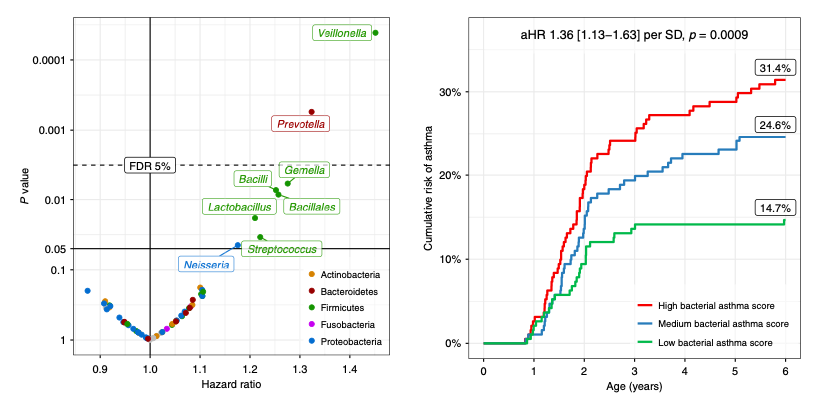
At age one month, researchers found that children who developed asthma had a higher diversity of microbes, but also have an increased ratio of high-risk bacteria Vallonella and Prevotella. They found no association between specific taxa of microbes and asthma development by 6 years at ages 1 week or 3 months old. 

A larger proportion of high-risk bacteria in a critical period of airway immune development poses a major threat to normal development. The children who developed asthma early in life showed a reduction in tumor necrosis factor-α (TNF-α) and interleukin-1β (IL-1β), which are secreted by the bodies immune cells to fight inflammation and infections. They convergently showed an increase in Chemokine (C-C motif) ligand 2 (CCL2) and CCL17 levels in the topical immune profile. 

The airway microbiota samples were taken during the first three months of life from 700 children monitored for the development of asthma using 16S ribosomal RNA gene amplicon sequencing from the population based Copenhagen Prospective Studies on Asthma in Childhood 2010 (COPSAC 2010). The use of this cohort strengthened the results of the study because all children were sampled during infancy before the development of any symptoms, and were uniformly monitored for the development of any asthmatic symptoms through childhood. 

The findings of this study suggest that the development of childhood asthma may be connected to the interactions between early-life airway microbiota and the developing immune system. Because different areas of the human body have different microbial compositions which are considered healthy, determining specific microbes increasing the risk for childhood asthma may provide tools to prevent the disease’s spread.

  1. Thorsen, J., Rasmussen, M.A., Waage, J. et al. Infant airway microbiota and topical immune perturbations in the origins of childhood asthma. Nat Commun 10, 5001 (2019) doi:10.1038/s41467-019-12989-7
  2. The Centers for Disease Control and Prevention (CDC, 2019).
  3. Thavagnanam, S., Fleming, J., Bromley, A., Shields, M. D. & Cardwell, C. R. A meta-analysis of the association between Caesarean section and childhood asthma. Clin. Exp. Allergy38, 629–633 (2008).
  4. Illi, S. et al. Protection from childhood asthma and allergy in Alpine farm environments—the GABRIEL advanced studies. J. Allergy Clin. Immunol. 129, 1470–1477.e6 (2012).
  5. Ball, T. M. et al. Siblings, day-care attendance, and the risk of asthma and wheezing during childhood. N. Engl. J. Med.343, 538–543 (2000).

November 11, 2019

Monday’s morning digest is all about interesting updates in microbiome field – real time sampling of international travelers to study antibiotic resistant bacteria, new techniques on using rectal swabs instead of fecal samples to study infant microbiota, 16srRNA gene sequencing for strain level identification and if neutraceutical consumption helps in multiple sclerosis! Finally some interesting review articles on microbial ecology in wine making and a Movember month featured article on association of gut microbiome with men’s sexual health. Enjoy reading!

General microbiome

From the vineyard to the winery: how microbial ecology drives regional distinctiveness of wine – Di Liu – Frontiers in Microbiology

The Gut Microbiome and Men’s Sexual Health – Mohamad M. Osman – Current Sexual Heath Reports

Antibacterial Soaps and Other Cleaners May Actually Be Aiding in the Development of Super Bacteria – Shimon Shatzmiller – Pharmacology, Toxicology and Pharmaceutics

Dietary lipids, gut microbiota and lipid metabolism – Marc Schoeler – Reviews in Endocrine and Metabolic Disorders

Human microbiome

Functional characterisation of gut microbiota and metabolism in Type 2 diabetes indicates that Clostridiales and Enterococcus could play a key role in the disease – Marina Mora-Ortiz – BioRxiv

Real-time sampling of travelers shows intestinal colonization by multidrug-resistant bacteria to be a dynamic process with multiple transient acquisitions – A. Kantele – BioRxiv

A multi-omic cohort as a reference point for promoting a healthy human gut microbiome – Zhuye Jie – BioRxiv

Antimicrobial resistance gene prevalence in a population of patients with advanced dementia is related to specific pathobionts – Aislinn D. Rowan-Nash – BioRxiv

Genomic characterization of the non-O1/non-O139 Vibrio cholerae strain that caused a gastroenteritis outbreak in Santiago, Chile, 2018 – Mónica Arteaga – BioRxiv

Molecular Reconstruction of the Diet in Human Stool Samples – Frank Maixner – mSystems

Infant microbiome

Impacts of Delivery Mode on Very Low Birth Weight Infants’ Oral Microbiome – Hongping Li – Pediatrics and Neonatology

Biomarker Research in ADHD: the Impact of Nutrition (BRAIN) – study protocol of an open-label trial to investigate the mechanisms underlying the effects of a few-foods diet on ADHD symptoms in children – Tim Stobernack – BMJ Open

Immunometabolic approaches to prevent, detect, and treat neonatal sepsis – Maria Giulia Conti – Pediatric Research

Rectal swabs are a reliable proxy for faecal samples in infant gut microbiota research based on 16S-rRNA sequencing – Marta Reyman – Scientific Reports

Gut microbiome of treatment-naïve MS patients of different ethnicities early in disease course – R. E. Ventura – Scientific Reports

Animal experiments

Vasoactive intestinal peptide deficiency is associated with altered gut microbiota communities in male and female C57BL/6 mice – Manpreet Bains – Frontiers in Microbiology

Metabolic analysis of regionally distinct gut microbial communities using an in vitro platform – Jenni Firrman – Agricultural and Environmental Chemistry

Effect of Diet on the Enteric Microbiome of the Wood-Eating Catfish Panaque nigrolineatus – Harold J. Schreier – Frontiers in Microbiology

A high-fat/high-protein, Atkins-type diet exacerbates Clostridioides (Clostridium) difficile infection in mice, whereas a high-carbohydrate diet protects – Chrisabelle C. Mefferd – BioRxiv

Plant, soil, root microbiome

Effects of repeated applications of urea with DMPP on ammonia oxidizers, denitrifiers, and non-targeted microbial communities of an agricultural soil in Queensland, Australia – Aineah Obed Luchibia – Applied Soil Ecology

Covariation of diet and gut microbiome in African megafauna – Tyler R. Kartzinel – PNAS

Fungal communities resist recovery in sand mine restoration – Miranda Hart – Frontiers in Forest and Global Change

Microbial community structure and ecology in sediments of a pristine mangrove forest – C.O.Santana – BioRxiv

Bridging the gap between single-strain and community-level plant-microbe chemical interactions – Bridget O’Banion – Molecular Plant-Microbe Interactions

A brief from the leaf: latest research to inform our understanding of the phyllosphere microbiome – Johan HJ Leveau – Current Opinion in Microbiology

Water microbiome

Metabolic and biogeochemical consequences of viral infection in aquatic ecosystems Amy E. Zimmerman – Nature Reviews Microbiology

Down to the bone: the role of overlooked endolithic microbiomes in reef coral health – Mathieu Pernice – ISME Journal

Differential responses of stream water and bed sediment microbial communities to watershed degradation – Hehuan Liao – Environment International

B12 production by marine microbial communities and Dinoroseobacter shibae continuous cultures under different growth and respiration rates – Josue Villegas-Mendoza – Aquatic Microbial Ecology

Quantifying the contribution of microbial immigration in engineered water systems – Ran Mei – Microbiome

Microbial community rearrangements in power-to-biomethane reactors employing mesophilic biogas digestate – Norbert Ács – Frontiers in Energy Research

Techniques

Evaluation of 16S rRNA gene sequencing for species and strain-level microbiome analysis – Jethro S. Johnson – Nature Communications

AMR – An R Package for Working with Antimicrobial Resistance Data – Matthijs S. Berends – BioRxiv

Probiotics Prebiotics

The effect of emerging nutraceutical interventions for clinical and biological outcomes in multiple sclerosis: A systematic review – Wolfgang Marx – Multiple Sclerosis and Related Disorders

Resveratrol treatment improves the altered metabolism and related dysbiosis of gut programed by prenatal high-fat diet and postnatal high-fat diet exposure – Yi-Chuan Huang – The Journal of Nutritional Biochemistry

The effects of inulin on gut microbial composition: a systematic review of evidence from human studies – Quentin Le Bastard – European Journal of Clinical Microbiology & Infectious Diseases

November 8, 2019

Today’s week-end digest is about new bioinformatic tools (MGnify, PIME, MDiNE) for microbiota analysis, how chemical and built environment of home affects human microbiota and  guidelines for the gut microbiome studies in hypertension.

General microbiome

Adaptation of the Gut Microbiota to Modern Dietary Sugars and Sweeteners – Sara C. Di Rienzi – Advances in Nutrition

Bacteriophages in gastroenterology—from biology to clinical applications – João Sabino – Alimentary Pharmacology and Therapeutics

Boosting natural history research via metagenomic clean-up of crowdsourced feces – Amrita Srivathsan – Plos Biology

Human microbiome

Lower gut microbiome diversity and higher abundance of proinflammatory genus Collinsella are associated with biopsy-proven nonalcoholic steatohepatitis – Stuart Astbury – Gut Microbes

Guidelines for Transparency on Gut Microbiome Studies in Essential and Experimental Hypertension – Francine Z. Marques – Hypertension

The association between dietary fibre deficiency and high-income lifestyle-associated diseases: Burkitt’s hypothesis revisited – Stephen J. O’Keefe – The Lancet Gastroenterology and Hepatology

Animal experiments

Bacterial Swarming as a Protective Response to Intestinal Stress – Weijie Chen – BioRxiv

Flaxseed oil supplementation improves intestinal function and immunity, associated with altered intestinal microbiome and fatty acid profile in pigs with intrauterine growth retardation – Lianqiang Che – Food and Function

Gamma-aminobutyric acid-producing lactobacilli positively affect metabolism and depressive-like behaviour in a mouse model of metabolic syndrome – E. Patterson – Scientific Reports

Plant, root and soil microbiome

Short term effects of different green manure amendments on the composition of main microbial groups and microbial activity of a submerged rice cropping system – Muhammad Israr Khan – Applied Soil Ecology

Cost-effective in-situ remediation technologies for complete mineralization of dyes contaminated soils – Vipul R. Patel – Chemosphere

Distinct Microbial Community of Phyllosphere Associated with Five Tropical Plants on Yongxing Island, South China Sea – Lijun Bao – Microorganisms

Tracing the evolutionary routes of plant–microbiota interactions – Carmen Escudero-Martinez – Current Opinion in Microbiology

Water microbiome

Diet shapes cold‐water corals bacterial communities – Pierre E. Galand – Environmental Microbiology

Built Environment

Home chemical and microbial transitions across urbanization – Laura-Isobel McCall – Nature Microbiology

Techniques

Learning representations of microbe–metabolite interactions – James T. Morton – Nature Methods

MGnify: the microbiome analysis resource in 2020 – Alex L. Mitchell – Nucleic Acids Research

PIME: A package for discovery of novel differences among microbial communities – Luiz Fernando W. Roesch – Molecular Ecology Resources

MDiNE: A model to estimate differential co-occurrence networks in microbiome studies – Kevin McGregor – Bioinformatics

Probiotics

Fermentation of plant-based milk alternatives for improved flavour and nutritional value – Muzi Tangyu – Applied Microbiology and Biotechnology

Modulations of Probiotics on Gut Microbiota in a 5‐Fluorouracil‐Induced Mouse Model of Mucositis – Chun Yan Yeung – Journal of Gastroenterology and Hepatology

The effect of an additive containing three Lactobacillus species on the fermentation pattern and microbiological status of silage – Maja Fijałkowska – Journal of the Science of Food and Agriculture

Microbes in the news

Gut Microbiome Puts the Brakes on Iron Absorption – Michigan Medicine

The Link Between Sleep and Your Gut Microbiome – Health central

Microbiome in China: Cosmetic trend will ‘heat up’ by the end of 2020, says expert – Cosmetics Design-Asia

Enterome Enters Research Collaboration With Major Cancer Center Focused on New Microbiome-derived Immunotherapies – Yahoo Finance

Non Microbiology Picks

Is running associated with a lower risk of all-cause, cardiovascular and cancer mortality, and is the more the better? A systematic review and meta-analysis – Zeljko Pedisic – British Journal of Sports Medicine

November 5, 2019

Today, in this brief digest:  microbiome and metabolic signatures in IBS, the influence of US immigration on antimicrobial resistance gene spreading, the importance of microbiota delivery, the potential role of the microbiome in head and neck cancer oncogenesis, and more other papers. Have a nice day!


Human or General Microbiome

The internationalization of human microbiome research – Ana Maria Porras – Current Opinion in Microbiology 

Identification of Gut Microbiota and Metabolites Signature in Patients With Irritable Bowel Syndrome – Shengtao Zhu – Frontiers in Cellular and Infection Microbiology 

Incidence of Bloodstream Infections, Length of Hospital Stay, and Survival in Patients With Recurrent Clostridioides difficile Infection Treated With Fecal Microbiota Transplantation or Antibiotics: A Prospective Cohort Study – Gianluca Ianiro – Annals of Internal Medicine

Delivery to the gut microbiota: A rapidly proliferating research field – Adi Seifert – Advances in Colloid and Interface Science

Potential role of microbiome in oncogenesis, outcome prediction and therapeutic targeting for head and neck cancer – Ester Orlandi – Oral Oncology

Alterations in Oral Microbiota in HIV are Related to Decreased Pulmonary Function – Libing Yang – American Journal of Respiratory and Critical Care Medicine

Impact of delivery mode-associated gut microbiota dynamics on health in the first year of life – Marta Reyman – Nature Communication

Periodontopathogenic microbiota, infectious mechanisms and preterm birth: analysis with structural equations (cohort-BRISA) – Elisa Miranda Costa – Archives of Gynecology and Obstetrics

Guidelines for Transparency on Gut Microbiome Studies in Essential and Experimental Hypertension – Francine Z. Marques – Hypertension

US immigration is associated with rapid and persistent acquisition of antibiotic resistance genes in the gut – Quentin Le Bastard – Clinical Infectious Diseases


Beneficial compounds and microbes

Changes in stool frequency following chicory inulin consumption, and effects on stool consistency, quality of life and composition of gut microbiota – Anthony W. Watson – Food Hydrocolloids

Prophages in Lactobacillus reuteri are associated with fitness trade-offs but can increase competitiveness in the gut ecosystem – Jee-Hwan Oh – Applied and Environmental Microbiology


Animal Microbiome / Animal Experiments

Effect of Metformin on Short-Term High-Fat Diet-Induced Weight Gain and Anxiety-Like Behavior and the Gut Microbiota – Shuqin Ji – Frontiers in Endocrinology 

Both gut microbiota and cytokines act to atherosclerosis in ApoE-/- mice – Qiuxia Liu – Microbial Pathogenesis 

The Effect of Clostridium butyricum on Gut Microbiota, Immune Response and Intestinal Barrier Function During the Development of Necrotic Enteritis in Chickens – Ting Huang – Frontiers in Microbiology

Lactic Acid Treatment of Cereals and Dietary Phytase Modified Fecal Microbiome Composition Without Affecting Expression of Virulence Factor Genes in Growing Pigs – Jutamat Klinsoda – Frontiers in Microbiology

Spatial and temporal axes impact ecology of the gut microbiome in juvenile European lobster (Homarus gammarus) – Corey C. Holt – The ISME Journal 

An antibiotic depleted microbiome drives severe Campylobacter jejuni-mediated Type 1/17 colitis, Type 2 autoimmunity and neurologic sequelae in a mouse model – Phillip T. Brooks – Journal of Neuroimmunology


Environmental Microbiome

Exploration of the antibiotic resistome in a wastewater treatment plant by a nine-year longitudinal metagenomic study – Xiaole Yin – Environment International


Bioinformatics

Embracing Ambiguity in the Taxonomic Classification of Microbiome Sequencing Data – Nidhi Shah – Frontiers in Genetics

Fueling ab initio folding with marine metagenomics enables structure and function predictions of new protein families – Yan Wang – Genome Biology


Techniques

Microbiota Analysis Using Two-step PCR and Next-generation 16S rRNA Gene Sequencing – Shailesh K. Shahi – JoVE

Optimizing microbiome sequencing for small intestinal aspirates: validation of novel techniques through the REIMAGINE study – Gabriela Guimaraes Sousa Leite – BMC Microbiology

November 4, 2019

Good Morning! Highlights of today’s digest include a skin microbiome study in leprosy disease in Indian patients, another study shows findings from a mouse model and suggests vitamin B6 may have a therapeutic potential for treatment of chronic stress-induced gastritis. Finally, metagenomic sequencing and assembly of bacteria from different soils show how a soil type can influence genetic potential of bacteria for production of specialized metabolites such as antibiotics.

General microbiome

Review: Recent metabolomics and gene editing approaches for synthesis of microbial secondary metabolites for drug discovery and development – Sinha et al. – World Journal of Microbiology and Biotechnology

Human oral microbiome

Targeted polymerase chain reaction-based expression of putative halitogenic bacteria and volatile sulphur compound analysis among halitosis patients at a tertiary hospital in Nigeria – Adedapo et al. – Odontology

Human respiratory microbiome

The composition and functional protein subsystems of the human nasal microbiome in granulomatosis with polyangiitis: a pilot study – Wagner et al. – BMC Microbiome

Human skin microbiome

*16S rDNA based skin microbiome data of healthy individuals and leprosy patients from India – Bayal et al. – Nature Scientific Data

Human vaginal microbiome

Associations between the vaginal microbiome and Candida colonization in women of reproductive age – Tortelli et al. – American Journal of Obstetrics and Gynecology

Vaginal Biomarkers That Predict Cervical Length and Dominant Bacteria in the Vaginal Microbiomes of Pregnant Women – Witkin et al. – mBio

Human gut microbiome

Cohabitation is associated with a greater resemblance in gut microbiota which can impact cardiometabolic and inflammatory risk – Finnicum et al. – BMC Microbiology

Animal experiments

*Hydrogen sulfide‐mediated resistance against water avoidance stress‐induced gastritis by maintenance of gastric microbial homeostasis – Han et al. – MicrobiologyOpen

Animal microbiome

Bacterial communities associated with the midgut microbiota of wild Anopheles gambiae complex in Burkina Faso – Zoure et al. – Molecular Biology Reports

It’s what’s on the inside that counts: stress physiology and the bacterial microbiome of a wild urban mammal – Stothart et al. – Proceedings of the Royal Society B

Analysis of the Microbiota in the Fecal Material of Painted Turtles (Chrysemys picta) – Fugate et al. – Current Microbiology

Plant, root and soil microbiome

*Bacterial secondary metabolite biosynthetic potential in soil varies with phylum, depth, and vegetation type – Sharrar et al. – bioRxiv

Evidence for extensive anaerobic dechlorination and transformation of the pesticide chlordecone (C10Cl10O) by indigenous microbes in microcosms from Guadeloupe soil – Lomheim et al. – bioRxiv

Functional screening of a soil metagenome for DNA endonucleases by acquired resistance to bacteriophage infection – Mtimka et al. – Molecular Biology Reports

Exploring Actinobacteria Associated with Rhizosphere and Endosphere of the Native Alpine Medicinal Plant Leontopodium Nivale Subspecies Alpinum – Oberhofer et al. – Frontiers in Microbiology

Plant communities are more sensitive than soil microbial communities to multiple environmental changes in the Eurasian steppe – Zhou et al. – Global Ecology and Conservation

Floral organs act as environmental filters and interact with pollinators to structure the yellow monkeyflower (Mimulus guttatus) floral microbiome – Gomez and Ashman – Molecular Ecology

Characterization of Bacterial and Fungal Communities in Soils under Different Farming Systems. The Cacao Plantation in Sulawesi Island—Indonesia – Suwastika et al. – Eurasian Soil Science

Soil microbial biomass, activity and community structure as affected by mineral phosphorus fertilization in grasslands – She et al. – Applied Soil Ecology

Water and extremophile microbiome

Artificial substrata increase pond farming density of grass carp (Ctenopharyngodon idella) by increasing the bacteria that participate in nitrogen and phosphorus cycles in pond water – Li et al. – PeerJ

High-throughput sequencing revealed differences of microbial community structure and diversity between healthy and diseased Caulerpa lentillifera– Liang et al. – BMC MIcrobiology

Stochastic processes shape microeukaryotic community assembly in a subtropical river across wet and dry seasons – Chen et al. – BMC Microbiome

Built-environment

Prediction of microbial communities for urban metagenomics using neural network approach – Zhou et al. – Human Genomics

Food microbiology

Fermented cereal-based Munkoyo beverage: Processing practices, microbial diversity and aroma compounds – Phiri et al. – PLOS ONE

Phages and viruses

High Diversity and Novel Enteric Viruses in Fecal Viromes of Healthy Wild and Captive Thai Cynomolgus Macaques (Macaca fascicularis) – Sawaswong et al. – Viruses

Techniques

HS-SPME-GC-MS approach for the analysis of volatile salivary metabolites and application in a case study for the indirect assessment of gut microbiota – Campanella et al. – Analytical and Bioanalytical Chemistry

Unraveling interspecies interactions across heterogeneities in complex biofilm communities – Roder et al. -2920.14834 – Environmental Microbiology

The microbiome during lung development

Perinatal maternal antibiotic exposure augments lung injury in experimental bronchopulmonary dysplasia – Willis et al – Am J Physiol Lung Cell Mol Physiol

Editorial: Maternal Antibiotics Augment Hyperoxia Induced Lung Injury in Neonatal Mice – Lal et al – Am J Physiol Lung Cell Mol Physiol

Effects of Hyperoxia on Alveolar and Pulmonary Vascular Development in Germ Free Mice – Dolma et al – Am J Physiol Lung Cell Mol Physiol

Editorial: Mice without a microbiome are partially protected from lung injury by hyperoxia – Willis et al – Am J Physiol Lung Cell Mol Physiol

November 2, 2019

Good Weekend morning for all!

Today’s digest is highly rich with plant and soil microbiome papers (notice a great Science paper regarding soil suppressiveness phenomena), as well as bacterial metabolism papers and more. Have a great and peaceful weekend!

Human and animal microbiome

Studying the gut virome in the metagenomic era: challenges and perspectives, Sanzhima Garmaeva, BMC Biology

Cortisol-induced signatures of stress in the fish microbiome, Tamsyn M Uren Webster, bioRxiv

Influence of pig gut microbiota on Mycoplasma hyopneumoniae susceptibility, Meera Surendran Nair, Veterinary Research

Natural variation in the contribution of microbial density to inducible immune dynamics, Derrick Jent, Molecular Ecology

Metabolism

The ecology and evolution of microbial metabolic strategies, Djordje Bajic & Alvaro Sanchez, Curr. Opin. In. Biotechnology

Is the enzymatic hydrolysis of soil organic phosphorus compounds limited by enzyme or substrate availability?, K.A. Jarosch ,SBB

Plant and Soil microbiome

Pathogen-induced activation of disease-suppressive functions in the endophytic root microbiome, Victor J. Carrio, Science

Drivers of the composition of active rhizosphere bacterial communities in temperate grasslands, Selma Vieira, ISME

Analysis of soil bacterial communities associated with genetically modified drought-tolerant corn, Jose G. Ibaraa ,Applid Soil Ecology

Phyllosphere of Submerged Plants in Bathing Lakes as a Reservoir of Fungi Potential Human Pathogens, Anna Biedunkiewicz, Microbial Ecology

Bacterial microbiome associated with the rhizosphere and root interior of crops in Saskatchewan, Canada, Jorge Cordero, Can. J. of Microbiology

Comparative metagenomics of two distinct biological soil crusts in the Tengger Desert, China, Jin-Yu Li , SBB

In planta bacterial multi-omics analysis illuminates regulatory principles underlying plant-pathogen interactions, Tatsuyas Nobori, bioRxiv

Air microbiome

Microbial communities in the tropical air ecosystem follow a precise diel cycle, Elena S. Gusareva, PNAS

Bioinformatics

Evaluating Bioinformatic Pipeline Performance for Forensic Microbiome Analysis, Kierra F. Kaszubinski, J. o. Forensic Sci.

October 28, 2019

Monday morning digest is about microbiome and microbial metabolites in depression, neuronal function and fear extinction, and epilepsy in children; functional foods in lung cancer risk and microbiota based novel marker of colorectal cancer.

General microbiome

Gut microbial metabolites in depression: understanding the biochemical mechanisms – Giorgia Caspani – Microbial Cell

Engineering commensal bacteria to rewire host–microbiome interactions – In Young Hwang – Current Opinion in Biotechnology

Human microbiome

The composition and functional protein subsystems of the human nasal microbiome in granulomatosis with polyangiitis: a pilot study – Josef Wagner – Microbiome

Autoinducer-2 of gut microbiota, a potential novel marker for human colorectal cancer, is associated with the activation of TNFSF9 signaling in macrophages – Qing Li – Oncoimmunology

Distinct Gut Microbiota Composition and Functional Category in Children With Cerebral Palsy and Epilepsy – Congfu Huang – Frontiers in Pediatrics

Drug resistant gut bacteria mimic a host mechanism for anticancer drug clearance – Peter Spanogiannopoulos – BioRxiv

A comprehensive human minimal gut metagenome extends the host’s metabolic potential – Marcos Parras-Molto – BioRxiv

Enriched taxa were found among the gut microbiota of centenarians in East China – Na Wang – PlosOne

Animal experiments

The microbiota regulate neuronal function and fear extinction learning – Coco Chu – Nature

Syntrophic growth of alkaliphilic anaerobes controlled by ferric and ferrous minerals transformation coupled to acetogenesis – Daria G. Zavarzina – ISME Journal

Contribution of fungal microbiome to intestinal physiology, early-life immune development and mucosal inflammation in mice – Erik van Tilburg Bernardes – BioRxiv

Plant, root, soil microbiome

Root-associated microbiomes of wheat under the combined effect of plant development and nitrogen fertilization – Shuaimin Chen – Microbiome

Water microbiome

Deterministic and stochastic processes driving the shift in the prokaryotic community composition in wastewater treatment plants of a coastal Chinese city – Liyuan Hou – Applied Microbiology and Biotechnology

Metabolic specializations within a bacterial community to create living rocks – Samantha C Waterworth – BioRxiv

Probiotics/Prebiotics

Association of Dietary Fiber and Yogurt Consumption With Lung Cancer Risk Jae Jeong Yang – JAMA Oncology

Effect of probiotics on the occurrence of nutrition absorption capacities in healthy children: a randomized double-blinded placebo-controlled pilot study – A. Ballini – European Review for Medical and Pharmacological Sciences

Microbes in the news

Can we predict the future? Bill Gates says yes, in this one area – CNBC

Exposure to Sunlight Boosts Good Gut Microbiome Bacteria, and Vitamin D Levels – Genetic Engineering and Biotechnology News

Harnessing the Power of Microbes to Fight Cancer – Medscape

October 21, 2019

Good Morning! Highlights of today’s digest include malaria parasite control by a symbiont: investigation of a host immune response and mosquito development in responds to the mosquito symbiont Asaia. On a relating note, please also check out Parasite Microbiome Project, which aims to provide interactive centralized platform and resources for researchers to dissect complex interactions between parasites, hosts and their respective microbiota. Finally, a plant-microbe interactions study aimed to define a core microbiota of wheat crop and a possibility to use certain microbial taxa for management of stripe rust, a widely occuring wheat leaf disease.

General microbiome
*Asaia Activates Immune Genes in Mosquito Eliciting an Anti-Plasmodium Response: Implications in Malaria Control – Cappelli et al. – Frontiers in Genetics

*Opinion: Parasite microbiome project: Grand challenges – Dheilly et al. – PLOS PATHOGENS

Human oral microbiome
Deep metagenomics examines the oral microbiome during dental caries, revealing novel taxa and co-occurrences with host molecules – Baker et al. – bioRxiv

Human gut microbiome
Review: Is there any association between gut microbiota and type 1 diabetes? A systematic review – Jamshidi et al. – Gut Pathogens

Differential Effects of Typical Korean Versus American-Style Diets on Gut Microbial Composition and Metabolic Profile in Healthy Overweight Koreans: A Randomized Crossover Trial – Shin et al. – Nutrients

Animal experiments
Colonic Microbiota and Metabolites Response to Different Dietary Protein Sources in a Piglet Model – Li et al. – Frontiers in Nutrition

Antibiotics and Host-Tailored Probiotics Similarly Modulate Effects on the Developing Avian Microbiome, Mycobiome, and Host Gene Expression – Ward et al. – mBio

Evaluation of the bacterial ocular surface microbiome in clinically normal cats before and after treatment with topical erythromycin – Darden et al. – PLOS ONE

Animal microbiome
Effects of Nutritional Deprivation and Re-Alimentation on the Feed Efficiency, Blood Biochemistry, and Rumen Microflora in Yaks (Bos grunniens) – Zou et al. – MDPI Animals

Plant, root and soil microbiome
* Wheat‐associated microbiota and their correlation with stripe rust reaction – Dai et al. – Journal of Applied Microbiology

Prophage induction mediated by quorum sensing signals alters soil bacterial community structure – Liang et al. – bioRxiv

Water and extremophile microbiome
Chemical and biological dispersants differently affect the bacterial communities of uncontaminated and oil-contaminated marine water – de Almeida Couto et al. – Brazilian Journal of Microbiology

Shift of Sediments Bacterial Community in the Black-Odor Urban River during In Situ Remediation by Comprehensive Measures – Zhang et al. – MDPI Water

Built environment
Pathogen surveillance in the informal settlement, Kibera, Kenya, using a metagenomics approach – Hendriksen et al. – PLOS ONE

October 20, 2019

In today’s microbiome digest, several interesting studies have been covered including a) the relationships between multidrug-resistant bacteria (MDRB) colonization and dysbiosis after liver transplantation, b) microbiome and host transcriptome signature in patients with Atopic dermatitis or psoriasis, c) in the animal microbiome section- effect of host genetics on the gut microbiome composition of Avian, Bovine, and Drosophila models, d) a study which shows Composition of gut microbiota can modulate adaptive immune responses in chickens to vaccination against influenza viruses, e) CSMD, a bioinformatics pipeline specifically developed to generate accurate species-level microbiome profiles for clinical samples with low microbial loads and many more. Enjoy your Sunday with the latest microbiome feed.

General microbiome

Research highlight: Your microbiome is what you eat – Ashley York – Nature Reviews Microbiology

Gastro-intestinal and oral microbiome signatures associated with healthy aging – Harinder Singh – GeroScience

The future of microbiome‐based therapeutics in clinical applications – Anukriti Sharma – Clinical Pharmacology and Therapeutics

Human gut microbiome

Colonizing multidrug-resistant bacteria and the longitudinal evolution of the intestinal microbiome after liver transplantation – Medini K. Annavajhala – Nature Communication

Normal gut microbiome in NMDA receptor encephalitis – Julia Herken – Neurology, Neuroimmunology and Neuroinflammation

Urolithin Metabotypes Can Determine the Modulation of Gut Microbiota in Healthy Individuals by Tracking Walnuts Consumption over Three Days – Izaskun García-Mantrana – Nutrients 

Fecal microbiota transplantation results in bacterial strain displacement in patients with inflammatory bowel diseases – Manli Zou – FEBS openbio

Alterations to the Gastrointestinal Microbiome Associated with Methamphetamine Use among Young Men who have Sex with Men – Ryan R. Cook – Scientific Reports

Human skin microbiome

Microbe-host interplay in atopic dermatitis and psoriasis – Nanna Fyhrquist – Nature Communications

Human reproductive tract microbiome

Review: Maternal microbiome and the hypertensive disorder of pregnancy, preeclampsia – Kalie F Beckers – American Journal of Physiology Heart and Circulatory Physiology

Animal microbiome / Animal experiments

Changes in Microbiota and Development of Nonspecific Inflammation of Genitals in Female C57Bl/6 Mice after Aerosol Infection with Mycobacterium tuberculosis – S. I. Kayukova – Bulletin of Experimental Biology and Medicine

Land-use change has host-specific influences on avian gut microbiomes – Priscilla A. San Juan – The ISME Journal

Host genetic effects upon the early gut microbiota in a bovine model with graduated spectrum of genetic variation – Peixin Fan – The ISME Journal

Host determinants of among-species variation in microbiome composition in drosophilid flies – Karen L. Adair – The ISME Journal

Faecal microbiome sequences in relation to the egg-laying performance of hens using amplicon-based metagenomic association analysis – A. A. Elokil – Animal

Of microbes and mange: consistent changes in the skin microbiome of three canid species infected with Sarcoptes scabiei mites – Alexandra L. DeCandia – Parasites & Vectors

Commensal gut microbiota can modulate adaptive immune responses in chickens vaccinated with whole inactivated avian influenza virus subtype H9N2 – AlexanderYitbarek – Vaccine

Bioinformatics

CSMD: A computational subtraction-based microbiome discovery pipeline for species-level characterization of clinical metagenomic samples – Yu Liu – Bioinformatics

Microbiome news

MICROBE TALK: THE ROLE OF MICROBES IN CANCER

EcoBiome Innovation Center Launches MyEcoBiome™ Personal Soil Health Test

October 11, 2019

Good morning everyone!

Today’s digest is full of great reviews paper, among else- from the gut microbiome to bacterial metabolic modelling. Also featured is a lovely paper regarding vaginal microbiome transplantation (with interesting translational meaning!) and a food-for-thought paper about microbiology past, present and furture (1st in the list down).

Have a great weekend and happy Jewish New year!

Food for Thought

Shift in the paradigm towards next-generation microbiology, Blaz Sterz & Luka Kronegger, FEMS Microbiology Letters

Human microbiome

** Re‐assessing microbiomes in the low‐biomass reproductive niche, Jessica L. O’Callaghan, BJOG

** Incorporating functional trade-offs into studies of the gut microbiota, Aspen T Reese, Curr. Opi. Microbiology

** Gut microbial metabolites in depression: understanding the biochemical mechanisms, Giorigia Caspani, microbial cell

** Vaginal microbiome transplantation in women with intractable bacterial vaginosis, Ahinoam Lev-Sagie, Nature Medicine

Gut microbiome diversity is associated with sleep physiology in humans, Robert P. Smith, PLOS One

Microbial Interactions in Oral Communities Mediate Emergent Biofilm Properties, P.I. Diaz, J. Dental Research

Animal microbiome

A wild microbiome improves mouse modeling of the human immune response, Sara E. Hamiltion, Lab Animal

Gut Microbiota of Migrating Wild Rabbit Fish (Siganus guttatus) Larvae Have Low Spatial and Temporal Variability, Duy Le, Microbial Ecology

Environmental microbiome

** Implications of indoor microbial ecology and evolution on antibiotic resistance, Sarah Ben Maamar, J. Exp. science & Env. Epid.

A microcosm approach highlights the response of soil mineral weathering bacterial communities to an increase of K and Mg availability, O. Nicolitch, Scientific Reports

Preceding crop and tillage system affect winter survival of wheat and the fungal communities on young wheat roots and in soil, Hanna Friberg, FEMS Microbiology Letters

Viral microbiome

A review on viral metagenomics in extreme environments, Sonia Davila-Ramos, Frontiers in Microbiology

Methods in microbiology

Multi-faceted approaches to discovering and predicting microbial nutritional interactions, Sebastian Gude, Curr. Opi. Biotechnology

Artificial neural network-assisted Fourier transform infrared spectroscopy for differentiation of Salmonella serogroups and its application on epidemiological tracing of Salmonella Bovismorbificans outbreak isolates from fresh sprouts, Helene Obereuter, FEMS Microbioogy Letters