
Individual response of gut microbiota to diet (in mice), appendicitis, adaptive evolution of goose with its microbiome, fungi in rubber plantations.
Events
Storify of days 1-2 of the 6th ASM Beneficial Microbes Meeting, Sept 9-12, Seattle, WA.
Pregnancy and birth
Urinary Microbiota Associated with Preterm Birth: Results from the Conditions Affecting Neurocognitive Development and Learning in Early Childhood (CANDLE) Study – Nicholas J. Ollberding – PLOS ONE
Review: The role of the bacterial microbiota on reproductive and pregnancy health – Deborah B. Nelson – Anaerobe
Human skin microbiome
Skin microbiome prior to development of atopic dermatitis: early colonization with commensal staphylococci at 2 months is associated with a lower risk of atopic dermatitis at 1 year – Elizabeth A. Kennedy – Journal of Allergy and Clinical Immunology
Human respiratory microbiome (and Methods)
Note that 2 different amplification strategies were performed, so IMHO this is more reflection of primer differences than sequencing differences: Different next generation sequencing platforms produce different microbial profiles and diversity in cystic fibrosis sputum – Andrea Hahn – Journal of Microbiological Methods
Human gut microbiome
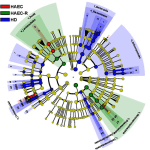
Evaluation of the microbiome in children’s appendicitis – Martin Salö – International Journal of Colorectal Disease
Review: Food: a new form of personalised (gut microbiome) medicine for chronic diseases? – Tess Pallister – Journal of the Royal Society of Medicine
Review: Linking the Microbiota, Chronic Disease, and the Immune System – Timothy W. Hand – Trends in Endocrinology & Metabolism
Animal and bioreactor experiments
From the Sonnenburg lab @Stanford: Individualized Responses of Gut Microbiota to Dietary Intervention Modeled in Humanized Mice – Samuel A. Smits – mSystems
An In Vitro Approach to Study Effects of Prebiotics and Probiotics on the Faecal Microbiota and Selected Immune Parameters Relevant to the Elderly – Yue Liu – PLOS ONE
Animal microbiome
Genome and metagenome analyses reveal adaptive evolution of the host and interaction with the gut microbiota in the goose – Guangliang Gao – Scientific Reports
Hold off on the orange oil: Characterization of Antibacterial Activities of Eastern Subterranean Termite, Reticulitermes flavipes, against Human Pathogens – Yuan Zeng – PLOS ONE
Use of MALDI-TOF MS and culturomics to identify mosquitoes and their midgut microbiota – Fatalmoudou Tandina – Parasites & Vectors
Plant, root, and soil microbiome
Drought history affects grassland plant and microbial carbon turnover during and after a subsequent drought event – Lucia Fuchslueger – Journal of Ecology
Effect of organic matter enrichment on the fungal community in limestone cave sediments – ELS Marques – Genetics and Molecular Research
Contrasting elevational diversity patterns for soil bacteria between
two ecosystems divided by the treeline – Guixiang Li – Science China Life Sciences
Review: Diversity and ecology of soil fungal communities in rubber plantations – Jutamart Monkai – Fungal Biology Reviews
Illumina sequencing reveals a rhizosphere bacterial community associated with foxtail millet smut disease suppression – Yansha Han – Plant and Soil
Water and extremophile microbiome
Viruses-to-mobile genetic elements skew in the deep Atlantis II brine pool sediments – Mustafa Adel – Scientific Reports
Built environment microbiome
Review: The Microbiome of the Built Environment and Human Behavior: Implications for Emotional Health and Well-Being in Postmodern Western Societies – C.E. Stamper – International Review of Neurobiology
Microbes in the news
The Bacteria on Your Skin Are Safer Than These Two Chemicals the FDA Just Banned From Your Soap – Jill Richardson – Truth Digg
DNA in London Grave May Help Solve Mysteries of the Great Plague – Roff Smith – National Geographic
Bik’s Non-Microbiology Picks
This paper was discussed on Twitter this weekend because of a conflict of interest of one of the authors (Deepak Chopra) and the design and interpretation of the study:
Identification of Altered Metabolomic Profiles Following a Panchakarma-based Ayurvedic Intervention in Healthy Subjects: The Self-Directed Biological Transformation Initiative (SBTI) – Christine Tara Peterson – Scientific Reports

 Microbiome Digest - Bik's Picks