October 5, 2019

This weekend, read about how cooking food modifies the microbiome, how bacteria ‘strip off’ to evade antibiotics, and more. Check out an interesting pilot study looking at potential inclusion and exclusion criteria of donors for safe vaginal microbiota transplant. Enjoy!

Events

Bioinformatics for the Microbiome Symposium 2019, Stanford University, Monday October 28.
Some tickets are still available!

General microbiome

Mobile phones as fomites for potential pathogens in hospitals: microbiome analysis reveals hidden contaminants – Rebecca Simmonds – Journal of Hospital Infection

Review: Microbiomes as sources of emergent host phenotypes – J. B. Lynch and E. Y. Hsiao – Science

Vaginal microbiome

*Conceptual Design of a Universal Donor Screening Approach for Vaginal Microbiota Transplant – Kevin DeLong – Frontiers in Cellular and Infection Microbiology

Highly diverse anaerobe-predominant vaginal microbiota among HIV-infected pregnant women in Zambia – Joan T. Price – PlosOne

Urinary microbiome

*Possible role of L-form switching in recurrent urinary tract infection – Katarzyna M. Mickiewicz – Nature Communications

Aerococcus urinae and Globicatella sanguinis Persist in Polymicrobial Urethral Catheter Biofilms Examined in Longitudinal Profiles at the Proteomic Level – Yanbao Yu – Biochemistry Insights

Gut microbiome

*Cooking shapes the structure and function of the gut microbiome – Rachel N. Carmody – Nature Microbiology

Integrated paired-end enhancer profiling and whole-genome sequencing reveals recurrent CCNE1 and IGF2 enhancer hijacking in primary gastric adenocarcinoma – Wen Fong Ooi – Gut

Effects of Low-FODMAP Diet on Symptoms, Fecal Microbiome, and Markers of Inflammation in Patients With Quiescent Inflammatory Bowel Disease in a Randomized Trial – Selina R.Cox – Gastroenterology

Water microbiome

Trophic networks improve the performance of microbial anodes treating wastewater – Christin Koch – npj Biofilms and Microbiomes

Application of a novel molecular technique to characterise the effect of settling on microbial community composition of activated sludge – Luong N.Nguyen – Journal of Environmental Management

Bacterial diversity in Icelandic cold spring sources and in relation to the groundwater amphipod Crangonyx islandicus – Ragnhildur Guðmundsdóttir – PlosOne

Animal microbiome

Looking like the locals – gut microbiome changes post-release in an endangered species – Rowena Chong – Animal microbiome

Animal experiment

Letrozole treatment of pubertal female mice results in activational effects on reproduction, metabolism and the gut microbiome – Pablo Arroyo – PlosOne

Microbiota of MR1 deficient mice confer resistance against Clostridium difficile infection – Ashley D. Smith – PlosOne

Exploring the microbiota of upper respiratory tract during the development of pneumonia in a mouse model – Yoshitomo Morinaga – PlosOne

Plant microbiome

Microbiome profiling of the onion thrips, Thrips tabaci Lindeman (Thysanoptera: Thripidae) – Suresh J. Gawande – PlosOne

Food

Comparison of the microbial composition of African fermented foods using amplicon sequencing – Maria Diaz – Scientific Reports

The impact of grape processing and carbonic maceration on the microbiota of early stages of winemaking – Raffaele Guzzon – Journal of Applied Microbiology

Fungi

Phyllosphere Fungal Communities of Plum and Antifungal Activity of Indigenous Phenazine-Producing Pseudomonas synxantha Against Monilinia laxa – Tamara Janakiev – Frontiers in Microbiology

Microbial communities associated with the black morel Morchella sextelata cultivated in greenhouses – Gian Maria Niccolò Benucci – PeerJ

Viruses

The gut virome in inflammatory bowel disease pathogenesis: From metagenomics to novel therapeutic approaches – Federica Ungaro – United European Gastroenterology Journal

Association of the Eukaryotic Vaginal Virome with Prophylactic Antibiotic Exposure and Reproductive Outcomes in a Subfertile Population Undergoing In Vitro Fertilization: A Prospective Exploratory Study – Ashley M. Eskew – Obstetrics and Gynaecology

Bioinformatics

ProphET, prophage estimation tool: A stand-alone prophage sequence prediction tool with self-updating reference database – João L. Reis-Cunha – PlosOne
The Hetch Hetchy Railroad

This post has nothing to do with microbiology, but everything with my love for maps. It is about the former Hetch Hetchy Railroad.

Hetch Hetchy reservoir is the main source of drinking water for the city of San Francisco and other parts of the Bay Area. The densely populated SF Bay Area only gets rainfall in the winter months and is dependent on reservoirs in the Sierra Nevada mountains for the collection and storage of rain and melting snow water for the dry summer months.

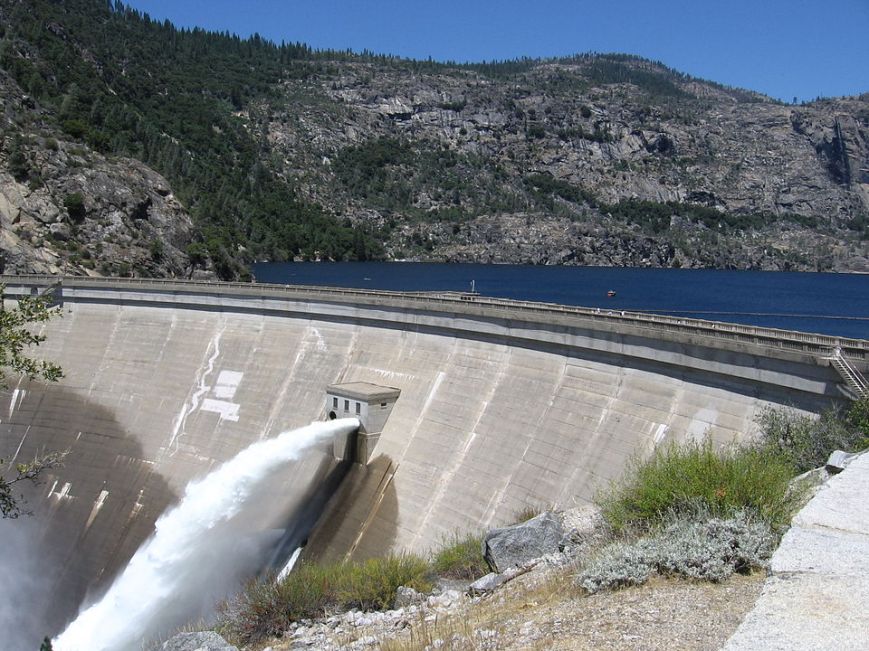
The Hetch Hetchy area once was a glacier-formed valley of what is now Yosemite National Park, California. It is located in the Northwestern part of the national park, far away from the much more famous Yosemite Valley. Hetch Hetchy Valley was equally beautiful, but it was turned into a reservoir, an artificial lake, in 1923 upon the completion of the O’Shaughnessy Dam.

O’Shaughnessy Dam at Hetch Hetchy reservoir. Photo by Inklein at English Wikipedia, CC BY-SA 3.0, https://commons.wikimedia.org/w/index.php?curid=8256821

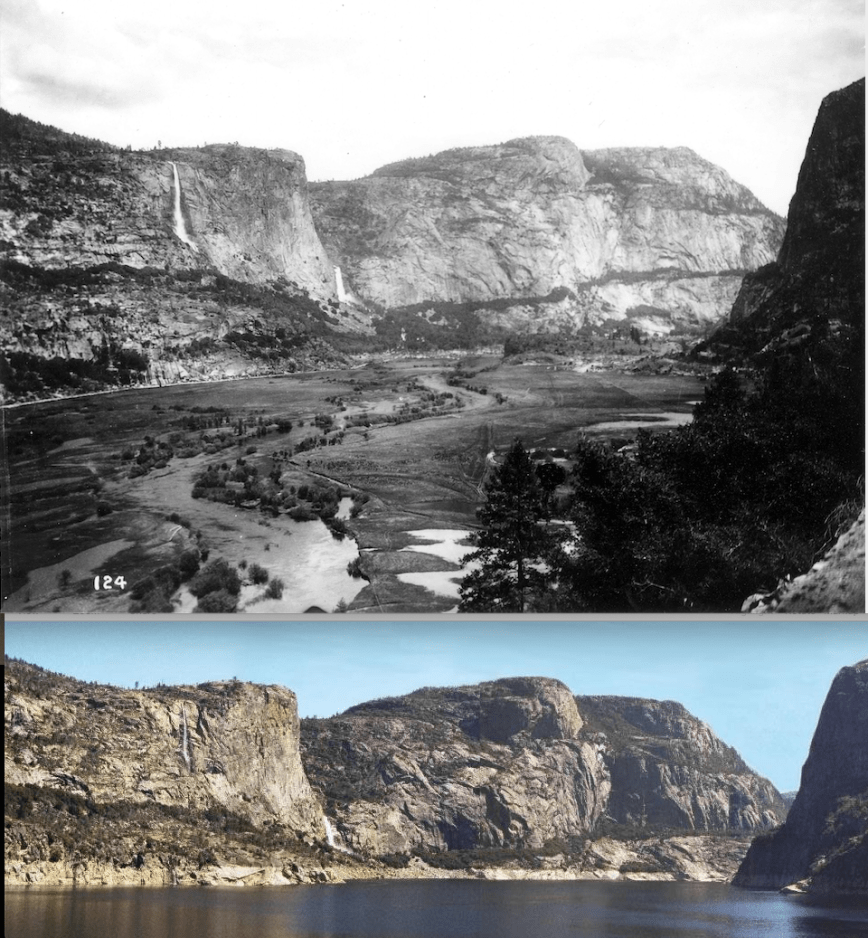
Here are two photos comparing Hetch Hetchy valley before and after the dam was completed, taken from roughly the same position.

Screen Shot 2019-07-24 at 5.52.04 PM.png

Top: Hetch Hetchy Valley in the early 1900, with the Tuolumne River. Source: Isaiah West Taber – Sierra Club Bulletin, Vol. VI. No. 4, January, 1908, pg. 211 (Wikipedia). Bottom: Hetch Hetchy reservoir, May 2002. Photo by Daniel Mayer. Source: Wikipedia.

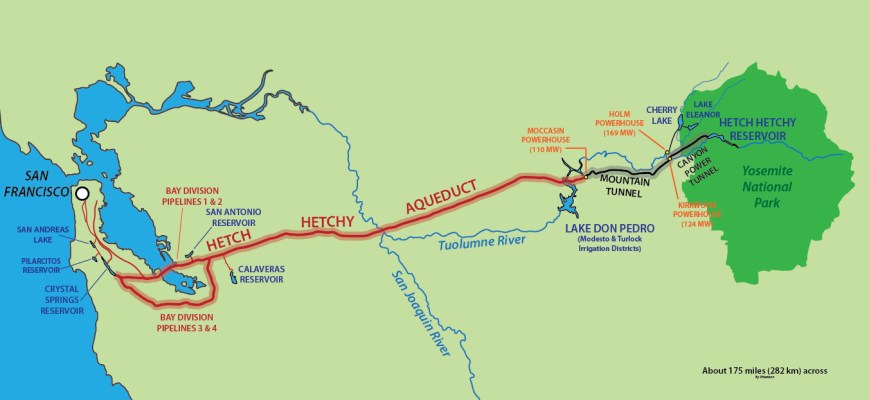
As of today, the Hetch Hetchy Project consists of the reservoir, the dam, hydroelectric plants, and a long aqueduct that carries the water to the SF Bay Area through a long series of tunnels, using only gravity.

Hetchhetchyprojmap.jpg

Hetch Hetchy Project. Source: By Shannon1 using Adobe Illustrator CS5; aqueduct path data from USGS topos, CC BY-SA 4.0, https://commons.wikimedia.org/w/index.php?curid=26434757.

The story about the Hetch Hetchy Railroad, built in the 1910s and 1920s to bring the construction crews and materials needed to build the dam, hydroelectric plants, and aqueducts is very interesting if you like history and maps. After completion of the dam in 1923, the HHRR was used to carry tourists and mail to the Northern Yosemite area. However, the steep terrain, sharp curves, and heavy snowfall made it very hard and expensive to operate the railroad. During World War II, HHRR rail materials such as steel and wood were used for war operations, and the railroad was finally completely dismantled in 1949.

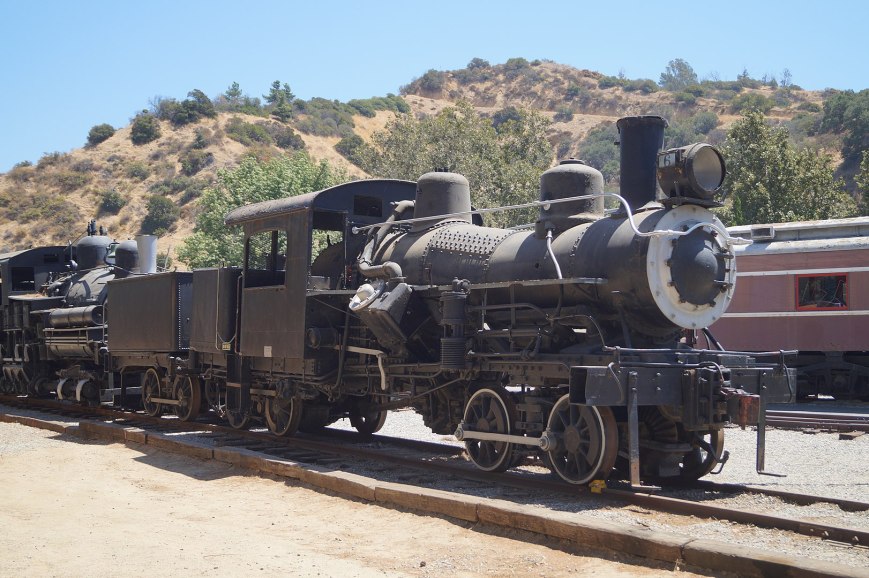
Hetch Hetchy Railroad Locomotive #2 in the Travel Town Museum in Los Angeles, 2017. Photo by NearEMPTiness, Wikipedia.com

Friends of us who live near an area where the railroad used to run told us about the success and decline of the railroad, and pointed us towards some sections where you can still see remnants of how the tracks ran. Even though the rails and wooden cross-ties are now all gone, you can still see the flattened track at some sections. Close to the Hetch Hetchy reservoir, the road to access the lake now runs over the railroad track.

Online maps and photos of the Hetch Hetchy Railroad

Hearing about the now-gone railroad got me interested in mapping the complete course of the railroad. I first searched online and found a couple of railroad and other sites that mentioned it.

  • GhostRails and AbandonedRails (very similar sites) both have a rough map of the first part of the route and some discussion on where to see remnants of the railway
  • San Francisco’s Municipal Transportation Agency has a site that remembers how San Franciscans could take the railway up to the Hetch Hetchy reservoir to visit the site where their drinking water came from and see their tax dollars at work.
  • MTB project has a bike route that follows part of the track around Groveland
  • Wikipedia has a page that describes when the railroad was in operation and which locomotives ran over it. It also describes how steep and curvy the track was.
  • Latitude.to has the GPS coordinates of the start of the track, in California’s Central Valley west of the Don Pedro Reservoir, at Hetch Hetchy Junction
  • There is also a Hetch Hetchy Railroad museum in El Portal, west of Yosemite National Park’s entrance on Highway 140
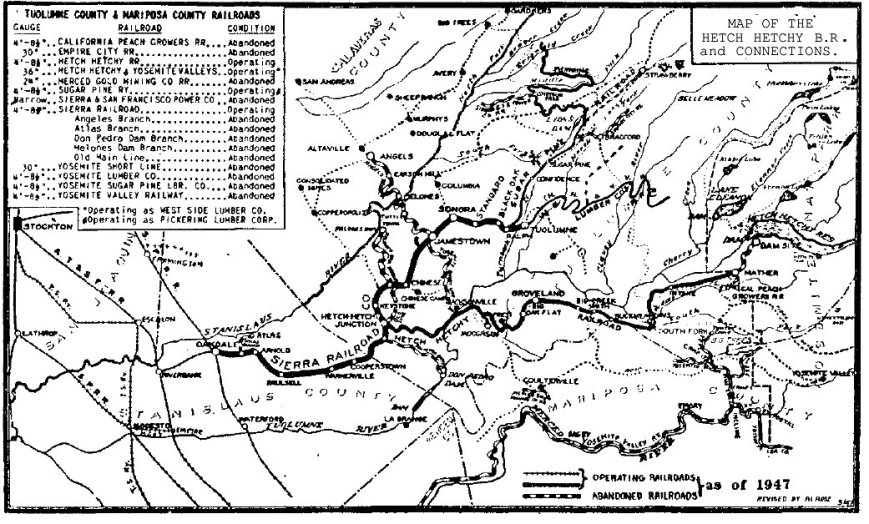
  • Several old maps were also available online, such as this map at Yosemite News. On the map below,  you can see that it split off from the (still-existing) Sierra Railroad.

Map from 1947 displaying the Hetch Hetchy Railroad

More maps and information about the HH Railroad

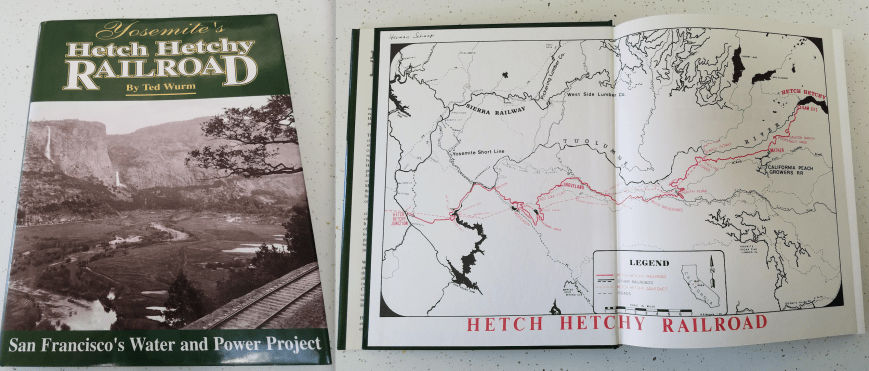
The information I found online was not enough detailed to know how the HHRR exactly ran. Luckily, our friends lent us their copy of the book Yosemite’s Hetch Hetchy Railroad by Ted Wurm. The author was part of a group of railfans who traveled the railroad around 1937 and took lots of photos. This book has a map of the railroad route, and several descriptions that allowed me to start to map the exact position of the tracks.

Photo of Ted Wurm's book about the Hetch Hetchy Railroad

Yosemite’s Hetch Hetchy Railroad by Ted Wurm

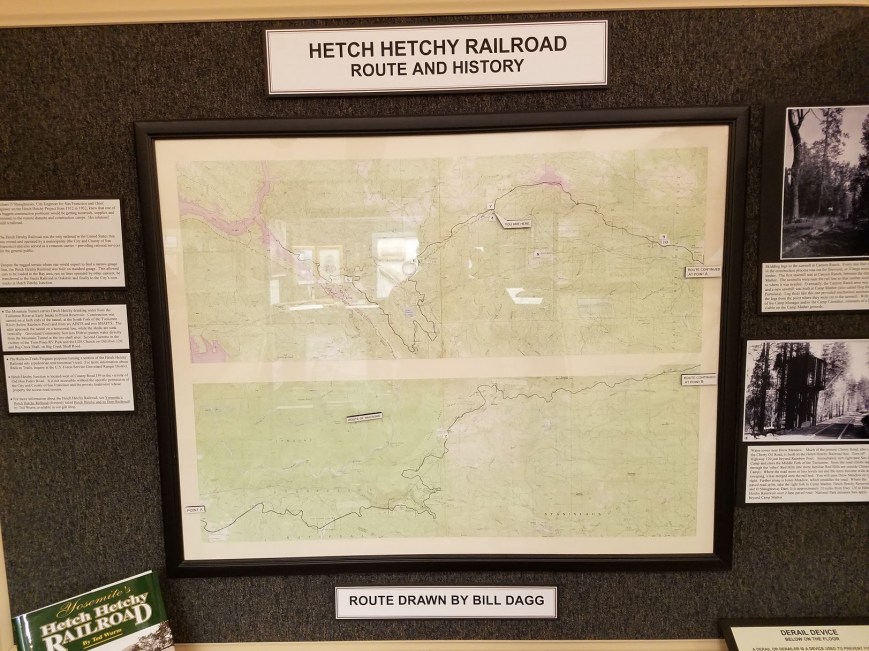
The Groveland Yosemite Gateway Museum also has a small exhibition on the Hetch Hetchy Railroad. It consists of several photos and a topographical map in which a person called Bill Dagg draw the course of the railroad by hand.

Map of the HHRR in the Groveland Museum, hand-drawn by Bill Dagg

Drawing the exact location of the railroad in Google Earth

These two maps by Ted Wurm and Bill Dagg were a lot more detailed than what I could find online. I was very excited to see how much work these two men had put into mapping the railroad.

Since I could not find an electronic version of the railroad’s course online, I decided to make a KML file myself. KML stands for “Keyhole Markup Language“, and is a way to visualize geographic data in – for example – Google Earth. Google Earth is the advanced version of Google Maps and it allows you to add extra layers. An easy way to make a KML file is to draw a line or a polygon on top of the map displayed in Google Earth.

In order to draw the map, I downloaded Google Earth Pro. There is also a Google Earth Web version that runs in Chrome and that can display KML files, but it did not allow me to make one or edit points.

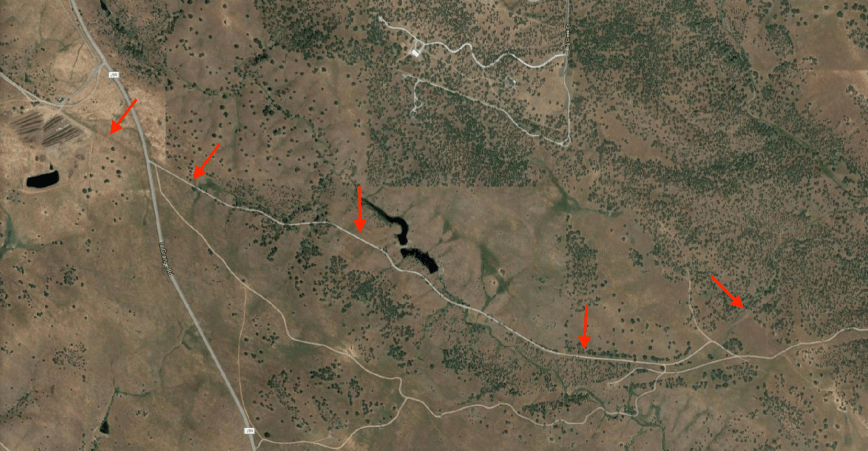
Using Google Earth satellite views and the maps from Ted Wurm’s book and Bill Dagg’s map from the Groveland Museum it was easy to spot some parts of the now-dismantled railroad. In some places, the railroad is now an unpaved or paved road, while in other spots the old foundations are still visible in the landscape.

Google Maps satellite view of the western-most part of the Hetch Hetchy Railroad. The leftmost and rightmost arrows show visible remnants of the track foundations, while the other arrows show parts that now serve as a road.

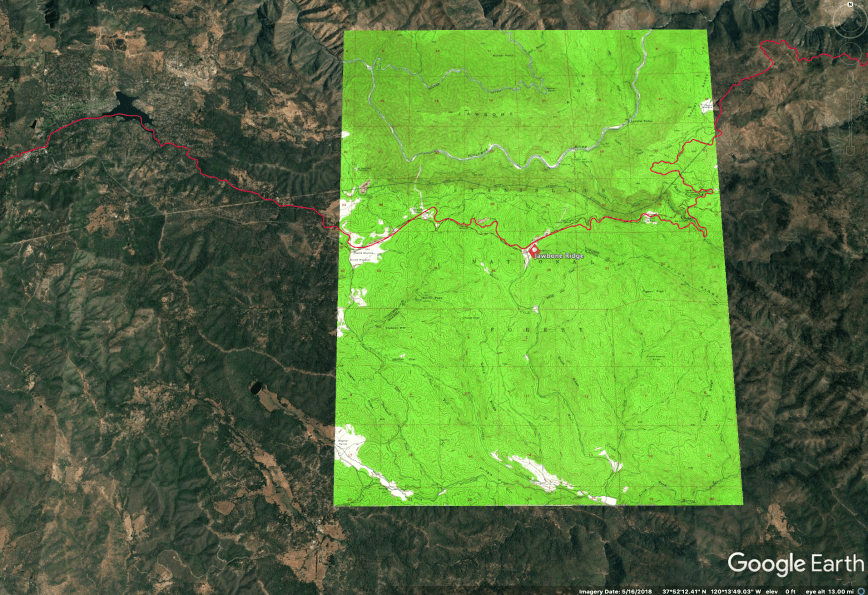
I was also very excited to find some historical topographical maps on the website of the USGS from around 1947, just before the railroad was removed. These maps are available as KMZ (zipped KML) files, so you can just overlay them in Google Earth. This allowed me to draw the railroad even more precisely.

Historical topographic map from USGS as a KMZ overlay in Google Earth. The red line is my drawing of the railroad.

This was a fun project to do in Google Earth. In some cases, the historic topographical maps were a bit shifted from the current Google map, and in other cases new roads were put over the historic railroad, so I had to make an educated guess where the tracks had been. But in most spots it was easy to see the old tracks from the satellite images.

Download the Hetch Hetchy Railroad

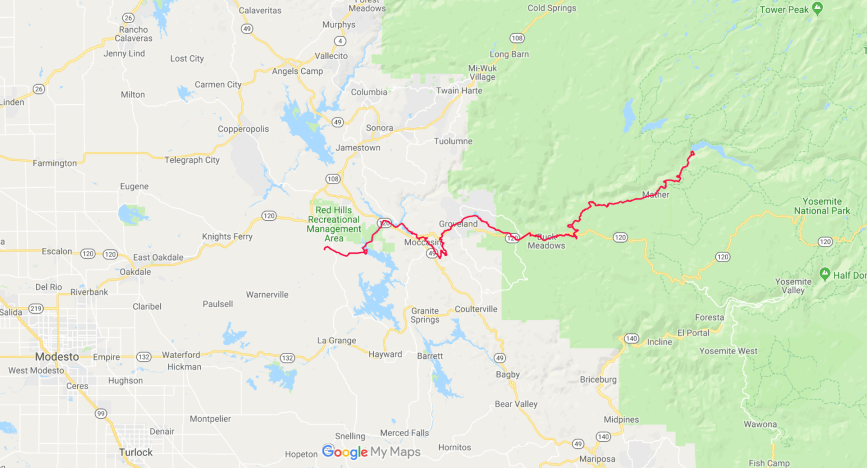
So here it is, a link to the historic Hetch Hetchy Railroad route (KML file) as drawn by me in Google Earth. If you click on the link it will show you the route in Google Maps.

Or, if you want to edit, download the KMZ file to display in Google Earth. Enjoy!

The Hetch Hetchy Railroad, mapped by Elisabeth Bik

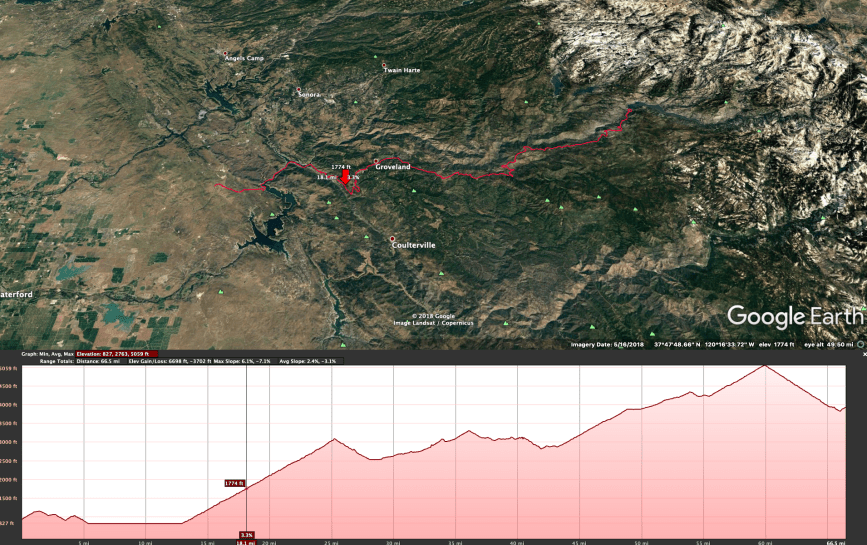
One thing that struck me as amazing is how beautiful the incline of the trail is over certain areas. Look at this elevation profile that Google Earth draw over the complete 68-mile route. In several places, the tracks go up or down a nearly perfect 4 degrees. What a great piece of 1920s engineering that was!

Elevation profile of the Hetch Hetchy Railroad, generated by Google Earth.