General microbiology and science, June 11

Lots of dengue and host response today, but also biosynthetic pathways, a book review, snakes, melons, bones, and bandages for mice.

Metagenomics and gene ontology

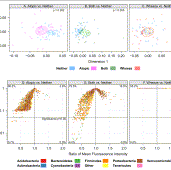
Hao Wang atlasAtlas of nonribosomal peptide and polyketide biosynthetic pathways reveals common occurrence of nonmodular enzymes – Hao Wang – PNAS

“This study demonstrates the widespread distribution of nonribosomal peptide synthetase and modular polyketide synthase biosynthetic pathways across the three domains of life, by cataloging a total of 3,339 gene clusters from 2,699 genomes. “

Microbiology general

Bacteria are godsBacteria Are Our Gods: Nicholas P. Money, a Mycologist, Has Written a Beautiful Book About the Facts of Life – Charles Mudede – The Stranger

“a beautifully written collection of linked essays called The Amoeba in the Room: Lives of the Microbes. The book is by Nicholas P. Money, a mycologist who teaches at Miami University”

Dengue

Dengue NoeckerContrasting associations of polymorphisms in FcγRIIa and DC-SIGN with the clinical presentation of dengue infection in a Mexican population – Cecilia A. Noecker – Acta Tropica

“In this study, real-time PCR was used to characterize the distribution of rs1801274 and rs4804803 in subjects with asymptomatic dengue infection (n = 145), uncomplicated dengue (n = 67), and severe dengue (n = 36) in Morelos.”

Dengue Rong Fu ChenAugmented miR-150 expression associated with depressed SOCS1 expression involved in dengue haemorrhagic fever – Rong-Fu Chen – Journal of Infection

“SOCS1 expression and lower IFN-γ level were significantly reduced in DHF patients, but not in patients with DF. Elevated SOCS1 and reduced miR-150 levels were detected 24 h after DENV-2 infection in PBMCs. “

PNASCommentary: How season and serotype determine dengue transmissibility
Neil M. Ferguson and Derek A. T. Cummings – PNAS

“The research published by Reiner et al. in PNAS (10) starts to address the last of these uncertainties by giving us a unique picture of how rates of transmission of the four dengue viruses varied in Iquitos, a small city in Peru, over a 12-y period.”

Dengue DelmelleA web-based geospatial toolkit for the monitoring of dengue fever – Eric M. Delmelle – Applied Geography

“In this paper, we present a web-based geospatial toolkit with a user-friendly interactive interface for the monitoring of dengue fever outbreaks, in space and time. “

Infection and host response

Nicholas IlottLong non-coding RNAs and enhancer RNAs regulate the lipopolysaccharide-induced inflammatory response in human monocytes – Nicholas E. IIott – Nature Communications

“…here we characterize the long non-coding RNA transcriptome in primary human monocytes using RNA sequencing. We identify 76 enhancer RNAs (eRNAs), 40 canonical lncRNAs, 65 antisense lncRNAs and 35 regions of bidirectional transcription (RBT) that are differentially expressed in response to bacterial lipopolysaccharide (LPS).”

Screen shot 2014-06-11 at 01.29PM, Jun 11Exploring the collaboration between antibiotics and the immune response in the treatment of acute, self-limiting infections – Peter Ankomah and Bruce R. Levin – PNAS

“We use a mathematical model and computer simulations to explore the design and evaluation of antibiotic treatment protocols for an acute, self-limiting bacterial infection. “

Beth TamburiniAntigen capture and archiving by lymphatic endothelial cells following vaccination or viral infection – Beth A. Tamburini – Nature Communications

“Antigen derived from viral infections with influenza and vesicular stomatitis virus can persist after resolution of infection. Here we show that antigen can similarly persist for weeks following viral challenge and vaccination. “

Screen Shot 2014-06-11 at 9.53.19 PMImmunologic Research has a special on Stanford Immunology, with contributions from Kari Nadeau, Robert Negrin, Christopher Contag, and many others.

Arsenic metabolism

Screen shot 2014-06-11 at 01.57PM, Jun 11Feasibility of Arsenic and Antimony NMR Spectroscopy in Solids: An Investigation of Some Group 15 Compounds – Alexandra Faucher – Solid State Nuclear Magnetic Resonance

“Results of density functional theory quantum chemistry calculations for isolated molecules using ADF and first-principles calculations using CASTEP, a gauge-including projector augmented wave method to deal with the periodic nature of solids, are compared with experiment.”

Screen shot 2014-06-11 at 02.02PM, Jun 11Role of endometrial concentrations of heavy metals (cadmium, lead, mercury and arsenic) in the aetiology of unexplained infertility – E. Tanrıkut – European Journal of Obstetrics & Gynecology and Reproductive Biology

“The concentrations of cadmium, lead, mercury and arsenic were measured in endometrial biopsy specimens using atomic absorption spectrometry.”

Screen shot 2014-06-11 at 02.06PM, Jun 11Mitigation approach of arsenic toxicity in chickpea grown in arsenic amended soil with arsenic tolerant plant growth promoting Acinetobacter sp. – Shubhi Srivastava – Electrical Engineering

“The study was undertaken with the aim of testing the effects of isolated bacterial strain nbri05 from arsenic contaminated site of West Bengal.”

Screen Shot 2014-06-11 at 10.36.36 PMNSF funds effort to market UT Arlington arsenic analyzer – University of Texas at Arlington – Phys.org

“The National Science Foundation has awarded nearly $200,000 to two University of Texas at Arlington researchers teaming with a private company to make an affordable, environmentally friendly field analyzer for arsenic levels in water.”

Science and Art

Screen Shot 2014-06-11 at 9.49.44 PMArts: The third culture – Michael John Gorman – Nature
“After months of injections with horse immunoglobulin in 2011, artist Marion Laval-Jeantet had a transfusion of horse blood in a Ljubljana art gallery. She walked around the donor animal on prosthetic hooves; then samples of her hybrid blood were freeze-dried and placed in engraved aluminium cases. “

Dr. Bik’s Picks

Screen shot 2014-06-11 at 01.27PM, Jun 11Medically important differences in snake venom composition are dictated by distinct postgenomic mechanisms – Nicholas R. Casewell – PNAS

“Venom variation observed between related snake species is therefore the result of a complex interaction between a variety of genetic and postgenomic factors acting on toxin genes. “

Shahar Cohen melonThe PH gene determines fruit acidity and contributes to the evolution of sweet melons – Shahar Cohen – Nature Communications

“We identify a family of plant-specific genes with a major effect on fruit acidity by map-based cloning of C. melo PH gene (CmPH) from melon, Cucumis melo taking advantage of the novel natural genetic variation for both high and low fruit acidity in this species”

Cow skullA Bone Collector’s Basement Of Animal Skulls Sees The Light – Lauren Sommer – NPR

“Bandar has spent 60 years building this scientific collection of animal bones. Now, many of his skulls are on view at the California Academy of Sciences in San Francisco, which has just opened an exhibit featuring his work.”
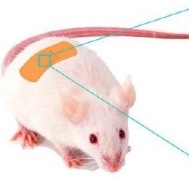
Bandage coatingBandage Coating Kills Bacteria Using Graphene And Hydrogen Peroxide – Melissae Fellet – ACS

“A bandage loaded with graphene quantum dots and a small amount of hydrogen peroxide significantly reduces the amount of bacteria in wounds on mice”

Screen Shot 2014-06-11 at 9.46.55 PMAt the start of the FIFA World Cup in Brazil, Nature has a special on South American science
Screen Shot 2014-06-11 at 10.43.30 PMQ&A: The nutrient hunter – Jascha Hoffman – Nature

“Investigative food journalist Jo Robinson has spent more than a decade scouring the literature on plant nutrition. Her demonstration garden in Washington state opens this month as her book Eating on the Wild Side (Little, Brown, 2013) emerges in paperback. She talks about eating tomatoes to protect from sunburn, why bitter is better — and how purple is the new green.”

[hr]

General microbiology and science, June 10

Transcription in 12 different human tissues, bacteria in arterial plaques, and hairs with anticancer activity.

Infection and Host Response

Genome wideGenome-wide survey of tissue-specific microRNA and transcription factor regulatory networks in 12 tissues – Zhiyun Guo – Nature Scientific Reports

“Finally, we describe TSmiR (http://bioeng.swjtu.edu.cn/TSmiR), a novel and web-searchable database that houses interaction maps of TF-TS miRNA in 12 tissues.”

IntracellularIntracellular Bacteria Interfere with Dendritic Cell Functions: Role of the Type I Interferon Pathway – Laurent Gorvel – PLOS ONE

To analyze the mechanisms used by C. burnetiiand B. abortus to alter moDC activation, we performed microarray and found that C. burnetiiand B. abortus induced a specific signature consisting of TLR4TLR3STAT1 and interferon response genes.”

Screen Shot 2014-06-10 at 9.55.25 PMBacteria Present in Carotid Arterial Plaques Are Found as Biofilm Deposits Which May Contribute to Enhanced Risk of Plaque Rupture – Bernard B. Lanter – mBio

“In the current work, atherosclerotic carotid artery explants from 15 patients were all shown to test positive for the presence of eubacterial 16S rRNA genes”

Screen Shot 2014-06-10 at 10.01.00 PMRNA-seq: Impact of RNA degradation on transcript quantification – Irene Gallego Romero – BMC Biology

“We sought to quantify the impact of variation in RNA quality on estimates of gene expression levels based on RNA-seq data.”

Dengue virus

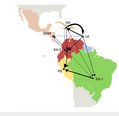
DengueSpatiotemporal Dynamics of DENV-2 Asian-American Genotype Lineages in the Americas – Daiana Mir – PLOS ONE

“Our study reveals that genetic diversity of DENV-2 AS/AM genotype circulating in the Americas mainly resulted from one single founder event and can be organized in at least four major lineages”

Phages, viruses, CRISPRs

Screen Shot 2014-06-10 at 9.53.22 PMCasposons: a new superfamily of self-synthesizing DNA transposons at the origin of prokaryotic CRISPR-Cas immunity – Mart Krupovic – BMC Biology

“We describe a new superfamily of archaeal and bacterial mobile elements which we denote casposons because they encode Cas1 endonuclease, a key enzyme of the CRISPR-Cas adaptive immunity systems of archaea and bacteria. “

Dr. Bik’s Picks

GeckoHow do geckos climb? – Ann Le Good – BioMedCentral

“The answer, from the recent Royal Society conference on cell adhesion, is that their climbing mechanism depends on van der Waals forces (as well as friction and shear stress). “

This one is intriguing:
AnticancerAnticancer Properties of Peptide Fragments of Hair Proteins – Sergiusz Markowicz – PLOS ONE

“We found out that the mixtures of soluble peptides obtained from human hair inhibited the proliferation of human melanoma cells in vitro. Moreover, the hair-derived peptide mixtures also inhibited the proliferation of B lymphoma cells and urinary bladder cancer cells. “

EarthEarth is around 60 million years older than previously thought — and so is the moon, new research finds – Science Daily

The timing of the giant impact between Earth’s ancestor and a planet-sized body occurred around 40 million years after the start of solar system formation. This means that the final stage of Earth’s formation is around 60 million years older than previously thought, according to new research.”


[hr]

More Microbiology and Science, June 6

Natural peptides against dengue, visualizing your QIIME .biom OTU table, and exposure to cockroaches and dust to babies. And Da Picks!

 
Dengue

Screen Shot 2014-06-07 at 2.05.52 AMIdentification of natural antimicrobial agents to treat dengue infection: In vitro analysis of latarcin peptide activity against dengue virus – Rothan HA – BMC Microbiology

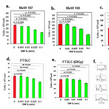
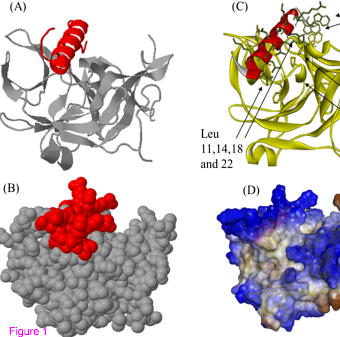
“The Ltc 1 peptide exhibited significant inhibitory effects against dengue NS2B-NS3pro and virus replication in the infected cells. “

Bioinformatics

Screen Shot 2014-06-07 at 1.16.46 AMVisualizing millions of DNA sequences – in your web browser! – Featuring Phinch, developed by Holly Bik in the Eisen Lab

“The idea is to take your QIIME outputs – .biom OTU table files with taxonomy and embedded metadata – directly into a data visualization framework for assessment.”

Infection, immunity, host response

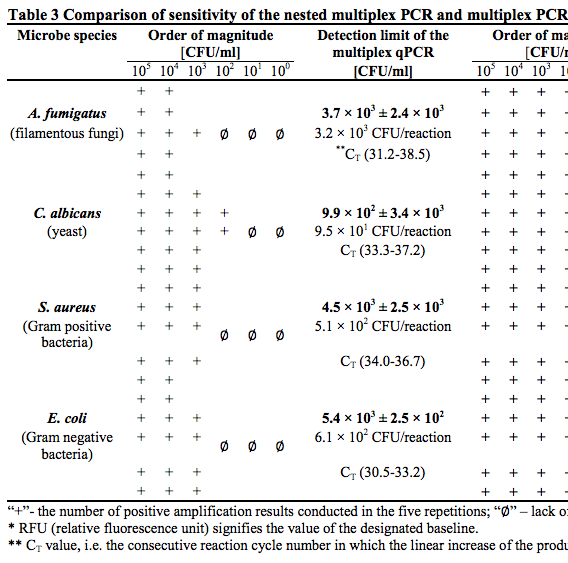
Screen Shot 2014-06-07 at 2.06.31 AMA novel, nested, multiplex, real-time PCR for detection of bacteria and fungi in blood – Gosiewski, T – BMC Microbiology

“ The designed primers correctly typed the studied species as belonging to the groups of Gram-positive bacteria, Gram-negative bacteria, yeast fungi, or filamentous fungi.”

Screen Shot 2014-06-07 at 2.00.39 AMEffects of early-life exposure to allergens and bacteria on recurrent wheeze and atopy in urban children – Susan V. Lynch – The Journal of Allergy and Clinical Immunology

“….first-year exposure to cockroach, mouse, and cat allergens was negatively associated with recurrent wheeze…. House dust microbiome composition is associated with clinical outcomes. 

Screen Shot 2014-06-07 at 1.58.39 AMImplementation and impact of ultraviolet environmental disinfection in an acute care setting – Janet P. Haas – AJIC: American Journal of Infection Control

During the time period UVD was in use, there was a significant decrease in overall hospital-acquired MDRO plus CD in spite of missing 24% of opportunities to disinfect contact precautions rooms. This technology was feasible to use in our acute care setting and appeared to have a beneficial effect.”

Dr. Bik’s Picks

Screen Shot 2014-06-07 at 2.39.26 AMCool video of a scientist uncovering a whale in an old painting: Whale tale: a Dutch seascape and its lost Leviathan – University of Cambridge

“When art conservators peeled back a layer of varnish on a 17th-century Dutch painting, they uncovered an image of a beached whale that had been hidden for at least 150 years. “

Screen Shot 2014-06-07 at 2.40.17 AMLooking for the best strategy? Ask a chimp – Science Daily

“If you’re trying to outwit the competition, it might be better to have been born a chimpanzee, according to a study by researchers at Caltech, which found that chimps at the Kyoto University Primate Research Institute consistently outperform humans in simple contests drawn from game theory.”

[hr]


More Microbiology and Science, June 4, 2014

Dengue, arthritis, arsenic, two retractions, frogs singing in the gutters, and deadly sharks (but not as you know them).

Infection, sepsis, and host response

Screen Shot 2014-06-05 at 1.08.42 AMBacteria in the Adventitia of Cardiovascular Disease Patients with and without Rheumatoid Arthritis – Samuel A. Curran – PLOS ONE

“The aortic adventitia of CVD patients contains a wide range of bacterial species, and the bacterial flora is significantly less diverse in RA+CVD than CVD patients. M. oryzae may stimulate an proinflammatory response that may aggravate and perpetuate the pathological processes underlying atherosclerosis in RA patients.”

Dengue Screen Shot 2014-06-05 at 1.06.24 AM

A tetravalent alphavirus-vector based dengue vaccine provides effective immunity in an early life mouse model – Syed Muaz Khalil – Vaccine

“We report here that a single immunization with a tetravalent VRP vaccine induced NAb and T-cell responses to each serotype at a level equivalent to the monovalent vaccine components, suggesting that this vaccine modality can overcome serotype interference. “

Arsenic metabolism

Screen Shot 2014-06-05 at 1.09.38 AMSpecies- and tissue-specific bioaccumulation of arsenicals in various aquatic organisms from a highly industrialized area in the Pohang City, Korea – Seongjin Hong – Environmental Pollution

“Contamination of water and sediment with arsenic (As) in a highly industrialized area of Pohang City, Korea was investigated, with emphasis on in situ bioaccumulation of arsenicals by various aquatic organisms.”

Publishing and misconduct Screen Shot 2014-06-05 at 1.03.01 AM

Japanese scientist to retract stem cell papers – Phys.org

“Haruko Obokata, 30, would withdraw two papers at the centre of the controversy, according to a spokeswoman for Riken, the respected  that sponsored the study, marking a steep fall from grace for the young researcher.”

Dr. Bik’s Picks

SharkShark meat worse than its bite – Tony Camie – IOL Scitech

“Never mind their fearsome jaws. People are now more likely to be killed by eating shark meat rather than the other way round.”

frogUrban frogs use drains as mating megaphones – Katia Moskvitch – Nature

“Gathering in the gutter may provide a better way to seduce females.”

[hr]

General microbiology and science digest, June 3, 2014

Dengue, immunology, arsenic, and The Picks.


Immunology

Review: Ontogeny of early life immunity – David J. Dowling, Ofer Levy – Trends in Immunology

“Here, we review novel mechanistic insights into early life immunity, with an emphasis on emerging models of human immune ontogeny”

Dengue

Time-varying, serotype-specific force of infection of dengue virus – Robert C. Reiner, Jr. – PNAS

“Using a bespoke method for a 12-y longitudinal dataset of serotype-specific dengue virus (DENV) infections, we estimated time-varying, serotype-specific FoIs for all four DENV serotypes. “

Correspondence: A “microRNA-like” small RNA expressed by Dengue virus? – Rebecca L. Skalsky – PNAS

Reply to Skalsky et al.: A microRNA-like small RNA from Dengue virus – Mazhar Hussain and Sassan Asgari – PNAS


More Microbiology

Review: Tropheryma whipplei and Whipple’s disease – Florence Fenollar, Jean-Christophe Lagier, Didier Raoult – Journal of Infection

“T. whipplei seems to be an opportunistic bacterium that causes chronic infections in susceptible patients with as yet unknown predisposing factors.”

Genesis and pathogenesis of the 1918 pandemic H1N1 influenza A virus
Michael Worobey – PNAS

“We infer that the virus arose via reassortment between a preexisting human H1 IAV lineage and an avian virus”

Shotgun glycomics of pig lung identifies natural endogenous receptors for influenza viruses – Lauren Byrd-Leotis – PNAS

“Studies using novel “shotgun glycan microarray” technology identify, for the first time to our knowledge, the endogenous receptors for influenza viruses from a natural host, the pig.”

Counties Deploying Bacteria-Sniffing Dogs To Find Failing Septic Systems – Bellamy Pailthorp – PKLU.org

“Molly, a border collie trained by Environmental Canine Services, can sniff out human fecal coliform bacteria in water samples.”

Arsenic metabolism

Arsenic in the Multi-aquifer System of the Mekong Delta, Vietnam: Analysis of Large-Scale Spatial Trends and Controlling Factors – Laura E. Erban – Environmental Science & Technology

“We relate strong trends in the distribution of contamination among well samples to explanatory variables derived from 3D ancillary physicochemical data sets using logistic regression models.”

Monitoring Arsenic Contamination in Agricultural Soils with Reflectance Spectroscopy of Rice Plants – Tiezhu Shi – Environmental Science & Technology

“The prediction of soil As contents was achieved by partial least-squares regression (PLSR) using laboratory and field spectra of rice plants, as well as linear regression employing normalized difference spectral index (NDSI) calculated from fild spectra. “

Marine Mammals

Fossil record shows whales evolved from land to sea – Steve Luckstead – UnionBulletin

“Other mammals such as seals, sea lions and walrusess spend a good part of their lives in the ocean, but they are clearly tetrapods (four-legged). But whales don’t have any leg-like appendages. So what gives?”


Science and Art

Sculpting the apples of science – Helen Fields – PNAS

“Rath’s work is based on a visit to the US Department of Agriculture’s Plant Genetic Resources Unit (PGRU) in Geneva, New York. The PGRU grows thousands of apple varieties that might otherwise disappear from orchards.”

Dr. Bik’s Picks

Evidence of bird dropping masquerading by a spider to avoid predators – Min-Hui Liu – Nature Scientific Reports

” The orb-web spider Cyclosa ginnaga has a silver body and adds a white discoid-shaped silk decoration to its web. The size, shape and colour of C. ginnaga’s body resemble, when viewed by the human eye against its decoration, a bird dropping. “

Why Have Female Hurricanes Killed More People Than Male Ones? – Ed Yong – National Geographic

“Here’s a simple fact with an uncertain explanation: historically, hurricanes with female names have, on average, killed more people than those with male ones.”

[hr]

Human microbiome digest – May 28, 2014

Today I will have four separate posts, to see if that would work better. This post is all about the human microbiome, with articles about arthritis, childhood wheezing, and pregnancy.

Human Gut Microbiome

Screen shot 2014-05-28 at 06.03PM, May 28Human Respiratory Microbiome

Screen shot 2014-05-28 at 06.08PM, May 28Pregnancy and Birth

[hr]

Infection and host response digest – May 28, 2014

Hi all,

Today I’m just playing with different layouts for my digests, by splitting them up into smaller groups of topics. In this post, you will find dengue, phages, and infection/host response papers.

Dengue

Phages and viruses

Infection and Host ReponseScreen Shot 2014-05-28 at 7.32.41 PM

Staphylococcus aureus

Arsenic metabolism


[hr]


Digest May 23, 2014

Today’s digest features showering with bacteria instead of soap, bacteria on the Mars rover, phages and bacteria reading through stop-codons, and a meteor shower tonight. What do meteor showers have to do with microbiome papers, you ask? Well, nothing. They are just cool to watch. So put on that fleece, get yourself to a dark place outside, and look North. Or stay inside and read today’s new digest.

General microbiome papers

Human oral microbiome papers

Human gut microbiome papers

Human genital microbiome papers

Pregnancy and birth papers

Metagenomics

Chromosomal organization

Antibiotics and resistance papers

Pathogenicity papers

Phages and viruses

Microbes in space

More Microbes

Bacteria in the news

Dr. Bik’s Picks

[hr]