March 7, 2016

Back to our regular program…. Today I’ve included papers on the antibiotic resistome in preterm infants, or in soils, the salt-loving Tamarix, and a critical article about the Microbiome Summit in Forbes.

Pregnancy and birth

Developmental dynamics of the preterm infant gut microbiota and antibiotic resistome – Molly K. Gibson – Nature Microbiology

Human oral microbiome

Microbial Diversity in the Early In Vivo-Formed Dental Biofilm – D. Heller – Applied and Environmental Microbiology

Animal models

Effect of dietary protein sources on the small intestine microbiome of weaned piglets based on high-throughput sequencing – Kefei Cao – Letters in Applied Microbiology

Plant, root, and soil microbiome

Appearance of β-lactam Resistance Genes in Agricultural Soils and Clinical Isolates over the 20th Century – David W. Graham – Scientific Reports

Functional redundancy of linuron degradation in microbial communities of agricultural soil and biopurification systems – Benjamin Horemans – Applied and Environmental Microbiology

Metagenomic Signatures of Bacterial Adaptation to Life in the Phyllosphere of a Salt-Secreting Desert Tree – Omri M. Finkel – Applied and Environmental Microbiology

Microbial and Functional Diversity within the Phyllosphere of Espeletia Species in an Andean High-Mountain Ecosystem – Carlos A. Ruiz-Pérez – Applied and Environmental Microbiology

Water and extremophile microbiome

Prokaryotic Community Structure Driven by Salinity and Ionic Concentrations in Plateau Lakes of the Tibetan Plateau – Zhi-Ping Zhong – Applied and Environmental Microbiology

Functional responses of salt marsh microbial communities to long-term nutrient enrichment – Christopher J. Graves – Applied and Environmental Microbiology

Waste, pollution, and bioreactor microbiology

Dynamics of size-fractionated bacterial communities during the coastal dispersal of treated municipal effluents – SiGuang Liu – Applied Microbiology and Biotechnology

Biological Nitrogen Removal in a Photosequencing Batch Reactor with an Algal-Nitrifying Bacterial Consortium and Anammox Granules – Nathan D. Manser – Environmental Science & Technology Letters

Microbes in the news (notice 3 articles on antibiotic resistance from EurekAlert)

Preemies’ gut bacteria reveal vast scope of antibiotic resistance – Washington University School of Medicine – EurekAlert

Antibiotics use affects the abundance of resistant bacteria in soil – Aarhus University – EurekAlert

Daily dose of antibiotics helps bacteria develop multi-drug tolerance – KU Leuven – EurekAlert

Microbiome Monday: The Top Three Questions from Visitors – AMNH

Bacteria-laden mosquitoes can control Zika – Zeenews India

Microbes and art

BioArt : What is our True Relationship with the Human Microbiome? – Labiotech
After every 50 handshakes his assistants (white lab coats) would swab his palms, to use for later analysis of the collective microbiome.

Growing fungus and bacteria on textiles for fashion – Yuliasri Perdani – Jakarta Post

Science, publishing, and career

A critical view of the Microbiome Medicine SummitKeep Calm And Avoid Microbiome Mayhem – Kavin Senapathy – Forbes

Everything Is Crumbling: An influential psychological theory, borne out in hundreds of experiments, may have just been debunked. How can so many scientists have been so wrong? – Daniel Engber – Slate

Not just #creatorgate: Most scandalous retractions in science – SBS

Conferences on Weekends? Good or Bad Idea? Summary of responses to query .. – Jonathan Eisen – Phylogenomics

An example of how pseudoscientists and quacks are contorting science

This weekend I have been tweeting and posting about the Microbiome Medicine Summit, an online collection of talks by self-proclaimed “microbiome experts”. Some of these were MDs, some were PhD’s, and many others had titles I had never heard of before, but there was not a lot of science or medicine that was discussed here. In fact, a lot of the talks I listened to tried to first scare people about ingredients in their food or bad bugs in their guts, immediately followed by a mention of the speaker’s book or online cleansing products that the audience should buy.

Screen Shot 2016-03-07 at 12.36.08 AMAs an example of this scare tactic, I found a disturbing “factoid” on the website of Ann Louise Gittleman, who calls herself the First Lady of Nutrition (although I think that Michelle Obama is way ahead of her!). ALG held one of today’s Microbiome Summit talks called “Parasites May be the Hidden Cause of Your Health Issues”. You can find my transcript of parts of her talk here.

In her talk, ALG mentioned that a large part of the US population are infected by parasites. She mentioned that her mentor parasitologist estimated that 1970’s this number was 8 out of 10 Americans. She also claimed that most stool tests won’t detect these parasites. They are so hidden inside our guts, she said, that a regular stool test will easily miss them. But they are there! Anyone with GI problems, diarrhea, constipation, gas, GERD, or even sleep problems, Crohn’s Disease, asthma, arthritis and pretty much anything else you can think off, all these symptoms, she says, are an indication that you are infected with parasites. She even went on to say that these parasites are easier to detect “4 days before and after a full moon.”

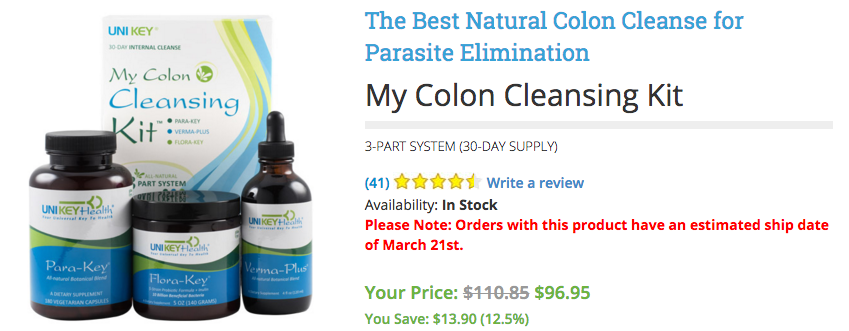
So this is the point where she lost all my sympathy. She is really trying to scare the audience by telling them that pretty anyone is infested with invisible and undetectable parasites. But low and behold, she offers a solution (I am sarcastic here). You can go to her website where she sells a product called “My Colon Cleansing Kit“. And it’s even for sale! For $96 you will get 3 jars of herbs and probiotics.

Screen Shot 2016-03-07 at 1.03.57 AM

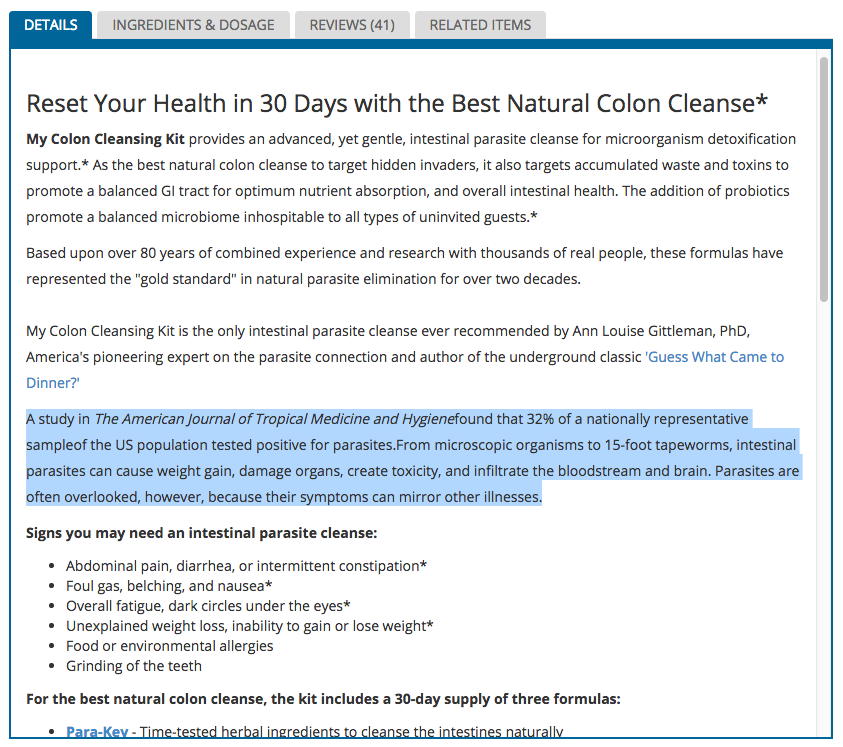
But here is what caught my eye. On the Details tab, she writes the following:

A study in The American Journal of Tropical Medicine and Hygiene found that 32% of a nationally representative sample of the US population tested positive for parasites. From microscopic organisms to 15-foot tapeworms, intestinal parasites can cause weight gain, damage organs, create toxicity, and infiltrate the bloodstream and brain. Parasites are often overlooked, however, because their symptoms can mirror other illnesses.

Screen Shot 2016-03-07 at 1.02.14 AM

Oh, that is scary. It sounds like she is writing that one third of the US populations is infected with parasites, right? Don’t you already feel a bit itchy down under? Could these invisible parasites you never realized you had be the cause that you don’t feel so well lately?

But is it really true? I guess I am a skeptical scientist, so I did not immediately believed this. So I dived into the American Journal of Tropical Medicine archives to dig up the study that she forgot to properly cite. It took me some ninja Google skills, but I found the study. And here it is, the real science behind ALG’s statement:

Seasonal prevalence of intestinal parasites in the United States during 2000 – Omar M Amin – Am J Trop Med Hyg June 2002 vol. 66 no. 6 799-803

Abstract: One-third of 5,792 fecal specimens from 2,896 patients in 48 states and the District of Columbia tested positive for intestinal parasites during the year 2000. Multiple infections with 2-4 parasitic species constituted 10% of 916 infected cases. Blastocystis hominis infected 662 patients (23% or 72% of the 916 cases). Its prevalence appears to be increasing in recent years. Eighteen other species of intestinal parasites were identified. Cryptosporidium parvum and Entamoeba histolytica/E. dispar ranked second and third in prevalence, respectively. Prevalence of infection was lowest (22-27%) in winter, gradually increased during the spring, reached peaks of 36-43% between July and October, and gradually decreased to 32% in December. A new superior method of parasite detection using the Proto-fix-CONSED system for fixing, transport, and processing of fecal specimens is described. In single infections, pathogenic protozoa caused asymptomatic subclinical infections in 0-31 % of the cases and non-pathogenic protozoa unexpectedly caused symptoms in 73-100% of the cases. The relationship between Charcot-Leyden crystals and infection with four species of intestinal parasites is examined and the list of provoking parasitic causes is expanded.

After reading the whole paper here’s my scientific interpretation: Yes, it is true that one third of the tested patients (916 of 2896) tested positive for at least one parasite. But here is the catch: it says *patients*. Every word in a scientific paper should be read carefully and is probably important. These were patients. These were not healthy people. All these samples were sent in by a physician to a specialized parasitic center for parasitic evaluation. In other words, their doctor suspected that their patients might have a parasite, based on e.g. a combination of GI complaints and recent travel to a foreign country, which about half of them had done.

So instead of writing that one third of the US population tested positive for parasites, it should read “One third of US patients suspected to be infected with a parasite indeed were found to be infected with a parasite. ” That is very different than the general population, where the real percentage is probably orders of a magnitude lower.

It’s just sad that people who are not trained to carefully interpret science are tweaking research findings to fit their own plan – and to fill their own pockets. It is even more sad if these persons are trying to attract people with chronic disorders such as arthritis, Crohn’s disease, and autism. That is just flat-out misleading and quackery. Please don’t fall for this.

Fun fact: Quackery means “the promotion of fraudulent or ignorant medical practices” (source: Wikipedia). It is derived from the Dutch word “kwakzalver”  meaning something like “a person who tries to sell ointments (“zalven”) that probably won’t work”. The Medieval word quack referred to the sound a duck or frog makes, but was also used to refer to exaggeration or overstatements (source: EtymologieBank).

[hr]

Microbiome Medicine Summit, part 3 – Gittleman

Here is another transcript from the Microbiome Medicine Summit – a talk by Ann Louise Gittleman, PhD, CNS, Nutritionist called: “Parasites May be the Hidden Cause of Your Health Issues“. Here is what Wikipedia’s entry about her has to say about her PhD degree:

In 2002 she was given a PhD in Holistic Nutrition from Clayton College of Natural Health, an unaccredited and now defunct diploma mill whose notable graduates are surrounded in controversy. In 2010, Clayton College closed due to financial difficulties.

Also note how in her talk, she first tries to scare the audience about an invisible (and non-existing!) problem, then will offer a solution: her cleansing products. Also note that, when asked for possible signs for parasite infection, she will list a long list of health conditions most of us might experience. Also note that she says that most of these parasites cannot be detected by conventional tests. Finally, note that she states to not use probiotics during parasite cleaning, but that her own Colon Cleanse kit contains…. probiotics.

Start of (partial) transcript:

This is a very strange subject for someone like myself. I have always been involved with English and drama and religion and metaphysics.

Many many years ago, I studied with a woman …. who changed my whole career in 5 days. It was Dr Hazel Parcells who taught me that 8 out 10 of all Americans – and this was back in 1974 – were infested with of one or more parasites.

In that little class, she showed all of these creatures that came out of all of these individuals who did parasite cleanses.

So we all went on the program, and sure enough, many of our health problems in those days truly did disappear or certainly dissapated, and we learned how parasites were the most immunosuppresive agent in the human body. And I dare to say today, with the human microbiome, it is still a problem that is not being detected, not being suspected (inaudible) need to be treated.

Dr. Parcells was very ahead or her time. She was able to diagnose individuals using a sample of blood and she was extraordinarily accurate.

It was an 8-day milk diet. (…) It was her belief that the milk acted as bait for the parasites, they came out of their hiding places, because many of them live within the gut wall. Which is why when you do traditional stool samples, you don’t see them.

The milk acted as bait, it took them out of the gut wall, and then she zapped them with a speciality blend of herbs.

Quite frankly, we saw all kinds of things coming out.

Host Raphael Kellman: What does the average person do today? Cause you can’t really test for it, the tests are not very accurate, they miss it most of the time. What should they do next?

ALG: Number 1. There are a lot of foods that really help to debilitate parasites. One of them (…) is the cranberry. These are very tart fruits that are quite rich in organic acids. They break down their protein structure, and then stimulating the release of parasitic wastes. So on a daily basis I would suggest for a 2-3 week stint that you do my CranWater daily.

Number 2: Pumpkin seeds on a daily basis. In that way, you clear up any parasite infection by at least 25%.
Another one is garlic. Another one is cayenne peppers. Parasites cannot take the heat.
They really love instant sugars.

Host: Who should be suspicious that they may have parasites hurting their microbiome and their gut?

ALG: If you have symptoms with your intestines, constant constipation or diarrhea or gas, that is not due to certain sensitivities or any other situation, then I really think that you have to suspect parasites. If you’ve gut unresolved joint or muscle pain (…) if you have difficulty sleeping and are constantly waking up between 1 to 3 I would suspect parasites. If you got frequent infections, if you got cold or yeast infections, or any kind of autoimmune situation, think of the parasites. Anxiety, nervousness, depression –

Q What about cancer?

ALG: Well we gotta be very careful but one of my great parasitologist friends .. told me he had never seen a case of cancer that also wasn’t accompanied by parasites. He always cleared out parasites first and foremost, which then led to the development of the parasite products that I have developed and promoted for the last 25 years.

So I’ll tell you that parasites are a real problem, no matter what disease you’re suffering from or if you wanna look good.

It is so amazing to think of all of the seemingly disconnected symptoms and effects of the lowly parasites that behooves all of us, like Europeans to eat certain foods or take certain herbs or bitters to try to eliminate these things from the digestive tract.

Q What are your favorite herbs to reduce or eliminate worms?

ALG: The favorite herb that we put into our product which is my colon cleansing kit is one that you won’t find in any other. and it’s because of the research I was able to do. That herb is Centaury. It allows the parasites to release all their hookers or sucker agents from your gut.

The nutrients that parasites don’t do well with, would be the zinc and vitamin A. They don’t seem to hold on to the intestinal lining as prolifically in the presence of the vitamin A and the zinc.

Q What’s the connection between these parasites and the microbiome?

If you have a healthy microbiome, these little buggers can’t exist. It’s very simple.
We gotta be eating foods that are very high in fermenting agents.

Q Do you recommend fermented foods to everyone across the board?

ALG: No, I don’t. I very rarely recommend that to individuals who have a lot of GI problems, because it creates so much more gas and discomfort.

I have found that the same conditions that give root to parasites or protozoa are those that actually feed back to pathogenic bacteria. So a course of the treatment that I recommend is the My Colon Cleansing kit which has natural herbs that are also very antibacterial.

I was taught, that when you are clearing out parasites, one should not be taking any kind of probiotics or beneficial bacteria because it would actually feed and strengthening the parasites. (taking probiotics/fermented foods) comes later in the entire protocol.

After that first inititial weakening of the agents that are crowding out the microbiome, and are feeding off of the microbiome, we then add back a healthy probiotic.

A microbiome imbalance and a parasite issue, they always go together.

Q Tell us the symptoms that might point to the possibility that there is a microbiome/parasite issue?

ALG: GERD is a primary symptom. Indigestion. A weakened lower esophageal sphincter muscle. That’s for starters. I would also say that IBS may be connected, Crohn’s disease, constipation, diarrhea. Allergy, majorly connected. Joint and muscle aches and pains in arthritis. Skin conditions, very connected because the skin is a detoxification organ.

Q Do you feel there is any value in stool testing?

Many of these little critters live in the small intestine, not in the large intestine, some of them live in the intestinal wall so you are not seeing them in a stool sample, and then they may not be reproducing at the time you take the stool sample. They are most active the 4 days before and after the full moon. I’ve always seen much better results around that time.

(ALG talking about all the great parasitologists who passed away.)

I’ve always been interested. A search for God is what I call it. I studied many of the religions, but I love all the religions where I feel there is some kind of truth.
Maybe this was a search of truth. I don’t know. Truly I think there’re underlying issues, underlying laws of nature, of God, that we all have to observe because if we don’t we get into trouble.

[hr]

Microbiome Medicine Summit, part 2, Donna Gates

Part two of me listening to the podcasts provided by self-proclaimed microbiome experts on the Microbiome Medicine Summit. Today features Donna Gates, who – quite frankly – provided the talk with the most quackery I heard so far. Here is a transcript of some of the things she had to say. Please note that English is not my first language, but I did try my best. You can hear the full MP3 here, but it’s over an hour long.

Donna Gates, MEd, ABAAHP, The Power of Developing a Strong Inner Ecosystem

25 years ago, I began to study microbiologists and their journals. And they were always reporting in their journals and to each other things they were finding, but it wasn’t ever coming down to us.

What I used to say years ago, I said it because it made sense, and now there is science behind it. Like, I would say: “Bacteria talk to each other”. And then the quorum sensing came out. And I used to say; “They’re inside the gut and the gut is connected to the brain”, and sure enough, science started.

Host Raphael Kellman: You felt something about the inner ecosystem that you know existed, something that you focused on for a while, way before scientists confirmed that in fact there is a microbiome and an inner ecosystem.

DG: We should all develop this intuition. Probably everyone has it. Certainly healers have it. Especially today, we’re all so busy, we can’t access that part of ourselves. You have to be quiet.

RK: I get the feeling that the bacteria really love you. And they really give you their insights. And if that’s the case, give us the insights that the microbiome is giving you.

DG: There is research showing that the microbiome are very much influenced by our thoughts and I used to think that too.

Over the years I collected vast amounts of fascinating information. For example, we’re so much alike, we human beings, and the bacteria and the other microbes inside of us, they’re just like us.

Bacteria work together in guilds. They even sacrifice themselves, for the sake of the community.

They’re highly intelligent, in a microbe kind of way.

Leo Galland has brought up a new concept which is pretty brilliant. There are certain bacteria in the gut that are “Alexander organisms”. Alexander the Great was this fantastic leader. 1000s of people followed him into battle and they conquered a huge part of the world.

In the gut, the guilds of these communities, they do need a leader. So certain bacteria have been identified as Alexander organisms. That’s one of the things that scientists are looking at: who are the leaders. Who do all these other microbes follow.

The microbiome also consists of viruses, and then there are bacteriophages that are actually controlling the viruses.

A lot of people are talking lately about archaea, this new species that was thought to be a bacteria, but now got moved into its own species. If you have a lot of archaea, which about 50% of us do, we tend to be constipated all the time. They produce methane gas which causes constipation.

The bacteria produce toxins called endotoxins. And they inflame the gut wall, and things leak in that are not supposed to be there, so we end up with diabetes and insulin resistance, hypertension, cardiovascular disease. Endotoxins are like a gun. What really pulls that gun is our high fat diet.

Bacteria are controlling our genes, too. The bacteria have trillions of their own genes. Those, the bacteria and their genes are expressing our genes. They can be turning on the genes we don’t want to turn on, the ones that cause gut problems, or make us age, or cause cancer.

Finally scientists are focusing on this. For many many years I was that lone voice up there saying why don’t people not wake up and see how critical this is? It’s how we prevent autism so consistently over the last 15 years.

I have the moms feed my fermented coconut kefir to their newborn babies, and they grow up to be completely different. They’re so smart, they’re so happy. Every single one of them are really physically beautiful children. They’re so happy, consistently. They’re delightful to raise. Compare that to an autistic child, that’s a pure nightmare for the parent.

Plant foods are full of oxalates, like little shards of glass. There many oxalates in plant food, especially in spinach and chocolate and soy and beets. We’re eating a lot of those today. If you don’t have Oxalobacter formigenes, these oxalates cause calcifications in our bodies, they cause stones. They’re finding stones now in peoples bones, in their brains, in their lungs during an autopsy. These stones can go anywhere in the body. Lactobacillus plantarum degrades oxalates, and can help to compensate for this.

On adding Lp to fermentation cultures: Lactobacillus plantarum is an Alexander Organism. If you put him – or her – in there, they’re telling everybody how to behave, who can grow, and you end up with a very special food.

Plantarum is naturally growing on the plants.

I don’t use the term sauerkraut. That’s a jar of sauerkraut, it’s dead, it has vinegar and lots of salt. I start using the term fermented vegetables, cultured vegetables.

43.00 (lots of loud banging in background – maybe an exploding jar of sauerkraut?)

Bacteria are so intelligent. One of the things they are designed to do is look for parasites and eggs and larva which are on our food, and they will eat them up. They love them, it’s like caviar to them.

All cultures have fermented food.
But we are spraying our foods with glyphosate.

For me, every diet needs to be gluten-free. Grains are OK, but only in the evening, soaked in water, cooked and drained to remove the oxalates, and eaten with vegetables for balance.

Dr. William Shaw was called in by these prisoners only being fed soy. They were very very sick all the time, esp the ones that had been there a while. They sued the state to get real meat into the prison. He told me he was sure to win the case, because when they X-rayed their stomachs, they had stalactites growing down from the top of their stomach, from the oxalates.

And then the oxalate kids, they are super sensitive. There was this little boy, he literally pulled his eye out, because that’s another symptom, aching joints. This little boy, his left eye ached so badly, that’s a common… that’s when I knew that I was – tended to be sensitive, because when I at them, or too many of them, my *left* eye would ache.

I was just at this conference and there is this app, that I’m going to invite everybody on my mailing list to subscribe to this app, but’s it’s kind of fun. It shows up on your iPhone, or your phone, and you can put it over things. If you put this app, your phone, right over your wine glass, all these special Tesla or energy waves go into it, and change it, completely change it. It’s so different afterwards, it’s delicious. You can do it to your coffee, do it to your water, it’s kind of fascinating. We can change things with energy. We are energetic beings, the water is, the wine is. And also they do it for gluten. So I tested it, there was a difference! There were some little crackers on the table, so I thought, ok I will eat gluten. And I ate them, and nothing happened.

Cell wellbeing test, it tells you if you are low in B12 or not. It’s a very sophisticated scan. You pull out some hairs from the back of your neck, put them on this little scanner. All this information goes to Germany, comes back in 15 min, and then you know what your deficiency is.

Host: What would be the 3 main points you would want to leave the audience with?

DG: It’s so simple.
1. Drop the bad fats and oils. Only eat the ones that are good, like coconut oil and olive oil.
2. Don’t eat so much sugar. Stevia is a wonderful substitute. I introduced it into the US.
3. Eat something fermented. That’s the most important.

Host : Where can people get more information about you?

DG: Thanks for bringing that up. I always forget to mention my products. The most important product we have is our knowledge.

I’m one year away from turning 70. But I have no symptoms of aging. I don’t hurt, my hair’s not grey. We don’t have to age. Why am I holding up?

[hr]

Microbiome Medicine Summit

Some “pearls of wisdom” quotes from the Microbiome Medicine Summit, a collection of podcasts that’s online this week. Not a lot of science here, but several vague statements and extrapolated findings. And links to websites of self proclaimed experts who are eager to sell you their books and dietary supplements. Hyperlinks here lead to MP3s of the podcasts – I have almost all of them in case someone is interested in hearing one of the others. Here are the ones I listened to:

Deepak Chopra 

There are no things in the universe, There is no such thing as a thing, The universe is a verb, your body is a verb

Your body is not a thing, it’s a process

With every breath that you breathe out, you’re breathing out bits and pieces of your heart and kidney and brain tissue, and technically speaking we’re all intimately shearing our organs with each other right now.

The microbiome is the house you live in.
30% of our microbiomes has disappeared in Western societies

Where is our memory housed?

Every cell in your body is the entire history of evolution in those genes.
The universe is constantly recycling its memories in the activity of our cells.

We are conciousnous ourselves.

Science is very good in creating technology: trains, the internet. Science works, so it must be the truth, right? but that’s a mistake.

Now we have a science which has a vocabulary which is based on taking snapshots of an eternal activity, and then we create a map, through that map we create an technology and we say that this is the truth.

While science can give us great technology, both divine and diabotical…, it does not give us a clue to the origins of consciencousness

Sleep, meditation, movement, mind-body coordination, emotions, and food.
Pay attention to these things, you’ll keep the microbiome happy.

[hr]

Amy Myers, MD Autoimmune diseases

Top three toxins that we are exposed to:
Mercury in fish, vaccines, tooth fillings, environment
Mycotoxins, toxic mold – only 25% of people are sensitive for it
Gluten, with roundup on it, which is related to leaky gut.

Q: Do you test mold in you autoimmune cases?
A: No, because you would find something in 80% of the population

Q: How to reverse the symptoms of autoimmune diseases?
A: The first step: Healing the gut. Dr. Fasano at Harvard: Leaky gut is one of the factors that must be present in order for autoimmunity to happen. When we’re stressed out, eat toxins, are exposed to mold, or we eat gluten or dairy, we create this leaky gut. Large molecules now get in, and the immune system will begin to attack them.

Q is there something other than dietary changes that you take to enhance integrity of microbiome?
A: My program with all my patients: doing stool test, treat for infections such as yeast overgrowth, replacing with good probiotics, repairing with L-glutamin and other.
We see a lot of SIBO Small intestinal bacterial overgrowth.

Tame the toxins: Water filters for drinking and showering water, air filters. I don’t mean to scare people, but using a HEPA airfilter to prevent

[hr]

Julie Matthews, CNC, connection of microbiome with autism and autoimmunity

Findings about microbiome and autism:
Increases in pathogenic bacteria, Clostridia, Desulfovibrio, Sutterella,
Q :if people have son or daughter iwth autism what should they do
Go to your doctor and have them do a comprehensive stool analysis

Q Is there a particular stool test that you would recommend, a particular company?
A: I like the Genova test, is good, because they do the DNA analysis.

Q it’s difficult to treat Clostridia. How do you treat?
A: I’m not a doctor, so I don’t treat, I’ll leave that to the doctors

Discourages eating spinach, beets, sweet potatoes, beans, nuts, chi seeds, because of their high oxylate levels

Q For autoimmune diseases, is there a good diet you would go to first?
A: Would start with gluten free, soy free, and eliminate eggs, corn. Might then look at grains. Then I might look at low phenol diet or low oxylates.

Q: Do you have some study references?
A: People can go to nourishinghope.com/gistudies
or bioindividualnutrition.com/gistudies
(Note EB: both links don’t work)

[hr]

Leo Galland, MD about allergies

There is an unsung epidemic of allergies that is sweeping the world right now.
In my book I have a protocol that people can use to try to figure out if allergies are responsible for their mysterious symptoms.

Q: Is there another blood test other than the IgE?
LG: I have not found any of these blood tests to be definitive, so I really think that my Powerwash Elimination Protocol for food allergies is the most reliable and most sensitive way to determine if any of your symptoms…
LG there is a urine test for leaky gut

Leaky gut:  There is no labtest that can substitute a careful examination

Parasite detection: there is no perfect type of test.

Q: What kind of treatments would you do for the microbiome to help people with allergies?
LG: I have a program that I use that I called ARC: Avoidance, Reflorestation and Cultivation and I describe that in my book.

Q How do you remove inflammation of the gut?
LG: Herb: berberin has great antiinflammatory effects. An antiinflammatory diet is also important.
If you are eating food like hamburgers and rolls and ketchup and sweets, that creates a leaky gut. Leaky gut due to a lousy diet creates inflammation in the body.

Strawberries are an anti-inflammatory food. Unless of course you’re allergic to them.

Lactobacilli and bifidobacteria might impact on mood

I never use probiotics in a vacuum.

I published paper called The gut microbiota and the brain (Note EB: review paper)
For people who have a lot of gas and bloating, I often like the soil derived organisms like Bacillus.

Three main points.

1. What happens in your gut doesn’t stay in your gut. If affects your whole body.
The microbes in your gut can have a profound effect on your immune function and your brain function…. When you take an antibiotic and it alters the microbes in your gut, it might be affecting you systemically in other ways as well

2. The first step in trying to have a healthy balance of bacteria in your gut is controlling inflammation, often its’ about controlling infl by following an antiinflammatory diet of food items that you are not allergic too. That is a very individual process for each person to work out

3. Probiotics can be very helpful for a number of conditions, and have been a proven benefit in the treatment of allergies. but you need to pay attention to how the probiotic is affecting you as an individual, how your gut is responding to it.

[hr]

Larry Palevsky

We know that genetically modified foods will alter the good bacteria that are in our intestines.

When we give antibiotics, when we eat food that has antibiotics in them, even when we vaccinate, we alter the microbiome in the intestines. That changes the conditions and allows for the overgrowth of unfavorable bacteria, which then leads to a lot of the chronic illnesses that we re seeing, , including obesity, autism, diabetes, asthma, atopic illnes and the like.

Q Are you saying that vaccinations are altering the microbiome and therefore they’re more sucseptible for diseases?
LP: When we use overuse antibiotics we are creating superbugs. We know that.
There is growing evidence that vaccinations also change the serotypes of microorganismss
and by changing the serotypes, we are altering ways that the microbiological organisms relate to each other. And so we are are getting mutations of bacteria and viruses because of vaccinations.

Q But does that mean that we should be very careful about vaccinations, perhaps not offer our children vaccinations ?
LP. We should be also asking the questions about the role that vaccinations maybe play in altering the microbiome unfavorably.

We maybe creating more problems by vaccines regarding the microbiome than we are in using the vaccines

[hr]

David Perlmutter

DP: Any time I get to talk about the microbiome I’m always excited.

RK: This is the greatest gift to holistic medicine. The power of bacteria to make widespread holistic changes just feeds perfectly into the whole model of functional and holistic medicine.
DP: It really does.

DP: We’ve been sort of mislead in our characterization of all bacteria being bad, that these are all agents of death. The truth of the matter, every aspect of our health and physiologic function is dependent on the health of the organisms that live upon us and within us.

DP: The role of the microbiome in the soil and how that relates to viniculture: The widespread use of herbicides like glyphosphate, the active ingredient in Roundup, are having a devastating effect in the ability of individuals to grow these grapes now, and certainly the quality of the grapes that are produced.

The body’s chemistry is influenced obviously by the foods that we eat.  Inflammation is the cornerstone of some of our most dreaded brain diseases: Alzheimers, Parkinsons, MS, autism, but also inflammation marking the cornerstone of obesity, diabetes and even cancers.

We began exploring what are the factors that are increasing gut permeability, and that led us to these beautifully scientific studies that showed fe that changes in the gut bacteria (dysbiosis), gluten etc ….leads to gut permeability.

The notion of a leaky brain is coming to the table as well.

DP: We can reestablish gut health. But we’ve got to recognize first how we’re traumatizing the microbiome, and it’s through some very very common actions that are so widely accepted as being harmless but actually harmful, that are changing our microbiomes for the worst, including: our dramatic overuse of antibiotics, NSAIDs, acid blockers such as PPI, our exposure to toxins like glyphosphate…
RK: it punctures holes in our gut!
DP: ..and it does so through the mechanism of changing the gut bacteria.

Q: Let’s try to reduce everything that you said to one most important piece of advice.
DP: The one most important piece of advice is to keep an open mind and have gratitude in your heart.

[hr]

Martha Herbert

MH: The microbiome is really important for oxygenation, for pH regulation….
Q: How does the gut bacteria play a role in the oxygenation of the body and the brain?
MH: You know, the gut bacteria have such an amazing number of roles in metabolism. And as they get depleted, the ecosystem balance is altered . So I actually can’t answer that … completely.

[hr]
Natasha Campbell-McBride

Our gut flora fulfills a myriad of functions for us, and if someone decide they would sterilize the human gut, we probably wouldn’t survive. We simply cannot live without this mass of microbes inside of us.

[hr]

Raphael Kellman: Gut bacteria: They’re playing our genes like Mozart plays the piano. It’s incredible. Their deep knowledge of our physiology, of our genetics, of what turns genes on and off. It’s just exquisite.

[hr]

March 5, 2016

Lung microbes in Cystic Fibrosis, microbiota of reindeer, strawberry phyllosphere, and microbes in raindust.

Pregnancy and birth

Dynamics of Gut Microbiota According to the Delivery Mode in Healthy Korean Infants – Eun Lee- Allergy Asthma Immunol Res.

Review: Respiratory Microbiome of New-Born Infants – David J. Gallacher – Frontiers in Pediatrics

Review: Bosom Buddies: The Symbiotic Relationship Between Infants and Bifidobacterium longum ssp. longum and ssp. infantis. Genetic and Probiotic Features – Silvia Arboleya – Annual Review of Food Science and Technology

Review: Maternal microbiome – A pathway to preterm birth – Angela E. Vinturache – Seminars in Fetal and Neonatal Medicine

Human respiratory microbiome

Analysis of Lung Microbiota in Bronchoalveolar Lavage, Protected Brush and Sputum Samples from Subjects with Mild-To-Moderate Cystic Fibrosis Lung Disease – Deborah A. Hogan – PLOS ONE

Human oral microbiome

Levels of Candidate Periodontal Pathogens in Subgingival Biofilm – R.R.D.S Oliveira – Journal of Dental Research

Human gut microbiome

Effects of plant stanol ester consumption on fasting plasma oxy(phyto)sterol concentrations as related to fecal microbiota characteristics – Sabine Baumgartner – The Journal of Steroid Biochemistry and Molecular Biology

Microbiome Survey of the Inflamed and Noninflamed Gut at Different Compartments Within the Gastrointestinal Tract of Inflammatory Bowel Disease Patients – Forbes, Jessica D. – Inflammatory Bowel Diseases

Metagenomic evidence for taxonomic dysbiosis and functional imbalance in the gastrointestinal tracts of children with cystic fibrosis – Ohad Manor – Scientific Reports

Research highlight: Growth impairment in undernourished children – Claire Greenhill – Nature Reviews Endocrinology

Review: Elucidating the role of the host genome in shaping microbiome composition – Emily R. Davenport – Gut Microbes

Review: The Microbiome: A Key Regulator of Stress and Neuroinflammation – Kieran Rea – Neurobiology of Stress

Review: The Brain-Gut-Microbiome Axis: What Role Does it Play in Autism Spectrum Disorder? – Ruth Ann Luna – Current Developmental Disorders Reports

Review: Microbes and the Mind: Emerging Hallmarks of the Gut Microbiota-Brain Axis – Kylynda C. Bauer – Cellular Microbiology

Review: The human gut microbiome and its dysfunctions through the meta-omics prism – Stanislas Mondot – Annals of the New York Academy of Sciences

Animal models

Age, introduction of solid feed and weaning are more important determinants of gut bacterial succession in piglets than breed and nursing mother as revealed by a reciprocal cross-fostering model – Gaorui Bian – Environmental Microbiology

Effects of environmental temperature on the gut microbial communities of tadpoles – Kevin D. Kohl – Environmental Microbiology

Apple-Derived Pectin Modulates Gut Microbiota, Improves Gut Barrier Function, and Attenuates Metabolic Endotoxemia in Rats with Diet-Induced Obesity – Tingting Jiang – MDPI Nutrients

The effects of fecal microbial transplantation on microbiome and immunity in SIV-infected macaques – Tiffany Hensley-McBain – Journal of Virology

Soy Protein Compared with Milk Protein in a Western Diet Increases Gut Microbial Diversity and Reduces Serum Lipids in Golden Syrian Hamsters – Dustie N Butteiger – Journal of Nutrition

Review: The interplay between intestinal bacteria and host metabolism in health and disease: lessons from Drosophila melanogaster – Adam C. N. Wong – Disease Models & Mechanisms

Animal microbiome

New Insights into the Microbiota of the Svalbard Reindeer Rangifer tarandus platyrhynchus – Sylwia Zielińska – Frontiers in Microbiology

Geographically conserved microbiomes of four temperate water tunicates – Patrick L. Cahill – Environmental Microbiology Reports

Twenty five new viruses associated with the Drosophilidae (Diptera) – Claire L Webster – bioRxiv

Plant, root, and soil microbiome

Soil Microbial Community Interactions Under Tillage Systems in Australia – Vivian A. Rincon-Florez – Plant, Soil and Microbes

Variation of Bacterial Community Diversity in Rhizosphere Soil of Sole-Cropped versus Intercropped Wheat Field after Harvest – Zhenping Yang – PLOS ONE

Dispersal of Bacillus subtilis and its effect on strawberry phyllosphere microbiota under open field and protection conditions – Feng Wei – Scientific Reports

Temporally Variable Geographical Distance Effects Contribute to the Assembly of Root-Associated Fungal Communities – Christopher J. Barnes – Frontiers in Microbiology

Elevation gradient of soil bacterial communities in bamboo plantations – Yu-Te Lin – Botanical Studies

Soil microbial functional capacity and diversity in a millet-shrub intercropping system of semi-arid Senegal – S. Diakhaté – Journal of Arid Environments

Bioaugmentation of microbes to restore coastal wetland plants to protect land from coastal erosion – Regina Bledsoe – International Biodeterioration & Biodegradation

Review: Nutrient scavenging activity and antagonistic factors of non-photobiont lichen-associated bacteria: a review – M. Auður Sigurbjörnsdóttir – World Journal of Microbiology and Biotechnology

Water, rain, and extremophile microbiome

Remnants of marine bacterial communities can be retrieved from deep sediments in lakes of marine origin – Silke Langenheder – Environmental Microbiology Reports

Comparative summer dynamics of surface cyanobacterial communities in two connected lakes from the west of Ireland – N. Touzet – Science of The Total Environment

Dust Rains Deliver Diverse Assemblages of Microorganisms to the Eastern Mediterranean – Ghida Nouhad Itani – Scientific Reports

Protistan diversity and activity inferred from RNA and DNA at a coastal ocean site in the eastern North Pacific – Sarah K. Hu – FEMS Microbiology Ecology

A distinct and active bacterial community in cold oxygenated fluids circulating beneath the western flank of the Mid-Atlantic ridge – Julie L. Meyer – Scientific Reports

Biodigester microbiology

This one sounded wrong: Microbial diversity in an anaerobic digester with biogeographical proximity to geothermal active region – Rishi Mahajan – Environmental Technology

Food microbiology

Impact of mulches and growing season on indicator bacteria survival during lettuce cultivation – Aixia Xu – International Journal of Food Microbiology

Built environment microbiology

Seasonal Dynamics of the Airborne Bacterial Community and Selected Viruses in a Children’s Daycare Center – Aaron J. Prussin II – PLOS ONE

Bioweathering Potential of Cultivable Fungi Associated with Semi-Arid Surface Microhabitats of Mayan Buildings – Benjamín O. Ortega-Morales – Frontiers in Microbiology

Microbiome of death

Review: The Thanatomicrobiome: A Missing Piece of the Microbial Puzzle of Death – Gulnaz T. Javan – Frontiers in Microbiology

Waste and pollution microbiology

Isolation and characterization of yeasts associated with plants growing in heavy-metal- and arsenic-contaminated soils – Juan Ramos-Garza – Canadian Journal of Microbiology

Review: Understanding the development of environmental resistance among microbes: A Review – Jatin Srivastava – CLEAN – Soil, Air, Water

Review: Microbial communities, processes and functions in acid mine drainage ecosystems – Lin-xing Chen – Current Opinion in Biotechnology

Infection microbiology

Absence of Serological Evidence of Rickettsia spp., Bartonella spp., Ehrlichia spp. and Coxiella burnetii Infections in American Samoa – Colleen Lau – Ticks and Tick-borne Diseases

Comparison between a Broad-Range Real-Time and a Broad-Range End-Point PCR Assays for the Detection of Bacterial 16S rRNA in Clinical Samples – Mariam Meddeb – Annals of Clinical & Laboratory Science

Metagenomics and bioinformatics

Capturing the most wanted taxa through cross-sample correlations – Mathieu Almeida – The ISME Journal

MEGAnnotator: a user-friendly pipeline for microbial genomes assembly and annotation
Gabriele Andrea Lugli – FEMS Microbiology Letters

Sequence techniques

Microbial Ecology in the Era of Next Generation Sequencing – Surajit De Mandal – Omics: Next Generation: Sequencing & Applications

Microbial Ecology

Microbes as Engines of Ecosystem Function: When Does Community Structure Enhance Predictions of Ecosystem Processes? – Emily B. Graham – Frontiers in Microbiology

Microbes in the news

Would you try to vaginally “seed” your baby’s microbiome after a C-section – Jonathan Eisen – The Tree of Life

Science, publishing, and career

This Paper Should Not Have Been Retracted: #HandofGod highlights the worst aspects of science twitter – Andrew David Thaler – Southern Friend Science

The “Creator” paper, Post-pub Peer Review, and Racism Among Scientists – Dr24hours – Complex Roots

UC reclassifies master’s degrees, charges elevated tuition – Nanette Asimov – SF Chronicle

She Wanted to Do Her Research. He Wanted to Talk ‘Feelings.’ – A. Hope Jahren – NY Times

[hr]

March 4, 2015

Long term use of protein pump inhibitors, bovine genetics and microbial methane, fungi for biodegradation, Bayesian fingerprinting.

Human oral microbiome

Impact of smoking on experimental gingivitis. A clinical, microbiological and immunological prospective study – D. C. Peruzzo – Journal of Periodontal Research

Human gut microbiome

A comparison of the gut microbiome between long-term users and non-users of proton pump inhibitors – A. G. Clooney – Alimentary Pharmacology & Therapeutics

Animal microbiome

Bovine Host Genetic Variation Influences Rumen Microbial Methane Production with Best Selection Criterion for Low Methane Emitting and Efficiently Feed Converting Hosts Based on Metagenomic Gene Abundance – Rainer Roehe – PLOS Genetics

When Parasites Are Good for Health: Cestode Parasitism Increases Resistance to Arsenic in Brine Shrimps – Marta I. Sánchez – PLOS Pathogens

Plant, root, and soil microbiome

A New Perspective on Sustainable Soil Remediation—Case Study Suggests Novel Fungal Genera Could Facilitate in situ Biodegradation of Hazardous Contaminants – Lauren M. Czaplicki – Remediation Journal

Fungal effects on plant–plant interactions contribute to grassland plant abundances: evidence from the field – Jonathan A. Bennett – Journal of Ecology

Status of microbial diversity in agroforestry systems in Tamil Nadu, India – Srinivasan Radhakrishnan – Journal of Basic Microbiology

Water microbiome

Microfungi Potentially Pathogenic for Humans Reported in Surface Waters Utilized for Recreation – Anna Biedunkiewicz – CLEAN – Soil, Air, Water

Waste and pollution microbiology

Bait and scrape: An approach for assessing biofilm microbial communities on organic media used for gas-phase biofiltration – Jason P. Oliver – Ecological Engineering

Food microbiology

ReviewMicrobial Safety of Wood in Contact with Food: A Review – Florence Aviat – Comprehensive Reviews in Food Science and Food Safety

Bioinformatics

Species Identification by Bayesian Fingerprinting: A Powerful Alternative to DNA Barcoding – Ziheng Yang – BioRxiv

blastjs: a BLAST+ wrapper for Node.js – Martin Page – BMC Research Notes

Microbes in the news

uBiome Investigates Health Implications of Seniors’ Changing Microbiomes, Seeks Participants – Benzinga

Mystery bacteria linked to 18 deaths in Wisconsin – CBS News

Includes Pat Schloss78 Fellows Elected to the American Academy of Microbiology – ASM

Science, publishing, and career

A Science Journal Invokes ‘the Creator,’ and Science Pushes Back – Madison Kotack – Wired

PLOS ONE retracting paper that cites “the Creator” – Alison McCook – Retraction Watch

#IAmAResearchParasite – Marcia McNutt – Science

Making a game of science – Elizabeth Pennisi – Science

Yes, Even CRISPR Pioneer Jennifer Doudna Experiences Gender Bias – Lisa Potter and Jon Brooks – KQED

[hr]

March 3, 2016

Gut microbiome of Indian Nicobarese tribe, CDI patients’ stories about life before and after stool transplants, cryptic species in Nematoda, and similar fungi at opposite poles.

Pregnancy and birth

Review: The Developing Microbiome of the Preterm Infant – Mara E. DiBartolomeo – Clinical Therapeutics

Gut colonization by aerobic microorganisms is associated with route and type of nutrition in premature neonates – Ülle Parm – Nutrition Research

Human oral microbiome

Influence of a triclosan toothpaste on periodontopathic bacteria and periodontitis progression in cardiovascular patients: a randomized controlled trial – G. J. Seymour – Journal of Periodontal Research

Human respiratory microbiome

Review: Microbes and asthma: Opportunities for intervention – Hermelijn H. Smits – Journal of Allergy and Clinical Immunology

Understanding Persistent Bacterial Lung Infections: Clinical Implications Informed by the Biology of the Microbiota and Biofilms – Alexa A. Pragman – Clinical Pulmonary Medicine

Human gut microbiome

Elucidating the richness of bacterial groups in the gut of nicobarese tribal community – Perspective on their lifestyle transition – Maile Anwesh – Anaerobe

Resistant potato starches (type 4 RS) exhibit varying effects on laxation with and without phylum level changes in microbiota: A randomised trial in young adults – W.J. Dahl – Journal of Functional Foods

RecommendedFecal microbiota transplantation for recurrent Clostridium difficile infection: The patient experience – Amy L. Pakyz – American Journal of Infection Control

Analysis of Gut Microbiome Reveals Significant Differences Between Men with Chronic Prostatitis/Chronic Pelvic Pain Syndrome and Controls – Daniel A. Shoskes – The Journal of Urology

RiMINI – the influence of rifaximin on minimal hepatic encephalopathy (MHE) and on the intestinal microbiome in patients with liver cirrhosis: study protocol for a randomized controlled trial – Christian Schulz – BMC Trials

Editorial: Dysbiosis in fungal microbiota in IBD – Katrina Ray – Nature Reviews Gastroenterology & Hepatology

Models of microbiome research

Functional characterization of inflammatory bowel disease-associated gut dysbiosis in gnotobiotic mice – Hiroko Nagao-Kitamoto – CMGH Cellular and Molecular Gastroenterology and Hepatology

Effect of breast feeding time on physiological, immunological and microbial parameters of weaned piglets in an intensive breeding farm – G.R. García – Veterinary Immunology and Immunopathology

Animal microbiome

Prevalence of potential nitrogen-fixing, green sulfur bacteria in the skeleton of reef-building coral Isopora palifera – Shan-Hua Yang – Limnology and Oceanography

An investigation of the microbiota in uterine flush samples and endometrial biopsies from dairy cows during the first 7 weeks postpartum – Lif Rødtness Vesterby Knudsen – Theriogenology

Coexisting cryptic species of the Litoditis marina complex (Nematoda) show differential resource use and have distinct microbiomes with high intraspecific variability – S Derycke – Molecular Ecology

Hologenome analysis of two marine sponges with different microbiomes – Taewoo Ryu – BMC Genomics

Plant, root, and soil microbiome

Land use change in the Amazon rainforest favors generalist fungi – Rebecca C Mueller – Functional Ecology

Drivers of phosphorus limitation across soil microbial communities – Petr Čapek – Functional Ecology

Effects of changes in straw chemical properties and alkaline soils on bacterial communities engaged in straw decomposition at different temperatures – Guixiang Zhou – Scientific Reports

Soil pH is a Key Determinant of Soil Fungal Community Composition in the Ny-Ålesund Region, Svalbard (High Arctic) – Tao Zhang – Frontiers in Microbiology

Diversity of endophytic fungal and bacterial communities in Ilex paraguariensis grown under field conditions – María Laura Pérez – World Journal of Microbiology and Biotechnology

Resolving evolutionary relationships in lichen-forming fungi using diverse phylogenomic datasets and analytical approaches – Steven D. Leavitt – Scientific Reports

Rhizosphere competence of wild-type and genetically-engineered Pseudomonas brassicacearum is affected by the crop species – Stacey Blouin Bankhead – Phytopathology

Actinorhizal Alder Phytostabilization Alters Microbial Community Dynamics in Gold Mine Waste Rock from Northern Quebec: A Greenhouse Study – Katrina L. Callender – PLOS ONE

Differences in soil micro-eukaryotic communities over soil pH gradients are strongly driven by parasites and saprotrophs – A. Ö. C. Dupont – Environmental Microbiology

Water and extremophile microbiome

Diazotroph community structure in the deep oxygen minimum zone of the Costa Rica Dome – Shunyan Cheung – Journal of Plankton Research

Not poles apart: Antarctic soil fungal communities show similarities to those of the distant Arctic – Filipa Cox – Ecology Letters

Food microbiology

Salmonella in Shell Eggs: Mechanisms, Prevention and Detection – Seockmo K – Omics Journal of Nutrition & Food Sciences

Intensive aquaculture selects for increased virulence and interference competition in bacteria – Lotta-Riina Sundberg – Proceedings of the Royal Society B

Application of electrolyzed oxidizing water in production of radish sprouts to reduce natural microbiota – Chunling Zhang – Food Control

Biodiversity of culturable psychrotrophic microbiota in raw milk attributable to refrigeration conditions, seasonality and their spoilage potential – Nuwan R. Vithanage – International Dairy Journal

Microbiological characteristics of fresh tofu produced in small industrial scale and identification of specific spoiling microorganisms (SSO) – Franca Rossi – LWT – Food Science and Technology

Built Environment and Waste Microbiome

The efficacy of disinfectants in the decontamination of dental unit water lines: an in vitro laboratory study – Mrudula Patel – BDJ Open

Review: Bacterial communities in full-scale wastewater treatment systems – Agnieszka Cydzik-Kwiatkowska – World Journal of Microbiology and Biotechnology

Preferential methanogenic biodegradation of short-chain n-alkanes by microbial communities from two different oil sands tailings ponds – Mohd Faidz Mohamad Shahimin – Science of The Total Environment

Microbes in space

Two older papers that showed up in my PubMed alert today:
Review: The Significance of Microbe-Mineral-Biomarker Interactions in the Detection of Life on Mars and Beyond – Wilfred F.M. Röling – Astrobiology
Microbial Ecology of a Crewed Rover Traverse in the Arctic: Low Microbial Dispersal and Implications for Planetary Protection on Human Mars Missions – Andrew C. Schuerger – Astrobiology

Phages and viruses

Diversity of phage infection types and associated terminology: the problem with “Lytic or Lysogenic” – Zack Hobbs – FEMS Microbiology Letters

Techniques

Effect of Freezing Conditions on Fecal Bacterial Composition in Pigs – Barbara U. Metzler-Zebeli – MDPI Animals

Microbes in the news

Astronaut Scott Kelly back on earth, Northwestern profs celebrate – Chicago Sun Times

Microbial Manifesto: The Global Push to Understand the Microbiome (Kavli Roundtable) – Alan Brown – Live Science

‘Gut’ bacteria may help put a kink in family obesity cycle – Science Codex

[hr]

March 2, 2016

Metagenomics of weight loss, and the microbiomes of pollen, offices, and Irish Lough Neagh.

Human respiratory microbiome

Alterations of the Nasopharyngeal Microbiota in Infants with Cystic Fibrosis. Cystic Fibrosis Transmembrane Conductance Regulator and Antibiotic Effects – Edith T. Zemanick – American Journal of Respiratory and Critical Care Medicine

Human gut microbiome

Characterization of the Gut Microbial Community of Obese Patients Following a Weight-Loss Intervention Using Whole Metagenome Shotgun Sequencing – Sandrine Louis – PLOS ONE

Influence of the Biliary System on Biliary Bacteria Revealed by Bacterial Communities of the Human Biliary and Upper Digestive Tracts – Fuqiang Ye – PLOS ONE

Animal microbiome

Horizontal gene transfer from bacteria has enabled the plant-parasitic nematode Globodera pallida to feed on host-derived sucrose – Etienne G.J. Danchin – Molecular Biology and Evolution

Review: The interplay between intestinal bacteria and host metabolism in health and disease: lessons from Drosophila melanogaster – Adam C. N. Wong – Disease Models & Mechanisms

Plant, root, and soil microbiome

Pollen-Associated Microbiome Correlates with Pollution Parameters and the Allergenicity of Pollen – Andrea Obersteiner – PLOS ONE

Built environment microbiome

Geography and location are the primary drivers of office microbiome composition – John Chase – PeerJ Preprint

Water microbiome

Commentary: Is El Niño a long-distance corridor for waterborne disease? – Jaime Martinez-Urtaza – Nature Microbiology

Viruses

Viruses’ origin could relate to the act of prey among primitive life forms during the old ages – Eslam Abbas – PeerJ Preprint

Metagenomic Characterisation of the Viral Community of Lough Neagh, the Largest Freshwater Lake in Ireland – Timofey Skvortsov – PLOS ONE

Microbial ecology

The impact of selection, gene conversion, and biased sampling on the assessment of microbial demography – Marguerite Lapierre – Molecular Biology and Evolution

Social amoebae trap and kill bacteria by casting DNA nets – Xuezhi Zhang – Nature Communications

Bioinformatics

LS3: A method for improving phylogenomic inferences when evolutionary rates are heterogeneous among taxa – Carlos J. Rivera-Rivera – Molecular Biology and Evolution

Microbes in the news

Bacteria or virus? New tests may identify what’s causing your infection – Fox News

El Niño Opens Up a Bridge for Bacteria to Travel Between Continents – Esther Inglis-Arkell – Gizmodo

Building Off NYC Subway Study, Consortium to Profile Metagenomes of Transit Systems in 45 Cities – Monica Heger – GenomeWeb

White House calls for microbiome science support – Stephen Daniells – Nutraingredients[hr]

March 1, 2016

Colonization of the mouth in babies, biofilm in dinosaur bone, lichen symbiosis, microbial forensics, horse stool transplants, and ViromeScan.

Pregnancy and birth

Probiotic Supplementation and Late-Onset Sepsis in Preterm Infants: A Meta-analysis – Shripada C. Rao – Pediatrics

Early colonization of the oral cavity in 6- and 12-month-old infants by cariogenic and periodontal pathogens: a case-control study – Vlasta Merglova – Folia Microbiologica

Review: Perinatal nutrition: How to Take Care of the gut microbiota? – Izaskun García-Mantrana – Clinical Nutrition Experimental

Human skin microbiome

Antagonism between Staphylococcus epidermidis and Propionibacterium acnes and its genomic basis – Gitte J. M. Christensen – BMC Genomics

Human oral microbiome

Bacterial community shifts during healing of palatal wounds: comparison of two graft harvesting approaches – Suzanne L. Delima – Journal of Clinical Periodontology

Human gut microbiome

Innate Sensing of the Gut Microbiota: Modulation of Inflammatory and Autoimmune Diseases – Aline Ignacio – Frontiers in Immunology

Does the intestinal microbial community of Korean Crohn’s disease patients differ from that of western patients? – Chang Soo Eun – BMC Gastroenterology

Review: Gut Microbiota Modification: Another Piece in the Puzzle of the Benefits of Physical Exercise in Health? – Begoña Cerdá – Frontiers in Physiology

Editorial: The Microbiome in Critical Illness: Firm Conclusions or Bact to Square One?
John D. Lyons – Digestive Diseases and Sciences

Editiorial: Posttraumatic Stress Disorder Does the Gut Microbiome Hold the Key?
Sophie Leclercq – Canadian Journal of Psychiatry

Animal models of microbiome research

Cognitive Impairment by Antibiotic-Induced Gut Dysbiosis: Analysis of Gut Microbiota-Brain Communication – Esther E. Fröhlich – Brain, Behavior, and Immunity

Epigenome-Microbiome crosstalk: A potential new paradigm influencing neonatal susceptibility to disease – Rene Cortese – Epigenetics

Animal microbiome

Testing the Hypothesis of Biofilm as a Source for Soft Tissue and Cell-Like Structures Preserved in Dinosaur Bone – Mary Higby Schweitzer – PLOS ONE

The holobiont concept: the case of xylophagous termites and cockroaches – Mercedes Berlanga – Symbiosis

Termites: Characterization of the Core and Caste-Specific Microbiota in the Termite, Reticulitermes flavipes – Jacquelynn Benjamino – Frontiers in Microbiology

The sea cucumber microbiome is so hot right now: Individual Apostichopus japonicus fecal microbiome reveals a link with polyhydroxybutyrate producers in host growth gaps – Yohei Yamazaki – Scientific Reports

Gut bacterial communities across tadpole ecomorphs in two diverse tropical anuran faunas – Miguel Vences – The Science of Nature

Review: Equine faecal microbiota transplant: Current knowledge, proposed guidelines and future directions – K. R. Mullen – Equine Veterinary Education

Plant, root, and soil microbiome

Differential Response of Potato Toward Inoculation with Taxonomically Diverse Plant Growth Promoting Rhizobacteria – Tahir Naqqash – Frontiers in Plant Science

Disentangling the relative importance of host tree community, abiotic environment, and spatial factors on ectomycorrhizal fungal assemblages along an elevation gradient – Shunsuke Matsuoka – FEMS Microbiology Ecology

Changes of soil microbial community under different degraded gradients of alpine meadow – Yaoming Li – Agriculture, Ecosystems & Environment

Responses of Soil Fungal Populations and Communities to the Thinning of Cryptomeria Japonica Forests – Wan-Rou Lin – Microbes and Environments

Land-Cover Legacy Effects on Arbuscular Mycorrhizal Abundance in Human and Wildlife Dominated Systems in Tropical Savanna – Geofrey E. Soka – Advances in Ecology

Response of Soil Microbial Properties to Long-Term Application of Organic and Inorganic Amendments in a Tropical Soil (Saria, Burkina Faso) – Ndeye Hélène Diallo-Diagne – OJSS

Microspatial variability in community structure and photophysiology of calcified macroalgal microbiomes revealed by coupling of hyperspectral and high-resolution fluorescence imaging – R. G. Perkin – Scientific Reports

Lichen: Understanding Microbial Multi-Species Symbioses – Ines A. Aschenbrenner – Frontiers in Microbiology

Water and extremophile microbiome

Protist metabarcoding and environmental biomonitoring: time for change – J. Pawlowski – European Journal of Protistology

Biogeochemical and microbial variation across 5500 km of Antarctic surface sediment implicates organic matter as a driver of benthic community structure – Deric R. Learman – Frontiers in Microbiology

Book Chapter: Life in the Anoxic Sub-Seafloor Environment: Linking Microbial Metabolism and Mega Reserves of Methane Hydrate – Varsha Honkalas – Advances in Biochemical Engineering/Biotechnology

Waste and pollution microbiology

Potential Impacts of PCBs on Sediment Microbiomes in a Tropical Marine Environment – James S. Klaus – MDPI J. Mar. Sci. Eng.

Microbial Community Structure of Activated Sludge in Treatment Plants with Different Wastewater Compositions – Nataliya M. Shchegolkova – Frontiers in Microbiology

Food microbiology

Metatranscriptomics reveals temperature-driven functional changes in microbiome impacting cheese maturation rate – Francesca De Filippis – Scientific Reports

Forensic microbiology

Review: Expansion of Microbial Forensics – Sarah E. Schmedes – Journal of Clinical Microbiology

Bioinformatics, viruses, metagenomics

ViromeScan: a new tool for metagenomic viral community profiling – Simone Rampelli – BMC Genomics

MIMIVIRE is a defence system in mimivirus that confers resistance to virophage – Anthony Levasseur – Nature

More microbiology

Culture-independent method for identification of microbial enzyme-encoding genes by activity-based single-cell sequencing using a water-in-oil microdroplet platform – Kazuki Nakamura – Scientific Reports

Expanding the Diet for DIET: Electron Donors Supporting Direct Interspecies Electron Transfer (DIET) in Defined Co-Cultures – Li-Ying Wang – Frontiers in Microbiology

Microbes and infection

Genome analysis of three Pneumocystis species reveals adaptation mechanisms to life exclusively in mammalian hosts – Liang Ma – Nature Communications

Microbes in the news

NASA’s lab rat: What astronaut Scott Kelly’s year in space can teach us – Sharon Begley – STAT news

Video: Bacteria Can Be Your Best Friend, interview with Ned Ruby and Margaret McFall-Ngai – ThinkTech Hawaii

Inside the secret defense systems of giant viruses – Carl Zimmer – STATnews

How Gut Microbiota Impacts HIV Disease. A new understanding of the role gut microbiota plays in HIV disease is beginning to emerge, suggesting potential new strategies to manage the infection – Bob Roehr – Scientific American

The Case of the Missing Microbes – Kevin Bonham – Scientific American

Faecal transplants could be useful in treating diarrhoea in horses – review – Horse Talk

Antibiotic use in preschoolers alters intestinal microbiome, increases disease risk – Healio

Altering the Gut Microbiome with Early Life Exercise – HCP Live

Obstructive sleep apnea raises hypertension risk, a possible link with gut bacteria: Study– Devon Andre – Belmarra Health

Tipping the Balance in Microbiome Standoffs.The Human Microbiome May Dispose Us toward Health or Illness On The Basis Of Tiny Shifts in Microbial Subpopulations – MaryAnn Labant – GenEngNews

Fighting Infections with Viruses, as Antibiotics Fail – NewsMax

HU develops Jerusalem sewage viruses to kill off resistant dental bacteria – Jerusalem Post

Turning bacteria into ‘SWARMBOTS’: Groups of microbes could be engineered to help combat harmful bugs in the gut – Daily Mail

Bacteria or Virus? New Tests May Identify What’s Causing Your Infection – The Wall Street Journal

Science, publishing, and career

I’m quoted here too: Blatt is back: “open debate cornerstone of scientific process” – Leonid Schneider- For Better Science

An introvert goes conferencing – Strategies to cope – Stephen B Heard – Scientist Sees Squirrel

Bik’s Picks

Ever Wonder What a Neanderthal Considered a Delicacy? – Erika Engelhaupt – National Geographic

[hr]