
Hypotheses about oral microbiota and disease, effect of rhinovirus infection on nasal microbiome, the gut microbiome in children with diarrhea in low-income countries, primate vaginal microbiomes, and much more.
Oral microbiome (also see Probiotics and Biofilms in today’s General digest)
 Historical and contemporary hypotheses on the development of oral diseases: are we there yet? – Bob T. Rosier – Frontiers in Cellular and Infection Microbiology
“In this comprehensive review, we describe how these different hypotheses, and the ideas around them, arose and test their current applicability to the understanding of the development of oral disease. Finally, we conclude that an all-encompassing ecological hypothesis explaining the shifts from health to disease is still lacking.”
 The inflammophilic character of the periodontitis-associated microbiota – George Hajishengallis – Molecular Oral Microbiology
“This Review discusses evidence that periodontitis-associated communities are ‘inflammo-philic’ (= loving or attracted to inflammation) in that they have evolved to not only endure inflammation but also to take advantage of it. “
Respiratory microbiome
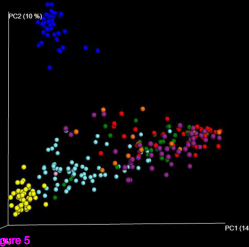 Characterization of the nasopharyngeal microbiota in health and during rhinovirus challenge – Allen EK – Microbiome
“Rhinovirus illnesses were induced by self-inoculation using the finger to nose or eye natural transmission route in ten otherwise healthy young adults.”
Gut microbiome
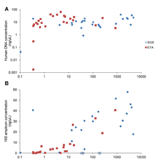
 Diarrhea in young children from low-income countries leads to large-scale alterations in intestinal microbiota composition – Mihai Pop – Genome Biology
“We use high throughput 16S rRNA gene sequencing to compare fecal microbiota composition in children under five years of age who have been diagnosed with moderate to severe diarrhea (MSD) with the microbiota from diarrhea-free controls. “
Structure of the gut microbiome following colonization with human feces determines colonic tumor burden – Baxter NT – Microbiome
“We transplanted fecal microbiota from three CRC patients and three healthy individuals into germ-free mice, resulting in six structurally distinct microbial communities. Subjecting these mice to a chemically induced model of CRC resulted in different levels of tumorigenesis between mice. “
Commensal bacteria directly suppress in vitro degranulation of mast cells in a MyD88-independent manner – Kazumi Kasakura – Bioscience, Biotechnology, and Biochemistry
“Here, we show that heat-killed commensal bacteria suppressed degranulation of mast cells in vitro in a MyD88-independent manner.”
 Co-occurrence of driver and passenger bacteria in human colorectal cancer
Jiawei Geng – Gut Pathogens
“Building on the driver-passenger model, we used 454 pyrosequencing of bacterial 16S rRNA genes associated with 10 normal, 10 adenoma, and 8 tumor biopsy samples, and found 7 potential driver bacterial genera and 12 potential passenger bacterial genera (7 being pro-inflammatory and 5 anti-inflammatory). “
Review: Intestinal Microbiota and the Efficacy of Fecal Microbiota Transplantation in Gastrointestinal Disease – Olga Aroniadis – Gastroenterology & Hepatology
“The published revelations about the human microbiome are bringing the strength of science to clinical observation and enhancing the understanding of not only disease but also how much of a person’s daily function and health depends on the microorganisms living in intimate relationship with each cell in the body.”
 Dietary Intervention with Yoghurt, Synbiotic Yogurt or Traditional Fermented Sobya: Bio-Potency among Male Adolescents Using Five Bio-Markers of Relevance to Colonic Metabolic Activities – Laila Hussein – Food and Nutrition Sciences
“The mean fecal total lactobacilli counts increased (P < 0.05) three weeks after daily consumption of the three fermented supplements (P < 0.05), when compared to the pre-intervention levels. Similar trends were observed for genus bifidobacterium. On the contrary, enterobacteraceae counts were reduced in all the three groups consuming fermented supplements.”
Vaginal microbiome (also see pregnancy)
 Primate vaginal microbiomes exhibit species specificity without universal Lactobacillus dominance – Suleyman Yildirim – ISME J (uncorrected proof, link to Chapman Research)
“Our results indicated that all primates exhibited host-specific vaginal microbiota and that humans were distinct from other primates in both microbiome composition and extent of diversity”
Skin microbiome
New Molecular Techniques to Study the Skin Microbiota of Diabetic Foot Ulcers
Jean-Philippe Lavigne – Advances in Wound Care
“Molecular tools have better documented the composition and organization of the skin flora. Further advances are required to elucidate which among the many bacteria in the DFU flora are likely to be pathogens, rather than colonizers.”
General human microbiome
Shrinkage of the human core microbiome and a proposal for launching microbiome biobanks – Abolfazl Barzegari – Future Microbiology
“This article suggests launching microbiome biobanks for archiving native microbiomes, supervising antibiotic use, probiotic design and native starter production, as well as advertising a revisit to native lifestyles.”
Review: Blowing on Embers: Commensal Microbiota and our Immune System
Darina S. Spasova and Charles D. Surh – Frontiers in Immunology
“This review discusses the recent advances in this field, focusing on the close relationship between the adaptive immune system and commensal microbiota, a constant and abundant source of foreign antigens.”
Microbiome: Second Genome Is Finding Disease Mechanisms, Biomarkers, And Therapeutics – Wayne Koberstein – Life Science Leader
“We now understand that biological processes such as inflammation, barrier function, metabolism, and energy homeostasis are directly linked to our microbiome,” says Peter DiLaura, president and CEO of Second Genome.
“This joint research effort will initiate a new field of clinical laboratory diagnostic tests that target the human microbiome”
Prokaryotes versus Eukaryotes: Who is hosting whom? – Guillermo Tellez – Frontiers in Veterinary Science
“Our aim here is to encourage empirical inquiry into the relationship between mutualism and evolutionary diversification between prokaryotes and eukaryotes which encourage us to postulate: Who is hosting whom?”
Animal models of microbiome and disease
Combination of Metagenomics and Culture Based Methods to Study the Interaction Between Ochratoxin A and Gut Microbiota – Mingzhang Guo
“Changes in functional genes of gut microbiota including signal transduction, carbohydrate transport, transposase, amino acid transport system and mismatch repair were observed.”
Functional divergence in gastrointestinal microbiota in physically-separated genetically identical mice – G. B. Rogers – Scientific Reports
“We report significant divergence in both the composition and metabolism of gut microbiota in genetically-identical adult C57BL/6 mice housed in separate controlled units within a single commercial production facility.”
Alteration of Gut Bacteria and Metabolomes After Glucaro-1,4-Lactone Treatment Contributes to the Prevention of Hypercholesterolemia – Baogang Xie – J. Agric. Food Chem
“Colonic flora test results reveal that the quantity of Bifidobacterium and Lactobacillus in the intestines respectively increase by about 1.7- and 4.2-fold in rats treated with 1,4-GL compared with those in the control group. “
Pregnancy and birth
Oral presentation: The evolution of the vaginal microbiome throughout uncomplicated pregnancy in a UK population – M Chandiramani – Arch Dis Child Fetal Neonatal Ed
“Vaginal swabs were collected at time points across gestation (8–12, 20–22, 28–30 and 34–36 weeks) and the postpartum period (6 weeks) from 43 women delivered at term. Resident bacterial communities were determined using the Illumina MiSeq platform generated from bar-coded amplicons of 16S rRNA gene fragments.”
 Group B Streptococcus β-hemolysin/Cytolysin Breaches Maternal-Fetal Barriers to Cause Preterm Birth and Intrauterine Fetal Demise in Vivo – Tara M. Randis – Journal of Infectious Diseases
“We used a new murine model to evaluate the contribution of the pore-forming GBS β-hemolysin/cytolysin (βH/C) to vaginal colonization, ascension, and fetal infection.”
Zinc and copper levels in low birth weight deliveries in Medani Hospital, Sudan –
Abass RM – BMC Research Notes
“Maternal zinc and copper levels, as well as cord copper levels, are lower in LBW newborns than in those with normal weight.”
Effective Biomarkers for Diagnosis of Neonatal Sepsis – Vineet Bhandari – Journal of Pediatric Infectious Diseases
“The diagnostic utility of the following biomarkers seems to be most practical in the early (interleukin [IL]-6, IL-8, tumor necrosis factor-alpha, neutrophil CD64), mid (procalcitonin) and late (C-reactive protein) phases of neonatal sepsis.”
Review: Association of Periodontal Disease and Pre-term Low Birth Weight Infants
Manjusha Varadan, Jaiganesh Ramamurthy – The Journal of Obstetrics and Gynecology of India
“The association of periodontitis as risk factor for pre-term birth has been in extensive research in the past two decades when a number of studies investigated this relationship.”
[hr]





 Microbiome Digest - Bik's Picks