March 10, 2016

Signals within microbial communities, feeding the microbiome with milk, gut metagenomes of Japanese subjects, multiethnic cohorts, biogeography of viruses in the sea, and finding transcription start sites.

General human microbiome

Review: Signaling in Host-Associated Microbial Communities – Michael A. Fischbach and Julia A. Segre – Cell

Review: The microbiome systemic diseases connection – T.A. van der Meulen – Oral Diseases

Review: The human microbiota: novel targets for hospital-acquired infections and antibiotic resistance – Melinda M. Pettigrew – Annals of Epidemiology

Pregnancy and birth

The placental microbiome is altered among subjects with spontaneous preterm birth with and without chorioamnionitis – Amanda L. Prince – American Journal of Obstetrics and Gynecology

It’s in the Milk: Feeding the Microbiome to Promote Infant Growth – Stavros Bashiardes – Cell Metabolism

The Microbiome in Necrotizing Enterocolitis: A Case Report in Twins and Minireview
Suchitra K. Hourigan – Clinical Therapeutics

Comment: Gut microbiome and necrotising enterocolitis: time for intervention?
Alessio Fasano – The Lancet

Human oral microbiome

Not sure if I agree with the goal of this paper: Natural Antimicrobials and Oral Microorganisms: A Systematic Review on Herbal Interventions for the Eradication of Multispecies Oral Biofilms – Lamprini Karygianni – Frontiers in Microbiology

Human urinary tract microbiome

The Urinary Microbiome Differs Significantly between Patients with Chronic Prostatitis/Chronic Pelvic Pain Syndrome and Controls as Well as between Patients with Different Clinical Phenotypes – Daniel A Shoskes – Urology

Human gut microbiome

The gut microbiome of healthy Japanese and its microbial and functional uniqueness – Suguru Nishijima – DNA Research

Microbiome Heterogeneity Characterizing Intestinal Tissue and Inflammatory Bowel Disease Phenotype – Tyler, Andrea D. – Inflammatory Bowel Diseases

Perspective: Characterisation and therapeutic manipulation of the gut microbiome in inflammatory bowel disease – J. Schulberg – Internal Medicine Journal

FMT Happens: Regulating Fecal Microbiota Therapy in Canada; What You Need to Know – Shahad Salman – World Medical & Health Policy

Review: Characterization of the Gut Microbiome in Epidemiologic Studies: The Multiethnic Cohort Experience – Benjamin C. Fu – Annals of Epidemiology

Review: Antibiotics and the Human Gut Microbiome: Dysbioses and Accumulation of Resistances – M. P. Francino – Frontiers in Microbiology

Animal models

Ecological robustness of the gut microbiota in response to ingestion of transient food-borne microbes – Chenhong Zhang – ISME Journal

Review: Viruses in Rodent Colonies: Lessons Learned from Murine Noroviruses – Stephanie M. Karst – Annual Review of Virology

Animal microbiome

Study of the Aminoglycoside Subsistence Phenotype of Bacteria Residing in the Gut of Humans and Zoo Animals – Teresita de J. Bello González – Frontiers in Microbiology

Allows the consumption of toxic cabbageSaxA-mediated isothiocyanate metabolism in phytopathogenic Pectobacteria – Cornelia U. Welte – Applied and Environmental Microbiology

Comparison of Fecal Microbiota of Mongolian and Thoroughbred Horses by High-Throughput Sequencing of the V4 Region of the 16S rRNA Gen (sic) – Yiping Zhao – Asian Australian Journal of Animal Sciences

Potential bacterial core species associated with digital dermatitis in cattle herds identified by molecular profiling of interdigital skin samples – Martin W. Nielsen – Veterinary Microbiology

I really feel for horses who are sick of grass.  Abstract: Analysis of the large intestinal and faecal microbiota of horses with grass sickness using denaturing gradient gel electrophoresis – D. Nölkes – Journal of Equine Veterinary Science

Plant, root, and soil microbiome

Phyllosphere Fungal Communities Differentiate More Thoroughly than Bacterial Communities Along an Elevation Gradient – Corinne Vacher – Microbial Ecology

A compositional shift in the soil microbiome induced by tetracycline, sulfamonomethoxine and ciprofloxacin entering a plant-soil system – Hui Lin – Environmental Pollution

Water and extremophile microbiome

Long-term warming alters richness and composition of taxonomic and functional groups of arctic fungi – József Geml – FEMS Microbiology Ecology

Review: Biogeography of Viruses in the Sea – Cheryl-Emiliane T. Chow – Annual Review of Virology

DGGE: Oil removal and effects of spilled oil on active microbial communities in close to salt‑saturation brines – Yannick Y. Corsellis – Extremophiles

Bioreactors and waste microbiology

Longitudinal Analysis of Microbiota in Microalga Nannochloropsis salina Cultures – Haifeng Geng – Microbial Ecology

Ecological patterns, diversity and core taxa of microbial communities in groundwater-fed rapid gravity filters – Arda Gülay – ISME Journal

Bacterial communities in different locations, seasons and segments of a dairy wastewater treatment system consisting of six segments – Kikue Hirota – Journal of Environmental Sciences

Food microbiology

Resistome diversity in cattle and the environment decreases during beef production – Noelle R Noyes – eLIFE

Inactivation of Salmonella on tainted foods: using blue light to disinfect cucumbers and processed meat products – J. Stephen Guffey – Food Science & Nutrition

Bioinformatics and metagenomics

Review: Recovering complete and draft population genomes from metagenome datasets – Naseer Sangwan – Microbiome

Dissecting phylogenetic fuzzy weighting: theory and application in metacommunity phylogenetics – Leandro D. S. Duarte – Methods in Ecology and Evolution

Transcriptomics

A novel enrichment strategy reveals unprecedented number of novel transcription start sites at single base resolution in a model prokaryote and the gut microbiome – Laurence Ettwiller – BMC Genomics

Fungi

Perspective: The invisible dimension of fungal diversity – David Hibbett – Science

Microbes in the news

At StanfordCenter launched to explore, exploit human microbiome – Bruce Goldman – Stanford Medicine

Columbia Expands Its Microbiome Research – Christopher Williams – Columbia University Medical Center

UT professor develops technique to enhance desirable traits of plants, animals through microbiology – Maluly Martinez Benavides – The Daily Texan

5th World Summit “Gut Microbiota For Health”: Media Information on Top Issues Ready for Download

Gut bacteria make cabbage poison harmless – Radboud University

Scientists developed a robust method for analysis of intestinal bacteria – Science Codex

Nukadoko: rich in beneficial bacteria: Nukadoko is made by fermenting rice bran, a byproduct of milling brown rice, with lactic acid bacteria and yeast. – Natsuko Tamaki – The Japan News

A mouse’s house may ruin experiments. Environmental factors lie behind many irreproducible rodent experiments – Sara Reardon – Nature

Viral infections may affect respiratory microbiome of patients with CF – Healio

Science, publishing, and career

German Defense Minister to keep doctoral degree – plagiarism found on 44% – Debora Weber-Wulff – Copy, Shake, and Paste

Bik’s Picks

How long can you chew on goat meat? Impact of meat and Lower Palaeolithic food processing techniques on chewing in humans – Katherine D. Zink – Nature

[hr]

#LabStockPhotoFail

There was some discussion online today about a stock photo showing a woman in a purple shirt holding a soldering iron – at the heated element. See discussion at Tech.Mic. Here is the stock photo (on the right) and some similar ones, all from the Tech.Mic website.

From Tech.Mic.com

From Tech.Mic.com

I guess these stock photo companies put some not very tech-savvy models in a lab and let them play with equipment, while the photographer circles around them. “Make love to the camera, baby!”

I bet there are tons of similar pictures in the laboratory realm. So I took a look at Alamy Stock Photos, and sure enough, there were some nice examples. Let’s call them #LabStockPhotoFail. They’re not all Fails, but let’s say that some are just very far removed from regular labwork.

“This is the Tipping Point”

Screen Shot 2016-03-10 at 1.36.46 AM

“Tips are so overrated”

Screen Shot 2016-03-10 at 12.12.13 AM

“My Gel is not Well”

Screen Shot 2016-03-10 at 12.24.11 AM

“I love pipetting with my coworkers standing uncomfortably close to me” (and what the heck is that 10ml pipette on the right doing with the fluid level at 8 ml?)

group-of-scientists-testing-in-laboratory-pipetting-solution-DPAETD

“Safe and accurate pipetting techniques”

Screen Shot 2016-03-10 at 12.19.36 AM

“Back in the lab after the long weekend”

Screen Shot 2016-03-10 at 12.26.10 AM

“Coffee break during gel loading”

gel-electrophoresis-dna-samples-being-loaded-by-micropipet-into-the-CN1HMX

[hr]

March 9, 2016

Two papers on altered microbiome in HIV-infected humans and SIV-infected monkeys, ESBL carriage in hospital wards and medical students, fungus infection affects frog song, and protein recycling in the ocean.

Pregnancy and birth

Gut bacteria dysbiosis and necrotising enterocolitis in very low birthweight infants: a prospective case-control study – Barbara B Warner – The Lancet

Human gut microbiome

Editorial: The HIV-Associated Enteric Microbiome Has Gone Viral – Brent E. Palmer – Cell Host & Microbe

Altered Virome and Bacterial Microbiome in Human Immunodeficiency Virus-Associated Acquired Immunodeficiency Syndrome – Cynthia L. Monaco – Cell Host & Microbe

Comparison of the faecal colonization rates with extended-spectrum beta-lactamase producing enterobacteria among patients in different wards, outpatients and screened medical students – Fatemeh Ebrahimi – Microbiology and Immunology

Animal models

SIV Infection-Mediated Changes in Gastrointestinal Bacterial Microbiome and Virome Are Associated with Immunodeficiency and Prevented by Vaccination – Scott A. Handley – Cell Host & Microbe

Animal microbiome

Enhanced call effort in Japanese tree frogs infected by amphibian chytrid fungus
Deuknam An – Biology Letters

Plant, root, and soil microbiome

Diversity and bioactivity of bacterial endophyte community of Cupressaceae – J. Soltani – Forest Pathology

Leaf litter decomposition in remote oceanic island streams is driven by microbes and depends on litter quality and environmental conditions – Verónica Ferreira – Freshwater Biology

Network modules and hubs in plant-root fungal biomes – Hirokazu Toju – Journal of the Royal Society Interface

Water and extremophile microbiome

Diverse, uncultivated bacteria and archaea underlying the cycling of dissolved protein in the ocean – William D Orsi – The ISME Journal

Food microbiology

Detection of pathogenic Escherichia coli and microbiological quality of chilled shrimp sold in street markets – Liliana Jose Barbosa – Letters in Applied Microbiology

More microbiology

Antimicrobial activity of extracts from macroalgae Ulva lactuca against clinically-important Staphylococci is impacted by lunar phase of macroalgae harvest – Amy M. Deveau – Letters in Applied Microbiology

Microbes in the news

Bacteria discovered by scientists in London cuts dependence on commercial fertilizers – John Miner – LFPress

Fungus makes tree frogs sing – Nature

Michigan researchers start $9.2M effort to study bacteria – Click on Detroit

“Nightmare Bacteria” Found in Southern California Sewage Treatment Plants – Alexander Haro – The Inertia

Two Starbucks Items Voluntarily Recalled Due to Bacteria, Allergen Risk – Gillian Mohney – ABC News

Science, publishing, and career

Scientific record: Class uncorrected errors as misconduct – Sophien Kamoun – Nature

A Multi-dimensional Investigation of the Effects of Publication Retraction on Scholarly Impact – Xin Shuai – Arxiv

[hr]

Microbiome Medicine Summit, part 5

Here is another transcript of the Microbiome Medicine Summit from last week. This transcript was made by the awesome Michelle Beaumont, Research Associate at King’s College London. Thank you, Michelle, for enduring this 45-min long talk and typing in all the text! That’s hours of work, so thank you very much.
Screen Shot 2016-03-09 at 2.45.27 AM

Screen Shot 2016-03-09 at 1.25.03 AMToday’s transcript (shortened a bit by me) is from the podcast by Larry Dossey, MD. Read more about him on Wikipedia.

The host, as before, is Raphael Kellman, MD (shown here in Italics). Here is a link to the MP3 audio file (for as long as the Summit leaves it on). The title of the talk was: “How Consciousness and Mindset Affect the Microbiome and Overall Health.” Highlighted parts in red (by me) are good sentences to read if you are short on time.

Larry, tell us more about your background and your personal story that that segwayed into this incredible journey of consciousness and and the one mind and the role of spirituality and healing. Was there a particular event that triggered a change?

Well, there were several events. As you know as is often the case when physicians make these kinds of transitions in their lives, often it has to do with the physical illness, that was the case with me. I was afflicted beginning in the medical school (with) classical migraine headache, tipified not with just nausea, vomiting and headache but severe partial blindness and this got so bad during medical school that I actually tried to drop out. (…) Nothing worked. I tried everything and you may remember back in the late sixties and early seventies biofeedback popped up on the American scene and I was all over the country learning how to do this deep relaxation using these high-tech instruments that measure things you aren’t aware of usually and it was like a miracle. I had one of those overnight cures and there’s no going back after you discovered the power of consciousness in intention and in this sort of thing in your own personal life, so I was hooked Raphael, I mean I couldn’t deny the power of consciousness in my own medical problem area. 

But Larry, you took a big step forward from basically biofeedback to a much bigger picture to consciousness on a global, nonlocal level to the level of mind that then goes beyond energy, because you could certainly explain your experiences with biofeedback on a very energetic, even perhaps biochemical/mechanical perspective. You took many steps beyond that, so what catalyzed that further progression in your thinking?

It was a shock to my system. The first year in my medical practice as an intern in Dallas I had a series of what we call precognitive dreams. I dreamt of patients whom I would not see until the next day in complex detail, but the sort of experiences I had with these precognitive dreams just were not supposed to happen. (…) 

Screen Shot 2016-03-09 at 2.43.51 AMI came away thinking that there’s some well kept secrets here that we weren’t informed off, and so I developed a passionate interest in this business of non-local manifestations of consciousness whether you want to call it ESP, telepathy, clairvoyance, precognition, this whole area was something was entirely unknown to me. I came out of this search in this personal exploration thinking that all of this was one of the best kept secrets in medicine and people were just not willing to go there and I thought that was cowardly and I began to explore this in my own life and write about it. The thing is I couldn’t get any papers published in the traditional medical journals so I began to write books about this.

Wow, that was a big jump. Did it change your personal life as well, as you started exploring this new consciousness, this new domain, this new dimension?

Not only did change my personal life because my world view just really was transformed, my personal experiences and my delving into the literature. It also changed my professional life. After my first book came out in ’82, a book called “Space, Time and Medicine” I began to be invited around the country to talk to hospitals and hospital staffs and lay conferences, and I discovered that I was one of the few people who was willing, to you know open this can of worms and it made a lot of my colleagues, extremely uncomfortable. I was a member of a large internal medicine group in Dallas which I helped found and there were some real problems about my continuing to be integrated into the group with those kinds of interests. I was advised “Why don’t you just practice internal medicine?”. My feeling was that this was a decent, necessary part of internal medicine, so it was sort of a lonely journey early on, but it’s one that if I had to do it over again I wouldn’t change.

*** Deleted a part here where host Raphael Kellman expresses how Larry’s book help him a lot, and how he felt connected to Larry, followed by Larry saying how great he feels to be connected to him and many others. ***

Larry, you say that it was a well-kept secret (…) but I also believe that many people that are so deeply “entrenched in science” to say I think that science could be misinterpreted or taken in the wrong direction. They never knew this, they’re totally foreign to this knowledge that we all have in a point in our hearts or in our soul, but they never learn it, so it wasn’t a well-kept secret. (…) How does this way of thinking, that we are part of one consciousness, one mind, that there’s something deeper within us that will redefine how we understand the superficial perspective of who we are? How will that new way of thinking practically change the practice of medicine?

(…) I think this is one of the most exciting and fantastic moments to be a physician I’ve ever …I could concede. I think that the revolution is happening in terms of consciousness, spirituality, really because of two reasons. One is that doctors have their own internal experiences as well as experiences with patients which they cannot deny, although they may not choose to go public with him, but then in addition to doctors experiences we have to talk about experiments, we have to talk about that pesky little four letter word which is called data, and so I just must say that it is abundant. It is replicated around the world and the only way doctors are going to be able to hide from this is that they engaged in willful blindness. There is simply too much information out there to do this denial act which has appealed to a lot of doctors during a practice lifetime but it’s not going to work anymore. I think that you don’t get this picture if you listen to the diehard skeptics who basically will never change, but if you actually are willing to go to the literature and do some work, it becomes very clear that we are facing a complete revolution in what we mean by therapy doctor-patient relationships and the manifestations of consciousness.

(…) How do we get more people to, not just health professionals, doctors and scientists and the AMA etcetera, but the average person to be more in tune and more aware of a different reality, a different world that we live in? (…) Tell me what what do you suggest that we do, that people do, what would be a good idea, statement, some suggestion that may push humanity a bit forward?

(…) I’ve made every mistake in the business about how to do these things and how to bring people over to this new way of looking at things (…) I recall back in my practice days that I would get excited about a new study and I would make a copy for all of my colleagues and then on Monday morning I would have had this on their desk so they can share in my enthusiasm for the new study. That was a disaster! One of my colleagues came to me one day and he said “Larry, nobody reads this and you’re just running up the copy costs.” So I decided to just sort of give up, and when I sort of backed off that’s when my colleagues came forward and expressed an interest in some of this stuff. But even so we’re never going on the basis of data and experiments to bring skeptics along with us. Some of them will never come over in spite of the powerful data on their side. This is not a new problem. Max Planck, the physicist, ran into it the early part of the 19th centuries and he’s paraphrased as saying that “science changes funeral by funeral” so I sort of made peace with a lot of my colleagues but I have to tell you that in the past two years it has completely changed around. Just a couple years ago I gave a Harvard talk to a group of Harvard physicians who were gathered for a continuing medical education course and they wanted me to talk about what they call “that weird consciousness stuff”. So I did and I revealed to them some of my experiences which were you know, pretty amazing, precognitive dreams and so on. When the Q&A time came I thought you know, they’re not gonna buy this, I was ready for the tomatoes and that kinda thing, but I was really fooled because they began to share with me their experiences. One female intern stood up in the middle of this big group of doctors and she said “Well I get numbers in my dreams,” she said. “I dream specific lab values of my patients laboratory tests before I even ordered the tests!”. It was a really interesting to me because it revealed to me that in a safe environment a lot of doctors will come forward and reveal things which they have never shared with anybody else they will also usually begin the revelation of these experiences by saying something like “You know I’ve never told anybody this in my life, but…” then they would reveal this, so I’m much more sanguine and hopeful these days about the response of our colleagues than I used to be twenty years ago.

Screen Shot 2016-03-09 at 2.46.39 AM

Absolutely, I agree with you. Give me a good example of two health disorders, two diseases, two health challenges that this way of thinking, this one mind, the role of consciousness, the role of soul, whatever you want to call it, will influence and perhaps even change the the modalities of treatment, or how it could be an adjunctive component to the treatments that they’re receiving.

I can give you some sensational examples. One was a woman who had retinitis pigmentosa and she was desperate. She was going to see an eye specialist for this problem. He sort of told her that he had done everything he could and there was nothing anybody else could do. She went to a Native American shaman – where I live, there’s a shaman behind every tree, it’s pretty easy to find one – and the shaman did whatever shamans do. He did a ritual healing for her and she went back to the eye specialist about six months later, and the problem had disappeared with no additional treatment of any kind. The ophthalmologist went into a rage. He said “This is an incurable situation,” he said “Never come back to my practice. This is impossible. I never want to see you again.”. So I went to see this woman and this is kind of a typical story you know, twenty years ago this would not be as likely to happen today I think, but at least that’s one way with intentionality, healing energy, or whatever you want to call it can be applied to the worst diseases for which medicine has not dealt very well with. You know, I have a file drawer full of these kinds of cases. The unfortunate thing is that we don’t know how to produce them on command and we can’t engineer these kinds of spontaneous remissions, but at least they are part of the medical lore and they they always have been.

Is there one thing that you would recommend as part of consciousness healing, mind healing, to a particular patient who has a specific disease? If there’s one thing that you could recommend that would be different than they would get if they just go to their physician?

I would advise in almost every disease entity I’m familiar with, that they need to make a place in there lives for some sort of contemplative practice whether they want to call that meditation, or contemplation or prayer or just timeout or sitting down for some a long time and so on. I think this is really crucial. It helps minimize stress responses of course. I mean we all know that now, but it also does a lot of other things. One I’m particularly interested in is it helps an individual get out of the sense of isolation and aloneness and feel some sort of connection with a larger entity that I call the One Mind, you know I wrote a major rant about this, my book “One Mind”, but I think that this is so easy to do that people underestimate the importance of this you know. Angie Ariand, the cultural anthropologist had four rules of life and she recommends them to everybody whether they’re sick or not. The first one was show up, the next one was tell the truth, the next one was be quiet, and the last one was probably the hardest thing, it was don’t be attached to the results, and I just think that says so much. This would be a generic approach I would recommend anybody, I don’t care what they’re dealing with.

That’s a nice way of helping people to kind of be catapulted to this One Mind, to collective energy, collected being. That’s beautiful. I think to be silent, to hear the the inner voice is wonderful as a vehicle to help people perhaps tap into that one mind that you speak about.

Well, I agree with you totally and I think that it’s getting even more difficult for people these days to follow these simple program and contemplation meditation. I’ve revised Angie’s rules to a less delicate form. The first one, for me is “Turn off your damn smartphone.”

I like that that’s real good practical advice. That’s gonna save lives, that little bit of advice but absolutely. (RK expresses again thanks to LD’s book that helped some many people in their loneliness. We’re 22 min in by now). 

Screen Shot 2016-03-09 at 2.48.33 AM

Talking about overcoming loneliness, I want to turn to the microbiome which is a very hot topic. I wrote a book on this, The Microbiome Diet. Actually, Larry, you know eight years ago, ten years ago I had a dream, I had a vision. I told it to my agent, to my wife and to my mother. I think everyone thought I was losing it. I said you know, the microbiome, I just felt intuitively that this is going to really help us transform medicine and we have to write about it. And my agent said he doesn’t know what I’m talking about and eight years later I wrote another proposal similar idea and she thought this was wonderful and this is this is going to be… I said “Janice is what I told you about eight years ago”, she said “Yes, yes you did but eight years ago no one was ready for it.” so there’s something that’s emerging today that we’re learning about. I think that the One Mind is teaching us new information about nature itself about the microbiome, the trillions of gut bacteria that play an incredible role in keeping us healthy, and my personal opinion is that the implications of the microbiome is going to really help us better understand what you’re writing about in the One Mind. Could you elaborate on that idea and would you agree with that idea and and if so why?

Absolutely, I agree with it, totally. I must say that you were ahead of your time when you sent that first book proposal and you know I must say that I remember seeing the microbiome on the horizon about twenty years ago. I don’t know if you remember Lynn Margulis, who is a biologist at Amherst, and she began to talk about you know, essentially the forerunner to this by microbial concept, how bacteria were included into the cell wall and they started invaded so that they became sort of tenants in our cellular makeup and that was sort of a state setting observation for the microbiome I think. Here’s what we know. I think that the microbiome is certainly factored into the One Mind idea. The reason I say that is because there are dozens of experiments, now I’m talking about hardcore controlled laboratory studies, which show that people, by using their intention, can interact with bacteria growing in test tubes, they can interact with fungi growing on Petri dishes, and they can use their intentions to increase the growth rate of bacteria or suppress it, and they can do this even though they’re not particularly skillful. We’re not talking about healers or shamans, we’re talking about skeptical college sophomores, who can do this. This is a widespread ability in the human race and it shows clearly that there is some nexus that in which is enveloped the consciousness of human beings in the behavior of microorganisms. I think we can predict with confidence that we’re going to see people intentionally learning how to regulate their microbiome through psychological techniques including intention, willing, wishing or praying, or whatever you want to call this stuff.

Do you have a particular idea or a type of thought or meditation or tapping into a particular type of idea that may particularly influence in a favorable way the microbiome?

I just incorporate into the energy and visualization that I use for practically any problem at all. Actually I’ve gotten so comfortable with bacteria, microbes in general that I don’t see them as a foreign substance anymore in my body. I played around with this idea so long that I see them as natural occupants and entities that are sharing what I call my corporeal body.

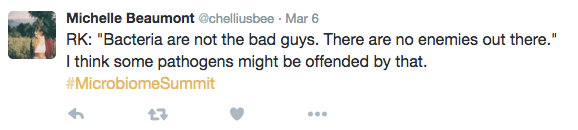
Larry, that’s what the science is showing, that this is the greatest turnaround in medicine in a hundred and fifty years, that bacteria are not the bad guy, there are no enemies out there, that in fact the bacteria are the good guys. That’s the greatest turnaround in a hundred and fifty years in medicine in my opinion.
Screen Shot 2016-03-09 at 2.51.49 AM

I really agree with you. I bump into people however and I bet you do too, who really don’t want much to do with this idea that they’re invaded by these microbes. I had one friend who just really got upset when I tried to tell him about how lucky he was to have these trillions of bacteria working in his behalf and he said “Don’t try to do that new age stuff for me, I don’t want anything to do with the bacteria my body.” Some people want to run in the other direction.
Screen Shot 2016-03-09 at 2.52.38 AM

You know what I tell my patients? I say you “You think you’re looking at me as a doctor person, as a person you know, but what you’re really looking at are trillions of bacteria dressed up in a suit, you know. We are mostly bacteria but you know to help people get comfortable with that idea, that the “me” that we think we are is really more like a beautiful “we”. We’re part of a bigger whole and by the way Larry, people love that idea. There’s a certain sense of comfort that people feel when they hear that.

Well I think this expanded concept that these are our friends and most of them really are there for a benefit, it really forces us to reinvestigate and rethink what we mean by antibiotics. I mean I know you deal with this all the time, most of the antibiotics we take are sort of like a nuclear bomb. It just destroys everything within its reach. And that’s crazy. If we hold on to the idea that these things are there to help us then you don’t want to destroy the good guys and so I know that people are working now on specific antibiotics that could be targeted to specific microorganisms, and that’s the smart way to go and I think that’s where we’re going to see antibiotic use headed in the future.

Just to close a little bit on the microbiome. I believe that the microbiome and its incredible interconnectedness to the outside bacteria and to every cell in every gene in our body, is a beautiful, physical example of that one-ness that you speak about. And that’s why you know, when I wanted to have people to talk about the microbiome I turned to you even though they say well “Larry Dossey talks about the One Mind.” but I said but no there’s a tremendous connection between the one mind and how it’s expressed here in the physical world.

I happen to believe that the discovery of the microbiome is one of the most convincing pieces of evidence that we have uncovered so far pointing to the one-ness of ourselves in nature. If I had to pinpoint the most valuable lesson that may come out of the microbiome I think it’s the lesson that we cannot secede from nature. We’ve tried to do that and it has left us in a precarious position on this planet. The fact that we’re living with this incredible array of organisms in our own body says that we better get comfortable with nature and we are a part of the whole.

Right and a whole that’s not withholding, the whole that as a giving whole. Look what the microbiome is doing for us, sustaining us, keeping us alive. You know this is a little bit of theological medicine but you know that’s what the literature is pointing to, that we don’t live in a world that’s rooted in selfishness, you know I think that science is painting up a very very different picture. You know the one mind is teaching us, I believe, very important lessons and I really look forward to more of your work that will teach us more about this one mind. And to continue our dialogue. I want to go into prayer, Larry, because I know that’s a very important topic for you. Has your perspective changed over time, about the power and the value of prayer and the fact that it could be turned on at will and has your perspective changed on that?

Well my views have evolved, I’m happy to say but I have not lost my enthusiasm for prayer which I define basically so generically that you know, it disappoints a lot of people. I just think prayer is communication with something beyond the individual self, however that’s defined whether it’s god or goddess or all or universe or something else. The studies are very convincing that people who are willing to appeal to a greater power and follow a spiritual path through their years live longer on average and they have a lower incidence of all the major diseases you want to talk about. I mean this is big stuff you know, for years we just farmed out spirituality to rabbis and ministers and preachers and so on and we’re not going to be able to winnie out of the benefits of spiritual practice including prayer in my judgment. It’s time doctors took it on and we would go in that direction lot quicker. Doctors would develop the courage to actually look at the data, the prayer studies are very convincing in my judgment. If people don’t want to call it prayer that makes them sort of nervous and if they think that’s too squishy and they just would rather do intentionality… Who cares but the fact is that there’s something going on here that is highly relevant to health and longevity and we need to embrace it.

So basically your ideas have not really changed all that much and basically you’re saying that prayer, intentionality, focus and also letting go of a particular outcome, that state that a person taps into, can effect change in our world, in our lives?

Absolutely.

Do you think that there is even something perhaps deeper that underlies the value of prayer? For example is it selflessness, just being in a certain inner state that also perhaps is even more important than the prayer or even the intentionality that you speak about?

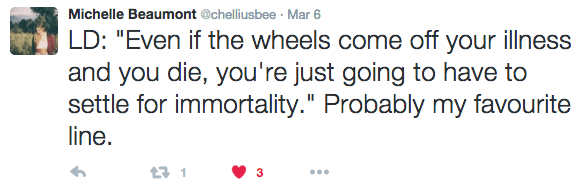
Indeed I do. I think that there are some underlying commonalities that go beyond this word prayer. One I think is surrender. I think when Angie Arian lists her fourth rule of life which is “don’t be attached to results” I think there’s something really deeply important about that you know. We’ve been through all of this stuff in the past 20 years about the right mindset to adopt if you want to have one of these healings and so on and i think we went overboard with telling people to fight your illness, to be really aggressive in this sort of thing. I think for a lot of people it is just the opposite and I could quote you data to support that. An accepting abiding sense that no matter what happens it’s okay. Even if the wheels come off your illness and you die, my message is that you’re just gonna have to settle for immortality.
Screen Shot 2016-03-09 at 2.53.25 AM

And I used to counsel my patients with cancer, a patient who was approaching death and we would have what I used called The Conversation. The conversation was you know “Joe if things continue to go bad and you know, the wheels come off and you’re just gonna have to settle for immortality.” and he would laugh, you know, a nervous laugh, and then the next day would really get into things and if I may say so I think that this image that there’s some aspect of who we are, that’s non-local in time, which to say is infinite, is indirect evidence that some part of us couldn’t die if it tried, its not local with respect to time which means that it’s immortal and eternal. This is one of the major lessons that comes out of the consciousness and healing and prayer studies because it reveals a non-local aspect, a temporally non-local aspect of who we are. We might as well call it the soul but if that makes people nervous you know, we can end in other words to do the same thing.

We could call it the most inner point of who we are, our inner core, you know it doesn’t really matter what word we use. Let’s talk a little bit about spontaneous remission and that obviously is something that we can’t pursue.  We can’t force the experience of a spontaneous remission but you know there are some studies to point to the fact that spontaneous remissions exists. It’s something that actually happens in the physical world. What’s your take on it? What are the most convincing studies and how would that change the mindset of conventional doctors and conventional medicine and signs?

Well the first thing I want to say is the conventional notion of doctors really needs to be radically renovated on this subject. I bet you had the same experience, so I was in medical school, I was told by professors: “these things are rare, you’ll probably go through your life is an internist and never see one and this is just baloney.” Hirschberg and Reagan published a book in 1993 collecting thousands of these cases from all over the world is so we find these spontaneous remissions in practically any disease you want to look at. Acknowledging this would be a reason for hopefulness if nothing else in by just coming clean with the evidence, telling people you know, it may not be likely but there’s always the possibility that something nice would happen here. That would not be dishonest. There are several books. Andrew Weil has a book called “Spontaneous Healing”, Hirschberg and Barasch have a book called a “Remarkable Recovery” which I wrote the foreword to, so you know I recommend that book, so there’s a good literature out there about this. I want to say though that I take issue with some of the books that have been published in recent years that sort of give formulas about how to engineer these things. I mean I don’t think there is a formula. These things happen to religious people and atheists alike. If you ask people who had these spontaneous remissions what they did to have one, they are all over the ballpark. Some people talk about the virtues of exercise, music, dance, taking up a hobby, some people say they fought their disease, others say they accepted it. There’s no pattern that i’ve seen and really I think that one of the frustrating things that people encounter.

You know it’s definitely not about whether you’re an atheist or believer. (talks about God). It doesn’t matter whether you say you’re a believer or you’re not a believer, we’re all in the same space and language is meaningless to me at that point.

I could not agree more. Earlier this month my wife and I participated in a conference in Tucson called the Final Transition conference and there were people there who do work with the dying and this was one of the richest conferences I’ve ever been to because nobody held back, people were completely open in their presentations and what came out of this is that our fear of death and annihilation simply goes away and the journey through death can be an extremely fascinating and fearless experience for most people. And I think if we can really make this message real from the nonlocal consciousness perspective, that the most essential part of you couldn’t die if it tried.

(…) The future of medicine, how do you see it?

Screen Shot 2016-03-09 at 2.54.27 AM

(…) it’s going to get a lot more technical in terms of new medications, new surgical procedures, bionics is gonna be big, I mean things are going to be really high tech in ways that we can’t even imagine currently and I’m not particularly against that. What will be the big breakthrough in my judgment, will tend to be the insights into the nature of consciousness. I cannot imagine a more morbid approach to consciousness than has been engaged in by the medical profession for the past two hundred and fifty years which says that with death there is total annihilation of everything. I can’t think of worse things to tell a sick person. This is where the major humanitarian breakthroughs, the ethical and moral advances are going to come, from a reinvention of the nature of consciousness and a willingness to actually engage with the data that is already there. We’ve done a terrible job there and my prediction is in the future we’re going to turn that around.

And that’s why we need collaboration and we need to support each other. That’s a lot of people that are working in this direction. By the way, that’s why one of the reasons why I’m so interested in the microbiome because I’m interested in the implications of the microbiome and how that could be a vehicle and a medium to make the transformation go a little bit faster. By the way I think that what you said is so, so important and I’m going to remember some of these quotes to pass along to others, is that offering hope and offering a different worldview to patients and why that’s so important. If you believe that we live in a world of survival of the fittest, that we’re just a bunch of chemicals that just dissipate into nothingness when we die, how could you, and we live in a cold brute and hostile world, if that’s your inner feeling as a healer, as a doctor, as health professional, how can you really offer any hope and comfort to any patient you interact with. Deep down you can’t,  because they sense what you’re feeling.

If doctors really believe that in their heart they ought to go to choose another profession. I would suggest they go into computers or or sell real estate but they are not fit to prevail their skills on other human beings if that is their worldview they should never go into medicine in the first place.

But this is the point that I think we need to make so sharp, which you know i i assist you with, is that we have two choices you can either believe that we live in a dog eat dog world, survival of the fittest, or you could begin to see differently because the science is pointing in a different direction if you just open your eyes, that we don’t live in such a world, we live in a world of survival of the wholest, we live in a world, in my opinion and I don’t believe any scientist could refute this, that we live in a world that’s rooted in kindness and if you have that perspective that’s how you offer hope to a patient and I believe, and then tell me if I’m getting it, that that’s the message of the One Mind at the deepest level.

You got it

Ok, ok well what I want people to hear that because there’s two paths, we can choose: Either the old way where scientists are rooted in and culture is rooted in, our society is rooted in, which is one way. Or a very different way which are the fundamental implications of the books that you’re writing, that I’m speaking about and I’m writing about and many others, but let’s make it clear that that’s a different world view and that world view is that ultimately it’s one mind and that it’s not survival of the fittest and that something continues and goes on and that ultimately it’s all a world of of kindness and hope and possibility and growth and forever transformation.

I agree yeah.

Larry, that’s the other possibility.

You know if we were to really get what you just said, as physicians, if we were to get there in our heart we would really feel that their medicine could resume being a spiritual path as it used to be you know, now it’s the path of the technician and the mechanic but it used to be a spiritual path and we can reclaim that.

Beautiful. And we will, as much as the physical and the technological will advance, so will the spiritual component advance you know, I really thank you on behalf of all listings for the work that you’re doing and that we continue this dialogue and you continue to write these wonderful books. Is there a new one coming?

Yeah. It’ll be out in the spring of 2016 and is called “What is consciousness?”

Oh boy, I like that.

Screen Shot 2016-03-09 at 2.55.14 AM

Screen Shot 2016-03-09 at 2.55.40 AM

I have a little poem before we go. This is a little poem from the 14th century from Hafiz the great Persian poet:

“Let’s go deeper, go deeper
For if we do, our spirits will embrace and interweave.
Our union will be so glorious
That even God will not be able to tell us apart.”

Screen Shot 2016-03-09 at 2.57.17 AM

Screen Shot 2016-03-09 at 2.49.58 AM

Screen Shot 2016-03-09 at 2.51.00 AM

 [hr]
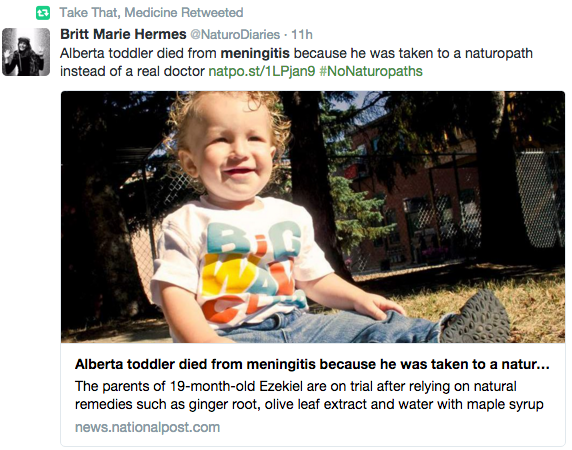
A sad story showing how alternative medicine can cause harm

This morning, there were several Tweets about a very sad story. Here is the first one:

Screen Shot 2016-03-09 at 12.18.17 AM

But soon many others followed. It was a very tragic story.

Screen Shot 2016-03-09 at 12.16.05 AM

In short, a 19 month old Alberta boy died of meningitis. Read more articles here and here. According to the story, his parents were running an alternative medicine website called TrueHope Nutritional Support Inc., a Canadian online story selling vitamin and mineral supplements.  The couple tried to treat their son, who was getting sicker and sicker, with all kinds of supplements but he did not get better, and eventually passed away.

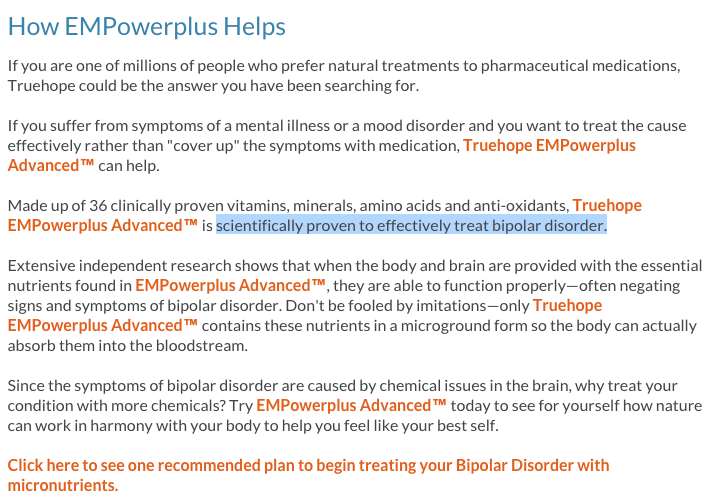
TrueHope, the company run by the parents of the boy (according to one of the news sites above) claims that their supplements will cure a wide variety of behavioral conditions such as autism, ADHD, bipolar disorder, and depression. Their main product is EMPowerplus, a multivitamin product. Here is one of their claims (highlighting mine):Screen Shot 2016-03-09 at 12.31.33 AM

In a related story, a British Columbia man with schizophrenia who had been taking EMPowerplus and had stopped taking his prescription drugs, killed his father.

Truehope lists a collection of “clinical studies” on their website, but most of these are by the same 2 authors, and unblinded, not-placebo controlled studies, where people with mental illness were given pills, and asked if they felt better after a while. Read a critical analysis about their research here.

Natasha Tracy, a mental health writer, wrote some critical blogs about EmPowerPlus. She actually bought the product, but received a lot of pushy telephone calls afterwards, asking her to do additional tests. Tracy wrote a post about her experience called What I Know about EMPowerplus by Truehope that You Don’t. TrueHope of course was not amused, and threatened her with a lawsuit. But she did not remove her posts – and has not been sued so far. More about the lawsuit and Tracy’s story here.

The question remains why such a product can be advertised to treat diseases, and sold in Canada without the need for a prescription. Today we learned how dangerous and tragic selling dietary supplements with vague health claims can be.

[hr]

Somewhere between March 8 and March 9, 2016

Human symbionts inject to persist, diet and exercise in mice, a 17-year long experiment, and using peanut butter as a vehicle to deliver probiotics in developing countries.

Human skin microbiome

Proteobacteria from the human skin microbiota: Species-level diversity and hypotheses – C. Cosseau – One Health

Human respiratory microbiome

Clinical metagenomics for the management of hospital- and healthcare-acquired pneumonia –  Etienne Ruppé – Future Microbiology

Human gut microbiome

Analysis of Gut Microbiota in Coronary Artery Disease Patients: a Possible Link between Gut Microbiota and Coronary Artery Disease – Takuo Emoto – Journal of Atherosclerosis and Thrombosis

PhD Thesis: Indigenous Australians have a distinctive gut microbial profile compared to Caucasian controls and patients with inflammatory bowel disease – Iyngkaran, Guruparan – Melbourne Medical School

Review: Changes in the Intestinal Microbiome and Alcoholic- and Non-alcoholic Liver Diseases—Causes or Effects? – Naga S. Betrapally – Gastroenterology

Review: Microbiome alterations in HIV infection a review – B Williams – Cellular Microbiology

Review: Extensive Intestinal Resection Triggers Behavioral Adaptation, Intestinal Remodeling and Microbiota Transition in Short Bowel Syndrome – Camille Mayeur – MDPI Microorganisms

Microbiome models

Human symbionts inject and neutralize antibacterial toxins to persist in the gut – Aaron G. Wexler – PNAS

The Effect of Diet and Exercise on Intestinal Integrity and Microbial Diversity in Mice – Sara C. Campbell – PLOS ONE

Chronic Psychological Stress Disrupted the Composition of the Murine Colonic Microbiota and Accelerated a Murine Model of Inflammatory Bowel Disease – Yohei Watanabe – PLOS ONE

Flavanol-Enriched Cocoa Powder Alters the Intestinal Microbiota, Tissue and Fluid Metabolite Profiles, and Intestinal Gene Expression in Pigs – Saebyeol Jang – The Journal of Nutrition

Deletion of the Toll-Like Receptor 5 Gene Per Se Does Not Determine the Gut Microbiome Profile That Induces Metabolic Syndrome: Environment Drumpfs Genotype
Wei Zhang – PLOS ONE

Animal microbiome

The microbiome of coral surface mucus has a key role in mediating holobiont health and survival upon disturbance – Bettina Glasl – ISME Journal

Repeated replacement of an intrabacterial symbiont in the tripartite nested mealybug symbiosis – Filip Husnik – BioRxiv

No access for me, but I assume this is in birds: Microbial shifts associated with necrotic enteritis – Gunther Antonissen – Avian Pathology

Plant, root, and soil microbiome
Orchids: Differences in mycorrhizal communities between Epipactis palustris, E. helleborine and its presumed sister species E. neerlandica – Hans Jacquemyn – Annals of Botany

Soil Respiration and Bacterial Structure and Function after 17 Years of a Reciprocal Soil Transplant Experiment – Ben Bond-Lamberty – PLOS ONE

Evaluation of a diagnostic microarray for the detection of major bacterial pathogens of potato from tuber samples – Y. Degefu – EPPO Bulletin

Shifts in symbiotic associations in plants capable of forming multiple root symbioses across a long-term soil chronosequence – Felipe E. Albornoz – Ecology and Evolution

Bacterial diversity and community along the succession of biological soil crusts in the Gurbantunggut Desert, Northern China – Bingchang Zhang – Journal of Basic Microbiology

Variation of Bacterial Community Diversity in Rhizosphere Soil of Sole-Cropped versus Intercropped Wheat Field after Harvest – Zhenping Yang – PLOS ONE

Characterization of bacterial communities in lithobionts and soil niches from Victoria Valley, Antarctica – Marc W. Van Goethem – FEMS Microbiology Ecology

Bacterial indicator taxa in soils under different long-term agricultural management – N.G. Jiménez-Bueno – Journal of Applied Microbiology

Water and extremophile microbiome

Delta-proteobacterial SAR324 group in hydrothermal plumes on the South Mid-Atlantic Ridge – Huiluo Cao – Scientific Reports

Nutrient treatments alter microbial mat colonization in two glacial meltwater streams from the McMurdo Dry Valleys, Antarctica – Tyler J. Kohler – FEMS Microbiology Ecology

Bioreactor microbiology

Gut microbiota-involved mechanisms in enhancing systemic exposure of ginsenosides by coexisting polysaccharides in ginseng decoction – Shan-Shan Zhou – Scientific Reports

Comparative analysis of taxonomic, functional, and metabolic patterns of microbiomes from 14 full-scale biogas reactors by metagenomic sequencing and radioisotopic analysis
Gang Luo – Biotechnology for Biofuels

Waste and pollution microbiology

Temporal dynamics of biotic and abiotic drivers of litter decomposition – Pablo García-Palacios – Ecology Letters

Microbial Community Structures in Petroleum Contaminated Soils at an Oil Field, Hebei, China – Yizhi Sheng – CLEAN – Soil, Air, Water

Effect of microbial community structure on organic removal and biofouling in membrane adsorption bioreactor used in seawater pretreatment – Sanghyun Jeong – Chemical Engineering Journal

Performance assessment and microbial diversity of two pilot scale multi-stage sub-surface flow constructed wetland systems – Journal of Environmental Sciences – A.O. Babatunde

Functional foods and food microbiology

For applications in developing countries: Influence of probiotics, included in peanut butter, on the fate of selected Salmonella and Listeria strains under simulated gastrointestinal conditions – Y.A.K. Klu – Journal of Applied Microbiology

Bioinformatics and metagenomics

Read networks and k-laminar graphs – Finn Volkel – ArXiv

CLUSTOM-CLOUD: In-Memory Data Grid-Based Software for Clustering 16S rRNA Sequence Data in the Cloud Environment – Jeongsu Oh – PLOS ONE

Protocol: Using QIIME to Evaluate the Microbial Communities Within Hydrocarbon Environments – Luke K. Ursell – Springer Protocols Handbooks

Regression Analysis for Microbiome Compositional Data – Pixu Shi – ArXiv

bioOTU: An Improved Method for Simultaneous Taxonomic Assignments and Operational Taxonomic Units Clustering of 16s rRNA Gene Sequences – Chen Shi-Yi – Journal of Computational Biology

Techniques

Indexed PCR Primers Induce Template-Specific Bias in Large-Scale DNA Sequencing Studies – James L. O’Donnell – PLOS ONE

More microbiology

Alice’s living croquet theory – Didier Raoult – International Journal of Antimicrobial Agents

Genomic approaches for understanding dengue: insights from the virus, vector, and host – Shuzhen Sim – Genome Biology

Microbes and infection

Multiplex detection and identification of viral, bacterial, and protozoan pathogens in human blood and plasma using a high-density resequencing pathogen microarray platform – Moussa Kourout – Transfusion

Local Action with Global Impact: Highly Similar Infection Patterns of Human Viruses and Bacteriophages – Rachelle Mariano – mSystems

Microbes in the news

Cutting Board Companions – Katherine Dahlhausen – MicroBEnet @PhDKD

Standard practice of giving premature babies antibiotics needs to be rethought, argues new study – Jessica Firger – Newsweek

Bacterial brawls mark life in the gut’s microbiome – Bill Hathaway – Phys.org

How your microbiome can put you at the scene of the crime – Kai Kupferschmidt – Science

Soy protein may diversify gut microbiota more than dairy protein: Study – Stephen Daniells – Nutraingredients
Sleep Deprivation Caused By Jet Lag And Shift Work Could Be Treated Through Your Gut Microbiome – Cayla Dengate – Huffington Post

U-M Students Analyze Their Own Biological Samples to Study How Microbes Affect Human Health – Infection Control Today

#1 is outdated but rest ok: 10 things you need to know about your gut – Naomi Mead – Netdoctor

The Dannon Company Announces Fourth-Annual Winner of Yogurt and Probiotics Fellowship Grant: Micah Eimerbrink – BusinessWire

Science, publishing, and career

Insights into the PeerJ Preprint: “Gender bias in open source” – PeerJ Blog

Bik’s Picks

I Speak Whale: Vast assembly of vocal marine mammals from diverse species on fish spawning ground – Delin Wang – Nature

[hr]

Missing Line Numbers Hack

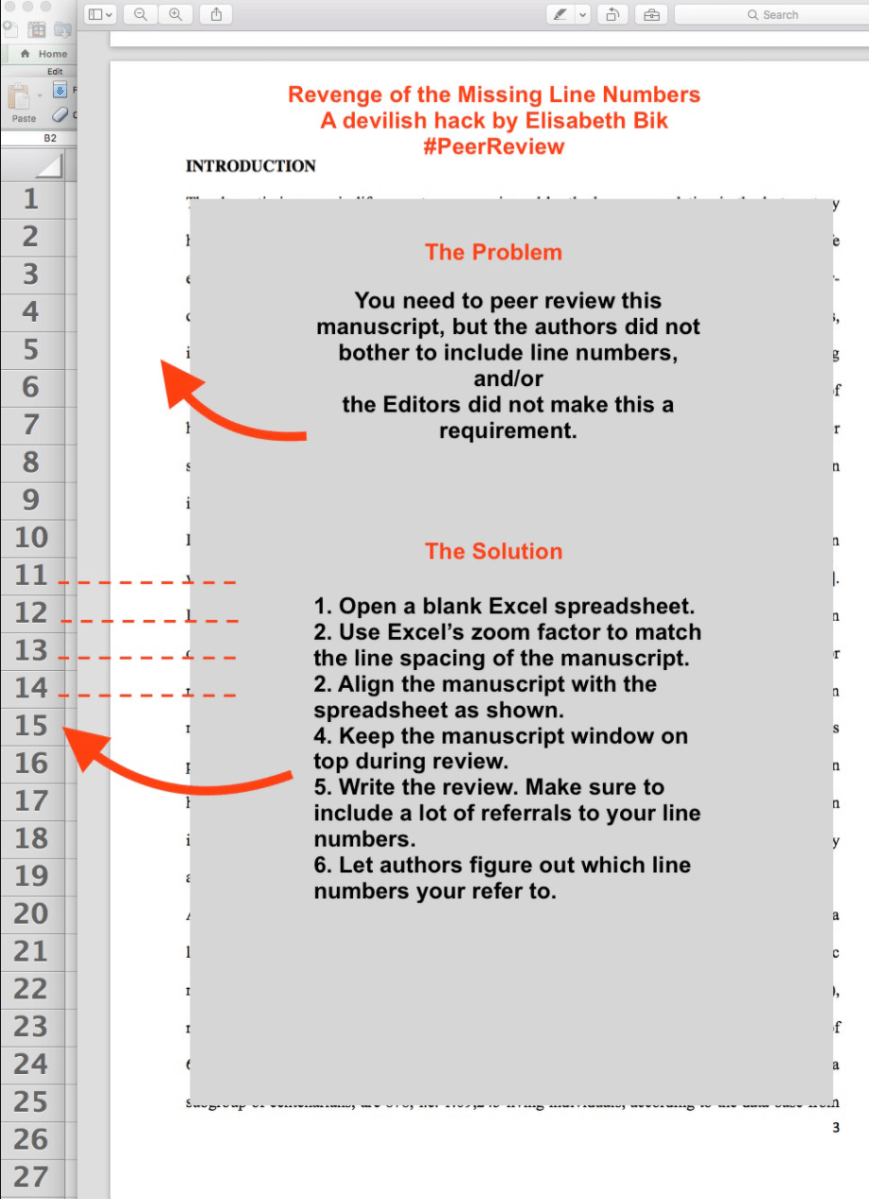
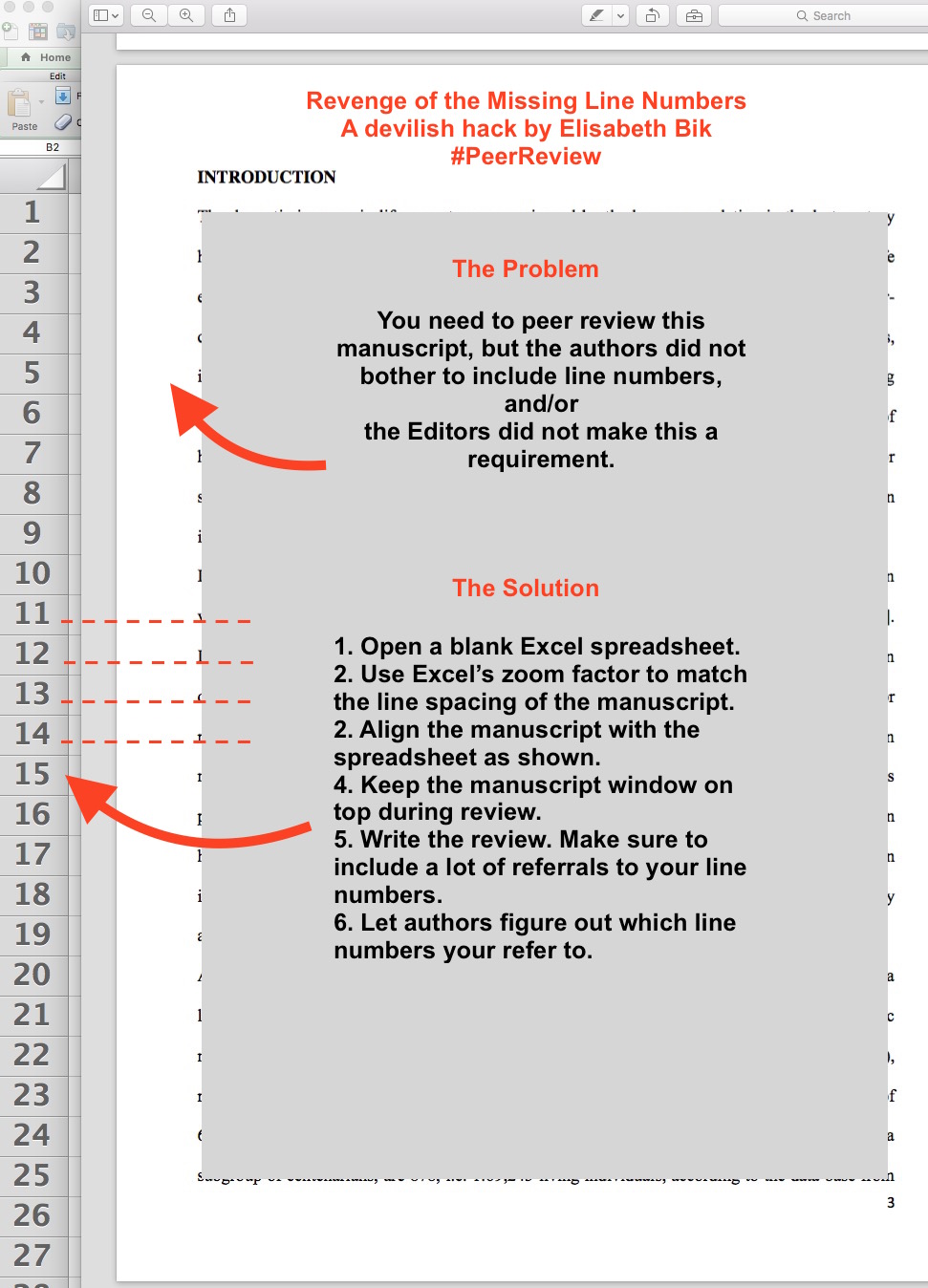
I am currently reviewing a manuscript without line numbers. Arrrrrrggggh. It is hard to refer to a particular word or sentence when you cannot refer to line numbers. Instead of writing Typo in L13, “Eschericia”, now I need to write “At the beginning of the second paragraph on P4, typo…”. If you make a lot of comments, like I usually do, this becomes a bit of a pain. And it is especially hard in manuscripts that have long paragraphs that span over multiple pages.

Line numbers are so easy to add to documents, why didn’t the authors bother to do that? Why don’t Editors make it an absolute requirement of the manuscript?

Today, I started the review of one of those manuscripts, and bummer, no line numbers.

Screen Shot 2016-03-08 at 04.08PM, Mar 08

Screen Shot 2016-03-08 at 04.05PM, Mar 08 2

Screen Shot 2016-03-08 at 04.11PM, Mar 08

Of course, I could have let the Editors know, and requested a new version, but the deadline is today and I should have seen this earlier. But I didn’t. And I also don’t want to delay the peer review process by my own annoyances. So I came up with this hack to add my own line numbers

Screen Shot 2017-03-23 at 9.23.38 PM.png
Missing Line Numbers HackI just added my own numbers using Excel, and let the authors figure it out. As revenge. Hehehe.

Screen Shot 2016-03-08 at 04.05PM, Mar 08 1Screen Shot 2016-03-08 at 04.05PM, Mar 08

[hr]

March 8, 2016

A very special edition of Bik’s Picks on this International Women’s Day: Soil decomposition on Mount Kilimanjaro, genome of a Ruminococcus associated with IBS, survival of microbes during the digestion of cheese.

Human oral microbiome

EditorialOral Biofilm Architecture at the Microbial Scale – Maria D. Ferrer – Trends in Microbiology

Human reproductive tract microbiome

Cervical Microbiota Associated with Risk of Higher Grade Cervical Intraepithelial Neoplasia in Women Infected with High-Risk Human Papillomaviruses – Chandrika J Piyathilake – Cancer Prevention Research

Human gut microbiome

Isolation and whole genome sequencing of a Ruminococcus-like bacterium, associated with irritable bowel syndrome – Ulla Hynönen – Anaerobe

Opinion: Gut microbiota impact on stroke outcome: Fad or fact? – Katarzyna Winek – J Cereb Blood Flow Metab

Review: Mechanisms linking the gut microbiome and glucose metabolism – Kristina M Utzschneider – J Clin Endocrinol Metab

Review: Gut Microbiome and Kidney Disease in Pediatrics: Does Connection Exist? – Tetyana L. Vasylyeva – Frontiers in Microbiology

Review: The complex interplay of diet, xenobiotics, and microbial metabolism in the gut: Implications for clinical outcomes – Mariia Taguer – Clinical Pharmacology & Therapeutics

Review: Obesity and Asthma: Microbiome-metabolome Interactions – Stephanie A Shore – American Journal of Respiratory Cell and Molecular Biology

Animal models

Gut Microbiota-Induced Immunoglobulin G Controls Systemic Infection by Symbiotic Bacteria and Pathogens – Melody Y. Zeng – Immunity

Plant, root, and soil microbiome

Methodological Guidelines for Accurate Detection of Viruses in Wild Plant Species – Christelle Lacroix – Applied and Environmental Microbiology

Rice bacterial endophytes: isolation of a collection, identification of beneficial strains and microbiome analysis – Iris Bertani – Environmental Microbiology

Sulfur Fertilization Changes the Community Structure of Rice Root-, and Soil-Associated Bacteria – Sachiko Masuda – Microbes and Environments

Do shifts in life strategies explain microbial community responses to increasing nitrogen in tundra soil? – Minna Männistö – Soil Biology and Biochemistry

Temperature sensitivity and enzymatic mechanisms of soil organic matter decomposition along an altitudinal gradient on Mount Kilimanjaro – Еvgenia Blagodatskaya – Scientific Reports

Influence of pesticide seed treatments on rhizosphere fungal and bacterial communities and leaf fungal endophyte communities in maize and soybean – Rachel Nettles – Applied Soil Ecology

Forest understory plant and soil microbial response to an experimentally induced drought and heat-pulse event: the importance of maintaining the continuum – Isabell von Rein – Global Change Biology

Water and extremophile microbiome

Abundance and Biogeography of Picoprasinophyte Ecotypes and Other Phytoplankton in the Eastern North Pacific Ocean – Melinda P. Simmons – Applied and Environmental Microbiology

Metagenomic 16s rrna investigation of microbial communities in the Black Sea estuaries in South-West of Ukraine – Oleksandra Bobrova – Acta Biochimica Polonica

Waste and pollution microbiology

Contaminant-Degrading Microorganisms Identified Using Stable Isotope Probing – Alison M. Cupples – Chemical Engineering & Technology

Food microbiology

Survival of lactic acid and propionibacteria in low- and full-fat Dutch-type cheese during human digestion Ex vivo – Aleksandra Martinovic – Letters in Applied Microbiology

Metagenomics and bioinformatics

Review: Targeted metagenomics of active microbial populations with stable-isotope probing -Sara Coyotzi – Current Opinion in Biotechnology

Infection and microbiology

Diagnosis of Bacterial Bloodstream Infections: A 16S Metagenomics Approach – Saskia Decuypere – PLOS Neglected Tropical Diseases

Microbes in the news

Fibre and protein enhance gut bacteria in children – Malene Sommer Christiansen – Science Nordic

Extreme Microbiome Project Aims to Characterize Microbes Living in Harsh Environments – Monica Heger – Genome Web

UTI bacteria use hooks to hang on inside you when you pee – Clare Wilson – New Scientist

Science, publishing and career

Statistical significance and its part in science downfalls – Hilda Bastian – PLOS Blogs

Microbiology and Nature in Video Games – Alex Alexiev – MicroBEnet

Tricon2016: The Microbiome: Sorting Out the Hype from the Hope – Bonnie Feldman – Storify

Leap day, giant viruses, and gene-editing – Dawn Field – Oxford University Press blog
[hr]

Happy International Women’s Day!

Happy International Women’s Day! Unfortunately, Stanford University, where I work, has decided to not participate. Their daily Newsletter, which I get in my inbox every morning, today again does not feature any women.

The newsletter features 3 stories every day, with a picture next to it. Often these are VIPs who passed away, researchers, or a picture of the study object. It seems that men are more often pictured then women in this newsletter (I tracked it for a while in the past). Here are two older examples of what I mean. On the right, you see the Stanford Report. It features 2 photos of men, and 1 of a pile of garbage. But that story, about hoarding disorder, was an interview with a woman. Did Stanford really think that a pile of garbage is worth showing more than a photo of a Stanford professor?

Stanford Report, Feb 17 2016

Here is another example. On the right, you see the Stanford Report with three pictures, each of a “study object”. To the left, the first or leading authors whose pictures were not shown. All three happen to be women. The Report staff often appears to favor “object” photos over photos of female researchers.

Stanford Report, January 213 2016

Today, I had high hopes. It’s International Women’s Day, right? Stanford is going to let its female researchers and doctors shine, right?

But no. This is the Daily Newsletter of today. It features 2 pictures of “study objects” and 1 picture of a man. The two top articles however, refer to studies of which in both cases the lead author is a woman. Why does Stanford so often decide that a picture of the study object is more important than to let these first authors shine?

Stanford Report March 8 2016


[hr]
Microbiome Medicine Summit, part 4

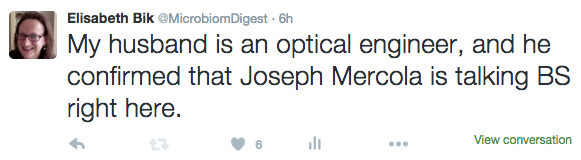
The Microbiome Medicine Summit has ended today, but I have downloaded all the talks. Tonight, I listened to Joseph Mercola’s talk, called The Basic Ways to a Healthy Microbiome (this link will download MP3 file). Dr. Joseph Mercola is one of the most popular alternative medicine gurus in the US. His website receives as many visitors as the pages from the National Institute of Health, and his Twitter account has over 200 million followers. He is not an MD, but he is a graduate of the Chicago College of Osteopathic Medicine (Source: Wikipedia). From Wikipedia:

Mercola has been criticized by business, regulatory, medical, and scientific communities. A 2006 BusinessWeek editorial stated his marketing practices relied on “slick promotion, clever use of information, and scare tactics.” In 2005, 2006, and 2011, the U.S. Food and Drug Administration warned Mercola and his company to stop making illegal claims regarding his products’ ability to detect, prevent, and treat disease. The medical watchdog site Quackwatch has criticized Mercola for making “unsubstantiated claims [that] clash with those of leading medical and public health organizations and many unsubstantiated recommendations for dietary supplements.”

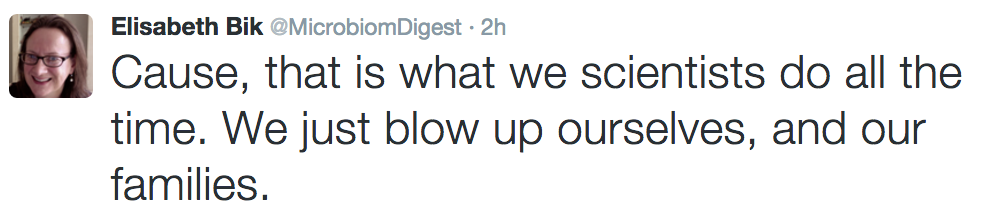
Here is my transcript of parts from Joseph Mercola (JM)’s talk. It was not until 18 minutes in that the microbiome was mentioned for the first time. Some remarkable statements are highlighted in red, and I have also tossed in some responses and comments from Twitter. Host: Raphael Kellman (RK).

RK. What are the main ways that people can take control of their health?
I’m passionate about health. I’ve summarized health into 5 simple basics.
And interestingly, they work for about every disease. I view these as the essential foundational elements. Whatever disease you have you really need to integrate this into the base program. What are those principles?
1. Access to sun as much as you can. It’s not dangerous like every dermatologist will tell you.
2. Drink clean water. Stop drinking sodas.
3. Eat real food (…) When you eat real food, you avoid a lot of other additives and derivatives that are put in food that can really damage your health. And the timing of your food is absolutely key.
4. Movement – you simply got to move your body on a regular basis.
5. You’re not special. I’m not special. We all need 8 hours of sleep a day. There’s a small subset of people, 1:10,000 people have a genetic problem, and they only need 4 hours a night. But I almost guarantee you: You’re not one of those people. You need 8 hours.

(note EB 3/8/16: these 5 steps are all reasonable – although I would not recommend sitting in the sun for hours every day. These steps all are important to help us stay healthy, but they are not a guaranty to a healthy life, nor will they provide a miracle “for every disease”). 

RK. Do these same principles apply to someone who already has a serious disease? Do they need to add something?
No, they all have the same basic principles. Eating real food. By that you’re avoiding sugars, processed foods. There is a loop-hole in the government regulations that allows the food industry to classify many food ingredients as GRAS, Generally Recognized As Safe. By making that classification, they can avoid having to do any human food safety testing, and also do not have to put that on the label. You can look all you want, it won’t be there. If you eat real food you avoid exposure to all those potential toxins.

RK. There are many people with insulin resistance who are eating a very healthy diet, and they’re not overweight, and their insulin resistance or their outright diabetes is due to endocrine disrupters, and the chemicals in the environments. Would you agree with that?
Absolutely. There is no question. What is the solution? If you eat clean food, that’s a big issue. But there all the toxic exposure, the BPA phthalates that are in food containers, or plastic curtains in your shower. You got to limit the exposure to plastics.
But it could be other things, like sun exposure. Vitamin D deficiency is pervasive. Yes, you can take oral vitamin D. But exposure to the sun is the ultimate and absolute best way to increase your vitamin D.

RK: I’ve been saying this for years! Listen, if the sun is an integral part of nature, and we are part of nature, you don’t have to be a medical doctor to figure out that the two of us need to get together. What happens, when you go to medical school, is that you lose your common sense.
Why is exposure to sun better than swallowing a capsule? There’s different reasons. One of them is there’s different wavelengths, 1500 wavelengths. One of those wavelengths is the infrared wavelength. And we know that infrared exposure actually helps structure water in your body. That’s why infrared sonars are so good for detoxing.

Screen Shot 2016-03-08 at 1.44.08 AM

I have structured my life so that I don’t need vitamin D. I have not swallowed a vitamin D pill in over 5 or 6 years.  (Note EB: He lives in Florida. You know, where it’s sunny).

Screen Shot 2016-03-08 at 1.30.08 AM
But if you’re not able to do that, then you have to swallow and then you have to do a blood test.
RK: Get out in the sun! If you have 15-20 min, roll up your sleeves and sit out in the sun!
Take your shirt off! Don’t be embarrassed. If you’re a woman, of course you have a sports bra on, you know, we don’t wanna get indecent public exposure.

Screen Shot 2016-03-08 at 1.45.45 AM

Screen Shot 2016-03-08 at 1.25.30 AM

RK: Your passion is to change the Paradigm of Medicine. What do you think is wrong with the current paradigm, and what is the new paradigm that you like to replace it with?
Everything that I mention reflects back to the simple principles of “RAP”, Replicate Ancestral Practice, so ancestral food, ancestral movements. What did our ancestors do hundreds of thousands of generations ago?

Screen Shot 2016-03-08 at 1.36.07 AM


Screen Shot 2016-03-08 at 1.36.58 AM

Screen Shot 2016-03-08 at 1.37.03 AM

Screen Shot 2016-03-08 at 1.23.53 AM

Our genes and our metabolism (EB: mumbled here) were not optimized for what happened in the last hundred years. So when you remove yourself from that exposure you’re not going to achieve optimal health.

RK: My niece just got into medical school. So I asked her: Do they teach you in biochemistry or in cell biology that all these compounds like CoQ10 and PQQ and niacinamide, that you could actually use those compounds and improve cellular function, and there is research to support that? None of that is being taught. It’s just to know about these compounds in the cell, and then they get onto Pharmacology, what drugs to use.

Yeah, that’s just dead reality. I’m a big believer in CoQ10 or the reduced version which I think is higher quality becase that’s the actual portion that works, it’s biquinol.
Why? Because it supports mitochondria health. Why are mitochondria important? Mitochondria are derivatives of bacteria, they’re ancient bacteria, and each one of your cells has between a 100 and a 100,000 of these organelles (Note: Wikipedia lists an upper limit of 2000 per cell), and what do they do? They produce you energies. When you eat food, your body metabolically and enzymatically breaks that down to the food’s fuels, like fat and sugar, that eventually find their way to these the mitochondria. The mitochondria take that, combine it with oxygen, along the electron transport chain and create energy, distributed through ATP.
Why is this important? The timing of your food. When you eat fuel, one of the artifacts, the byproducts of this fuel generation is not terribly efficient, because it makes free radicals. It produces excessive electrons, and those few radials, you need some, but in excess they can cause cellular damage, can break up your cell membrane, destroy your DNA, kill your mitochondria prematurely. So what? Here is the key. (mentions a book)
Don’t eat food at least 3 hours before you go to bed. Personally I don’t eat food for 5 to 6 hours. Restricting your calories to about a 6h window is a powerful way to address that insulin resistance that I talked about earlier.

Screen Shot 2016-03-08 at 1.28.48 AM
But when you eat before you go to bed you’ve got fuel your body isn’t using. And it backs up, and creates all these excessive electrons and free radicals and damages your health. There is no way that you need fuel when you’re sleeping like that. That’s one of the worst things you can do, is to eat before you go to sleep.
Most of us do not need three meals a day. If you have insulin resistance, restricting your calories to a 6 to 8h window, and especially not eating loooong before you go to sleep, is one of the most powerful interventions, that will actually help eradicate, make almost magically disappear your food (inaudible).

18 min in. The host is gently steering the conversation to the topic of the microbiome.
RK: We’re talking about how the mitochondria actually come from ancient bacteria. We and bacteria have a special relationship that goes back for millions or billions of years, that has been totally overlooked. In fact we have always thought that bacteria are the bad guys, but in the last 10 years there’s been one of the greatest scientific turnarounds in the last 100-150 years, from thinking about bacteria as the bad guy to now changing that conception 180 degrees that bacteria is the ultimate good guy.

Screen Shot 2016-03-08 at 1.18.43 AM

Your gut is your second brain. When you eat bad food, the processed foods, the sugars, it goes in there. There’s only so much space in your gut. You can only hold so many bacteria back there. So when you fertilize it with bad material, you get the pathogenic yeast, bacteria, fungi, viruses, bacteriophages, that should not be there. There are pathogenic disease-causing microbes which will negatively influence your health. We’ve known about this for…, I forget the name… there was this Russian researcher about a century ago…
RK: Metchnikoff?
Yeah.

Talk about that bacteria are outnumbering us. And bacteriophages outnumber them. And the amount of genetics.
JM: At least we’re waking up. We’re starting to understand it. The more you know, the more you realize you don’t know.
RK: Ah! I love it.
(some talk about wise men and the bible).

RK: What is the main health issue where microbiome medicine can really make a difference?
JM: I really believe it has an impact on virtually every single health issue. There is just no question about in my mind. But if you have to target it to a specific group, the answer would be the gut diseases, like colon cancer and irritable bowel syndrome and inflammatory bowel disease and peptic ulcer. But it has an influence on almost every disease. There is no question in my mind.

RK: What would be the first step you would tell people to do to improve the microbiome and to improve their gut?
JM: Easy answer to that. You’ve got to take your foot off the gas pedal.
What does that mean? It means, you cannot feed the pathogenic yeast, bacteria, and fungi, You’ve got to stop eating sugar. You can take hundreds of trillions of beneficial microbes, but if you’re eating sugar, it’s like trying to stop your car with your foot on the gas pedal.

Screen Shot 2016-03-08 at 1.22.37 AM

Screen Shot 2016-03-08 at 1.31.42 AMOats is particularly high in phyatic (?) acids which can bind minerals. I liked oatmeal. When I was growing up that was one of my biggest – life cereals – when I didn’t know any better. Cause I did not come from a healthy family. I mean, I love them, but they were just clueless about nutrition.

Screen Shot 2016-03-08 at 1.21.58 AM

Orange juice is OK if freshly squeezed. I literally have 5 or 6 dozen fruit trees and about 3 dozen citrus, mostly tangerine, on my property that I consume regularly. I live in Florida so I can grow citrus.

Screen Shot 2016-03-08 at 1.21.22 AM

RK: What would you say is the second most important step to improve the microbiome?
JM Probably to eat real food. As as a subset to that, it’s really important to eat fermented food. If you are going swallow oral vitamin D (…) you have to take vitamin K2. Not K1, but K2. What does K2 do? It actually sucks the calcium out of the lining of the bloodvessels so that you prevent and actually reverse atherosclerosis, and it plugs it back into your bones, where it’s supposed to be. So you get stronger denser bones, so you don’t get osteoporosis, break your hip and die a few months later when you get older. 

Screen Shot 2016-03-08 at 1.20.35 AM

If you find fermented food and fermented vegetables specifically, you can get clinically significant amounts of vitamin K2 for free. I personally think that fermenting your own vegetables is a wise strategy. It’s not that hard to do. It’s not like you are creating a science experiment, gonna kill yourself and your family.

Screen Shot 2016-03-08 at 1.19.30 AM

Screen Shot 2016-03-08 at 1.33.06 AM

(Around 30 min in, talking about prebiotics and butyrate enemas).
RK: Let’s talk about the targeted use of probiotics to improve various health conditions. More and more research is focussing on certain probiotics, certain types of bacteria that seem to be helpful with specific diseases. I feel there is a certain role for targeted probiotics.

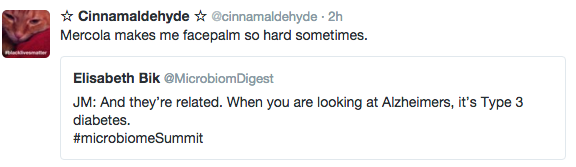
JM: Most people can just benefit from a shotgut broad approach, to not only improve their gut flora, but improve all their health and decrease these chronic degenerative diseases that we are all exposing and they don’t have to die prematurely from Alzheimers, 50% of the people, have diabetes, 50% it’s so terrible. And they’re related. When you are looking at Alzheimers, it’s Type 3 diabetes.

Screen Shot 2016-03-08 at 1.31.04 AM

RK: Explain the connection between the gut and the microbiome and neurological health and how improving the gut and improving the microbiome can – to a great degree – prevent Alzheimers.
JM: Well, there are more connections from your gut to your brain than the other way around. It has enormous amounts of serotonin and other neurotransmitters that are actually produced by your gut.

Screen Shot 2016-03-08 at 1.17.46 AM

RK (shouting enthusiastically): By bacterial cells! They’re producing these neurotransmitters!
JM (shouting): That’s where it is! It’s in your gut! Not in your brain! In your gut!
RK (shouting): Gut feelings are real! It’s not poetry!
JM: You just follow Ancestral Practices. Do it right. Don’t follow what your friends and neighbors and relatives are doing, follow what your ancient relatives were doing. Follow their sleep patterns, bacteria, food, clean water, stay away from toxins. And when you do that your health will just improve automatically. There is no science involved. It’s just an automatic reflex.

RK: Will this change the way that doctors understand health and healing?
JM: I hope it will, especially with all the DNA sequencing going on. Science changes relatively slowly. It might take a while, may take another generation. Because there’s these vested interests that are highly conflicted and have enormous influence over powerful federal regulatory agencies that dictate policies, and the media of course. There’s a lot of – huh – negative impacts we have to overcome.

Screen Shot 2016-03-08 at 1.16.48 AM

Something even as simple as stopping sugar is still challenged and not widely adopted or accepted by traditional medicine because of these conflicted interests that I referenced earlier. It’s obvious, if you are rational, if you are not biased, and you are non-conflicted, and you’re sincerely seeking the truth, there is no other rational conclusion that you could reach. But unfortunately we have to battle these forces that are pushing us the other way, not of different beliefs, but because it is affecting their pocketbook.

Screen Shot 2016-03-08 at 1.14.16 AM
JM: I’ve been doing my website for almost 20 years. I’ve been educating people. We have literally 10 million unique visitors every month. But it’s not just about teaching. We have to play an activist role, to be a leader to erase some of these challenges. And the most classic one is these GMO foods, which we know have contained Roundup, which is actually more pronicious that its main ingredient glyphosate. Glyphosate has been shown to decimate your gut microbes. That’s one of the ways it works, it destroys your gut microbes!
We brought it to the public 4 years ago with the direct ballot initiative in California, which failed, but we increased consciousness about this. Right now, people have no clue that the food they’re buying contains GMOs which is gonna their gut health.
We are also working on getting mercury out of dentistry, fluoride out of the water, educating people about the importance of vaccine safety. And about biosolids, where cities are combining human waste with industrial waste, and sell it as organic fertilizer that you buy at Home Depot or Lowes. (rant continues)

RK: How do you see the future of microbiome research?
A: I’m not sure. It’s not an area that I study real carefully. So I’m sure there will be some improvements. (Quickly moves on into his other passion, i.e., extending life beyond 120 years.)

Screen Shot 2016-03-08 at 1.15.13 AM

JM: I’m delighted that you really went above your classmates and your local medical community and outcast probably, for recognizing the truth and applying that and being honest and taking a rational approach. Because it works.

Screen Shot 2016-03-08 at 1.37.19 AM
Screen Shot 2016-03-08 at 1.34.12 AM [hr]