Non-human microbiomes, June 16

Microbiomes of tse-tse flies, fish, lettuce, spruce. And also some salty sisters!

Insect microbiome

Identification of overexpressed genes in Sodalis glossinidius inhabiting trypanosome-infected self-cured tsetse flies – Illiassou Hamidou Soumana – Frontiers in Microbiology

“The aim of the work was to investigate whether fly refractoriness could be associated with specific Sodalis gene expression. The transcriptome of S. glossinidius harbored by flies that were fed either with a non-infected blood meal (control) or with a trypanosome-infected meal but that did not develop infection were analyzed, using microarray technology, and compared. “

Fish microbiome

Teleost microbiomes: the state of the art in their characterization, manipulation and importance in aquaculture and fisheries – Martin S. Llewellyn – Frontiers in Microbiology

“We discuss teleost microbiomes in health and disease, microbiome ontogeny, prospects for successful microbiome manipulation (especially in an aquaculture setting) and attempt to identify important future research themes. “

Plant microbiomes

Effect of the strain Bacillus amyloliquefaciens FZB42 on the microbial community in the rhizosphere of lettuce under field conditions analyzed by whole metagenome sequencing – Magdalena Kröber – Frontiers in Microbiology

“Rhizosphere microbial communities of lettuce treated with B. amyloliquefaciens FZB42 and non-treated plants were profiled by high-throughput metagenome sequencing of whole community DNA. “

Loss of diversity in wood-inhabiting fungal communities affects decomposition activity in Norway spruce wood – Lara Valentín – Frontiers in Microbiology

“ The number of observed OTUs in DGGE was used as a measure of fungal diversity. Respiration rate increased between early- and late-decay stages. “

Specificity of plant-microbe interactions in the tree mycorrhizosphere biome and consequences for soil C cycling – Carolyn Churchland – Frontiers in Microbiology

“In this review we examine evidence for tree species- mycorrhizal specificity, and the mechanisms involved (e.g., signal compounds)”

Sludge and bioreactors

Pyrosequencing Analysis Yields Comprehensive Assessment of Microbial Communities in Pilot-Scale Two-Stage Membrane Biofilm Reactors – Aura Ontiveros-Valencia – Environmental Science & Technology

“UniFrac, principal coordinate analysis (PCoA), and diversity analyses documented that the microbial community of biofilms sampled when the MBfRs had a high acceptor loading were phylogenetically distant from and less diverse than the microbial community of biofilm samples with lower acceptor loadings. “

Sludge As a Potential Important Source of Antibiotic Resistance Genes in Both the Bacterial and Bacteriophage Fractions – William Calero-Cáceres – Environmental Science & Technology

“This study evaluates the prevalence of ARGs in the bacterial and phage fractions of anaerobic digested sludge; five ARGs (blaTEM, blaCTX-M, qnrA, qnrS, and sul1) are quantified by qPCR.”

Water and salt microbiology

Salty sisters: the women of halophiles – Bonnie K. Baxter – Frontiers in Microbiology

“This essay emphasizes the “her story” (not “history”) of halophile discovery.”

The feasibility of automated online flow cytometry for in-situ monitoring of microbial dynamics in aquatic ecosystems – Michael D. Besmer – Frontiers in Microbiology

“As proof-of-concept we demonstrate examples of microbial dynamics in (i) flowing tap water from a municipal drinking water supply network and (ii) river water from a small creek subject to two rainfall events.”

Cytometric fingerprints: evaluation of new tools for analyzing microbial community dynamics – Christin Koch – Frontiers in Microbiology

“The source of inoculum (four different types of wastewater samples) showed the strongest influence on the microbial community structure and biofilm performance while the choice of substrate (acetate or lactate) had no significant effect in the present study.”

Subseafloor bacteria survive by over-activating DNA-repair and antibiotic target genes – Phys.org

“A group of researchers at Woods Hole Oceanographic Institute and University of Delaware* developed techniques to analyse the messenger RNA (mRNA) molecules produced by subseafloor microbes.”

Unexplored hypersaline habitats are sources of novel actinomycetes – Polpass Arul Jose – Frontiers in Microbiology

“….diverse actinomycetes from poorly studied unusual environments promises a raise in the prospect of discovering novel compounds with potential activities that can be developed as a resource for drug discovery “

From Twitter, thanks to @DeepMicrobe: Eight plenary speakers, all of them male.
Ninth International Symposium on Subsurface Microbiology – ISSM 2014

Vibrio ecology, pathogenesis, and evolution – Daniela Ceccarelli and Rita R. Colwell – Frontiers in Microbiology

“This Research Topic brings together 24 articles that highlight the most recent research findings concerning the biology of the genus Vibrio and covers pathogenicity and host interaction, genome plasticity and evolution, and the dynamics of factors influencing the ecology of vibrios.”

[hr]

Non-human microbiomes, June 11

Microbes in mosquitos, beetles and cocoa.

Insect microbiome

Francesco BaldiniEvidence of natural Wolbachia infections in field populations of Anopheles gambiae – Francesco Baldini – Nature Communications

“Here we show evidence of Wolbachia infections in Anopheles gambiae in Burkina Faso, West Africa. Sequencing of the 16S rRNA gene identified Wolbachia sequences in both female and male germlines across two seasons, and determined that these sequences are vertically transmitted from mother to offspring. “

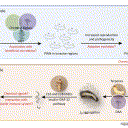
Screen Shot 2014-06-11 at 10.33.17 PMInterspecific communication between pinewood nematode, its insect vector, and associated microbes – Lilin Zhao – Trends in Parasitology

“The causative agent of PWD, the pinewood nematode (PWN), engages in a symbiotic partnership with its insect vector, the Monochamus beetle, as well as associated bacteria and ophiostomatoid fungi, in order to successfully infect and kill its host pine tree.”

Food microbiome

Philpp Adler cocoaThe key to acetate: Metabolic fluxes of acetic acid bacteria under cocoa pulp fermentation simulating conditions – Philipp Adler – Applied and Environmental Microbiology

“Acetic acid bacteria (AAB) play an important role during cocoa fermentation, as their main product acetate is a major driver for development of desired cocoa flavors. Here, we investigated the specialized metabolism of these bacteria under cocoa pulp fermentation simulating conditions.”

[hr]

Non-human microbiomes, June 9

Phages in cow dung, genome of a bumble-bee symbiont, and the microbiome of beach sand.

Mammal microbiomes

Screen shot 2014-06-09 at 02.43PM, Jun 09Differing Populations of Endemic Bacteriophages in Cattle Shedding High and Low Numbers of Escherichia coli O157:H7 Bacteria in Feces – J. Hallewell – Applied and Environmental Microbiology

“Based on genome size estimated by pulsed-field gel electrophoresis and morphology determined by transmission electron microscopy, T4- and O1-like phages of Myoviridae and T1-like phage of Siphoviridae were isolated. “

Insect microbiomes

Screen shot 2014-06-09 at 02.59PM, Jun 09Genomic Features of a Bumble Bee Symbiont Reflect Its Host Environment – Vincent G. Martinson – Applied and Environmental Microbiology

“Here, we report the genome of one gammaproteobacterial member of the gut microbiota, for which we propose the name “Candidatus Schmidhempelia bombi,” that was inadvertently sequenced alongside the genome of its host, the bumble bee, Bombus impatiens.”

Plant microbiomes

Screen shot 2014-06-09 at 02.52PM, Jun 09In Situ Evaluation of Paenibacillus alvei in Reducing Carriage of Salmonella enterica Serovar Newport on Whole Tomato Plants – Sarah Allard – Applied and Environmental Microbiology

“Long-term intervention measures to reduce Salmonella prevalence on tomatoes remain elusive for growing and postharvest environments. A naturally occurring bacterium identified by 16S rRNA gene sequencing as Paenibacillus alvei was isolated epiphytically from plants native to the Virginia Eastern Shore tomato-growing region. “

Screen shot 2014-06-09 at 03.20PM, Jun 09Streptomyces sp. strain PGPA39 alleviates salt stress and promotes growth of ‘Micro Tom’ tomato plants – Sasikumar Arunachalam Palaniyandi – Journal of Applied Microbiology

“A significant increase in plant biomass and chlorophyll content, and a reduction in leaf proline content were observed in PGPA39-inoculated tomato plants under salt stress compared to control and salt stressed non-inoculated plants.”

Screen shot 2014-06-09 at 02.54PM, Jun 09Microscopy, Culture, and Quantitative Real-Time PCR Examination Confirm Internalization of Mycobacteria in Plants – M. Kaevska – Applied and Environmental Microbiology

” The substrate into which plants were seeded was previously contaminated with different strains of Mycobacterium avium (108to 1010 cells/g of soil) and feces from animals with paratuberculosis. We detected M.avium subsp. aviumhominissuis, and paratuberculosis in the stems and leaves of the plants by both culture and real-time quantitative PCR. “

Environmental microbiomes

Screen shot 2014-06-09 at 02.40PM, Jun 09

Soil and groundwater microbiomes

Use of Silicate Minerals for pH Control during Reductive Dechlorination of Chloroethenes in Batch Cultures of Different Microbial Consortia  – Elsa Lacroix – Applied and Environmental Microbiology

“The consortia showed significant differences in sensitivities toward acidic pH for the different dechlorination steps. Molecular analysis indicated that Dehalococcoides spp. that were present in all consortia were the most pH-sensitive organohalide-respiring guild members compared to Sulfurospirillum spp. and Dehalobacter spp.”

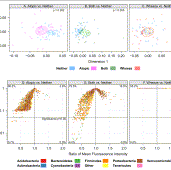
Screen shot 2014-06-09 at 03.01PM, Jun 09Variables Influencing Extraction of Nucleic Acids from Microbial Plankton (Viruses, Bacteria, and Protists) Collected on Nanoporous Aluminum Oxide Filters – Jaclyn A. Mueller – Applied and Environmental Microbiology

“Anodic aluminum oxide (AAO) filters have high porosity and can be manufactured with a pore size that is small enough to quantitatively capture viruses. These properties make the filters potentially useful for harvesting total microbial communities from water samples for molecular analyses, but their performance for nucleic acid extraction has not been systematically or quantitatively evaluated. “

Screen shot 2014-06-09 at 03.08PM, Jun 09MS2 Bacteriophage Reduction and Microbial Communities in Biosand Filters – Hanting Wang – Environmental Science & Technology

” In the upper layers, “CandidatusNitrosopumilus maritimus” and “Ca. Nitrospira defluvii” were found as dominant populations, while significant amounts of Thiobacillus-related OTUs were detected in the lower layers. “

Ponds, lakes, and ocean microbiomes

Screen shot 2014-06-09 at 02.48PM, Jun 09Diversity and Transport of Microorganisms in Intertidal Sands of the California Coast – Alexandria B. Boehm – Applied and Environmental Microbiology

“The present study uses next-generation massively parallel sequencing to characterize the microbial community present at 49 beaches along the coast of California. In addition, we characterize the transport of microorganisms within intertidal sands using laboratory column experiments. We identified extensive diversity in the beach sands.”

Screen shot 2014-06-09 at 02.46PM, Jun 09From Metagenomics to Pure Culture: Isolation and Characterization of the Moderately Halophilic Bacterium Spiribacter salinus gen. nov., sp. nov. – María José León – Applied and Environmental Microbiology

“We report the isolation and taxonomic characterization of this new, never before cultured microorganism, designated M19-40T, isolated from a saltern located in Isla Cristina, Spain, using a medium with a mixture of 15% salts, yeast extract, and pyruvic acid as the carbon source. “

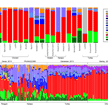
Screen shot 2014-06-09 at 03.05PM, Jun 09The Pattern of Change in the Abundances of Specific Bacterioplankton Groups Is Consistent across Different Nutrient-Enriched Habitats in Crete – Stilianos Fodelianakis – Applied and Environmental Microbiology

“Here, we investigated the bacterial community changes at three different nutrient-enriched and adjacent undisturbed habitats along the north coast of Crete, Greece: a fish farm, a closed bay within a town with low water renewal rates, and a city port where the level of nutrient enrichment and the trophic status of the habitat were different. “

[hr]

Non-human microbiomes, June 6

Today, I am delighted to share my new knowledge on The Ultimate Reader of Dung (TURD), palaeosymbiosis, a scientific journal called “Meat Science”, and that everything tastes better with olive oil and paprika covering.

Insect microbiome

Screen Shot 2014-06-07 at 2.17.11 AMSpotting the differences: probing host/microbiota interactions with a dedicated software tool for the analysis of faecal outputs in Drosophila – Matthew T. Wayland – Journal of Insect Physiology

“To facilitate its use, we present here a free, stand-alone dedicated software tool for the analysis of fly excreta. The Ultimate Reader of Dung (T.U.R.D.) is designed to offer a flexible environment for a wide range of experimental designs, with special attention to automation and high-throughput processing.”

Screen Shot 2014-06-07 at 2.19.09 AMThe gut microbiota of larvae of Rhynchophorus ferrugineus Oliver (Coleoptera: Curculionidae) – Tagliavia M – BMC Microbiology

“The RPW gut microbiota is composed mainly of facultative and obligate anaerobic bacteria with a fermentative metabolism. These bacteria are supposedly responsible for palm tissue fermentation in the tunnels where RPW larvae thrive and might have a key role in the insect nutrition, and other functions that need to be investigated.”

Nematode microbiome

Screen Shot 2014-06-07 at 2.18.06 AMPalaeosymbiosis Revealed by Genomic Fossils of Wolbachia in a Strongyloidean Nematode Georgios Koutsovoulos – PLOS Genetics

“We generated a draft genome sequence for the strongyloidean nematode parasite Dictyocaulus viviparus, the cattle lungworm. In the assembly, we identified nearly 1 Mb of sequence with similarity to Wolbachia. “

Food microbiome

Screen Shot 2014-06-07 at 2.20.26 AMMonitoring of the microbiota profile in nukadoko, a naturally fermented rice bran bed for pickling vegetables – Hiroshi Ono – Journal of Bioscience and Bioengineering

“Nukadoko is a fermented rice bran mash traditionally used for pickling vegetables in Japan. To date, the production of both homemade and commercial nukadoko depends on natural fermentation without using starter cultures. Here, we monitored chemical and microbiological changes in the initial batch fermentation of nukadoko. “

Food MicrobiologyExploitation of Albanian wheat cultivars: characterization of the flours and lactic acid bacteria microbiota, and selection of starters for sourdough fermentation – Luana Nionelli – Food Microbiology

“Type I sourdoughs were prepared through back slopping procedure, and the lactic acid bacteria were typed and identified. Lactobacillus plantarum and Leuconostoc mesenteroides were the predominant species.”

Screen Shot 2014-06-07 at 2.22.09 AMrRNA-based monitoring of the microbiota involved in Fontina PDO cheese production in relation to different stages of cow lactation – Paola Dolci – International Journal of Food Microbiology

“The aim of the present paper was to investigate the bacterial dynamics during Fontina PDO cheese manufacturing and ripening, in relation to the different lactation stages, in order to evaluate a possible correlation between microbiota and phase of lactation. “

Screen Shot 2014-06-07 at 2.27.04 AMAntifungal activity and identification of Lactobacilli, isolated from traditional dairy product “katak” – Rositsa Tropcheva – Anaerobe

“In the present study, four active strains were isolated from traditional fermented curd/yogurt-like product “katak”, produced in Bulgaria from centuries. The new isolates KR3, KR4, KR51 and KR53 were identified by API 50 CH biochemical test and different molecular methods (species-specific PCR, RAPD-PCR and 16S rDNA sequence analysis) as Lactobacillus brevis.”

Screen Shot 2014-06-07 at 2.26.05 AMMicrobiological and physicochemical characterization of dry-cured Halal goat meat. Effect of salting time and addition of olive oil and paprika covering – Sanâa Cherroud – Meat Science

“Molecular analysis proves that staphylococci, especially S. xylosus and S. equorum, were characterized as the most common naturally occurring microbiota. The best manufacturing process would be obtained with a longer salting time and the addition of the olive oil and paprika covering.”

Environmental microbiome

Screen Shot 2014-06-07 at 2.00.39 AMEffects of early-life exposure to allergens and bacteria on recurrent wheeze and atopy in urban children – Susan V. Lynch – The Journal of Allergy and Clinical Immunology

“….first-year exposure to cockroach, mouse, and cat allergens was negatively associated with recurrent wheeze…. House dust microbiome composition is associated with clinical outcomes. 

[hr]

Non-human microbiomes, June 5

Meta-analysis of avian gut microbiomes, mosquitos, microbes and oil-spills, and fungi and viruses found on corals and sponges.

Bird microbiome

Screen Shot 2014-06-05 at 11.23.11 AMCharacterizing the avian gut microbiota: membership, driving influences, and potential function – David W. Waite – Frontiers in Microbiology, Microbial Symbioses

“In this study, we present the first meta-analysis of the avian gut microbiota, using 16S rRNA gene sequences obtained from a range of publicly available clone-library and amplicon pyrosequencing data. “

Insect microbiome

Screen Shot 2014-06-05 at 11.24.12 AMPyrosequencing 16S rRNA genes of bacteria associated with wild tiger mosquito Aedes albopictus: a pilot study – Guillaume Minard – Frontiers in Cellular and Infection Microbiology

“We surveyed the bacteria associated with field populations of Ae. albopictus from Madagascar by pyrosequencing 16S rRNA gene amplicons. Different aspects of amplicon preparation and sequencing depth were tested to optimize the breadth of bacterial diversity identified”

Screen Shot 2014-06-05 at 11.24.56 AMMultifaceted Defense against Antagonistic Microbes in Developing Offspring of the Parasitoid Wasp Ampulex compressa (Hymenoptera, Ampulicidae) – Katharina Weiss – PLOS ONE

“Larvae of the emerald cockroach wasp, Ampulex compressa, sanitize their cockroach hosts, Periplaneta americana, with a cocktail of nine antimicrobials comprising mainly (R)-(-)-mellein and micromolide.”

Invertebrate microbiome

Screen Shot 2014-06-02 at 6.19.53 PMReview: Fungal association with sessile marine invertebrates – Oded Yarden – Frontiers in Microbiology, Microbial Symbioses

“The ecological function of fungi in association with sessile marine animals is complex and is founded on a combination of factors such as fungal origin, host health, environmental conditions and the presence of other resident or invasive microorganisms in the host.”

Screen Shot 2014-06-02 at 6.19.09 PMGenerating viral metagenomes from the coral holobiont – Karen D. Weynberg – Frontiers in Microbiology, Virology

“Here we present the first protocol for isolating, purifying and amplifying viral nucleic acids from corals based on mechanical disruption of cells. This method produces at least 50% higher yields of viral nucleic acids, has very low levels of cellular sequence contamination and captures wider viral diversity than previously used chemical-based extraction methods.”

Plant microbiome

Screen Shot 2014-06-05 at 11.26.58 AMColonization of plants by human pathogenic bacteria in the course of organic vegetable production – Andreas Hoffman – Frontiers in Microbiology, Plant-Microbe Interaction

“In this study laboratory experiments in axenic and soil systems following common practices in organic farming were conducted to identify the minimal dose needed for bacterial colonization of plants and to identify possible factors like bacterial species or serovariation, plant species or organic fertilizer types used, influencing the success of plant colonization by human pathogenic bacteria”

Water microbiome

Screen Shot 2014-06-05 at 11.28.03 AMThe polycyclic aromatic hydrocarbon degradation potential of Gulf of Mexico native coastal microbial communities after the Deepwater Horizon oil spill – Anthony D. Kappell – Frontiers in Microbiology, Aquatic Microbiology

“To investigate the Gulf Coast beach microbial community response to hydrocarbon exposure, we examined the functional gene diversity, bacterial community composition, and PAH degradation capacity of a heavily oiled and non-oiled beach following the oil exposure. “

Screen Shot 2014-06-05 at 11.36.29 AMComparison of prokaryotic community structure from Mediterranean and Atlantic saltern concentrator ponds by a metagenomic approach – Ana B. Fernández – Frontiers in Microbiology, Extreme Microbiology

“We analyzed the prokaryotic community structure of a saltern pond with 21% total salts located in Isla Cristina, Huelva, Southwest Spain, close to the Atlantic ocean coast. “

Screen Shot 2014-06-05 at 11.32.42 AMConversion of crude oil to methane by a microbial consortium enriched from oil reservoir production waters – Carolina Berdugo-Clavijo – Frontiers in Microbiology, Microbial Physiology and Metabolism

“Microbial community analysis revealed that the enrichment culture was dominated by members of the genus Smithella, Methanosaeta, and Methanoculleus. However, a shift in microbial community occurred following incubation of the enrichment in the sandstone columns. “

Screen Shot 2014-06-05 at 11.33.20 AMNatural oil slicks fuel surface water microbial activities in the northern Gulf of Mexico – Kai Ziervogel – Frontiers in Microbiology, Aquatic Microbiology

“These results demonstrate that the formation of oil slicks and activities of oil-degrading bacteria result in a temporal offset of microbial cycling of organic matter, affecting food web interactions and carbon cycling in surface waters over cold seeps.”

Screen Shot 2014-06-05 at 11.34.20 AMRecoding of the stop codon UGA to glycine by a BD1-5/SN-2 bacterium and niche partitioning between Alpha- and Gammaproteobacteria in a tidal sediment microbial community naturally selected in a laboratory chemostat – Anna Hanke – Frontiers in Microbiology, Evolutionary and Genomic Microbiology

“Metagenomics, proteomics and fluorescence in situ hybridization showed that this simplified community contained both a potential sulfur oxidizing Gammaproteobacteria (at 24 ± 2% abundance) and a member of the BD1-5/SN-2 candidate phylum (at 7 ± 6% abundance). “

Deep earth microbiome

Screen Shot 2014-06-05 at 11.35.07 AMChanges in the deep subsurface microbial biosphere resulting from a field-scale CO2 geosequestration experiment – Andre Mu – Frontiers in Microbiology, Terrestrial Microbiology

“This study demonstrates a successful new in situ sampling approach for detecting microbial community changes associated with an scCO2 geosequestration event.”

[hr]
Animal, plant, environmental microbiome digest, June 3, 2014

Microbiomes of wild mice, antibiotic treated cattle, catfish, insects, soil, and water. And some good old plagiarism.

Mammalian microbiome

Dietary history contributes to enterotype-like clustering and functional metagenomic content in the intestinal microbiome of wild mice – Jun Wang – PNAS

“By performing stable isotope analysis of environmental samples, monitoring communities during dietary shifts, and collecting functional metagenomic sequence data, we provide novel insight into the origins and dynamics of enterotype-like community clustering in wild house mice.”

Impact of treatment strategies on cephalosporin and tetracycline resistance gene quantities in the bovine fecal metagenome – Neena Kanwar – Nature Scientific Reports

“The study objective was to determine the effects of two treatment regimens on quantities of ceftiofur and tetracycline resistance genes in feedlot cattle. “

Fish microbiome

An Asian Origin of Virulent Aeromonas hydrophila Responsible for Disease Epidemics in United States-Farmed Catfish – Mohammad J. Hossain – mBio

“Our phylogenomic analyses suggest that U.S. catfish isolates emerged from A. hydrophila populations of Asian origin.”

Insect microbiome

Simultaneous assessment of the macrobiome and microbiome in a bulk sample of tropical arthropods through DNA metasystematics – Joel Gibson – PNAS

“We show that next-generation sequencing (NGS) of cytochrome c oxidase subunit I (COI) DNA barcodes can accurately detect 83.5% of individually sequenced species (corresponding to 91% of individuals) in a bulk sample of terrestrial arthropods from a Costa Rican species-rich site.”

GroEL from the endosymbiont Buchnera aphidicola betrays the aphid by triggering plant defense – Ritu Chaudhary – PNAS

“By means of mass spectrometry, we identified 105 proteins in the saliva of the potato aphid Macrosiphum euphorbiae. Among these proteins were some originating from the proteobacterium Buchnera aphidicola, which lives endosymbiotically within bacteriocytes in the hemocoel of the aphid. “

Soil and rock microbiome

Deep 16S rRNA Pyrosequencing Reveals a Bacterial Community Associated with Banana Fusarium Wilt Disease Suppression Induced by Bio-Organic Fertilizer Application – Zongzhuan Shen – PLOS ONE

“Compared to the other soil samples, BIO-treated soil revealed higher abundances of Gemmatimonadetes and Acidobacteria, while Bacteroidetes were found in lower abundance”

Evaluation of Molecular Techniques in Characterization of Deep Terrestrial Biosphere – Malin Bomberg – Open Journal of Ecology

“our results show that the inferred diversity and composition of microbial communities in deep fracture fluids is highly dependent on analytical technique and that the method should be carefully selected with this in mind.”

Detecting Nitrous Oxide Reductase (nosZ) Genes in Soil Metagenomes: Method Development and Implications for the Nitrogen Cycle – L. H. Orellana – mBio

“we analyzed the abundance and diversity of both nosZ types in whole-genome shotgun metagenomes from sandy and silty loam agricultural soils that typify the U.S. Midwest corn belt”

Water microbiome

Survival secrets of Deep Lake – Graeme O’Neill – LifeScientist.com

“Deep Lake, in Antarctica’s Vestfold Hills, harbours a unique flora of salt-loving Archaea that survive at temperatures way below freezing. Professor Rick Cavicchioli’s team at UNSW has been plumbing the lake’s mysteries”

Accumulation and enhanced cycling of polyphosphate by Sargasso Sea plankton in response to low phosphorus – Patrick Martin – PNAS

” We show here that phytoplankton in the ultra–low-phosphorus Sargasso Sea are enriched in polyphosphate (polyP)”

Commonness and rarity in the marine biosphere – Sean R. Connolly – PNAS

“By identifying common features of different neutral models, we conduct a uniquely robust test of neutral theory across a global dataset of marine assemblages.”

Temporal Changes in Microbial Ecology and Geochemistry in Produced Water from Hydraulically Fractured Marcellus Shale Gas Wells – Maryam A. Cluff – Environmental Science & Technology

“This study tracked microbial community dynamics using pyrotag sequencing of 16S rRNA genes in water samples from three hydraulically fractured Marcellus shale wells in Pennsylvania, USA over a 328-day period.”

General Ecology

Effects of differential habitat warming on complex communities – Tyler D. Tunney – PNAS

“To demonstrate differential warming effects on food webs, we use boreal lakes to show that the energy pathways leading to an apex predator shift, according to thermal preference, and the vertical pathway lengthened in warmer climate.”

Microbes in Space

Protein patterns of black fungi under simulated Mars-like conditions – Kristina Zakharova – Nature Scientific Reports

“In this study the alterations at the protein expression level from various fungi species under Mars-like conditions were analyzed for the first time using 2D gel electrophoresis.”

Data mining and Bioinformatics

Detecting a Weak Association by Testing its Multiple Perturbations: a Data Mining Approach – Min-Tzu Lo & Wen-Chung Lee – Nature Scientific Reports

“Here, we propose a novel method which hinges on increasing sample size in a different direction–the total number of variables”

This paper contains plagiarized text, but I will toss it in anyway:
An Integrated Strategy for Functional Analysis of Microbial Communities Based on Gene Ontology and 16S rRNA Gene – Su-Ping Deng, De-Shuang Huang – SciencePaperOnline

“We analyzed the similarity between two microbial communities on functional state. In the experimental results, it shows that the semantic similarity can quantify the difference between two compared species on function level. “

[hr]


Animal, plant, and environmental microbiome digest, June 2, 2014

Microbiomes of rumen, salamanders, insects, corals, sponges and soil.

Mammalian microbiome

Amphibian microbiome

Insect microbiome

  • Screen Shot 2014-06-02 at 3.19.02 PMReview: Towards an integrated understanding of gut microbiota using insects as model systems – Mathieu Pernice – Journal of Insect Physiology – we give a brief overview of the characteristics of the gut microbiota in insects in terms of low diversity but high variability at intra- and interspecific levels and we investigate some of the ecological and methodological factors that might explain such variability. “

Coral and sponge microbiome

Algae and Plant microbiome

Environmental microbiome

[hr]

Digest May 27, 2014

Today’s Picks feature thousand cultured GI tract species, host-microbiome interactions during pregnancy, metagenome assemblies using Hi-C, and the microbiomes of snow leopards and possums.

Human microbiome general

Human Gut Microbiome

Pregnancy and birth microbiome

Respiratory tract microbiome

Mammalian microbiome

Amphibian microbiome

Insect microbiome

Fish microbiome

Animal and bioreactor models of gut microbiome

Environmental microbiome

Microbiome and Metabolomics

Phages and viruses

  • Beyond Antibiotics – “Today there is renewed interest in phages as warnings intensify that a “post-antibiotic” era looms” – Roger Highfield – Newsweek

Infection, sepsis, and host response

Microbial Ecology papers

Arsenic metabolism

Chromosome organization

General lab techniques papers

Dr. Bik’s Picks

[hr]