Non-human microbiome, June 17

You waited for it: the Cannabis microbiome! But also microbiotas of salmon, a quail, coral, sponges, water, and ice.

Bird microbiome

Cultivable Bacterial Microbiota of Northern Bobwhite (Colinus virginianus): A New Reservoir of Antimicrobial Resistance? – Hongwen Su – PLOS ONE

“Firmicutes was the most commonly encountered phylum (57%) followed by Actinobacteria (24%), Proteobacteria (17%) and Bacteroidetes (0.02%). Extensive diversity in the species composition of quail microbiota was observed among individual birds and anatomical locations.”

Fish microbiome

Pyrosequencing-based characterization of gastrointestinal bacteria of Atlantic salmon (Salmo salar L.) within a commercial mariculture system – K.Z. Zarkasi – Journal of Applied Microbiology

“Salmon GI tract bacterial communities commercially farmed in south-eastern Tasmania were analysed, over a 13-month period across a standard commercial production farm cycle, using 454 16S rRNA-based pyrosequencing. “

Coral and sponge microbiome

Community Shifts in the Surface Microbiomes of the Coral Porites astreoides with Unusual Lesions – Julie L. Meyer – PLOS ONE

“The presence of lesions in P. astreoides coincided with a decrease in the relative abundance of Endozoicomonas, rather than the appearance of specific pathogenic taxa.”

Bacterial suspects identified in Caribbean coral deaths – NewScientist

“Three bacteria seem to be responsible for a disease that has killed most of the Caribbean’s reef-building corals.”

Effects of salinity on antibiotic production in sponge-derived Salinispora actinobacteria – Y.K. Ng – Journal of Applied Microbiology

“Fingerprint data were generated from extracts of S. arenicola broth cultures grown in media of varying salt (NaCl) concentrations.”

Plants microbiome

Understanding Cultivar-Specificity and Soil Determinants of the Cannabis Microbiome – Max E. Winston – PLOS ONE

“Here we present the first description of the endorhiza-, rhizosphere-, and bulk soil-associated microbiome of five distinct Cannabis cultivars. Bacterial communities of the endorhiza showed significant cultivar-specificity.”

The Role of Abiotic Environmental Conditions and Herbivory in Shaping Bacterial Community Composition in Floral Nectar – Michal Samuni-Blank – PLOS ONE

“ We studied culturable bacterial communities in Asphodelus aestivus floral nectar and in its typical herbivorous bug Capsodes infuscatus, along an aridity gradient.”

Microbial community structure during fluoranthene degradation in the presence of plants – S. Storey – Journal of Applied Microbiology

“Bacterial and fungal community composition in the rhizosphere was significantly different from that in nonrhizospheric and unplanted samples.”

Soil microbiome

Omics-based interpretation of synergism in a soil-derived cellulose-degrading microbial community – Yizhuang Zhou – Scientific Reports

“Analyses of reconstructed bacterial draft genomes from all seven uncultured phylotypes in F1RT indicate that its constituent microbes cooperate in both cellulose-degrading and other important metabolic processes.”

Structure, Composition and Metagenomic Profile of Soil Microbiomes Associated to Agricultural Land Use and Tillage Systems in Argentine Pampas – Belén Carbonetto – PLOS ONE

“The aim of our study was to investigate the effects of agricultural land use on community structure, composition and metabolic profiles on soil microbiomes of Argentine Pampas.”


Dust microbiome

Richness and Diversity in Dust Stormborne Biomes at the Southeast Mediterranean – Itzhak Katra – Scientific Reports

“In addition to the physico-chemical compositions, organismal diversities of dust from two storm events in southern Israel, December 2012 (Ev12) and January 2013 (Ev13), were determined by pyro-sequencing using primers universal to 16S and 18S rRNA genes and compared.”

Bioreactors

The maximum specific hydrogen-producing activity of anaerobic mixed cultures: definition and determination – Yang Mu – Scientific Reports

“ Our results demonstrate that this novel SHAm assay was a rapid, accurate and simple methodology for determining the hydrogen-producing activity of anaerobic mixed cultures.”

Methanogenic community changes, and emissions of methane and other gases, during storage of acidified and untreated pig slurry – S.O. Petersen – Journal of Applied Microbiology

“Pig slurry from two farms, acidified by different techniques or untreated, was stored for 83 days in a pilot-scale facility. Methanogens were characterized before and after storage by T-RFLP and qPCR targeting mcrA.”

Water and ice

The Characterization of RNA Viruses in Tropical Seawater Using Targeted PCR and Metagenomics – Alexander I. Culley – mBio

“In this study, we investigated the diversity of the RNA virus assemblages in tropical coastal seawater samples using targeted PCR and metagenomics.”

Variations of algal communities cause darkening of a Greenland glacier – Stefanie Lutz – FEMS Microbiology Ecology

“We have assessed the microbial ecology on the surface of Mittivakkat glacier in SE-Greenland during the exceptional high melting season in July 2012 when the so far most extreme melting rate for the Greenland Ice Sheet has been recorded.”

Pyrosequencing reveals correlations between extremely acidophilic bacterial communities with hydrogen sulphide concentrations, pH and inert polymer coatings at concrete sewer crown surfaces – E. Pagaling – Journal of Applied Microbiology

“Pyrosequencing and cloning showed that Mycobacterium and Acidithiobacillus dominated the acidophilic microbial communities. Methylacidiphilum was also dominant in samples where methane was detected.”

Bacterial community dynamics during the early stages of biofilm formation in a chlorinated experimental drinking water distribution system: implications for drinking water discolouration – I. Douterelo – Journal of Applied Microbiology

“Selected samples were analysed by cloning and sequencing of the 16S rRNA gene. Fingerprinting analysis revealed significant changes in the bacterial community structure over time (P < 0·05). “

[hr]
Non-human microbiomes, June 16

Microbiomes of tse-tse flies, fish, lettuce, spruce. And also some salty sisters!

Insect microbiome

Identification of overexpressed genes in Sodalis glossinidius inhabiting trypanosome-infected self-cured tsetse flies – Illiassou Hamidou Soumana – Frontiers in Microbiology

“The aim of the work was to investigate whether fly refractoriness could be associated with specific Sodalis gene expression. The transcriptome of S. glossinidius harbored by flies that were fed either with a non-infected blood meal (control) or with a trypanosome-infected meal but that did not develop infection were analyzed, using microarray technology, and compared. “

Fish microbiome

Teleost microbiomes: the state of the art in their characterization, manipulation and importance in aquaculture and fisheries – Martin S. Llewellyn – Frontiers in Microbiology

“We discuss teleost microbiomes in health and disease, microbiome ontogeny, prospects for successful microbiome manipulation (especially in an aquaculture setting) and attempt to identify important future research themes. “

Plant microbiomes

Effect of the strain Bacillus amyloliquefaciens FZB42 on the microbial community in the rhizosphere of lettuce under field conditions analyzed by whole metagenome sequencing – Magdalena Kröber – Frontiers in Microbiology

“Rhizosphere microbial communities of lettuce treated with B. amyloliquefaciens FZB42 and non-treated plants were profiled by high-throughput metagenome sequencing of whole community DNA. “

Loss of diversity in wood-inhabiting fungal communities affects decomposition activity in Norway spruce wood – Lara Valentín – Frontiers in Microbiology

“ The number of observed OTUs in DGGE was used as a measure of fungal diversity. Respiration rate increased between early- and late-decay stages. “

Specificity of plant-microbe interactions in the tree mycorrhizosphere biome and consequences for soil C cycling – Carolyn Churchland – Frontiers in Microbiology

“In this review we examine evidence for tree species- mycorrhizal specificity, and the mechanisms involved (e.g., signal compounds)”

Sludge and bioreactors

Pyrosequencing Analysis Yields Comprehensive Assessment of Microbial Communities in Pilot-Scale Two-Stage Membrane Biofilm Reactors – Aura Ontiveros-Valencia – Environmental Science & Technology

“UniFrac, principal coordinate analysis (PCoA), and diversity analyses documented that the microbial community of biofilms sampled when the MBfRs had a high acceptor loading were phylogenetically distant from and less diverse than the microbial community of biofilm samples with lower acceptor loadings. “

Sludge As a Potential Important Source of Antibiotic Resistance Genes in Both the Bacterial and Bacteriophage Fractions – William Calero-Cáceres – Environmental Science & Technology

“This study evaluates the prevalence of ARGs in the bacterial and phage fractions of anaerobic digested sludge; five ARGs (blaTEM, blaCTX-M, qnrA, qnrS, and sul1) are quantified by qPCR.”

Water and salt microbiology

Salty sisters: the women of halophiles – Bonnie K. Baxter – Frontiers in Microbiology

“This essay emphasizes the “her story” (not “history”) of halophile discovery.”

The feasibility of automated online flow cytometry for in-situ monitoring of microbial dynamics in aquatic ecosystems – Michael D. Besmer – Frontiers in Microbiology

“As proof-of-concept we demonstrate examples of microbial dynamics in (i) flowing tap water from a municipal drinking water supply network and (ii) river water from a small creek subject to two rainfall events.”

Cytometric fingerprints: evaluation of new tools for analyzing microbial community dynamics – Christin Koch – Frontiers in Microbiology

“The source of inoculum (four different types of wastewater samples) showed the strongest influence on the microbial community structure and biofilm performance while the choice of substrate (acetate or lactate) had no significant effect in the present study.”

Subseafloor bacteria survive by over-activating DNA-repair and antibiotic target genes – Phys.org

“A group of researchers at Woods Hole Oceanographic Institute and University of Delaware* developed techniques to analyse the messenger RNA (mRNA) molecules produced by subseafloor microbes.”

Unexplored hypersaline habitats are sources of novel actinomycetes – Polpass Arul Jose – Frontiers in Microbiology

“….diverse actinomycetes from poorly studied unusual environments promises a raise in the prospect of discovering novel compounds with potential activities that can be developed as a resource for drug discovery “

From Twitter, thanks to @DeepMicrobe: Eight plenary speakers, all of them male.
Ninth International Symposium on Subsurface Microbiology – ISSM 2014

Vibrio ecology, pathogenesis, and evolution – Daniela Ceccarelli and Rita R. Colwell – Frontiers in Microbiology

“This Research Topic brings together 24 articles that highlight the most recent research findings concerning the biology of the genus Vibrio and covers pathogenicity and host interaction, genome plasticity and evolution, and the dynamics of factors influencing the ecology of vibrios.”

[hr]

Non-human microbiome, June 12

Connected plants are better protected against pathogens, bacteria in olives and peanuts, and hormones made by marine phytoplankton.

Plant microbes

plant connectedEcological and evolutionary effects of fragmentation on infectious disease dynamics – Jussi Jousimo – Science

“To test the combined effects of ecological and evolutionary forces on host-pathogen systems, we analyzed the spatiotemporal dynamics of a plant (Plantago lanceolata)–fungal pathogen (Podosphaera plantaginis)relationship for 12 years in over 4000 host populations. “

Food microbiology

OliveGiarraffa and Grossa di Spagna naturally fermented table olives: Effect of starter and probiotic cultures on chemical, microbiological and sensory traits – C.L. Randazzo – Food Research International

“Multiplex PCR assay of lactic acid bacteria (LAB) showed that L. casei was detected in all samples, L. pentosus was the dominant species in spontaneous samples and in probiotic inoculated samples”

Screen Shot 2014-06-12 at 9.25.22 PMPeanut fractions boost the growth of Lactobacillus casei that alters the interactions between Campylobacter jejuni and host epithelial cells – Serajus Salaheen – Food Research International

“Our data suggest that peanut fraction induced the growth of L. casei which in turn led to a reduction in the growth of C. jejuni as well as its colonization. “

Water microbes

water hormonesPhytoplankton blooms: An overlooked marine source of natural endocrine disrupting chemicals – Yinhan Gong – Ecotoxicology and Environmental Safety

“Selected phytoplankton isolates are potent secretors of estrogenic and androgenic substances.”

[hr]

Non-human microbiomes, June 10

Plants vs viruses and dead mice vs soil microbes. Who will win?

Plant microbiome

Virus vs platnVirus versus Host Plant MicroRNAs: Who Determines the Outcome of the Interaction? – Fatemeh Maghuly – PLOS ONE

“Different viral pre-miRNA hairpin sequences and viral miR/miR* length variants occurring as isomiRs were predicted in both viruses. These miRNAs were located in three Open Reading Frames (ORFs) and in the Intergenic Region (IR). “

Soil microbiome

deadbodiesVertebrate Decomposition is Accelerated by Soil Microbes – Christian L. Lauber – Applied and Environmental Microbiology

“Our results indicate that mice placed on soil with intact microbial communities reach advanced stages of decomposition 2-3 times faster than those placed on sterile soil.”

FEMS Microbiology EcologyBacterial community structure and soil properties of a subarctic tundra soil in Council, Alaska – Hye Min Kim – FEMS Microbiology Ecology

“The bacterial community was analyzed by pyrosequencing of 16S rRNA genes, and the following soil properties were analyzed: soil moisture content (MC), pH, total carbon (TC), total nitrogen (TN), and inorganic nitrogen (NH4+ and NO3-). “

Screen Shot 2014-06-10 at 1.06.06 AMAntimony-Oxidizing Bacteria Isolated from Antimony Contaminated Sediment – A Phylogenetic Study – Van Khanh Nguyen – Geomicrobiology Journal

“Phylogenetic study showed that the Sb(III)-oxidizing bacteria fell within two subdivisions of Proteobacteria.”

[hr]

Non-human microbiomes, June 9

Phages in cow dung, genome of a bumble-bee symbiont, and the microbiome of beach sand.

Mammal microbiomes

Screen shot 2014-06-09 at 02.43PM, Jun 09Differing Populations of Endemic Bacteriophages in Cattle Shedding High and Low Numbers of Escherichia coli O157:H7 Bacteria in Feces – J. Hallewell – Applied and Environmental Microbiology

“Based on genome size estimated by pulsed-field gel electrophoresis and morphology determined by transmission electron microscopy, T4- and O1-like phages of Myoviridae and T1-like phage of Siphoviridae were isolated. “

Insect microbiomes

Screen shot 2014-06-09 at 02.59PM, Jun 09Genomic Features of a Bumble Bee Symbiont Reflect Its Host Environment – Vincent G. Martinson – Applied and Environmental Microbiology

“Here, we report the genome of one gammaproteobacterial member of the gut microbiota, for which we propose the name “Candidatus Schmidhempelia bombi,” that was inadvertently sequenced alongside the genome of its host, the bumble bee, Bombus impatiens.”

Plant microbiomes

Screen shot 2014-06-09 at 02.52PM, Jun 09In Situ Evaluation of Paenibacillus alvei in Reducing Carriage of Salmonella enterica Serovar Newport on Whole Tomato Plants – Sarah Allard – Applied and Environmental Microbiology

“Long-term intervention measures to reduce Salmonella prevalence on tomatoes remain elusive for growing and postharvest environments. A naturally occurring bacterium identified by 16S rRNA gene sequencing as Paenibacillus alvei was isolated epiphytically from plants native to the Virginia Eastern Shore tomato-growing region. “

Screen shot 2014-06-09 at 03.20PM, Jun 09Streptomyces sp. strain PGPA39 alleviates salt stress and promotes growth of ‘Micro Tom’ tomato plants – Sasikumar Arunachalam Palaniyandi – Journal of Applied Microbiology

“A significant increase in plant biomass and chlorophyll content, and a reduction in leaf proline content were observed in PGPA39-inoculated tomato plants under salt stress compared to control and salt stressed non-inoculated plants.”

Screen shot 2014-06-09 at 02.54PM, Jun 09Microscopy, Culture, and Quantitative Real-Time PCR Examination Confirm Internalization of Mycobacteria in Plants – M. Kaevska – Applied and Environmental Microbiology

” The substrate into which plants were seeded was previously contaminated with different strains of Mycobacterium avium (108to 1010 cells/g of soil) and feces from animals with paratuberculosis. We detected M.avium subsp. avium, hominissuis, and paratuberculosis in the stems and leaves of the plants by both culture and real-time quantitative PCR. “

Environmental microbiomes

Screen shot 2014-06-09 at 02.40PM, Jun 09

Soil and groundwater microbiomes

Use of Silicate Minerals for pH Control during Reductive Dechlorination of Chloroethenes in Batch Cultures of Different Microbial Consortia  – Elsa Lacroix – Applied and Environmental Microbiology

“The consortia showed significant differences in sensitivities toward acidic pH for the different dechlorination steps. Molecular analysis indicated that Dehalococcoides spp. that were present in all consortia were the most pH-sensitive organohalide-respiring guild members compared to Sulfurospirillum spp. and Dehalobacter spp.”

Screen shot 2014-06-09 at 03.01PM, Jun 09Variables Influencing Extraction of Nucleic Acids from Microbial Plankton (Viruses, Bacteria, and Protists) Collected on Nanoporous Aluminum Oxide Filters – Jaclyn A. Mueller – Applied and Environmental Microbiology

“Anodic aluminum oxide (AAO) filters have high porosity and can be manufactured with a pore size that is small enough to quantitatively capture viruses. These properties make the filters potentially useful for harvesting total microbial communities from water samples for molecular analyses, but their performance for nucleic acid extraction has not been systematically or quantitatively evaluated. “

Screen shot 2014-06-09 at 03.08PM, Jun 09MS2 Bacteriophage Reduction and Microbial Communities in Biosand Filters – Hanting Wang – Environmental Science & Technology

” In the upper layers, “CandidatusNitrosopumilus maritimus” and “Ca. Nitrospira defluvii” were found as dominant populations, while significant amounts of Thiobacillus-related OTUs were detected in the lower layers. “

Ponds, lakes, and ocean microbiomes

Screen shot 2014-06-09 at 02.48PM, Jun 09Diversity and Transport of Microorganisms in Intertidal Sands of the California Coast – Alexandria B. Boehm – Applied and Environmental Microbiology

“The present study uses next-generation massively parallel sequencing to characterize the microbial community present at 49 beaches along the coast of California. In addition, we characterize the transport of microorganisms within intertidal sands using laboratory column experiments. We identified extensive diversity in the beach sands.”

Screen shot 2014-06-09 at 02.46PM, Jun 09From Metagenomics to Pure Culture: Isolation and Characterization of the Moderately Halophilic Bacterium Spiribacter salinus gen. nov., sp. nov. – María José León – Applied and Environmental Microbiology

“We report the isolation and taxonomic characterization of this new, never before cultured microorganism, designated M19-40T, isolated from a saltern located in Isla Cristina, Spain, using a medium with a mixture of 15% salts, yeast extract, and pyruvic acid as the carbon source. “

Screen shot 2014-06-09 at 03.05PM, Jun 09The Pattern of Change in the Abundances of Specific Bacterioplankton Groups Is Consistent across Different Nutrient-Enriched Habitats in Crete – Stilianos Fodelianakis – Applied and Environmental Microbiology

“Here, we investigated the bacterial community changes at three different nutrient-enriched and adjacent undisturbed habitats along the north coast of Crete, Greece: a fish farm, a closed bay within a town with low water renewal rates, and a city port where the level of nutrient enrichment and the trophic status of the habitat were different. “

[hr]

Non-human microbiomes, June 5

Meta-analysis of avian gut microbiomes, mosquitos, microbes and oil-spills, and fungi and viruses found on corals and sponges.

Bird microbiome

Screen Shot 2014-06-05 at 11.23.11 AMCharacterizing the avian gut microbiota: membership, driving influences, and potential function – David W. Waite – Frontiers in Microbiology, Microbial Symbioses

“In this study, we present the first meta-analysis of the avian gut microbiota, using 16S rRNA gene sequences obtained from a range of publicly available clone-library and amplicon pyrosequencing data. “

Insect microbiome

Screen Shot 2014-06-05 at 11.24.12 AMPyrosequencing 16S rRNA genes of bacteria associated with wild tiger mosquito Aedes albopictus: a pilot study – Guillaume Minard – Frontiers in Cellular and Infection Microbiology

“We surveyed the bacteria associated with field populations of Ae. albopictus from Madagascar by pyrosequencing 16S rRNA gene amplicons. Different aspects of amplicon preparation and sequencing depth were tested to optimize the breadth of bacterial diversity identified”

Screen Shot 2014-06-05 at 11.24.56 AMMultifaceted Defense against Antagonistic Microbes in Developing Offspring of the Parasitoid Wasp Ampulex compressa (Hymenoptera, Ampulicidae) – Katharina Weiss – PLOS ONE

“Larvae of the emerald cockroach wasp, Ampulex compressa, sanitize their cockroach hosts, Periplaneta americana, with a cocktail of nine antimicrobials comprising mainly (R)-(-)-mellein and micromolide.”

Invertebrate microbiome

Screen Shot 2014-06-02 at 6.19.53 PMReview: Fungal association with sessile marine invertebrates – Oded Yarden – Frontiers in Microbiology, Microbial Symbioses

“The ecological function of fungi in association with sessile marine animals is complex and is founded on a combination of factors such as fungal origin, host health, environmental conditions and the presence of other resident or invasive microorganisms in the host.”

Screen Shot 2014-06-02 at 6.19.09 PMGenerating viral metagenomes from the coral holobiont – Karen D. Weynberg – Frontiers in Microbiology, Virology

“Here we present the first protocol for isolating, purifying and amplifying viral nucleic acids from corals based on mechanical disruption of cells. This method produces at least 50% higher yields of viral nucleic acids, has very low levels of cellular sequence contamination and captures wider viral diversity than previously used chemical-based extraction methods.”

Plant microbiome

Screen Shot 2014-06-05 at 11.26.58 AMColonization of plants by human pathogenic bacteria in the course of organic vegetable production – Andreas Hoffman – Frontiers in Microbiology, Plant-Microbe Interaction

“In this study laboratory experiments in axenic and soil systems following common practices in organic farming were conducted to identify the minimal dose needed for bacterial colonization of plants and to identify possible factors like bacterial species or serovariation, plant species or organic fertilizer types used, influencing the success of plant colonization by human pathogenic bacteria”

Water microbiome

Screen Shot 2014-06-05 at 11.28.03 AMThe polycyclic aromatic hydrocarbon degradation potential of Gulf of Mexico native coastal microbial communities after the Deepwater Horizon oil spill – Anthony D. Kappell – Frontiers in Microbiology, Aquatic Microbiology

“To investigate the Gulf Coast beach microbial community response to hydrocarbon exposure, we examined the functional gene diversity, bacterial community composition, and PAH degradation capacity of a heavily oiled and non-oiled beach following the oil exposure. “

Screen Shot 2014-06-05 at 11.36.29 AMComparison of prokaryotic community structure from Mediterranean and Atlantic saltern concentrator ponds by a metagenomic approach – Ana B. Fernández – Frontiers in Microbiology, Extreme Microbiology

“We analyzed the prokaryotic community structure of a saltern pond with 21% total salts located in Isla Cristina, Huelva, Southwest Spain, close to the Atlantic ocean coast. “

Screen Shot 2014-06-05 at 11.32.42 AMConversion of crude oil to methane by a microbial consortium enriched from oil reservoir production waters – Carolina Berdugo-Clavijo – Frontiers in Microbiology, Microbial Physiology and Metabolism

“Microbial community analysis revealed that the enrichment culture was dominated by members of the genus Smithella, Methanosaeta, and Methanoculleus. However, a shift in microbial community occurred following incubation of the enrichment in the sandstone columns. “

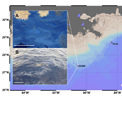
Screen Shot 2014-06-05 at 11.33.20 AMNatural oil slicks fuel surface water microbial activities in the northern Gulf of Mexico – Kai Ziervogel – Frontiers in Microbiology, Aquatic Microbiology

“These results demonstrate that the formation of oil slicks and activities of oil-degrading bacteria result in a temporal offset of microbial cycling of organic matter, affecting food web interactions and carbon cycling in surface waters over cold seeps.”

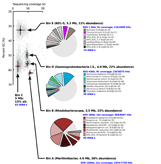
Screen Shot 2014-06-05 at 11.34.20 AMRecoding of the stop codon UGA to glycine by a BD1-5/SN-2 bacterium and niche partitioning between Alpha- and Gammaproteobacteria in a tidal sediment microbial community naturally selected in a laboratory chemostat – Anna Hanke – Frontiers in Microbiology, Evolutionary and Genomic Microbiology

“Metagenomics, proteomics and fluorescence in situ hybridization showed that this simplified community contained both a potential sulfur oxidizing Gammaproteobacteria (at 24 ± 2% abundance) and a member of the BD1-5/SN-2 candidate phylum (at 7 ± 6% abundance). “

Deep earth microbiome

Screen Shot 2014-06-05 at 11.35.07 AMChanges in the deep subsurface microbial biosphere resulting from a field-scale CO2 geosequestration experiment – Andre Mu – Frontiers in Microbiology, Terrestrial Microbiology

“This study demonstrates a successful new in situ sampling approach for detecting microbial community changes associated with an scCO2 geosequestration event.”

[hr]

Animal, plant, and environmental microbiome digest, June 2, 2014

Microbiomes of rumen, salamanders, insects, corals, sponges and soil.

Mammalian microbiome

Amphibian microbiome

Insect microbiome

  • Screen Shot 2014-06-02 at 3.19.02 PMReview: Towards an integrated understanding of gut microbiota using insects as model systems – Mathieu Pernice – Journal of Insect Physiology – “we give a brief overview of the characteristics of the gut microbiota in insects in terms of low diversity but high variability at intra- and interspecific levels and we investigate some of the ecological and methodological factors that might explain such variability. “

Coral and sponge microbiome

Algae and Plant microbiome

Environmental microbiome

[hr]
Infection and host response digest – May 28, 2014

Hi all,

Today I’m just playing with different layouts for my digests, by splitting them up into smaller groups of topics. In this post, you will find dengue, phages, and infection/host response papers.

Dengue

Phages and viruses

Infection and Host ReponseScreen Shot 2014-05-28 at 7.32.41 PM

Staphylococcus aureus

Arsenic metabolism


[hr]