It was a quiet day on the microbiome research front, so there will only be one post today. But, with vampire bats, Bacillus anthracis, and fish-eating spiders, it’s a good one!
Pregnancy and Birth
 Study Finds Certain Birth Defects are more Common in Hispanics – Cheri Cheng
“”One of the things that caught our eye was, while Hispanics represent 17 percent of the population, 24 percent of premature babies are Hispanic,” said Dr. Edward McCabe, senior vice president and chief medical officer of the March of Dimes, a nonprofit organization.”
Animal models of human microbiota
 Colonic Immune Suppression, Barrier Dysfunction, and Dysbiosis by Gastrointestinal Bacillus anthracis Infection – Yaíma L. Lightfoot – PLOS ONE
“Herein, we investigated the pathogenesis of GI anthrax in animals orally infected with toxigenic non-encapsulated B. anthracis Sterne strain (pXO1+ pXO2−) spores that resulted in rapid animal death.”
 Biology Students Study Stomach Bacteria – Pengxeu Thao – University of Minnesota Morris
“Wyckoff and her students are spending the summer studyingHelicobacter pylori (H. pylori), a Gram-negative bacterium found in the human stomach.”
Amphibian microbiome
 Cool Temperatures Reduce Antifungal Activity of Symbiotic Bacteria of Threatened Amphibians – Implications for Disease Management and Patterns of Decline – Joshua H. Daskin – PLOS ONE
“We characterized, at a range of temperatures approximating natural seasonal variation, the anti-Bd activity of bacterial symbionts from the skins of three species of rainforest tree frogs (Litoria nannotis, Litoria rheocola, and Litoria serrata)”
Plant microbiology
 Scientists look to bacteria to protect crop yields in the face of climate change – Jennifer Huizen – E&E Publishing
“If proved effective, this technology would decrease the amount of key nutrients like nitrogen and, most notably, water needed by the plant, while increasing the yield,” said Lin Myat, a postdoctoral fellow of molecular biology and genetics at Cornell “
belongs to
 β-Carboxysomal proteins assemble into highly organized structures in Nicotiana chloroplasts – Myat T. Lin – The Plant Journal
“We demonstrate that a foreign protein can be targeted with a 17-amino-acid CcmN peptide to the shell proteins inside chloroplasts. Our experiments establish the feasibility of introducing carboxysomes into chloroplasts for the potential compartmentalization of Rubisco or other proteins.”
Food microbiology
 Haley Oliver: Master of Meat – Jef Akst – The Scientist
“In her own lab at Purdue University, Oliver studies the spread of Listeria in other foods, such as melons, and investigates sanitation strategies that may limit contamination and increase food shelf life. “
Infection and host response
 Inflammation: Gone with Translation – Carola G. Vinuesa, Thomas Preiss – PLOS Genetics
“Over the last few years, a number of studies have investigated global gene activation induced by pathogen-derived stimuli to gain insights into the modes of induction of the inflammatory mediators and regulators.”
Dengue
 The Need for More Research and Public Health Interventions on Dengue Fever in Burkina Faso – Valéry Ridde – PLOS Neglected Tropical Diseases
“…our aim in this article is to draw attention to the need for rapid deployment of research and interventions on dengue fever in Burkina Faso, because it appears to have been overlooked, with the focus being, instead, on malaria.”
 Invariant NKT Cell Response to Dengue Virus Infection in Human
Ponpan Matangkasombut – PLOS Neglected Tropical Diseases
“iNKT cells activation were analyzed by the expression of CD69 by flow cytometry. Their cytokine production was then analyzed after α-GalCer stimulation”
General microbiology
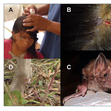
 Vampire Bats and Rabies: Toward an Ecological Solution to a Public Health Problem – Benjamin Stoner-Duncan – PLOS Neglected Tropical Diseases
“In the first half of 2011, 21 school-age children and two adults died of rabies transmitted by the common vampire bat (Desmodus rotundus) in and around the small rural village of Yupicusa in the Peruvian Amazon”
 Crossing the Interspecies Barrier: Opening the Door to Zoonotic Pathogens – Christian Gortazar – PLOS Pathogens
“The species barriers separating nonhuman animal species from humans represent a major hurdle for effective exposure to, infection by, and subsequent spread of zoonotic pathogens among humans”
 Human sweat can reduce bacteria fighting capabilities – ZeeNews
“A new research has revealed that human sweat can diminish bacteria-fighting qualities of brass objects like door knobs and taps within an hour of contact.”
Dr. Bik’s Picks
 Fish Predation by Semi-Aquatic Spiders: A Global Pattern – Martin Nyffeler – PLOS ONE
“More than 80 incidences of fish predation by semi-aquatic spiders – observed at the fringes of shallow freshwater streams, rivers, lakes, ponds, swamps, and fens – are reviewed.”
 US sets up honey bee loss task force – BBC News
“In the plan announced on Friday, Mr Obama directed the EPA and the agriculture department to lead a government-wide task force to develop a strategy within six months to fight bee and other pollinator declines.“
 Strict diet suspends development, doubles lifespan of worms – Science Daily
“Researchers at Duke University found that taking food away from C. elegans triggers a state of arrested development: while the organism continues to wriggle about, foraging for food, its cells and organs are suspended in an ageless, quiescent state. “
 Finding thoughts in speech: How human brain processes thoughts during natural communication – Science Daily
“The novelty of the authors’ approach is that the participants were not instructed to think and talk about a given topic in an experimental setting. “
[hr]







 Microbiome Digest - Bik's Picks