
Ethnic variation in vaginal microbiomes, effect of chemotherapy on human milk, response of (murine) microbiota to infection.
Oral microbiome
 Advancements toward a Systems Level Understanding of the Human Oral Microbiome – Jeffrey S. Mclean – Frontiers in Cellular and Infection Microbiology
“This review will discuss some of the recent insights into the oral microbiome at a fundamental level, existing knowledge gaps, as well as challenges that have surfaced and the approaches to address them.”
Vaginal microbiome
 Ethnic Variations in Cervical Cytokine Concentrations and Vaginal Flora During Pregnancy – Riana Dutt – American Journal of Reproductive Immunology
“Semi-quantitative vaginal cultures and concentrations of cervical cytokines were compared between Caucasian and non-Caucasian women.”
Gut microbiome
 A functional metabolic map of Faecalibacterium prausnitzii, a beneficial human gut microbe – Almut Heinken – Journal of Bacteriology
“In this study, we present an integrated, iterative approach of computational modeling, in vitro experiments, metabolomics and genomic analysis to accelerate the identification of metabolic capabilities for poorly characterized (anaerobic) microorganisms.”
Pregnancy and birth
 Effect of chemotherapy on the microbiota and metabolome of human milk, a case report – Camilla Urbaniak – Microbiome
“Mature milk was collected every two weeks over a four month period from a lactating woman undergoing chemotherapy for Hodgkin’s lymphoma. Mature milk was also collected from healthy lactating women for comparison. Microbial profiles were analyzed by 16S sequencing and the metabolome by gas chromatography-mass spectrometry.”
Animal models
 Dynamics of the Microbiota in Response to Host Infection – Clara Belzer – PLOS ONE
“Employing a murine model of infectious colitis with the pathogen Citrobacter rodentium, we generated a 2-month time-series of 16S rDNA gene profiles, and quantitatively cultured commensals, from multiple intestinal sites in infected and uninfected mice. “
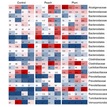 Carbohydrate-Free Peach (Prunus persica) and Plum (Prunus domestica) Juice Affects Fecal Microbial Ecology in an Obese Animal Model – Giuliana D. Noratto – PLOS ONE
“Fecal samples were obtained after 11 weeks of fruit or control juice administration. Real-time PCR and 454-pyrosequencing were used to evaluate changes in fecal microbiota. Over 1,500 different Operational Taxonomic Units at 97% similarity were detected in all rats.”
[hr]




 Microbiome Digest - Bik's Picks