More Microbiology and Science, June 6

Natural peptides against dengue, visualizing your QIIME .biom OTU table, and exposure to cockroaches and dust to babies. And Da Picks!

 
Dengue
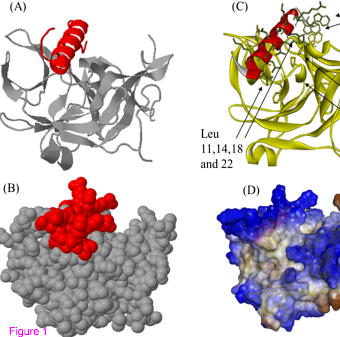
Screen Shot 2014-06-07 at 2.05.52 AMIdentification of natural antimicrobial agents to treat dengue infection: In vitro analysis of latarcin peptide activity against dengue virus – Rothan HA – BMC Microbiology

“The Ltc 1 peptide exhibited significant inhibitory effects against dengue NS2B-NS3pro and virus replication in the infected cells. “

Bioinformatics

Screen Shot 2014-06-07 at 1.16.46 AMVisualizing millions of DNA sequences – in your web browser! – Featuring Phinch, developed by Holly Bik in the Eisen Lab

“The idea is to take your QIIME outputs – .biom OTU table files with taxonomy and embedded metadata – directly into a data visualization framework for assessment.”

Infection, immunity, host response
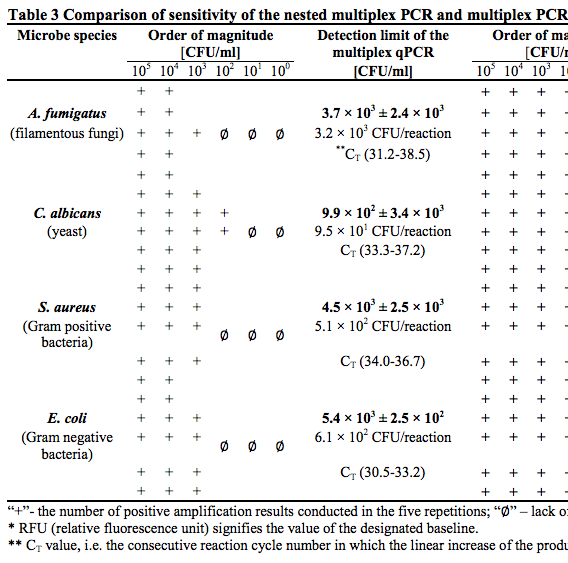
Screen Shot 2014-06-07 at 2.06.31 AMA novel, nested, multiplex, real-time PCR for detection of bacteria and fungi in blood – Gosiewski, T – BMC Microbiology

“ The designed primers correctly typed the studied species as belonging to the groups of Gram-positive bacteria, Gram-negative bacteria, yeast fungi, or filamentous fungi.”
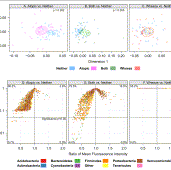
Screen Shot 2014-06-07 at 2.00.39 AMEffects of early-life exposure to allergens and bacteria on recurrent wheeze and atopy in urban children – Susan V. Lynch – The Journal of Allergy and Clinical Immunology

“….first-year exposure to cockroach, mouse, and cat allergens was negatively associated with recurrent wheeze…. House dust microbiome composition is associated with clinical outcomes. 

Screen Shot 2014-06-07 at 1.58.39 AMImplementation and impact of ultraviolet environmental disinfection in an acute care setting – Janet P. Haas – AJIC: American Journal of Infection Control

During the time period UVD was in use, there was a significant decrease in overall hospital-acquired MDRO plus CD in spite of missing 24% of opportunities to disinfect contact precautions rooms. This technology was feasible to use in our acute care setting and appeared to have a beneficial effect.”

Dr. Bik’s Picks

Screen Shot 2014-06-07 at 2.39.26 AMCool video of a scientist uncovering a whale in an old painting: Whale tale: a Dutch seascape and its lost Leviathan – University of Cambridge

“When art conservators peeled back a layer of varnish on a 17th-century Dutch painting, they uncovered an image of a beached whale that had been hidden for at least 150 years. “

Screen Shot 2014-06-07 at 2.40.17 AMLooking for the best strategy? Ask a chimp – Science Daily

“If you’re trying to outwit the competition, it might be better to have been born a chimpanzee, according to a study by researchers at Caltech, which found that chimps at the Kyoto University Primate Research Institute consistently outperform humans in simple contests drawn from game theory.”

[hr]


General microbiology and science digest, June 3, 2014

Dengue, immunology, arsenic, and The Picks.


Immunology

Review: Ontogeny of early life immunity – David J. Dowling, Ofer Levy – Trends in Immunology

“Here, we review novel mechanistic insights into early life immunity, with an emphasis on emerging models of human immune ontogeny”

Dengue

Time-varying, serotype-specific force of infection of dengue virus – Robert C. Reiner, Jr. – PNAS

“Using a bespoke method for a 12-y longitudinal dataset of serotype-specific dengue virus (DENV) infections, we estimated time-varying, serotype-specific FoIs for all four DENV serotypes. “

Correspondence: A “microRNA-like” small RNA expressed by Dengue virus? – Rebecca L. Skalsky – PNAS

Reply to Skalsky et al.: A microRNA-like small RNA from Dengue virus – Mazhar Hussain and Sassan Asgari – PNAS


More Microbiology

Review: Tropheryma whipplei and Whipple’s disease – Florence Fenollar, Jean-Christophe Lagier, Didier Raoult – Journal of Infection

“T. whipplei seems to be an opportunistic bacterium that causes chronic infections in susceptible patients with as yet unknown predisposing factors.”

Genesis and pathogenesis of the 1918 pandemic H1N1 influenza A virus
Michael Worobey – PNAS

“We infer that the virus arose via reassortment between a preexisting human H1 IAV lineage and an avian virus”

Shotgun glycomics of pig lung identifies natural endogenous receptors for influenza viruses – Lauren Byrd-Leotis – PNAS

“Studies using novel “shotgun glycan microarray” technology identify, for the first time to our knowledge, the endogenous receptors for influenza viruses from a natural host, the pig.”

Counties Deploying Bacteria-Sniffing Dogs To Find Failing Septic Systems – Bellamy Pailthorp – PKLU.org

“Molly, a border collie trained by Environmental Canine Services, can sniff out human fecal coliform bacteria in water samples.”

Arsenic metabolism

Arsenic in the Multi-aquifer System of the Mekong Delta, Vietnam: Analysis of Large-Scale Spatial Trends and Controlling Factors – Laura E. Erban – Environmental Science & Technology

“We relate strong trends in the distribution of contamination among well samples to explanatory variables derived from 3D ancillary physicochemical data sets using logistic regression models.”

Monitoring Arsenic Contamination in Agricultural Soils with Reflectance Spectroscopy of Rice Plants – Tiezhu Shi – Environmental Science & Technology

“The prediction of soil As contents was achieved by partial least-squares regression (PLSR) using laboratory and field spectra of rice plants, as well as linear regression employing normalized difference spectral index (NDSI) calculated from fild spectra. “

Marine Mammals

Fossil record shows whales evolved from land to sea – Steve Luckstead – UnionBulletin

“Other mammals such as seals, sea lions and walrusess spend a good part of their lives in the ocean, but they are clearly tetrapods (four-legged). But whales don’t have any leg-like appendages. So what gives?”


Science and Art

Sculpting the apples of science – Helen Fields – PNAS

“Rath’s work is based on a visit to the US Department of Agriculture’s Plant Genetic Resources Unit (PGRU) in Geneva, New York. The PGRU grows thousands of apple varieties that might otherwise disappear from orchards.”

Dr. Bik’s Picks

Evidence of bird dropping masquerading by a spider to avoid predators – Min-Hui Liu – Nature Scientific Reports

” The orb-web spider Cyclosa ginnaga has a silver body and adds a white discoid-shaped silk decoration to its web. The size, shape and colour of C. ginnaga’s body resemble, when viewed by the human eye against its decoration, a bird dropping. “

Why Have Female Hurricanes Killed More People Than Male Ones? – Ed Yong – National Geographic

“Here’s a simple fact with an uncertain explanation: historically, hurricanes with female names have, on average, killed more people than those with male ones.”

[hr]

More microbiology and science, June 2, 2014

Dengue and humidity, bacteria from Mars, sequencing, and aspartame.

Dengue

Microbes in Space

Sequencing and bioinformatics

Chromosome organization

Arsenic metabolism

Dr. Bik’s Picks

[hr]

Infection and host response digest – May 28, 2014

Hi all,

Today I’m just playing with different layouts for my digests, by splitting them up into smaller groups of topics. In this post, you will find dengue, phages, and infection/host response papers.

Dengue

Phages and viruses

Infection and Host ReponseScreen Shot 2014-05-28 at 7.32.41 PM

Staphylococcus aureus

Arsenic metabolism


[hr]