Microbiome Digest, July 25

A year worth of oral/stool samples shows relative stability, antibiotics and preterm infants, reagent contamination, and 42. Have a great weekend!


Oral and gut microbiome

Screen Shot 2014-07-25 at 9.45.01 PMHost lifestyle affects human microbiota on daily timescales – Lawrence A David – Genome Biology

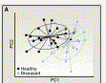
“Here, we link over 10,000 longitudinal measurements of human wellness and action to the daily gut and salivary microbiota dynamics of two individuals over the course of one year. These time series show overall microbial communities to be stable for months. However, rare events in each subjects’ life rapidly and broadly impacted microbiota dynamics. “

Pregnancy and Birth

Screen Shot 2014-07-25 at 9.44.20 PMThe impact of postnatal antibiotics on the preterm intestinal microbiome – Majd Dardas – Pediatric Research

“Rectal (fecal) swabs were collected at 10 and 30 d and analyzed by 16S rRNA pyrosequencing. At both time points, we examined the rectal microbiome from infants who received only 2 d of antibiotics and those who received at least 7 d of antibiotics.”

Techniques

Screen Shot 2014-07-25 at 9.45.50 PMReagent contamination can critically impact sequence-based microbiome analyses – Susannah Salter – BioRxiv (preprint)

“In this study we demonstrate that contaminating DNA is ubiquitous in commonly used DNA extraction kits, varies greatly in composition between different kits and kit batches, and that this contamination critically impacts results obtained from samples containing a low microbial biomass. “

Dengue

Speaking about “matter of timing”, seems like this paper came out a bit too late.
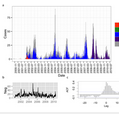
Screen Shot 2014-07-25 at 9.46.14 PMDengue and the World Football Cup: A Matter of Timing – Christovam Barcellos, Rachel Lowe – PLOS Neglected Tropical Diseases

“We provide a nationwide risk map, averaging June dengue incidence rates for 2001–2012. The areas along the Amazonian rivers and in the inner portions of southernmost states are actually low-risk areas, while elevated dengue risk is found in the central Brazilian plateau.”

Infection and host response

Don’t forget your towel! Even the issue number, 1004201, contains the “The Answer to the Ultimate Question of Life, the Universe, and Everything”. Perfection.
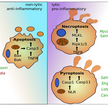
Screen Shot 2014-07-25 at 9.46.22 PMMicrobial Egress: A Hitchhiker’s Guide to Freedom – Ana Traven, Thomas Naderer – PLOS Pathogens

“The Restaurant at the End of the Infection — Macrophages as Host Cells”
“So Long and Thanks for All the Inflammatory Cell Death”

Dr. Bik’s Picks

crowSmarter than a first-grader? Crows can perform as well as 7- to 10-year-olds on cause-and-effect water displacement tasks

“New research conducted by UC Santa Barbara’s Corina Logan, with her collaborators at the University of Auckland in New Zealand, demonstrates the birds’ intellectual prowess may be more fact than fiction.”

JBC Journal of Biological ChemistryFour billion-year-old chemistry in cells today – Phys.org

“Parts of the primordial soup in which life arose have been maintained in our cells today according to scientists at the University of East Anglia.”

Screen Shot 2014-07-25 at 9.47.50 PMDustup Over Lionfish Science Fair Project – Bob Grant – The Scientist

A former graduate student says he feels slighted by a failure to attribute his contributions to a line of research regarding the salinity tolerances of an invasive species. “I’m not sure what happened, but my main issue is that the national media has presented a story that is sensationalized, and has left me out of the picture.”

[hr]

Microbiome digest, July 23

Just one post today. Invading oral bacteria found in liver cirrhosis patients guts, obesity, biofilms and dispersal, motile and electric bacteria, dengue, and Weird Al Yankovic.

General microbiome

Screen Shot 2014-07-23 at 7.12.37 PMRadio show: City Visions: Exploring the Human Microbiome

“City Visions host David Onek explores these questions and more with Bay Area leading researchers Katie Pollard of the Gladstone Institutes, Susan Lynch of UCSF, and Peter diLaura of Second Genome.”

Human gut microbiome

Nan Qin Nature GutAlterations of the human gut microbiome in liver cirrhosis – Nan Qin – Nature

“Here we characterize the gut microbiome in liver cirrhosis by comparing 98 patients and 83 healthy control individuals… Most (54%) of the patient-enriched, taxonomically assigned species are of buccal origin, suggesting an invasion of the gut from the mouth in liver cirrhosis. “

Lancet DiabetesObesity, inflammation, and the gut microbiota – Amanda J Cox – The Lancet Diabetes & Endocrinology

“In this Review, we provide evidence supporting perturbation of the intestinal microbiota and changes in intestinal permeability as potential triggers of inflammation in obesity.”

ParasitesOpinion: (Self-) infections with parasites: re-interpretations for the present
Julius Lukeš – Trends in Parasitology

“Here, we critically review cases in which humans were deliberately infected with parasites. Moreover, we summarize the contribution of (self-) infections and propose protist and helminth candidates, chosen on the basis of several criteria, to test as possible therapy for selected human diseases.”

General Microbiology

Screen Shot 2014-07-23 at 7.14.29 PMDispersed cells represent a distinct stage in the transition from bacterial biofilm to planktonic lifestyles – Song Lin Chua – Nature Communications

“Here we use single-nucleotide resolution transcriptomic analysis to show that the physiology of dispersed cells from Pseudomonas aeruginosa biofilms is highly different from those of planktonic and biofilm cells. “

Screen Shot 2014-07-23 at 7.15.00 PMBrownian motion? – Bacteria swim with bodies and flagella – Kevin Stacey – Brown University

“Using a new technique to track the swimming motion of a single bacterium, researchers have discovered that the movement of the bacterium’s body — not just thrust from the flagellum — allow movement through fluids.”

NewScientistBacteria that don’t need to eat: Meet the electric life forms that live on pure energy – Catherine Brahic – New Scientist

“Unlike any other living thing on Earth, electric bacteria use energy in its purest form – naked electricity in the shape of electrons harvested from rocks and metals. “

NatureCell communication: Stop the microbial chatter – Vivien Marx – Nature

“Bacteria can coat everything from thermal springs to teeth. Researchers are looking for antibiotics that can subvert the signalling that the microbes use to carve their niche.”

Dengue

Screen Shot 2014-07-23 at 7.19.32 PMSafety, immunogenicity and efficacy of a recombinant tetravalent dengue vaccine: A meta-analysis of randomized trials – Vivaldo G. da Costa – Vaccine

“..we conducted a meta-analysis to determine a more precise estimate of the overall parameters of safety, immunogenicity and efficacy of CYD-TDV. A data search was conducted in the PubMed, Medline, Cochrane Central Register of Controlled Trials and SciELO databases with defined selection criteria.”

Screen Shot 2014-07-23 at 7.19.57 PMKinome siRNA screen identifies novel cell-type specific dengue host target genes – Yong-Jun Kwon – Antiviral Research

“To identify novel human host cell targets important for dengue virus infection and replication, an image-based high-throughput siRNA assay screening of a human kinome siRNA library was conducted using human hepatocyte cell line Huh7 infected with a recent dengue serotype 2 virus isolate BR DEN2 01-01.”

Dr. Bik’s Picks

Bat polarizationA functional role of the sky’s polarization pattern for orientation in the greater mouse-eared bat – Stefan Greif – Nature Communications

“Here we demonstrate that the female greater mouse-eared bat (Myotis myotis) uses polarization cues at sunset to calibrate a magnetic compass, which is subsequently used for orientation during a homing experiment. “

Screen Shot 2014-07-23 at 7.20.54 PMScience and politics: Hello, Governor – Virginia Gewin – Nature

“When California’s governor enlisted the aid of two palaeoecologists, their careers took an unusual turn.”

Screen Shot 2014-07-23 at 7.21.49 PMYouTube distraction: Foil – Weird Al Yankovic music video

“fungal rot, bacterial formation, microbes, enzymes, mould and oxidation”

[hr]


General microbiology and science, July 18

Talking to bacteria to make them feel more comfortable (Bacteria whisperers!), probiotics, viruses vs. helminths, and women in Science.

Phages, viruses, helminths

Virus-helminth coinfection reveals a microbiota-independent mechanism of immunomodulation – Lisa C. Osborne – Science

“Helminth coinfection resulted in impaired antiviral immunity and was associated with changes in the microbiota and STAT6-dependent helminth-induced alternative activation of macrophages.”

Probiotics

Lactobacillus rhamnosus L34 and Lactobacillus casei L39 suppress Clostridium difficile-induced IL-8 production by colonic epithelial cells – Prapaporn Boonma – BMC Microbiology

“We screened Lactobacillus conditioned media from 34 infant fecal isolates for the ability to suppress C. difficile-induced IL-8 production from HT-29 cells. Factors produced by two vancomycin-resistant lactobacilli, L. rhamnosus L34 (LR-L34) and L.casei L39 (LC-L39), suppressed the secretion and transcription of IL-8 without inhibiting C. difficile viability or toxin production. “

Cross-talk between probiotic lactobacilli and host immune system – T.S. Kemgang – Journal of Applied Microbiology

“This review summarizes the interplay existing between the host immune system and probiotic lactobacilli, that is, with emphasis on lactobacilli as a prototype probiotic genus.”

General microbiology

Talking to bacteria? Towards light-mediated sensing of bacterial comfort – G. Zafrilla – Letters in Applied Microbiology

“The framework is to convert the human voice into electric pulses, these into light pulses exciting bacterial fluorescent proteins, and convert light-emission back into electric pulses, which will be finally transformed into synthetic voice messages.”

Bacteria in the news

More Forgotten Virus, Bacteria Vials Found at Federal Lab – Newsplex.com

“Food and Drug Administration officials said Wednesday the undocumented collection contained 327 carefully packaged vials, listing pathogens like dengue, influenza and rickettsia.”

1 weird tip to not die of smallpox – Beth Skwarecki – PLOS Blogs

Jenner then attempted to infect the child with smallpox twenty more times in his life. Fortunately for the kid, the vaccine had worked.”

Women in Science

Science Has a Gender Problem. Science Just Made It Worse – Katy Waldman – Slate

“Transgender sex workers should not be expected to thank Science for “raising awareness” of them as erotic objects, jokes, or disease vectors. “

Survey of Academic Field Experiences (SAFE): Trainees Report Harassment and Assault – Kathryn B. H. Clancy – PLOS ONE

“Little is known about the climate of the scientific fieldwork setting as it relates to gendered experiences, sexual harassment, and sexual assault. We conducted an internet-based survey of field scientists (N = 666) to characterize these experiences. “

Dr. Bik’s Picks

Long read: One of a kind: What do you do if your child has a condition that is new to science? – Seth Mnookin – The New Yorker

“At first, they said, he seemed to represent a challenging problem for each new specialist to solve. But, as one conjecture after another was proved wrong, the specialists lost interest; many then insisted that the cause of Bertrand’s illness lay in someone else’s area of expertise. “

Introduction to special issue: Slicing the wheat genome – Kellye Eversole – Science

“Together, these Research Articles explore multiple dimensions of the 17-gigabase wheat genome and pave the way toward achieving a full reference sequence to underpin wheat research and breeding”


Earth-like soils on Mars? Ancient fossilized soils potentially found deep inside impact crater suggest microbial life – Science Daily

“Soil deep in a crater dating to some 3.7 billion years ago contains evidence that Mars was once much warmer and wetter, says a geologist based on images and data captured by the rover Curiosity.”

How Colors Smell – Julie Beck – The Atlantic

“But what color is the smell of, say, soap? A new study published in PLOS One finds that some people say white, some say yellow, some say blue. “

Suspects in science museum’s dinosaur heist turn themselves in – Andrew Kenney – Charlotte Observer

“A man and woman, both 21, turned themselves over to N.C. State Capitol Police on Thursday in the case of the missing model dinosaur.”


[hr]

Playing with post frequency and format

UPDATE:

OK, this is embarrassing – the instructions below are not enough to stop the immediate notifications of new posts. You will also need to unsubscribe from the direct email. But this is getting very complicated. Apparently, it not currently possible for me in WordPress to set up a daily digest for my subscribers. I apologize to all my readers and I will switch back to 1-3 updates a day.

Still, I would appreciate any suggestions on improvements for this blog. Thanks!

Elisabeth Bik

[hr]

Dear readers,

If you have subscribed to receive MicrobiomeDigest updates per email, you will have noticed that I have been playing with the post format. One of my readers suggested to post each interesting paper separately, which might allow for an easier way to search and find older posts. The search function in WordPress, and also some other plug-ins that I played with do a good job finding posts, but it does not really show you where the search terms show up in the posts.

So, for today, I will post each paper that I find separately. This would work best in combination with a “daily digest” that will send out an email once a day that will lists all the recent posts.  Unfortunately, I have not found a way to send out daily compilations – any suggestions would be appreciated. I am currently working with the Jetpack plugin of WordPress, and it does not have that option.

But there is a work-around: You can set up to receive a daily (or weekly) digest by creating (or updating) a WordPress account. You can do that here.

Fill out the email adress on which you want to have the updates, create username/password. An email will be sent to your email address, and you will need to activate the account by clicking a button in the email.

Then, you will need to go back to the WordPress account page, and on the right, click the Edit button next to “Blogs I Follow”. Here is a direct link to that page. The name of my blog is “Microbiomedigest.com”. Click “delivery settings” to change the email frequency to “daily” or “weekly”.

We will see if this works better. If you absolutely hate this, or have any suggestions to make this blog format work, please let me know. My email is eliesbik [at] stanford [dot] edu   without spaces and brackets. I’d be happy to switch to any format, but with only one suggestion so far, I am not sure what the majority of my readers would like.

Also, I would love to have a bigger audience! So please spread the word about this blog.

Thanks you all, and have a great weekend,

Elisabeth Bik

[hr]


Foxp3+ T Cells Regulate Immunoglobulin A Selection and Facilitate Diversification of Bacterial Species Responsible for Immune Homeostasis

Screen Shot 2014-07-18 at 2.08.20 PMFoxp3+ T Cells Regulate Immunoglobulin A Selection and Facilitate Diversification of Bacterial Species Responsible for Immune Homeostasis – Shimpei Kawamoto – Immunity

“Here we show that in mice, Foxp3+ T cells contributed to diversification of gut microbiota, particularly of species belonging to Firmicutes”


Long-Term and Seasonal Dynamics of Dengue in Iquitos, Peru

Screen Shot 2014-07-18 at 2.09.19 PMLong-Term and Seasonal Dynamics of Dengue in Iquitos, Peru – Steven T. Stoddard – PLOS Neglected Tropical Diseases

“We studied 10 years (2000–2010) of laboratory-confirmed, clinic-based surveillance data collected in Iquitos, Peru. We characterized inter and intra-annual patterns of dengue dynamics on a weekly time scale using wavelet analysis. “

Gut microbiota and obesity

Review: Gut microbiota and obesity: role in aetiology and potential therapeutic target
Carthage P. Moran – Best Practice & Research Clinical Gastroenterology

Mechanisms behind the link between obesity and gastrointestinal cancers – Herbert Tilg – Best Practice & Research Clinical Gastroenterology

“Whereas underlying pathomechanisms remain unclear, chronic inflammation accompanying obesity has evolved in the last years as a crucial contributing factor.”

Review: Autoimmune diseases, gastrointestinal disorders and the microbiome in schizophrenia

Review: Autoimmune diseases, gastrointestinal disorders and the microbiome in schizophrenia: more than a gut feeling – Emily G. Severance – Schizophrenia Research

“this review surveys associative and experimental data linking autoimmunity, GI activity and schizophrenia, and proposes that understanding of disrupted biological pathways outside of the brain can lend valuable information regarding pathogeneses of complex, polygenic brain disorders.”