General microbiology and science, June 9

Today, we’ll have some dengue, neuroleptospirosis, and black slime in deli slicers. Pretty nasty stuff. Make sure to scroll down to the dolphin story.

Dengue

CleberChloroquine interferes with dengue-2 virus replication in U937 cells – Kleber Juvenal Silva Farias – Microbiology and Immunology

“In the present work, CLQ was effective against DENV-2 replication in U937 cells, and also caused a statistically significant reduction in expression of proinflammatory cytokines. “

Other microbiology

Screen Shot 2014-06-10 at 2.29.18 AMActionable Diagnosis of Neuroleptospirosis by Next-Generation Sequencing
Michael R. Wilson – New England Journal of Medicine

“Unbiased next-generation sequencing of the cerebrospinal fluid identified 475 of 3,063,784 sequence reads (0.016%) corresponding to leptospira infection. Clinical assays for leptospirosis were negative.”

also see:

In a First, Test of DNA Finds Root of Illness – Carl Zimmer – New York Times

“Even a biopsy of his brain tissue told the doctors nothing. It was then that Dr. Gern called on Dr. DeRisi, who agreed to use the experimental DNA technology to try to find what was causing the boy’s ailments.”

Evolving With a Little Help From Our Friends – Carrie Arnold – Quanta Magazine

“The findings, published in Science in July 2013, highlight a surprising idea in biology: that symbiosis — a long-term, stable and often beneficial interaction between organisms — could drive two populations apart, the first step in the development of new species.”

Screen Shot 2014-06-10 at 1.36.14 AMReview: Coping with low pH: molecular strategies in neutralophilic bacteria – Peter Lund – FEMS Microbiology Reviews

“Among the most favoured mechanisms are the pumping out of protons, production of ammonia, and proton-consuming decarboxylation reactions, as well as modifications of the lipid content in the membrane”

Screen Shot 2014-06-10 at 1.45.43 AMNegative impact of laws regarding biosecurity and bioterrorism on real diseases – N. Wurtz – Clinical Microbiology and Infection

“These limitations have seriously negatively impacted the number of collaborations, the size of research projects and more generally scientific research on microbial pathogens.”

Bacteria are everywhere

Screen Shot 2014-06-10 at 2.12.50 AMBut will it slice the Salmonella?
Broken Seals, Black Slime, Stowaway Bacteria: The Flaw in Many Deli Slicers – James Andrews – FoodSafetyNews

““A little bit of Salmonella oozed out every time they washed it,” Anderberg said. “It would emerge when they cleaned it and made the wet slicer assembly vertical — it just kind of drained out to where the meat was being sliced.””

LunaAnd it charges via USB, which is so convenient under the shower.
Squeaky clean pores with Luna Mini – Morgan Bornstein – The Gadgeteer

“The Luna Mini is a skincare device that utilizes “sonic pulsations” to break up the bacteria, oil, and makeup that cause breakouts, as well as smooth and refine skin texture. “

Marine Mammals (also see the Picks)

Deep-diving sea lions exhibit extreme bradycardia in long-duration dives

Birgitte I. McDonald – The Journal of Experimental Biology

“We investigated dive fH in five adult female California sea lions (Zalophus californianus) during foraging trips by instrumenting them with digital electrocardiogram (ECG) loggers and time depth recorders. “

PigsBecause swimming with dolphins is so 2013.
The Swimming Pigs of the Bahamas – Ella Morton – Slate

“The pigs of Big Major Cay spend their days lolling about on the beach, catching waves, and swimming out to greet visiting boats in the hope of scoring food.”

Chromosomal structure and organization

SophieReview: Reshaping chromatin after DNA damage: the choreography of histone proteins – Sophie E. Polo – Journal of Molecular Biology

“This review presents our current knowledge of chromatin dynamics in the mammalian cell nucleus in response to DNA-double strand breaks and UV lesions.”

Screen Shot 2014-06-10 at 2.18.15 AMThe 3D Genome in Transcriptional Regulation and Pluripotency – David U Gorkin – Cell Stem Cell

“Here, we review principles of 3D genome organization in mammalian cells. We focus on the emerging relationship between genome organization and lineage-specific transcriptional regulation, which we argue are inextricably linked.”

Science and Publishing

Mission possible: putting trainees at the center of academia’s mission
Viviane Callier & Nathan L Vanderford – Nature Biotechnology

“Under the current system, many graduate students and postdoctoral fellows are treated as cheap and easily replaceable labor, and the enterprise of academic research as a whole emphasizes fancy equipment, infrastructure, top-tier publications and the pursuit of research funding”

Science and Art

Screen Shot 2014-06-10 at 1.21.44 AMLife Magnified – Carl Zimmer – National Geographic

“If you travel through Dulles Airport in the near future, you may see some lovely scientific images on the walls.”

Dr. Bik’s Picks

Google for genomes – Karl Gruber – Nature Biotechnology

“In May, Google Genomics launched a preview of its application programming interface (API) that allows DNA sequence storage on Google’s cloud infrastructure. “

Screen Shot 2014-06-10 at 2.19.01 AMThe comments are hilarious. ““Free willy” has a whole new meaning now.”
In 1965, a young woman lived in isolation with a male dolphin in the name of science. It got weird. – Florence Waters – National Post

“For 10 weeks, from June to August 1965, the St Thomas research centre became the site of Lilly’s most notorious and highly criticized experiment, when his young assistant, Margaret Howe, volunteered to live in confinement with Peter, a bottlenose dolphin.”

[hr]
More Microbiology and Science, June 6

Natural peptides against dengue, visualizing your QIIME .biom OTU table, and exposure to cockroaches and dust to babies. And Da Picks!

 
Dengue

Screen Shot 2014-06-07 at 2.05.52 AMIdentification of natural antimicrobial agents to treat dengue infection: In vitro analysis of latarcin peptide activity against dengue virus – Rothan HA – BMC Microbiology

“The Ltc 1 peptide exhibited significant inhibitory effects against dengue NS2B-NS3pro and virus replication in the infected cells. “

Bioinformatics

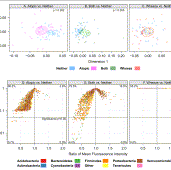
Screen Shot 2014-06-07 at 1.16.46 AMVisualizing millions of DNA sequences – in your web browser! – Featuring Phinch, developed by Holly Bik in the Eisen Lab

“The idea is to take your QIIME outputs – .biom OTU table files with taxonomy and embedded metadata – directly into a data visualization framework for assessment.”

Infection, immunity, host response

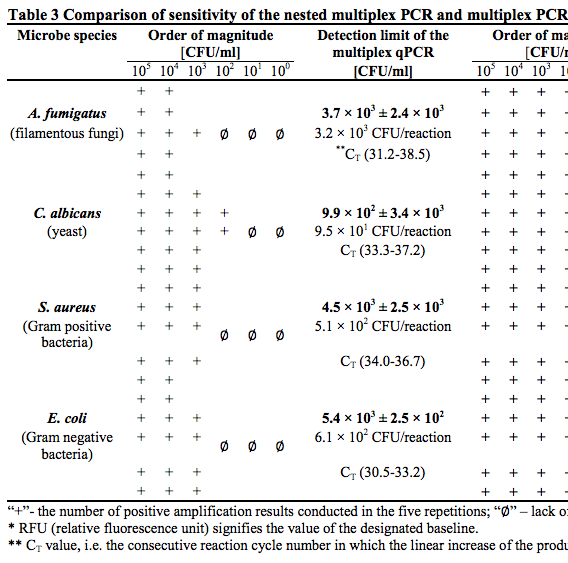
Screen Shot 2014-06-07 at 2.06.31 AMA novel, nested, multiplex, real-time PCR for detection of bacteria and fungi in blood – Gosiewski, T – BMC Microbiology

“ The designed primers correctly typed the studied species as belonging to the groups of Gram-positive bacteria, Gram-negative bacteria, yeast fungi, or filamentous fungi.”

Screen Shot 2014-06-07 at 2.00.39 AMEffects of early-life exposure to allergens and bacteria on recurrent wheeze and atopy in urban children – Susan V. Lynch – The Journal of Allergy and Clinical Immunology

“….first-year exposure to cockroach, mouse, and cat allergens was negatively associated with recurrent wheeze…. House dust microbiome composition is associated with clinical outcomes. 

Screen Shot 2014-06-07 at 1.58.39 AMImplementation and impact of ultraviolet environmental disinfection in an acute care setting – Janet P. Haas – AJIC: American Journal of Infection Control

During the time period UVD was in use, there was a significant decrease in overall hospital-acquired MDRO plus CD in spite of missing 24% of opportunities to disinfect contact precautions rooms. This technology was feasible to use in our acute care setting and appeared to have a beneficial effect.”

Dr. Bik’s Picks

Screen Shot 2014-06-07 at 2.39.26 AMCool video of a scientist uncovering a whale in an old painting: Whale tale: a Dutch seascape and its lost Leviathan – University of Cambridge

“When art conservators peeled back a layer of varnish on a 17th-century Dutch painting, they uncovered an image of a beached whale that had been hidden for at least 150 years. “

Screen Shot 2014-06-07 at 2.40.17 AMLooking for the best strategy? Ask a chimp – Science Daily

“If you’re trying to outwit the competition, it might be better to have been born a chimpanzee, according to a study by researchers at Caltech, which found that chimps at the Kyoto University Primate Research Institute consistently outperform humans in simple contests drawn from game theory.”

[hr]


More Microbiology and Science, June 5

Today we’ll learn why koalas hug trees, how to grow plants taller using blood and bacteria, and how to (not) get sick in a veterinary hospital.

Infection, host response, sepsis

Screen Shot 2014-06-05 at 8.35.13 PMGene Expression Profiles of Human Dendritic Cells Interacting with Aspergillus fumigatus in a Bilayer Model of the Alveolar Epithelium/Endothelium Interface – Charles Oliver Morton – PLOS ONE

“Two distinct sub-groups of dendritic cells (DC), monocyte-derived DC (moDC) and myeloid DC (mDC), were included in the model to examine immune responses to fungal infection at the alveolar surface”

Screen Shot 2014-06-05 at 8.52.36 PMDusp3 and Psme3 Are Associated with Murine Susceptibility to Staphylococcus aureus Infection and Human Sepsis – Qin Yan – PLOS Pathogens

“One QTL region on chromosome 11 containing 422 genes was found to be significantly associated with susceptibility to S. aureus infection. “

Screen Shot 2014-06-05 at 8.36.06 PMAn Individual-Based Model of Transmission of Resistant Bacteria in a Veterinary Teaching Hospital – Neeraj Suthar – PLOS ONE

“The model suggested that transmission resulting from contact with healthcare workers was common, and that certain transmission points (housing wards, diagnostics room, and the intensive care unit) presented higher risk for transmission than others (lobby and surgery). “

Dengue

Screen Shot 2014-06-05 at 8.36.42 PMInduction of Neutralizing Antibody Response against Four Dengue Viruses in Mice by Intramuscular Electroporation of Tetravalent DNA Vaccines – Eakachai Prompetchara – PLOS ONE

“This study evaluated neutralizing antibody (NAb) induction of a dengue tetravalent DNA (TDNA) vaccine candidate administered by intramuscular-electroporation (IM-EP) and the benefit of homologous TDNA boosting in mice.”

Circulating Levels of Soluble MICB in Infants with Symptomatic Primary Dengue Virus Infections – Daniel H. Libraty – PLOS ONE

“We found that serum levels of sMICB increased between pre-infection and acute illness among infants with symptomatic primary dengue virus infections”

Screen Shot 2014-06-05 at 8.37.27 PMImmature Dengue Virus Is Infectious in Human Immature Dendritic Cells via Interaction with the Receptor Molecule DC-SIGN – Mareike K. S. Richter – PLOS ONE

“We show that immature DENV is infectious in cells expressing DC-SIGN. Furthermore, we demonstrate that immature dendritic cells, in contrast to macrophage-like cells, do not support antibody-dependent enhancement of immature DENV.”

Viruses and Phages

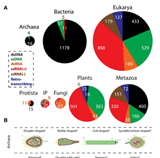
Screen Shot 2014-06-05 at 8.39.02 PMThe distribution and impact of viral lineages in domains of life – Arshan Nasir

“the distribution of viral lineages follows an ancient, highly dynamic and ongoing process that impacts the evolution of organisms. New viral lineages often arise from existing ones and may cross species barriers to infect new hosts”

Alternative invention for shrimp bacterial pathogens wins patent – Times of India

“Dr Indrani Karunasagar, director, UNESCO Centre for marine Biotechnology and Associate Director of Research, has received the patent for “the process of preparing a consortium of bacteriophages for controlling luminous bacterial disease in shrimp larvae.” Like a virus, a lytic bacteriophage is a virus that infects and replicates within the bacteria and kills it. “

Microbial Ecology

Screen Shot 2014-06-05 at 8.53.35 PMThe microbial contribution to macroecology – Albert Barberán – Frontiers in Microbiology

“We highlight two idiosyncrasies of microorganisms that are fundamental to understanding macroecological patterns and their mechanistic drivers. First, high dispersal rates provide novel opportunities to test the relative importance of niche, stochastic, and historical processes in structuring biological communities. Second, high speciation rates potentially lead to the convergence of ecological and evolutionary time scales.”

More microbiology

Screen Shot 2014-06-05 at 8.40.05 PMInteractions between Bacillus anthracis and Plants May Promote Anthrax Transmission
Holly H. Ganz – PLOS Neglected Tropical Diseases

“We found that B. anthracis increased the rate of establishment of a native grass (Enneapogon desvauxii) by 50% and that grass seeds exposed to blood reached heights that were 45% taller than controls.”

Screen Shot 2014-06-05 at 8.54.21 PMTo be or not to be associated: power study of four statistical modeling approaches to identify parasite associations in cross-sectional studies – Elise Vaumourin – Frontiers in Cellular and Infection Microbiology

“We applied these four approaches to detect associations within two populations of multi-infected hosts: (1) rodents infected with Bartonella sp., Babesia microti and Anaplasma phagocytophilum and (2) bovine population infected with Theileria sp. and Babesia sp”

Screen Shot 2014-06-05 at 8.47.24 PMPCR performance of a thermostable heterodimeric archaeal DNA polymerase – Tom Killelea – Frontiers in Microbiology, Evolutionary and Genomic Microbiology

“Here we looked at the PCR performances of the proof-reading D-type DNA polymerase from P. abyssi, Pab-polD. Fragments, 3 kilobases in length, were specifically PCR-amplified in its optimized reaction buffer. Pab-polD showed not only a greater resistance to high denaturation temperatures than Taq during cycling, but also a superior tolerance to the presence of potential inhibitors. “

Arsenic metabolism

Screen Shot 2014-06-05 at 8.50.18 PMArsenic and old toenails – University of British Columbia

“We successfully recruited 35,000 Atlantic Canadians whose health will be tracked over the next 25 years, and the project will be a major resource for cancer prevention research. More than 22,000 participants provided blood and toenail clippings, which ended up being an official Guinness World Record.”

Marine Mammals (and turtles)

Screen Shot 2014-06-05 at 8.51.14 PMSatellite Tracking of Sympatric Marine Megafauna Can Inform the Biological Basis for Species Co-Management – Christian Gredzens – PLOS ONE

“Fast-acquisition satellite telemetry was used to track eleven dugongs and ten green turtles at two geographically distinct foraging locations in Queensland, Australia to evaluate the inter- and intra-species spatial relationships and assess the efficacy of existing protection zones. “

Dr. Bik’s Picks

Screen Shot 2014-06-05 at 8.48.40 PMThe sheep genome illuminates biology of the rumen and lipid metabolism – Yu Jiang- Science

“We have developed and analyzed a high-quality reference sheep genome and transcriptomes from 40 different tissues. We identified highly expressed genes encoding keratin cross-linking proteins associated with rumen evolution.”

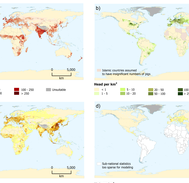
Screen Shot 2014-06-05 at 8.55.17 PMMapping the Global Distribution of Livestock – Timothy P. Robinson – PLOS ONE

“This paper describes the current approach in detail and presents new global distribution maps at 1 km resolution for cattle, pigs and chickens, and a partial distribution map for ducks. These digital layers are made publically available via the Livestock Geo-Wiki (http://www.livestock.geo-wiki.org), as will be the maps of other livestock types as they are produced.”

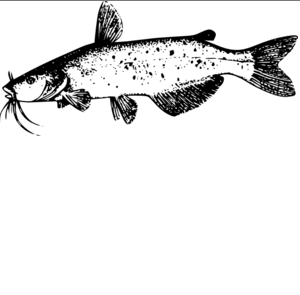
Screen Shot 2014-06-05 at 9.02.51 PMCatfish ‘See’ Their Next Meal with Acid-Sensing Whiskers – Charles Q. Choi – LiveScience

“Catfish have evolved sensors on their whiskers that can help the animals hunt in the dark by detecting slight changes in water acidity, the first time such sensors have been seen in fish, researchers say.”

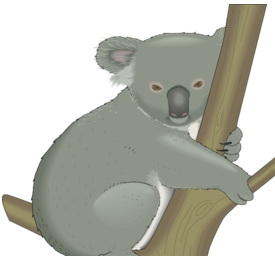
Screen Shot 2014-06-05 at 8.56.34 PMWhy Koalas Hug Trees – Tia Ghose – LiveScience

“Now, scientists have figured out why the iconic Australian marsupials hug trees: The trunks help the koala bears keep cool, according to a new study.”

[hr]


More Microbiology and Science, June 4, 2014

Dengue, arthritis, arsenic, two retractions, frogs singing in the gutters, and deadly sharks (but not as you know them).

Infection, sepsis, and host response

Screen Shot 2014-06-05 at 1.08.42 AMBacteria in the Adventitia of Cardiovascular Disease Patients with and without Rheumatoid Arthritis – Samuel A. Curran – PLOS ONE

“The aortic adventitia of CVD patients contains a wide range of bacterial species, and the bacterial flora is significantly less diverse in RA+CVD than CVD patients. M. oryzae may stimulate an proinflammatory response that may aggravate and perpetuate the pathological processes underlying atherosclerosis in RA patients.”

Dengue Screen Shot 2014-06-05 at 1.06.24 AM

A tetravalent alphavirus-vector based dengue vaccine provides effective immunity in an early life mouse model – Syed Muaz Khalil – Vaccine

“We report here that a single immunization with a tetravalent VRP vaccine induced NAb and T-cell responses to each serotype at a level equivalent to the monovalent vaccine components, suggesting that this vaccine modality can overcome serotype interference. “

Arsenic metabolism

Screen Shot 2014-06-05 at 1.09.38 AMSpecies- and tissue-specific bioaccumulation of arsenicals in various aquatic organisms from a highly industrialized area in the Pohang City, Korea – Seongjin Hong – Environmental Pollution

“Contamination of water and sediment with arsenic (As) in a highly industrialized area of Pohang City, Korea was investigated, with emphasis on in situ bioaccumulation of arsenicals by various aquatic organisms.”

Publishing and misconduct Screen Shot 2014-06-05 at 1.03.01 AM

Japanese scientist to retract stem cell papers – Phys.org

“Haruko Obokata, 30, would withdraw two papers at the centre of the controversy, according to a spokeswoman for Riken, the respected  that sponsored the study, marking a steep fall from grace for the young researcher.”

Dr. Bik’s Picks

SharkShark meat worse than its bite – Tony Camie – IOL Scitech

“Never mind their fearsome jaws. People are now more likely to be killed by eating shark meat rather than the other way round.”

frogUrban frogs use drains as mating megaphones – Katia Moskvitch – Nature

“Gathering in the gutter may provide a better way to seduce females.”

[hr]

General microbiology and science digest, June 3, 2014

Dengue, immunology, arsenic, and The Picks.


Immunology

Review: Ontogeny of early life immunity – David J. Dowling, Ofer Levy – Trends in Immunology

“Here, we review novel mechanistic insights into early life immunity, with an emphasis on emerging models of human immune ontogeny”

Dengue

Time-varying, serotype-specific force of infection of dengue virus – Robert C. Reiner, Jr. – PNAS

“Using a bespoke method for a 12-y longitudinal dataset of serotype-specific dengue virus (DENV) infections, we estimated time-varying, serotype-specific FoIs for all four DENV serotypes. “

Correspondence: A “microRNA-like” small RNA expressed by Dengue virus? – Rebecca L. Skalsky – PNAS

Reply to Skalsky et al.: A microRNA-like small RNA from Dengue virus – Mazhar Hussain and Sassan Asgari – PNAS


More Microbiology

Review: Tropheryma whipplei and Whipple’s disease – Florence Fenollar, Jean-Christophe Lagier, Didier Raoult – Journal of Infection

“T. whipplei seems to be an opportunistic bacterium that causes chronic infections in susceptible patients with as yet unknown predisposing factors.”

Genesis and pathogenesis of the 1918 pandemic H1N1 influenza A virus
Michael Worobey – PNAS

“We infer that the virus arose via reassortment between a preexisting human H1 IAV lineage and an avian virus”

Shotgun glycomics of pig lung identifies natural endogenous receptors for influenza viruses – Lauren Byrd-Leotis – PNAS

“Studies using novel “shotgun glycan microarray” technology identify, for the first time to our knowledge, the endogenous receptors for influenza viruses from a natural host, the pig.”

Counties Deploying Bacteria-Sniffing Dogs To Find Failing Septic Systems – Bellamy Pailthorp – PKLU.org

“Molly, a border collie trained by Environmental Canine Services, can sniff out human fecal coliform bacteria in water samples.”

Arsenic metabolism

Arsenic in the Multi-aquifer System of the Mekong Delta, Vietnam: Analysis of Large-Scale Spatial Trends and Controlling Factors – Laura E. Erban – Environmental Science & Technology

“We relate strong trends in the distribution of contamination among well samples to explanatory variables derived from 3D ancillary physicochemical data sets using logistic regression models.”

Monitoring Arsenic Contamination in Agricultural Soils with Reflectance Spectroscopy of Rice Plants – Tiezhu Shi – Environmental Science & Technology

“The prediction of soil As contents was achieved by partial least-squares regression (PLSR) using laboratory and field spectra of rice plants, as well as linear regression employing normalized difference spectral index (NDSI) calculated from fild spectra. “

Marine Mammals

Fossil record shows whales evolved from land to sea – Steve Luckstead – UnionBulletin

“Other mammals such as seals, sea lions and walrusess spend a good part of their lives in the ocean, but they are clearly tetrapods (four-legged). But whales don’t have any leg-like appendages. So what gives?”


Science and Art

Sculpting the apples of science – Helen Fields – PNAS

“Rath’s work is based on a visit to the US Department of Agriculture’s Plant Genetic Resources Unit (PGRU) in Geneva, New York. The PGRU grows thousands of apple varieties that might otherwise disappear from orchards.”

Dr. Bik’s Picks

Evidence of bird dropping masquerading by a spider to avoid predators – Min-Hui Liu – Nature Scientific Reports

” The orb-web spider Cyclosa ginnaga has a silver body and adds a white discoid-shaped silk decoration to its web. The size, shape and colour of C. ginnaga’s body resemble, when viewed by the human eye against its decoration, a bird dropping. “

Why Have Female Hurricanes Killed More People Than Male Ones? – Ed Yong – National Geographic

“Here’s a simple fact with an uncertain explanation: historically, hurricanes with female names have, on average, killed more people than those with male ones.”

[hr]

More microbiology and science, June 2, 2014

Dengue and humidity, bacteria from Mars, sequencing, and aspartame.

Dengue

Microbes in Space

Sequencing and bioinformatics

Chromosome organization

Arsenic metabolism

Dr. Bik’s Picks

[hr]
More Microbiology and Science, May 29 2014

In tonight’s digest, antimicrobial tolerance in biofilms, oil spills and dolphins, and dog people vs. cat people.

Biofilms

More microbiology

Marine mammals

Scientific publishing

  • Screen Shot 2014-05-29 at 10.53.15 PMNature’s publisher launches a new peer-reviewed, online-only journal that will accept descriptions of data sets: Publishing Data – Jef Akst – The Scientist

Dr. Bik’s Picks

[hr]