Foxp3+ T Cells Regulate Immunoglobulin A Selection and Facilitate Diversification of Bacterial Species Responsible for Immune Homeostasis

Screen Shot 2014-07-18 at 2.08.20 PMFoxp3+ T Cells Regulate Immunoglobulin A Selection and Facilitate Diversification of Bacterial Species Responsible for Immune Homeostasis – Shimpei Kawamoto – Immunity

“Here we show that in mice, Foxp3+ T cells contributed to diversification of gut microbiota, particularly of species belonging to Firmicutes”


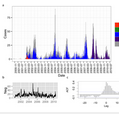
Long-Term and Seasonal Dynamics of Dengue in Iquitos, Peru

Screen Shot 2014-07-18 at 2.09.19 PMLong-Term and Seasonal Dynamics of Dengue in Iquitos, Peru – Steven T. Stoddard – PLOS Neglected Tropical Diseases

“We studied 10 years (2000–2010) of laboratory-confirmed, clinic-based surveillance data collected in Iquitos, Peru. We characterized inter and intra-annual patterns of dengue dynamics on a weekly time scale using wavelet analysis. “

Bifidobacterium longum and Bifidobacterium breve isolates from preterm and full term neonates: Comparison of cell surface properties

Screen Shot 2014-07-18 at 2.31.12 PMBifidobacterium longum and Bifidobacterium breve isolates from preterm and full term neonates: Comparison of cell surface properties
Valérie Andriantsoanirina – Anaerobe

“Our results suggest the existence of variations in bifidobacteria membrane structure and/or composition that may reflect adaptation of these bacteria to the intestinal environment of either preterm or full term neonates. “

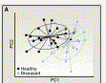
Gut microbiota and obesity

Review: Gut microbiota and obesity: role in aetiology and potential therapeutic target
Carthage P. Moran – Best Practice & Research Clinical Gastroenterology

Mechanisms behind the link between obesity and gastrointestinal cancers – Herbert Tilg – Best Practice & Research Clinical Gastroenterology

“Whereas underlying pathomechanisms remain unclear, chronic inflammation accompanying obesity has evolved in the last years as a crucial contributing factor.”

Review: Autoimmune diseases, gastrointestinal disorders and the microbiome in schizophrenia

Review: Autoimmune diseases, gastrointestinal disorders and the microbiome in schizophrenia: more than a gut feeling – Emily G. Severance – Schizophrenia Research

“this review surveys associative and experimental data linking autoimmunity, GI activity and schizophrenia, and proposes that understanding of disrupted biological pathways outside of the brain can lend valuable information regarding pathogeneses of complex, polygenic brain disorders.”


General microbiology and science, July 17

Detection of microbes in clinical samples, phages living in viruses, and archaea in biofilms.

Microbial detection in clinical samples

Metagenomic analysis of a sample from a patient with respiratory tract infection reveals the presence of a γ-papillomavirus – Marta Canuti – Frontiers in Microbiology

“We therefore concluded that the detected γ-papillomavirus is unlikely to be the causative agent of the respiratory complaints and its presence in the nose of the patient is not related to the disease.”

Detection of intestinal protozoa in paediatric patients with gastrointestinal symptoms by multiplex real-time PCR – L. Maas – Clinical Microbiology and Infection

“The performance of a multiplex real-time PCR for the detection of Blastocystis, Dientamoeba fragilis, Giardia lamblia, Cryptosporidium species and Entamoeba species in faecal samples was evaluated in an observational prospective study.”

Are Quantitative Bacterial Wound Cultures Useful? – George Kallstrom – Journal of Clinical Microbiology

“This minireview briefly summarizes the clinical microbiology of wound cultures, with an emphasis on the history and utility (or lack thereof) of the quantitative wound culture.”

Phages and viruses

The origins of giant viruses, virophages and their relatives in host genomes – Aris Katzourakis and Amr Aswad – BMC Biology

“These viruses, together with the transposon-related virophages that infect them, pose a number of questions about their evolutionary origins that need to be considered in the light of the complex entanglement between host, virus and virophage genomes.”

Antibiotics

Antibiotics promote aggregation within aquatic bacterial communities – Gianluca Corno – Frontiers in Microbiology

“In this study a chemostat-based experiment with 4 coexisting bacterial strains has been performed to mimicking the response of a freshwater bacterial community to the presence of antibiotics in low and high doses.”

Biofilms and Archaea

Biofilm formation of mucosa-associated methanoarchaeal strains – Corinna Bang – Frontiers in Microbiology

“Here, the ability of three methanoarchaeal strains, Methanobrevibacter smithii and Methanosphaera stadtmanae, which form part of the human gut microbiota, and the Methanosarcina mazei strain Gö1 to grow on different surfaces and form biofilms was investigated. “

Microbial ecology

Persistence in the shadow of killers – Robert M. Sinclair – Frontiers in Microbiology

“What we show is that coexistence is not only possible, but that it is possible even if the absolute fitness advantage of the sensitive strain over the killer strain is arbitrarily small. We do this by performing a specifically targeted mathematical analysis on our model, rather than via simulations.”

General microbiology

Editorial: Bioterrorism: myth or reality? – G. Greub and M. P. Grobusch – Clinical Microbiology and Infection

Dr. Bik’s Picks

Today I can only cry for the people onboard flight MH17.

[hr]

 

Non-human microbiome, July 17

Microbiomes of sparrows, stinkbugs, corals, grapevine, and archeological stones.

Bird microbiome

Screen Shot 2014-07-17 at 5.14.56 PMGut Bacterial Diversity of the House Sparrow (Passer domesticus) Inferred by 16S rRNA Sequence Analysis – Leticia Mirón – Metagenomics

“This study is the first description of the diversity of bacteria along the whole intestine of a wild bird (Passer domesticus). Pyrosequencing of the 16S rRNA gene unveiled a high bacterial diversity, distributed in 11 bacterial phyla. “

Insect microbiome

StinkybugsSymbiont polyphyly, co-evolution, and necessity in pentatomid stinkbugs from Costa Rica – Kalia S. I. Bistolas – Frontiers in Microbiology

“The gut microbiota of 13 micro-allopatric tropical pentatomid species, from a Costa Rican lowland rainforest, was characterized and compared with insect and host plant phylogenies.”

Coral microbiome

CoralsReview: A genomic approach to coral-dinoflagellate symbiosis: studies of Acropora digitifera and Symbiodinium minutum – Chuya Shinzato – Frontiers in Microbiology

“Here we review recent genomic data derived from the scleractinian coral, Acropora digitifera, and the endosymbiotic dinoflagellate, Symbiodinium minutum. “

Plant microbiome

Screen Shot 2014-07-17 at 5.15.23 PMPyrosequencing detects human and animal pathogenic taxa in the grapevine endosphere – Sohail Yousaf – Frontiers in Microbiology

“We used pyrosequencing and phylogenetic analyses of the 16S rDNA gene. We identified several HAPT, and focused on four genera (Propionibacterium, Staphylococcus, Clostridium, and Burkholderia). “

Built Environment microbiome

Screen Shot 2014-07-17 at 5.15.49 PM 1Biological nanosilver particles for the protection of archaeological stones against microbial colonization – Ashraf M M Essa – International Biodeterioration & Biodegradation

“The stones treated with silicon polymer loaded with AgNPs showed an elevated antimicrobial potentiality against A. niger and S. parvullus.”

Water microbiome

Screen Shot 2014-07-17 at 5.16.30 PM16S rDNA-based analysis reveals cosmopolitan occurrence but limited diversity of two cyanobacterial lineages with contrasted patterns of intracellular carbonate mineralization – Marie Ragon – Frontiers in Microbiology

“To explore the diversity of these two distant cyanobacterial lineages representing two different patterns of intracellular calcification, we designed specific primers against their 16S rRNA genes and looked for their occurrence in a wide variety of samples. “

[hr]