
Microbiomes of rumen, salamanders, insects, corals, sponges and soil.
Mammalian microbiome
 Improved culturability of cellulolytic rumen bacteria and phylogenetic diversity of culturable cellulolytic and xylanolytic bacteria newly isolated from the bovine rumen – Thet Nyonyo – FEMS Microbiology Ecology – “We isolated 129 strains from these media, and the numbers of isolates that showed filter paperase, carboxymethylcellulase and xylanase activity were 51, 117 and 105, respectively.”

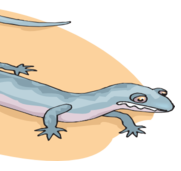
Amphibian microbiome
 Similarity and differentiation between bacteria associated with skin of salamanders (Plethodon jordani) and free-living assemblages – Benjamin M. Fitzpatrick and Amanda L. Allison – FEMS Microbiology Ecology
Insect microbiome
 Review: Towards an integrated understanding of gut microbiota using insects as model systems – Mathieu Pernice – Journal of Insect Physiology – “we give a brief overview of the characteristics of the gut microbiota in insects in terms of low diversity but high variability at intra- and interspecific levels and we investigate some of the ecological and methodological factors that might explain such variability. “

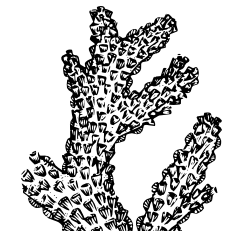
Coral and sponge microbiome
 Culture-dependent and culture-independent analyses reveal no prokaryotic community shifts or recovery of Serratia marcescens in Acropora palmata with white pox disease – Michael P. Lesser and Jessica K. Jarett – FEMS Microbiology Ecology – “Here, we show that both culture-dependent and culture-independent approaches could not recover this bacterium from samples of tissue and mucus from A. palmata colonies affected by WP disease in the Bahamas”
 Influence of environmental variation on symbiotic bacterial communities of two temperate sponges – César A. Cárdenas – FEMS Microbiology Ecology – “we analyzed the effect of transplantation of sponges between different habitats to test the effect of changes in environmental conditions on the stability of the bacterial communities in specimens of Tethya bergquistae and Ecionemia alata, based on pyrosequencing of amplified 16S rRNA genes”

Algae and Plant microbiome
 Review: Filamentous pathogen effector functions: of pathogens, hosts and microbiomes – Hanna Rovenich – Current Opinion in Plant Biology –
- Peatland succession induces a shift in the community composition of Sphagnum-associated active methanotrophs – Anuliina Putkinen – FEMS Microbiology Ecology – “SIP-derived 13C-labeled 16S rRNA gene clone libraries revealed a high diversity of SAM in every succession stage including some putative Methylocella/Methyloferula methanotrophs that are not detectable with the pmoA-based approach. “
 Community composition of the Planctomycetes associated with different macroalgae – Joana Bondoso – FEMS Microbiology Ecology – “Sequencing of DGGE bands indicated that Planctomycetes communities were highly diverse, and some Operational Taxonomic Units seemed to be specifically associated with each macroalgae.”

Environmental microbiome
 Soil structure and its influence on microbial biomass in different soil and crop management systems – Adriana Pereira da Silva – Soil and Tillage Research – “We quantify microbial biomass in the homogeneous morphological units (HMUs) in a different management.”
- Links between sulphur oxidation and sulphur-oxidising bacteria abundance and diversity in soil microcosms based on soxB functional gene analysis – Maria Tourna – FEMS Microbiology Ecology – “Cloning and sequencing revealed considerable diversity of known soxB genotypes from agricultural soils and also evidence for previously undescribed taxa.”
- Linking bacterial population dynamics and nutrient removal in the granular sludge biofilm ecosystem engineered for wastewater treatment – David G. Weissbrodt – FEMS Microbiology Ecology – “Multivariate analyses highlighted significant correlations from process to microbial scales in the first reactor, whereas nitrification and phosphorus removal might have been affected by oxygen mass transfer limitations with no impact at population level in the second system. “
- Prokaryotic taxonomic and metabolic diversity of an intermediate salinity hypersaline habitat assessed by metagenomics – Ana B. Fernández – FEMS Microbiology Ecology – “A metagenome was obtained by pyrosequencing the total prokaryotic DNA from the water of a pond with intermediate salinity (13% salts) from a saltern located in Santa Pola, Spain”

[hr]
 Microbiome Digest - Bik's Picks