
The Future of Portugal as explained by Microorganisms – Clara Rodríguez Fernández – Labiotech
Microbiology makes its mark at the first edition of the London Design Biennale taking place in Somerset House. Portugal’s exhibition by Marta de Menezes uses bacteria and viruses to create changing art that represents the future direction of the country. With the common topic “Design by Utopia“, 30 nations have interpreted utopic and dystopic futures using art to make us think about where we’re headed. Portuguese artist Marta de Menezes decided to use microbiology to represent the changing nature of her nation
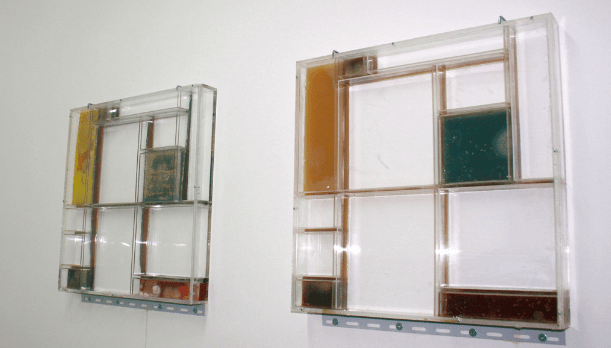
Decon by artist Marta de Menezes recreates Mondriaan paintings by colored media with bacteria.
Fungi Mutarium: Growing Food on Toxic Waste – Livin Studio
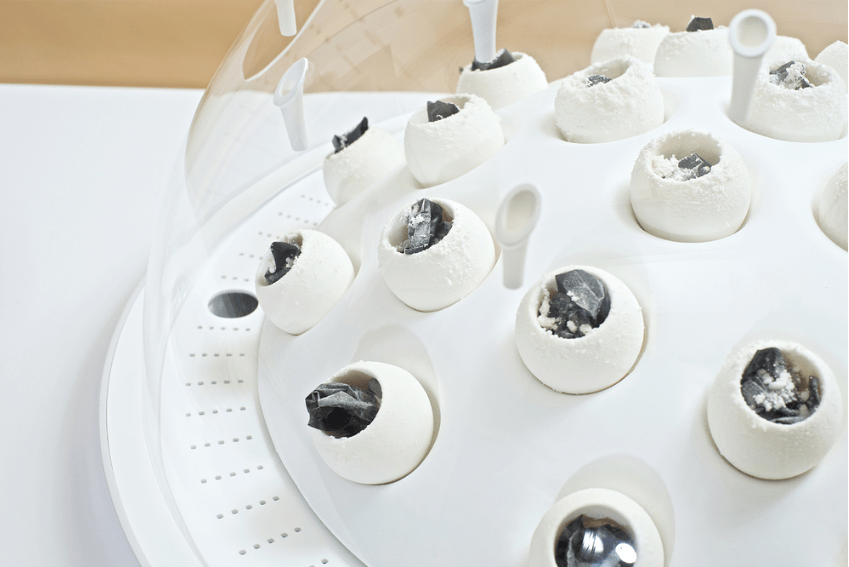
Livin Studio has, in collaboration with Utrecht University, developed a novel fungi food product grown on (plastic) waste, a prototype to grow it and culinary tools to eat it. (…)
Fungi Mutarium is a prototype that grows edible fungal biomass, mainly the mycelium, as a novel food product. Fungi is cultivated on specifically designed agar shapes that the designers called “FU”. Agar is a seaweed based gelatin substitute and acts, mixed with starch and sugar, as a nutrient base for the fungi. The “FUs” are filled with plastics. The fungi is then inserted, it digests the plastic and overgrows the whole substrate.
Decon by artist Marta de Menezes recreates Mondriaan paintings by colored media with bacteria.
Lecturer uses art to explain science – Derek Clayton – Iowa State Daily
More than 240 students and staff were greeted Monday by the sight of letter-shaped bacteria exploding out of petri dishes at Ahna Skop’s lecture titled “Too Creative for Science?” The petri dishes with bacteria letters were among the many pieces of art the associate professor of genetics at the University of Wisconsin-Madison used to wow the audience during her lecture. (…) Skop uses artwork to make it easier to understand complicated scientific concepts. From displaying bacterial worms to DNA helixes, she believes adding a visual aspect to science is absolutely vital in understanding it.
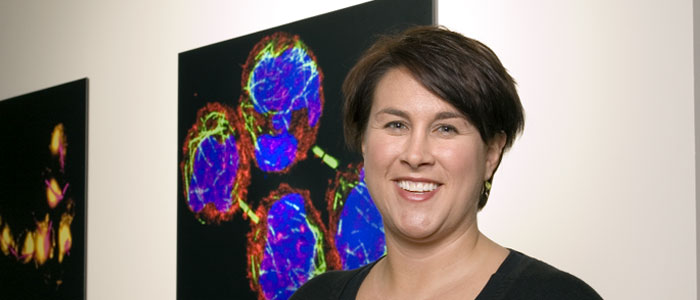
Ahna Skop, credit: University of Wisconsin-Madison
 Microbiome Digest - Bik's Picks
How lovely to see creative expressions of such complex science. Appreciating microbes should be available to all!
LikeLike